


 Views: 0
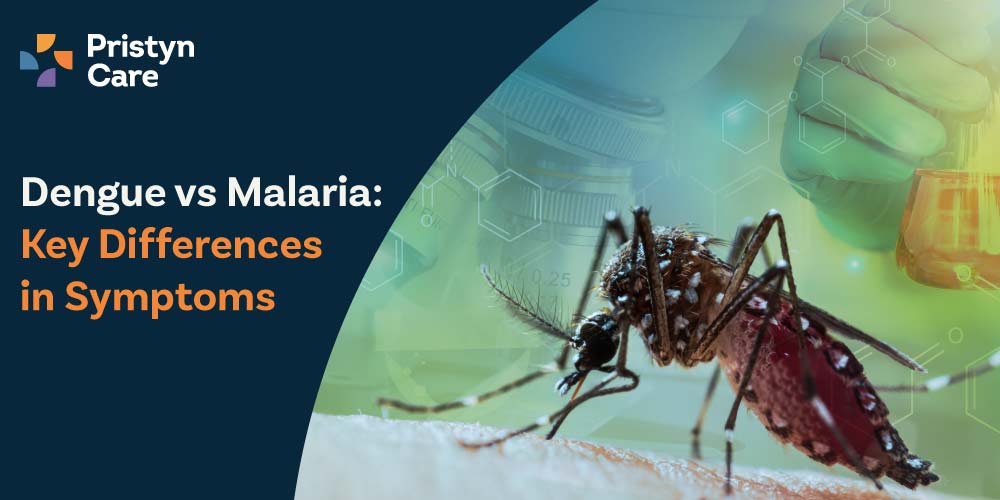
Dengue vs Malaria: Key Differences in Symptoms
Dengue Fever and Malaria are two common mosquito-borne diseases in India, especially during the monsoon season. While both may start with fever, their symptoms, causes, and progression are quite different.

Social share:


Dedicated Support at Every Step!
Our Doctors are available 24 hours a day, 7 days a week to help you!

Understanding these differences can help in early diagnosis and timely treatment.
Table of Contents
What Causes Dengue and Malaria?
Dengue
- Caused by a virus (dengue virus)
- Spread by Aedes mosquitoes (daytime biting)
Malaria
- Caused by parasites (Plasmodium species)
- Spread by Anopheles mosquitoes (nighttime biting)
No Cost EMI, Hassle-free Insurance Approval
Key Differences in Symptoms
1. Fever Pattern
Dengue Fever:
- Sudden high fever (up to 104°F)
- Continuous fever for several days
Malaria:
- Intermittent fever with chills
- Fever comes in cycles (every 2–3 days depending on type)
2. Body Pain
Dengue:
- Severe muscle and joint pain (“breakbone fever”)
- Pain behind the eyes
Malaria:
- Mild to moderate body aches
- Less intense compared to dengue
3. Chills and Sweating
Dengue:
- Chills are mild or absent
Malaria:
- Intense chills followed by heavy sweating
- Classic symptom of malaria
4. Rash
Dengue:
- Skin rash is common
- Appears a few days after fever
Malaria:
- Rash is rare
5. Bleeding Tendencies
Dengue:
- Bleeding gums or nose
- Easy bruising in severe cases
Malaria:
- Bleeding is uncommon
6. Platelet Count
Dengue:
- Significant drop in platelet count
- Risk of complications like Dengue Hemorrhagic Fever
Malaria:
- Platelets may decrease slightly but not as severely
7. Digestive Symptoms
Dengue:
- Nausea, vomiting, abdominal pain
Malaria:
- Nausea, vomiting, and diarrhea may occur
8. Severity and Complications
Dengue:
- Can lead to Dengue Shock Syndrome in severe cases
Malaria:
- Severe malaria can affect brain (cerebral malaria), kidneys, and lungs
Quick Comparison Table
| Feature | Dengue Fever | Malaria |
| Cause | Virus | Parasite |
| Fever Pattern | Continuous | Cyclical |
| Body Pain | Severe | Moderate |
| Chills | Mild/Absent | Severe |
| Rash | Common | Rare |
| Platelet Drop | Significant | Mild |
| Bleeding | Possible | Rare |
When to Get Tested?
You should seek testing if you have:
- Fever lasting more than 2–3 days
- Severe body pain or chills
- Low platelet count
- Travel history to mosquito-prone areas
Blood tests help confirm whether it is Dengue Fever or Malaria.
Why Early Diagnosis Matters
- Dengue requires supportive care and monitoring
- Malaria needs antimalarial medications
Incorrect or delayed diagnosis can worsen the condition.
Prevention Tips
To prevent both Dengue Fever and Malaria:
- Use mosquito repellents
- Sleep under mosquito nets
- Avoid stagnant water
- Wear protective clothing
Conclusion
Although Dengue Fever and Malaria share some common symptoms like fever and fatigue, key differences such as fever pattern, body pain intensity, rash, and platelet count can help distinguish between them.
If you experience symptoms, do not self-diagnose. Consult a doctor and get the appropriate tests done for accurate treatment.


FAQs
1. How can I tell if I have dengue or malaria?
Fever pattern, body pain, and symptoms like rash or chills can help differentiate, but testing is necessary for confirmation.
2. Can dengue and malaria occur together?
Yes, co-infection is possible but rare.
3. Which is more dangerous?
Both can be serious if untreated; severity depends on the case.
4. Is platelet count low in malaria?
It may decrease slightly but not as significantly as in dengue.
5. Should I take medicine without testing?
No, proper diagnosis is important for correct treatment.
Author:



Related Calculators

Dedicated Support at Every Step!
Our Doctors are available 24 hours a day, 7 days a week to help you!


