


 Views: 0
Different Types of Bone Fractures and Their Treatment Options
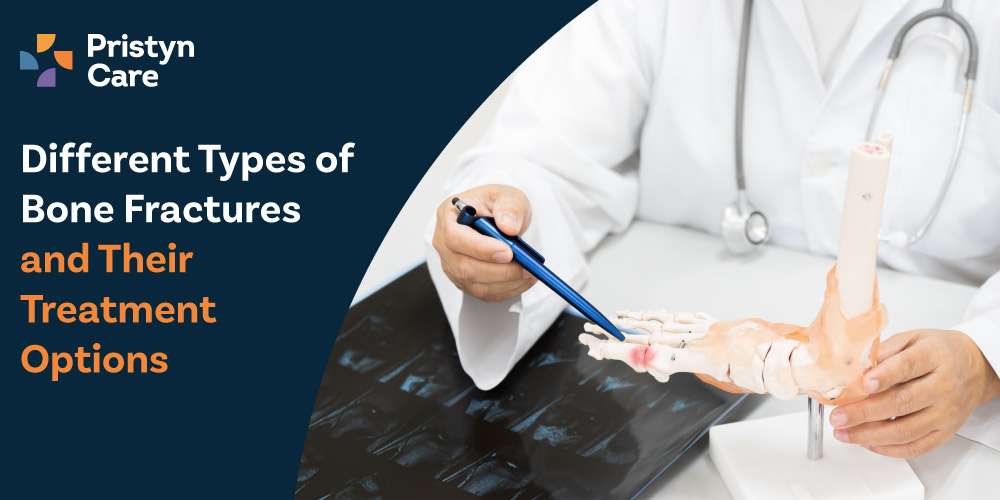
Bone fractures are common injuries that can occur due to trauma, falls, sports activities, or underlying bone weakness. Not all fractures are the same - each type varies in severity, complexity, and treatment approach.

Social share:


Dedicated Support at Every Step!
Our Doctors are available 24 hours a day, 7 days a week to help you!

Understanding the different types of bone fractures and their treatment options can help you recognize the seriousness of an injury and seek appropriate care.
Table of Contents
What Is a Bone Fracture?
A fracture is a break, crack, or disruption in the continuity of a bone. It can range from a small hairline crack to a complete break where the bone separates into multiple pieces.
No Cost EMI, Hassle-free Insurance Approval
Common Types of Bone Fractures
1. Simple (Closed) Fracture
- The bone breaks but does not pierce the skin
- Lower risk of infection
2. Open (Compound) Fracture
- The broken bone protrudes through the skin
- Higher risk of infection and requires urgent care
3. Hairline (Stress) Fracture
- A small crack in the bone
- Common in athletes due to repetitive stress
4. Comminuted Fracture
- The bone breaks into multiple fragments
- Usually caused by high-impact injuries
5. Greenstick Fracture
- Bone bends and partially breaks
- More common in children due to softer bones
6. Transverse Fracture
- Break occurs in a straight horizontal line across the bone
7. Oblique Fracture
- Fracture runs diagonally across the bone
8. Spiral Fracture
- Caused by a twisting force
- The break spirals around the bone
9. Impacted Fracture
- One part of the bone is driven into another
- Often seen in falls
10. Compression Fracture
- Bone is crushed or compressed
- Common in spine bones, especially in older adults
Symptoms of a Bone Fracture
- Severe pain at the injury site
- Swelling and bruising
- Deformity or abnormal alignment
- Inability to move or bear weight
- Tenderness when touched
How Are Fractures Diagnosed?
Doctors typically use:
- X-rays to confirm the fracture
- CT scans or MRI for complex injuries
Early diagnosis is essential for proper healing.
Treatment Options for Bone Fractures
Treatment depends on the type, location, and severity of the fracture.
1. Immobilization (Casting or Splinting)
- Used for simple fractures
- Keeps the bone in place while it heals
2. Closed Reduction
- The doctor realigns the bone without surgery
- Followed by casting
3. Open Reduction and Internal Fixation (ORIF)
- Surgical procedure to fix the bone using:
- Plates
- Screws
- Rods
4. External Fixation
- Metal pins and frames are placed outside the body
- Used in severe or open fractures
5. Pain Management and Medication
- Helps control pain and inflammation during healing
6. Physiotherapy
- Restores strength, flexibility, and function after healing
Recovery Time
- Minor fractures: 4–8 weeks
- Complex fractures: several months
Recovery depends on age, overall health, and adherence to treatment.
When Should You Seek Medical Attention?
Get immediate medical help if:
- There is severe pain or deformity
- You cannot move the affected area
- The bone is visible through the skin
- Swelling and pain worsen over time
Complications If Left Untreated
- Improper bone healing (malunion)
- Chronic pain
- Reduced mobility
- Infection (especially in open fractures)


Final Thoughts
Bone fractures vary widely - from minor cracks to severe breaks requiring surgery. Understanding the type of fracture helps determine the right treatment and recovery plan.
If you suspect a fracture, avoid self-treatment and seek medical care promptly. Early and appropriate management ensures proper healing and helps you return to normal activities safely.
Author:


Related Calculators

Dedicated Support at Every Step!
Our Doctors are available 24 hours a day, 7 days a week to help you!


