


 Views: 1
ICU vs General Ward: Key Differences Explained
When a patient is admitted to a hospital, one of the first decisions doctors make is whether they require care in an Intensive Care Unit (ICU) or can be managed in a general ward. For patients and families, this distinction can often be confusing and sometimes alarming.

Social share:


Dedicated Support at Every Step!
Our Doctors are available 24 hours a day, 7 days a week to help you!

Understanding the difference between ICU and general ward care can help you make informed decisions, set expectations, and reduce anxiety during hospitalization.
Table of Contents
What Is an ICU?
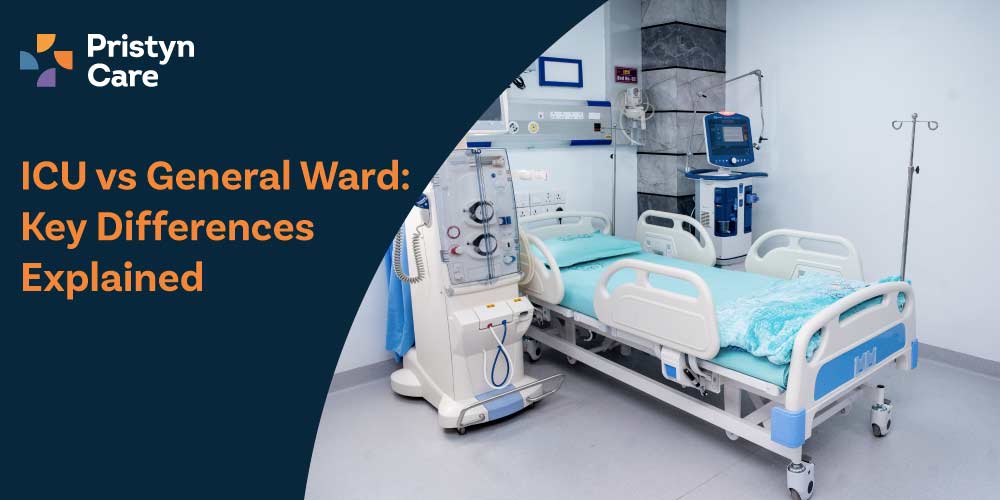
The Intensive Care Unit (ICU) is a specialized hospital department designed for patients who are critically ill and require constant monitoring, advanced medical support, and life-saving interventions.
Patients in the ICU typically have severe or life-threatening conditions such as:
- Respiratory failure
- Heart attack or cardiac arrest
- Severe infections (sepsis)
- Major trauma or accidents
- Complications after major surgery
ICUs are equipped with advanced technology and staffed by highly trained doctors, nurses, and critical care specialists.
No Cost EMI, Hassle-free Insurance Approval
What Is a General Ward?
A general ward is a hospital area where patients with stable or less severe conditions are admitted. These patients still need medical care, but they do not require continuous monitoring or intensive support.
Patients in general wards may include:
- Post-surgery recovery (stable cases)
- Mild to moderate infections
- Routine medical treatments
- Observation for non-critical conditions
General wards are designed for comfort and recovery rather than intensive intervention.
Key Differences Between ICU and General Ward
1. Level of Care
ICU:
- Provides critical, life-saving care
- Continuous monitoring (24/7)
- Immediate response to emergencies
General Ward:
- Standard medical care
- Periodic monitoring
- Suitable for stable patients
2. Monitoring and Equipment
ICU:
- Advanced monitoring systems track:
- Heart rate
- Blood pressure
- Oxygen levels
- Brain activity (in some cases)
- Life-support equipment such as ventilators and dialysis machines
General Ward:
- Basic monitoring devices
- Vital signs checked at intervals (e.g., every 4–6 hours)
- No life-support systems unless required temporarily
3. Doctor and Nurse Availability
ICU:
- Higher nurse-to-patient ratio (often 1:1 or 1:2)
- Continuous supervision by critical care specialists
- Immediate intervention if condition worsens
General Ward:
- Lower nurse-to-patient ratio
- Doctors visit during rounds
- Nurses attend patients periodically
4. Patient Condition
ICU:
- Critically ill or unstable patients
- High risk of complications
- Requires intensive observation
General Ward:
- Stable or recovering patients
- Lower risk of sudden deterioration
- Focus on healing and recovery
5. Infection Control
ICU:
- Strict infection control protocols
- Limited visitors
- Use of sterile techniques and protective equipment
General Ward:
- Standard infection control measures
- More relaxed visitor policies
6. Cost of Treatment
ICU:
- Significantly higher cost
- Due to:
- Advanced equipment
- Specialized staff
- Intensive monitoring
General Ward:
- More affordable
- Lower resource utilization
7. Environment and Privacy
ICU:
- Quiet, controlled environment
- Limited interaction
- Restricted visiting hours
General Ward:
- Shared rooms or semi-private spaces
- More interaction with other patients
- Flexible visiting hours
8. Duration of Stay
ICU:
- Usually short-term (until stabilization)
- Patients are shifted to a general ward once stable
General Ward:
- Longer stays for recovery and observation
When Is ICU Care Required?
Doctors recommend ICU admission when a patient needs:
- Continuous monitoring of vital functions
- Mechanical ventilation for breathing
- Emergency interventions
- Post-operative care after major surgeries (like heart or brain surgery)
- Management of organ failure (kidney, liver, lungs)
When Is a General Ward Sufficient?
A patient can be managed in a general ward if:
- Vital signs are stable
- No immediate life-threatening condition exists
- Recovery phase has started
- Only routine treatment and monitoring are required
Transition from ICU to General Ward
Many patients move from ICU to a general ward once their condition improves. This is a positive sign indicating:
- Stabilization of vital signs
- Reduced need for life support
- Lower risk of complications
This step is often called “step-down care.”
Emotional Impact on Patients and Families
ICU Experience
- Can be stressful due to seriousness of condition
- Limited interaction with patient
- Anxiety about outcomes
General Ward Experience
- More relaxed environment
- Better communication with patient
- Gradual return to normalcy
Common Myths About ICU vs General Ward
Myth 1: ICU Means the Patient Is About to Die
Reality: ICU is for intensive monitoring and treatment, not just end-of-life care.
Myth 2: General Ward Means No Serious Illness
Reality: Patients in wards can still have significant conditions but are stable.
Myth 3: ICU Always Gives Better Results
Reality: ICU is only beneficial when medically required. Unnecessary ICU stays can increase costs and infection risks.
Choosing Between ICU and General Ward
The decision is always made by doctors based on:
- Severity of illness
- Vital stability
- Need for advanced support
- Risk of complications
Patients and families should trust clinical judgment rather than requesting ICU care unnecessarily.
Cost Considerations
ICU care can be 3–5 times more expensive than general ward care due to:
- Continuous monitoring
- Specialized staff
- Equipment usage
If you have health insurance, check:
- ICU coverage limits
- Room rent caps
- Cashless facility availability
Tips for Families
- Stay informed about the patient’s condition
- Communicate regularly with doctors
- Follow hospital guidelines (especially in ICU)
- Avoid overcrowding in wards
- Be mentally prepared for transitions between units
Conclusion
The difference between ICU and general ward lies primarily in the level of care, monitoring, and medical support provided. ICU is designed for critically ill patients who need constant supervision and life-saving interventions, while general wards are meant for stable patients on the path to recovery.
Understanding these differences helps patients and families feel more confident and prepared during hospitalization. Always rely on medical advice to determine the appropriate level of care, as timely and appropriate treatment can significantly impact recovery outcomes.


FAQs
1. Is ICU always necessary after surgery?
No, only major or high-risk surgeries require ICU monitoring.
2. Can a patient’s condition worsen in a general ward?
Yes, but hospitals monitor patients and shift them to ICU if needed.
3. How long can a patient stay in ICU?
It depends on the condition. Some stay for a few hours, others for several days.
4. Is ICU care painful for patients?
Patients may undergo procedures, but pain is managed with medication.
5. Can family members stay in ICU?
Usually no, but brief visits are allowed under strict guidelines.
Author:





Related Calculators

Dedicated Support at Every Step!
Our Doctors are available 24 hours a day, 7 days a week to help you!


