


 Views: 67
When Is Surgery Needed for Deep Vein Thrombosis Complications?
Deep vein thrombosis (DVT) is a serious condition where a blood clot forms in a deep vein, usually in the legs. While most cases are treated with medications, some complications may require surgical or interventional procedures.



Dedicated Support at Every Step!
Our Doctors are available 24 hours a day, 7 days a week to help you!

Understanding when surgery is needed for DVT complications helps ensure timely treatment and prevents life-threatening outcomes.
Table of Contents
What Is DVT?
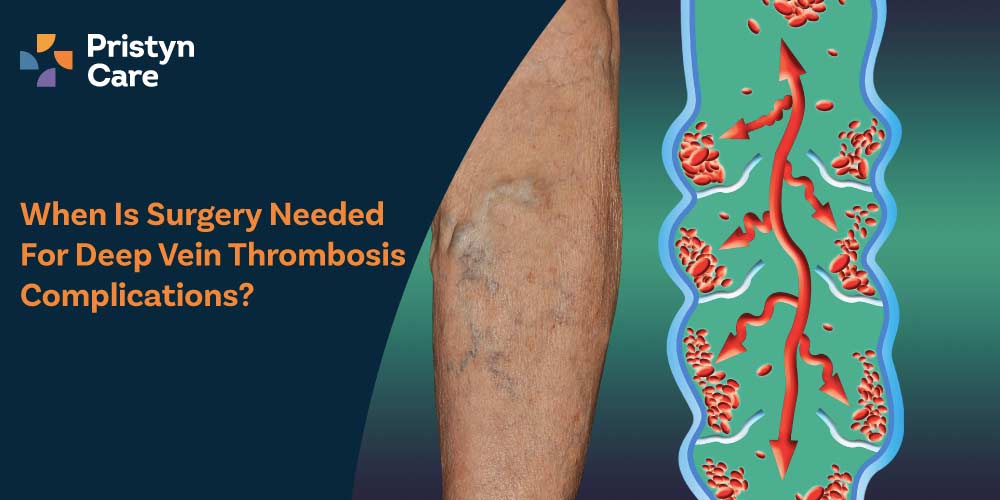
Deep Vein Thrombosis occurs when:
- A clot forms in a deep vein
- Blood flow is partially or completely blocked
- There is a risk of the clot traveling to the lungs (pulmonary embolism)
No Cost EMI, Hassle-free Insurance Approval
When Is DVT Usually Managed Without Surgery?
- Most patients are treated with blood thinners (anticoagulants)
- Compression stockings and lifestyle changes
- Regular monitoring
When Is Surgery or Intervention Needed?
1. Large or Extensive Clots
- Clots involving major veins (e.g., thigh or pelvis)
- High risk of complications
- May require clot removal procedures
2. Failure of Medical Treatment
- Symptoms persist despite anticoagulants
- Clot continues to grow
3. Severe Symptoms (Phlegmasia)
- Extreme swelling and pain
- Reduced blood supply to the limb
- Risk of tissue damage or limb loss
4. Risk of Pulmonary Embolism
- Clot likely to travel to the lungs
- May require placement of an IVC filter
5. Recurrent DVT
- Repeated clot formation
- Underlying structural or clotting issues
6. Post-Thrombotic Syndrome
- Chronic pain, swelling, and skin changes
- In selected cases, intervention may be needed
Types of Surgical/Interventional Procedures
1. Thrombectomy
- Surgical removal of the clot
2. Catheter-Directed Thrombolysis
- Medication delivered directly to dissolve the clot
3. Inferior Vena Cava (IVC) Filter
- Prevents clots from reaching the lungs
4. Venous Stenting
- Keeps narrowed veins open
 Doctor available
4.5/5

14+ Years Experience Overall
%20(4)%20(1).jpg/1682933853454_ban-Icon.png) Doctor available
Doctor available
5.0/5
27+ Years Experience Overall
Doctor available
4.5/5
27+ Years Experience Overall
Doctor available
4.6/5
24+ Years Experience Overall
Doctor available
4.5/5
24+ Years Experience Overall
Doctor available
4.7/5
23+ Years Experience Overall
Doctor available
5.0/5
22+ Years Experience Overall
Doctor available
4.5/5
21+ Years Experience Overall
Doctor available
4.5/5
19+ Years Experience Overall
Doctor available
4.9/5
19+ Years Experience Overall
Doctor available.jpeg/1777541472938_ban-Icon.png)
4.8/5
17+ Years Experience Overall
Doctor available
5.0/5
17+ Years Experience Overall
Doctor available
5.0/5
16+ Years Experience Overall
Doctor available
4.5/5
16+ Years Experience Overall
Doctor available
4.5/5
15+ Years Experience Overall
Doctor available
4.9/5
15+ Years Experience Overall
Doctor available
4.5/5
13+ Years Experience Overall
Doctor available
4.8/5
12+ Years Experience Overall
Doctor available
4.5/5
12+ Years Experience Overall
Doctor available
4.5/5
11+ Years Experience Overall
Doctor available
4.5/5
20+ Years Experience Overall
Doctor available
4.5/5
18+ Years Experience Overall
Doctor available
4.8/5
18+ Years Experience Overall
Doctor available
4.5/5
15+ Years Experience Overall
Doctor available
4.6/5
14+ Years Experience Overall
Doctor available
MBBS, MD - Radio Diagnosis/Radiology, DNB - Radio Diagnosis
₹1200₹600Consultation Fee
5.0/5
14+ Years Experience Overall
Doctor available
4.5/5
14+ Years Experience Overall
Doctor available
4.5/5
14+ Years Experience Overall
Doctor available
4.9/5
13+ Years Experience Overall
Doctor available
4.5/5
13+ Years Experience Overall
Doctor available.jpg/1716976963722_ban-Icon.png)
5.0/5
12+ Years Experience Overall
Doctor available
4.5/5
11+ Years Experience Overall
Doctor available
4.5/5
7+ Years Experience Overall
Benefits of Surgical Intervention
- Rapid symptom relief
- Reduced risk of complications
- Preservation of limb function
- Prevention of pulmonary embolism
Risks and Considerations
- Bleeding
- Infection
- Recurrence of clot
- Procedure-related complications

Free Deep Vein Thrombosis Surgery Cost Calculator

Our care coordinator will call you shortly.
When Should You Seek Immediate Medical Care?
- Sudden leg swelling or pain
- Skin discoloration
- Shortness of breath (possible pulmonary embolism)
- Chest pain


Final Thoughts
Surgery for DVT is not routine but becomes necessary in severe or complicated cases where medications are insufficient or complications arise. Early recognition and timely intervention are critical to prevent serious outcomes.
If you experience symptoms of DVT or worsening complications, prompt medical evaluation can be life-saving and ensure appropriate treatment.
Social share:





- Deep Vein Thrombosis Treatment in Hyderabad
- Deep Vein Thrombosis Treatment in Ghaziabad
- Deep Vein Thrombosis Treatment in Bangalore
- Deep Vein Thrombosis Treatment in Pune
- Deep Vein Thrombosis Treatment in Mumbai
- Deep Vein Thrombosis Treatment in Chennai
- Deep Vein Thrombosis Treatment in Noida
- Deep Vein Thrombosis Treatment in Delhi
- Deep Vein Thrombosis Treatment in Faridabad
- Deep Vein Thrombosis Cost in Hyderabad
- Deep Vein Thrombosis Cost in Ghaziabad
- Deep Vein Thrombosis Cost in Bangalore
- Deep Vein Thrombosis Cost in Pune
- Deep Vein Thrombosis Cost in Mumbai
- Deep Vein Thrombosis Cost in Chennai
- Deep Vein Thrombosis Cost in Noida
- Deep Vein Thrombosis Cost in Delhi
- Deep Vein Thrombosis Cost in Faridabad
Related Calculators

Dedicated Support at Every Step!
Our Doctors are available 24 hours a day, 7 days a week to help you!
Related Calculators
Get In Touch with our expert doctors !
- please enter 10 digit number.


