


 Views: 273
Abdominal Pain After Eating: What It Means
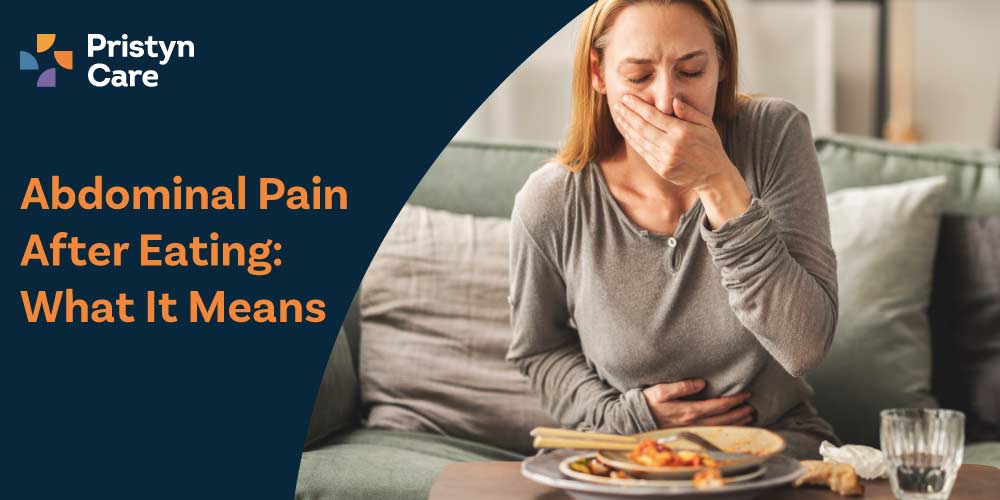
Abdominal pain after eating is a common concern that can range from mild discomfort to a sign of an underlying digestive disorder. While occasional pain may not be serious, repeated or severe pain after meals should not be ignored.


Social share:


Dedicated Support at Every Step!
Our Doctors are available 24 hours a day, 7 days a week to help you!

Understanding what abdominal pain after eating means can help identify the cause and guide appropriate treatment.
Table of Contents
Why Does Abdominal Pain Occur After Eating?
After you eat, your digestive system becomes active:
- Stomach produces acid
- Intestines contract to move food
- Enzymes are released for digestion
If something disrupts this process, it can lead to pain or discomfort.
No Cost EMI, Hassle-free Insurance Approval
Common Causes of Abdominal Pain After Eating
1. Indigestion (Dyspepsia)
- Feeling of fullness or bloating
- Burning sensation in the upper abdomen
- Often triggered by overeating or spicy foods
2. Gas and Bloating
- Caused by swallowing air or certain foods
- Leads to cramping and discomfort
- Usually temporary
3. Food Intolerance
- Difficulty digesting certain foods (e.g., lactose)
- Symptoms include pain, bloating, and diarrhea
4. Acid Reflux (GERD)
- Stomach acid flows back into the esophagus
- Causes burning pain (heartburn) after meals
5. Gallstones
- Pain in the upper right abdomen, especially after fatty meals
- May radiate to the back or shoulder
6. Peptic Ulcer
- Sores in the stomach lining
- Pain may worsen or improve after eating
7. Irritable Bowel Syndrome (IBS)
- Abdominal pain associated with bowel changes
- Often triggered by certain foods
8. Pancreatitis
- Inflammation of the pancreas
- Severe pain after eating, especially fatty foods
When Should You Be Concerned?
Seek medical attention if:
- Pain is severe or persistent
- It occurs after every meal
- You experience weight loss
- There is vomiting or blood in stool
- You have fever or difficulty swallowing
How Is It Diagnosed?
Doctors may use:
- Medical history and physical examination
- Blood tests
- Ultrasound or endoscopy
- Food intolerance tests
How to Manage Mild Symptoms
1. Modify Your Diet
- Avoid spicy, oily, and processed foods
- Eat smaller, frequent meals
- Identify and avoid trigger foods
2. Eat Slowly
- Chew food properly
- Avoid overeating
3. Stay Upright After Meals
- Avoid lying down immediately after eating
4. Stay Hydrated
- Drink adequate water throughout the day
When Should You See a Doctor?
Consult a doctor if:
- Symptoms persist for more than a few days
- Pain interferes with daily activities
- Over-the-counter remedies do not help


Final Thoughts
Abdominal pain after eating can be due to simple issues like indigestion or more serious conditions like gallstones or ulcers. The key is to observe patterns—what you eat, when the pain occurs, and associated symptoms.
If the discomfort is frequent or severe, do not ignore it. Early diagnosis and appropriate treatment can help prevent complications and improve your digestive health.
Author:



Related Calculators

Dedicated Support at Every Step!
Our Doctors are available 24 hours a day, 7 days a week to help you!


