


 Views: 12
Advanced Surgical Options for Uterine Prolapse
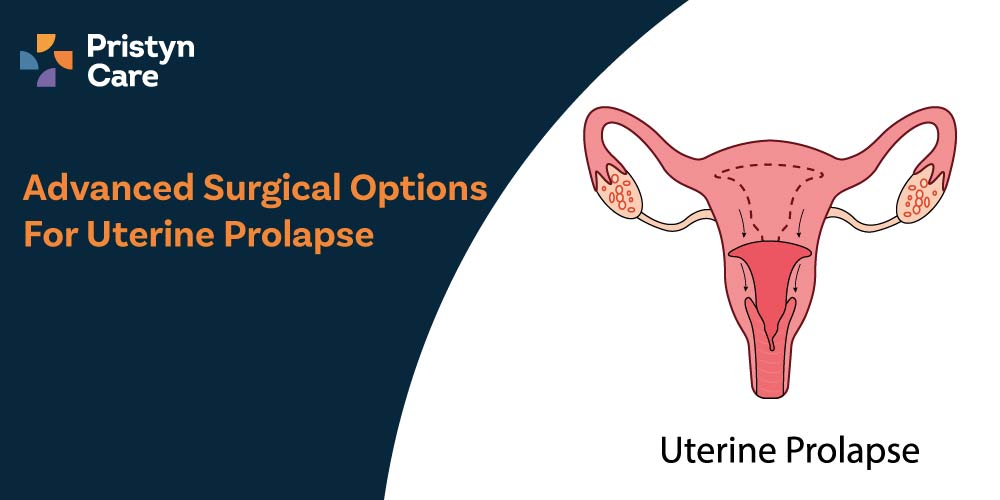
Uterine prolapse occurs when the uterus descends from its normal position into the vaginal canal due to weakened pelvic floor muscles and ligaments. While mild cases can be managed conservatively, advanced or symptomatic uterine prolapse often requires surgical correction.

Social share:


Dedicated Support at Every Step!
Our Doctors are available 24 hours a day, 7 days a week to help you!

Understanding the advanced surgical options for uterine prolapse helps patients choose the most effective and long-lasting treatment.
Table of Contents
What Is Uterine Prolapse?
Uterine prolapse happens when:
- Pelvic support structures weaken
- The uterus shifts downward
- In severe cases, it may protrude outside the vaginal opening
No Cost EMI, Hassle-free Insurance Approval
When Is Surgery Recommended?
Surgical treatment is advised when:
- Symptoms are severe or affecting daily life
- Conservative treatments (like pelvic exercises or pessary) fail
- There is significant prolapse (moderate to severe stages)
Goals of Surgical Treatment
- Restore normal anatomy
- Relieve symptoms (pressure, discomfort, urinary issues)
- Improve quality of life
- Preserve or remove the uterus based on patient preference
Advanced Surgical Options
1. Vaginal Hysterectomy with Pelvic Floor Repair
- Removal of the uterus through the vagina
- Repair of surrounding support structures
- Common and effective for women not planning future pregnancies
2. Uterus-Preserving Surgery (Uterine Suspension)
Sacrohysteropexy (Laparoscopic or Robotic)
- Uterus is lifted and attached to a ligament or sacrum using mesh
- Maintains fertility and uterine structure
Uterosacral Ligament Suspension
- Uses existing ligaments to support the uterus
3. Laparoscopic Sacrocolpopexy
- Typically done after hysterectomy
- Vaginal vault is supported using mesh
- Provides long-term stability
4. Colpocleisis (For Select Patients)
- Vaginal canal is closed partially or completely
- Suitable for older women not sexually active
Role of Minimally Invasive Surgery
Laparoscopic and robotic techniques offer:
- Smaller incisions
- Less pain
- Faster recovery
- Better visualization for precise repair
Use of Mesh in Prolapse Surgery
- Provides additional support
- Reduces recurrence risk in selected cases
- Requires careful selection and expertise
How Surgeons Decide the Best Procedure
- Age and overall health
- Severity of prolapse
- Desire to preserve the uterus
- Sexual activity considerations
- Previous surgeries
Recovery After Surgery
- Hospital stay: 1–3 days
- Light activities: within 1–2 weeks
- Full recovery: 4–6 weeks
Risks and Complications
- Infection
- Bleeding
- Recurrence of prolapse
- Mesh-related complications (rare)
Benefits of Surgical Treatment
- Long-term symptom relief
- Improved bladder and bowel function
- Better quality of life
When Should You See a Doctor?
- Feeling of heaviness or bulge in the vagina
- Difficulty with urination or bowel movements
- Discomfort during daily activities


Final Thoughts
Advanced surgical options for uterine prolapse provide effective and long-lasting solutions, especially in moderate to severe cases. With modern minimally invasive techniques, patients can achieve better outcomes with faster recovery.
A personalized surgical plan, based on individual needs and preferences, ensures optimal results and improved quality of life.
Author:





Related Calculators

Dedicated Support at Every Step!
Our Doctors are available 24 hours a day, 7 days a week to help you!


