


 Views: 38
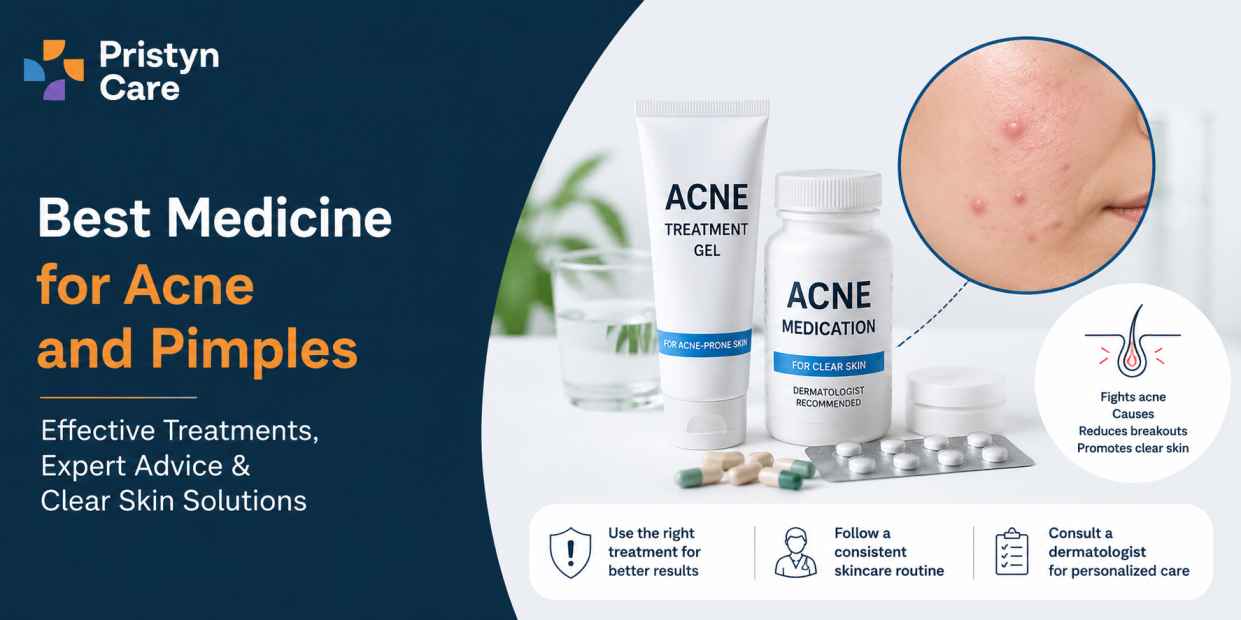
Best Medicine for Acne and Pimples: Do Medicines Really Work for All Types of Acne?


Dedicated Support at Every Step!
Our Doctors are available 24 hours a day, 7 days a week to help you!

The right treatment depends on the type and severity of acne, the cause, the location of breakouts, whether scarring is developing, and how the skin has responded to previous treatments. Dermatologists may use topical medicines, oral medicines, hormonal treatment, or procedures depending on the individual case.
If acne has become painful, persistent, recurrent, or is leaving scars, simply changing medicines repeatedly may not be enough. A dermatologist can determine whether you need medical treatment alone or whether procedures for acne scars or resistant acne should also be considered.
Table of Contents
What Type of Acne Do You Have?
Before choosing an acne medicine, it is important to understand what type of acne you have.
Common types include:
- Whiteheads: Small, closed clogged pores that appear as white or skin-coloured bumps.
- Blackheads: Open clogged pores that appear dark because of oxidation.
- Papules: Small, inflamed red bumps that may be tender.
- Pustules: Inflamed pimples containing pus.
- Nodules: Large, firm, painful inflammatory lesions that develop deeper in the skin.
- Cystic acne: Deep, painful acne lesions that can increase the risk of permanent acne scarring.
- Hormonal acne: Acne associated with hormonal fluctuations, often affecting the lower face, jawline, or chin in adults.
- Back acne: Acne affecting the back, sometimes referred to as "bacne."
- Scalp acne: Acne-like bumps affecting the scalp or hairline.
The treatment approach can vary significantly between mild comedonal acne and severe inflammatory or cystic acne.
No Cost EMI, Hassle-free Insurance Approval
Is There a Single Best Medicine for Acne?
No. There is no universal best medicine for acne and pimples.
Acne develops through several interacting factors, including clogged hair follicles, excess oil production, inflammation, and changes involving acne-associated microorganisms. Therefore, treatment is usually selected according to the type and severity of acne.
Depending on the condition, a dermatologist may recommend:
- Topical retinoids
- Benzoyl peroxide
- Topical antibiotics in appropriate combinations
- Oral antibiotics for selected inflammatory acne
- Hormonal treatments for appropriate patients
- Oral isotretinoin for severe acne
- Medicines or procedures for acne scars
- Other dermatologist-supervised treatments
The American Academy of Dermatology recommends several topical and systemic treatment options and emphasizes that treatment should be individualized rather than using a one-size-fits-all approach.
Best Medicines and Treatments Used for Acne
| Medicine/Treatment | What It May Help With | Important Consideration |
| Topical Retinoids | Clogged pores, blackheads, whiteheads and acne prevention | Can cause dryness and irritation; should be used according to medical advice |
| Benzoyl Peroxide | Inflammatory pimples and acne-causing bacteria | May cause dryness or irritation and can bleach fabrics |
| Topical Antibiotics | Inflammatory acne | Usually used as part of an appropriate combination rather than prolonged antibiotic monotherapy |
| Oral Antibiotics | Moderate to severe inflammatory acne | Prescription treatment should be used for an appropriate duration and under medical supervision |
| Hormonal Treatment | Acne associated with hormonal factors in suitable patients | Not appropriate for everyone and requires medical evaluation |
| Isotretinoin | Severe, nodular, cystic or treatment-resistant acne | Strong prescription medicine requiring careful medical supervision |
| Homeopathic Medicines | Marketed for acne and pimples | Evidence for homeopathy should not be assumed to be equivalent to established acne treatments |
| Ayurvedic Medicines | Traditionally used for various skin conditions | Products and evidence vary; persistent or severe acne should be medically evaluated |
| Acne Scar Procedures | Depressed or textured acne scars | Treatment depends on scar type and may involve procedures rather than medicines alone |
What Is the Best Medicine for Acne and Pimples?
For mild acne, a dermatologist may recommend topical medicines such as retinoids, benzoyl peroxide, or other appropriate topical combinations.
For moderate or severe inflammatory acne, treatment may include prescription medicines. Oral antibiotics can be used for selected patients, generally for the shortest appropriate duration and as part of a broader treatment plan.
For severe acne involving deep, painful nodules or cysts, isotretinoin may be considered when other treatments have not worked or when the acne has a high risk of scarring. Isotretinoin is a prescription medicine and should not be started without a dermatologist's evaluation and monitoring.
Therefore, searching for the "best medicine" is less useful than identifying the best treatment for your particular type of acne.
What Is the Best Acne Medicine Tablet?
People often search for acne medicine tablets or oral medicine for acne when creams and face washes do not provide adequate improvement.
Depending on the diagnosis, oral treatment may include:
- Oral antibiotics for selected inflammatory acne
- Hormonal treatment for appropriate patients
- Isotretinoin for severe acne
- Other prescription medicines based on the underlying cause
Oral medicines should not be selected solely on the basis of online recommendations. The dermatologist may consider your acne severity, age, medical history, other medicines, pregnancy potential where relevant, and risk of scarring before prescribing treatment.
In particular, isotretinoin is a powerful prescription treatment used for severe acne and requires appropriate medical supervision.
Is Homeopathic Medicine for Acne Effective?
Searches for homeopathic medicine for acne, best homeopathic medicine for acne, and homeopathic medicine for acne and pimples are common.
However, the fact that a product is labelled homeopathic does not mean that it is proven to permanently cure acne. Acne that is persistent, painful, cystic, or causing scars should not be allowed to progress while repeatedly trying different products without professional evaluation.
If you prefer complementary or alternative approaches, discuss them with your dermatologist, particularly if you are already taking prescription medicines.
What About Homeopathic Medicine for Acne Scars?
Acne scars are different from active pimples.
Once acne has damaged deeper layers of the skin, simply taking a tablet or applying a cream may not be enough to correct the resulting change in skin texture.
This is why people searching for homeopathic medicine for acne scars, best homeopathic medicine for acne scars, or medicine to remove acne scars should first identify the type of scar they have.
Acne scars may include:
- Ice-pick scars
- Boxcar scars
- Rolling scars
- Raised scars
- Post-inflammatory dark marks, which are pigmentation rather than true depressed scars
Different scar types respond differently to treatment. Dermatologists may recommend procedures such as microneedling, laser-based treatments, chemical peels, subcision, or other scar-specific treatments depending on the individual skin and scar pattern.
The goal is usually not to find a single "scar removal medicine", but to select the right treatment for the specific type of scar.
Can Medicine Remove Acne Scars?
Medicines can help prevent new acne and may improve certain pigmentation or discoloration left after acne.
However, established depressed acne scars are structural changes in the skin. They often require procedures to improve their appearance rather than relying only on tablets or creams.
This distinction is important for anyone searching for best medicine for acne scars or medicine to remove acne scars.
If scars have become a major concern, a dermatologist can assess the scar type and determine whether medical treatment, a procedure, or a combination approach is appropriate.
What Is the Best Treatment for Cystic Acne?
Cystic acne involves deep and painful inflammatory lesions and can leave permanent scars.
People often search for medicine for cystic acne because ordinary acne creams may not provide enough relief. Severe acne may require prescription treatment, and isotretinoin is one of the medicines dermatologists may consider for severe acne when appropriate.
Do not squeeze or repeatedly puncture cystic acne. This can increase inflammation and may contribute to scarring.
If painful cysts keep returning or acne is already leaving permanent marks, professional treatment should be considered rather than continuing to experiment with different over-the-counter medicines.
What Medicine Is Used for Hormonal Acne?
Hormonal fluctuations can contribute to acne, particularly in adults.
People commonly search for medicine for hormonal acne or homeopathic medicine for acne due to hormonal imbalance. However, treatment should focus on identifying the likely cause rather than simply taking a medicine labelled for hormonal acne.
For appropriate patients, dermatologists may consider hormonal treatments such as certain combined oral contraceptives or spironolactone. These treatments are not suitable for everyone and require medical assessment.
If acne suddenly develops in adulthood, becomes persistent, or is associated with other hormonal symptoms, a dermatologist may recommend further evaluation.
What Medicine Is Used for Acne on the Face?
For acne on the face, treatment depends on whether the problem consists mainly of blackheads and whiteheads, inflammatory pimples, cysts, or a combination.
Common dermatologist-directed approaches may include:
- Topical retinoids
- Benzoyl peroxide
- Appropriate topical combinations
- Prescription oral medicines for moderate or severe acne
- Hormonal treatment in selected patients
- Isotretinoin for appropriate severe cases
A skincare routine can support treatment, but persistent acne may need more than cleansing and cosmetic products.
What About Back Acne and Body Acne?
Acne is not limited to the face.
Back acne and body acne can occur because the hair follicles in these areas can also become clogged and inflamed. Sweat, friction, tight clothing, and certain products may contribute to breakouts in some people.
Treatment may involve topical medicines, prescription medicines, or other approaches depending on the severity.
If back acne consists of numerous painful lesions, keeps returning, or leaves scars, it is worth seeing a dermatologist rather than relying only on body washes.
Is There a Medicine for Scalp Acne?
People may use the term scalp acne to describe small pimples or bumps around the scalp and hairline.
However, not every scalp bump is acne. Folliculitis, irritation, dandruff-associated conditions, and other skin disorders can produce similar-looking bumps.
Therefore, repeatedly applying acne medicines to the scalp without knowing the cause may not solve the problem.
A dermatologist can determine whether the condition is actually acne and recommend appropriate treatment.
Does Ayurvedic Medicine for Acne Work?
Ayurvedic medicine for acne and Ayurvedic medicine for acne and pimples are frequently searched by people looking for natural treatment options.
Some people may prefer traditional or herbal products, but "natural" does not automatically mean effective or risk-free. The ingredients, quality, evidence, and interactions of different products can vary.
If acne is severe, painful, persistent, or causing scars, delaying evidence-based treatment in favour of prolonged self-medication may allow scarring to progress.
You can discuss any Ayurvedic or herbal products you are considering with a qualified healthcare professional before using them alongside prescription medicines.
What Is SBL Homeopathy Medicine for Acne?
SBL homeopathy medicine for acne is another product-related search associated with acne treatment.
People considering such products should understand that the appropriate treatment depends on the actual diagnosis and severity of acne. A product name alone cannot determine whether it is suitable for an individual.
If you have recurrent inflammatory acne, cystic acne, or acne that is leaving scars, a dermatologist should assess the condition rather than relying solely on self-selected homeopathic products.
Why Does Acne Medicine Sometimes Fail?
Acne treatment can appear to "fail" for several reasons.
1. The wrong type of acne is being treated
A treatment that works for clogged pores may not be sufficient for deep inflammatory or cystic acne.
2. Treatment is stopped too quickly
Acne generally does not disappear overnight. Dermatological treatment often requires consistent use over time before its full benefit can be assessed.
3. The acne is severe
Severe acne may require prescription oral treatment rather than only creams or skincare products.
4. Hormonal factors are involved
Hormonal acne may continue to recur unless the underlying contributors are addressed.
5. Scarring has already developed
Medicines can help control active acne, but established acne scars may require procedures designed specifically for scar improvement.
6. The diagnosis is incorrect
Not every facial or body bump is acne. Conditions such as folliculitis and other skin disorders can look similar.
When Should You See a Dermatologist for Acne?
You should consider seeing a dermatologist if:
- Acne keeps returning despite treatment.
- You have large, painful pimples or cysts.
- Acne is spreading to the back, chest, or other areas.
- You are developing acne scars.
- Dark marks remain after pimples heal.
- Acne is affecting your confidence or daily life.
- Over-the-counter medicines are not providing adequate improvement.
- You are considering oral acne medicines.
- You are thinking about taking isotretinoin.
- You are unsure whether the bumps are actually acne.
Early treatment can be particularly important when severe acne is at risk of causing permanent scars.
Can Acne Scars Be Treated With Procedures?
Yes. Once active acne is under control, a dermatologist can assess whether procedures may help improve residual acne scars.
Depending on the type and depth of scars, treatment options may include:
- Microneedling
- Laser-based scar treatment
- Chemical peels
- Subcision
- Scar-specific procedures
- Combination treatment
There is no single best procedure for every acne scar. A rolling scar may require a different approach from an ice-pick or boxcar scar.
This is why patients with persistent acne scars should undergo a professional skin assessment before choosing a procedure.
When Does Acne Need Advanced Treatment?
Consider professional treatment when:
- Medicines are not controlling the acne adequately.
- Acne is severe or cystic.
- Breakouts are repeatedly leaving scars.
- Acne is widespread on the face and body.
- Acne continues despite an appropriate treatment course.
- You have significant acne scars that affect the appearance or texture of your skin.
Severe acne can be difficult to control and may require a dermatologist-led treatment plan rather than continuously changing over-the-counter medicines.

Free Allergy Surgery Cost Calculator

Our care coordinator will call you shortly.
Medicines vs Procedures for Acne: Which Is Better?
| Factor | Medicines | Procedures |
| Main purpose | Control active acne and prevent new breakouts | Improve selected scars or treat specific skin concerns |
| Best suited for | Mild to severe acne depending on the medicine | Selected acne scars and treatment-resistant concerns |
| Examples | Retinoids, benzoyl peroxide, antibiotics, hormonal treatment, isotretinoin | Microneedling, laser treatments, chemical peels, subcision |
| Treatment selection | Depends on acne type and severity | Depends largely on scar type and skin condition |
| Can it prevent new acne? | Yes, depending on treatment | Usually not the primary purpose |
| Can it improve established scars? | Limited for structural scars | Often more appropriate for structural acne scars |
The two approaches are not necessarily alternatives. Some patients may first need medical treatment to control active acne and later undergo procedures to address residual scarring.
Can Acne Be Permanently Cured With Medicine?
Acne can often be controlled very effectively, but there is no single medicine that guarantees permanent freedom from acne for everyone.
Some people experience long-term clearance after appropriate treatment, while others may have recurrent acne and require maintenance treatment.
For severe acne, isotretinoin can result in prolonged clearance for some patients, although recurrence can still occur.
The most important goal is to control active acne early and reduce the risk of permanent scarring.
How Can You Prevent Acne From Getting Worse?
Along with prescribed treatment, several habits can help:
- Avoid repeatedly touching or squeezing pimples.
- Use gentle, non-comedogenic skincare products where appropriate.
- Remove makeup before sleeping.
- Avoid excessively scrubbing acne-prone skin.
- Follow the treatment schedule recommended by your dermatologist.
- Give treatment sufficient time to work instead of changing products every few days.
- Keep sweat-prone areas clean after exercise.
- Avoid self-prescribing oral antibiotics or isotretinoin.
A consistent treatment routine is generally more useful than repeatedly switching between products.
Choose the Right Acne Treatment Instead of Searching for One “Best Medicine”
There is no single best medicine for acne that works for everyone.
Mild acne may respond to topical treatment, while moderate or severe acne may require prescription medicines. Hormonal acne may need a different approach, and severe cystic acne may require specialist treatment to reduce the risk of permanent scarring.
Similarly, medicine for acne scars is not the same as treatment for active acne. Once depressed or textured scars develop, procedures such as microneedling, laser treatment, subcision, chemical peels, or combination approaches may be considered depending on the scar type.
If your acne is persistent, painful, cystic, or already causing scars, getting the right diagnosis is more important than repeatedly trying different medicines.
At Pristyn Care, patients can consult dermatology specialists for evaluation of acne, persistent pimples, cystic acne, hormonal acne, acne scars, and other skin concerns. Based on the condition, the doctor can recommend appropriate medical treatment or discuss procedural options where suitable.
Frequently Asked Questions
What is the best medicine for acne and pimples?
There is no single best medicine for everyone. Treatment depends on the type and severity of acne and may include topical medicines, oral medicines, hormonal treatment, or isotretinoin for selected severe cases.
Which medicine is best for cystic acne?
Cystic acne often requires prescription treatment. Isotretinoin may be considered for severe acne when appropriate, but it requires medical supervision.
Is there a medicine to remove acne scars?
Medicines may help prevent new acne and improve some pigmentation, but established depressed acne scars often require procedures such as microneedling, laser treatment, subcision, or other scar-specific treatments.
What is the best homeopathic medicine for acne?
There is no medically established single homeopathic medicine that can be considered the best treatment for acne. Persistent or severe acne should be evaluated by a dermatologist.
Can acne scars be permanently removed?
Acne scar treatment aims to significantly improve the appearance and texture of scars. The extent of improvement depends on the type, depth, duration, and individual characteristics of the scars.
When should I stop treating acne at home?
If acne is painful, cystic, widespread, repeatedly returning, not improving with an appropriate treatment approach, or beginning to leave scars, consult a dermatologist rather than continuing prolonged self-treatment.


Disclaimer
This article is intended for informational purposes only and should not be considered a substitute for professional medical advice, diagnosis, or treatment. Acne medicines, particularly prescription oral medicines and isotretinoin, should be used only under appropriate medical supervision. If you have severe, painful, persistent, or scarring acne, consult a qualified dermatologist for an individual evaluation.
Social share:





Related Calculators

Dedicated Support at Every Step!
Our Doctors are available 24 hours a day, 7 days a week to help you!
Related Calculators
Get In Touch with our expert doctors !
- please enter 10 digit number.


