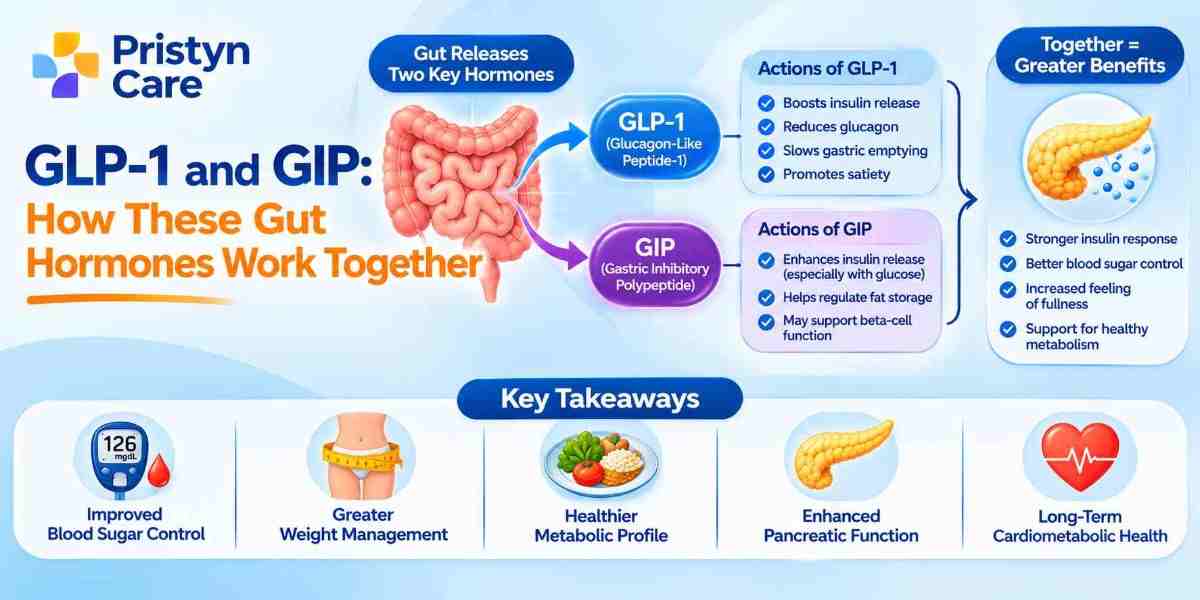
When you eat, your digestive system does more than break down food and absorb nutrients. It also releases hormones that help regulate blood sugar, insulin production, appetite and digestion.
Two important hormones involved in this process are GLP-1 (glucagon-like peptide-1) and GIP (glucose-dependent insulinotropic polypeptide). Both belong to a group of hormones called incretins. They help the body respond to rising blood sugar levels after meals.
Although GLP-1 and GIP share some functions, they also affect the body differently. Understanding how they work together has helped researchers develop newer treatments for type 2 diabetes and weight management.
Table of Contents
What Are GLP-1 and GIP?
GLP-1 and GIP are natural gut hormones released when food enters the digestive system. They signal the pancreas and other organs to help the body manage nutrients after eating.
These hormones are called incretins because they increase insulin release in response to food.
What Is GLP-1?
GLP-1 is mainly produced by specialised intestinal cells called L-cells. Its release increases after eating, particularly when nutrients enter the digestive tract.
GLP-1 helps regulate blood sugar by:
- Stimulating insulin release when blood glucose is elevated.
- Reducing glucagon secretion when blood sugar is high.
- Slowing stomach emptying, which can reduce post-meal glucose spikes.
- Increasing feelings of fullness and reducing appetite.
These effects make GLP-1 important for blood sugar management and appetite regulation.
What Is GIP?
GIP is produced by specialised cells called K-cells, mainly found in the upper part of the small intestine. Like GLP-1, it is released after food intake.
Its main function is to stimulate insulin release when blood sugar levels are elevated.
GIP also:
- Helps the pancreas respond to rising blood glucose.
- Influences fat storage and energy metabolism.
- Acts on receptors in the brain and other tissues.
- Can influence glucagon release depending on blood sugar levels.
Together, GLP-1 and GIP help the body manage nutrients absorbed after a meal.
How Do GLP-1 and GIP Work Together?
GLP-1 and GIP work through different receptors, but both help the pancreas release insulin when blood sugar levels rise.
The process generally works as follows:
- Food enters the digestive system: Nutrients stimulate the release of GLP-1 and GIP from intestinal cells.
- The pancreas receives signals: Both hormones activate their respective receptors on pancreatic beta cells.
- Insulin release increases: The pancreas releases more insulin in response to elevated blood glucose.
- Blood sugar comes under control: Insulin helps glucose move from the bloodstream into the body’s cells for energy.
GLP-1 also helps reduce glucagon secretion and slow stomach emptying. GIP has distinct effects on fat metabolism and other tissues.
This complementary activity is one reason researchers have explored medicines that activate both hormone pathways.
GLP-1 vs GIP: What Are the Differences?
Both hormones support insulin release, but their effects are not identical.
| Feature | GLP-1 | GIP |
| Full form | Glucagon-like peptide-1 | Glucose-dependent insulinotropic polypeptide |
| Produced by | Intestinal L-cells | Intestinal K-cells |
| Main role | Supports insulin release and blood sugar regulation | Supports glucose-dependent insulin release |
| Glucagon effect | Generally reduces glucagon when blood sugar is high | May influence glucagon secretion depending on glucose levels |
| Stomach emptying | Slows stomach emptying | Has little direct effect |
| Appetite | Helps reduce appetite and increase fullness | May influence appetite through brain pathways |
| Fat metabolism | Influences energy balance | Plays a role in fat storage and metabolism |
The main distinction is that GLP-1 has a more direct role in slowing stomach emptying and reducing appetite, while GIP has different effects on insulin regulation and fat metabolism.
What Happens to GLP-1 and GIP in Type 2 Diabetes?
In people with type 2 diabetes, the incretin response may become less effective. This can affect how the body releases insulin after meals.
One important difference is how the body responds to GLP-1 and GIP. GLP-1 can still stimulate insulin release in people with type 2 diabetes, although the response may vary. The insulin-producing cells may become less responsive to GIP, particularly when blood sugar levels remain high over time.
This reduced incretin effect contributes to difficulty controlling blood sugar after meals.
Researchers have used this understanding to develop medicines that activate incretin receptors and improve glucose regulation.
What Are GLP-1 and GIP Agonists?
GLP-1 and GIP agonists are medicines designed to activate the receptors of these hormones.
Some medicines target only the GLP-1 receptor, while others activate both GLP-1 and GIP receptors. The latter are known as dual GIP/GLP-1 receptor agonists.
A well-known example is tirzepatide, which activates both hormone receptors. Depending on the product and country, it is approved for indications such as type 2 diabetes and chronic weight management.
How Does a Dual GIP/GLP-1 Agonist Work?
A dual agonist activates both GLP-1 and GIP receptors. Its effects include:
- Increasing insulin release when blood sugar is elevated.
- Helping regulate glucagon secretion.
- Reducing appetite and food intake.
- Improving blood sugar control.
- Supporting weight loss.
By targeting two hormone pathways, these medicines can provide complementary metabolic effects. However, the exact contribution of each pathway to the overall benefits is still being studied.
GLP-1 Medicines vs Dual GIP/GLP-1 Medicines
Both treatment types help manage blood sugar, but they target different hormone pathways.
| Feature | GLP-1 receptor agonists | Dual GIP/GLP-1 receptor agonists |
| Hormone pathways targeted | GLP-1 | GLP-1 and GIP |
| Main action | Activates GLP-1 receptors | Activates both GLP-1 and GIP receptors |
| Blood sugar control | Improves glucose regulation | Improves glucose regulation through two pathways |
| Appetite effect | Reduces appetite | Reduces appetite |
| Weight management | Can support weight loss | Can provide substantial weight-loss benefits |
| Example | Semaglutide, liraglutide | Tirzepatide |
These medicines are not interchangeable. Their effectiveness, approved uses, dosing and potential side effects vary. A doctor can help determine which treatment is appropriate.
What About GLP-1, GIP and Glucagon Together?
GLP-1 and GIP are incretin hormones, but glucagon is another hormone that plays an important role in blood sugar regulation.
Glucagon is produced by alpha cells in the pancreas. Its main function is to signal the liver to release stored glucose when blood sugar levels fall.
The three hormones have different roles:
- GLP-1: Supports insulin release and reduces glucagon secretion when blood sugar is high.
- GIP: Supports insulin release and may influence glucagon secretion depending on glucose levels.
- Glucagon: Helps increase blood sugar by stimulating glucose release from the liver.
Researchers are also studying medicines that target GLP-1, GIP and glucagon receptors together. These are called triple agonists.
The aim is to combine effects on blood sugar regulation, appetite and energy metabolism. However, these treatments remain under investigation, and their safety and effectiveness must be established through clinical research.
Possible Side Effects of Dual GIP/GLP-1 Medicines
Medicines that activate both GLP-1 and GIP receptors can cause side effects, particularly when treatment begins or the dose increases.
Common side effects include:
- Nausea and vomiting.
- Diarrhoea or constipation.
- Abdominal discomfort.
- Reduced appetite.
- Indigestion.
Some people may also experience more serious complications, such as gallbladder problems or pancreatitis.
These medicines may not be suitable for everyone. A doctor should review your medical history, existing medicines and individual risk factors before prescribing treatment.
Frequently Asked Questions
- Are GLP-1 and GIP the same hormone?
No. Both are incretin hormones released by the intestine after eating, but they are produced by different intestinal cells and have different effects on the body.
- Why are GLP-1 and GIP important for blood sugar control?
Both hormones stimulate insulin release when blood sugar levels are elevated. This helps the body manage the rise in glucose that occurs after meals.
- What is a GIP and GLP-1 agonist?
It is a medicine that activates both GIP and GLP-1 receptors. Tirzepatide is an example used for approved diabetes and weight-management indications.
- Does GIP help with weight loss?
GIP influences energy metabolism and may affect appetite through its receptors in the brain. Its role in weight management is complex, and its effects are being studied alongside GLP-1 activity.
- What is the difference between GLP-1, GIP and glucagon?
GLP-1 and GIP help stimulate insulin release after meals. Glucagon mainly helps increase blood sugar by signalling the liver to release stored glucose. All three hormones contribute to metabolic regulation.
Conclusion
GLP-1 and GIP are two important gut hormones that help the body manage blood sugar after eating. Although both stimulate insulin release, they have different effects on appetite, digestion, glucagon secretion and energy metabolism.
Understanding how these hormones work together has helped researchers develop dual GIP/GLP-1 medicines, offering another treatment option for people with type 2 diabetes and certain weight-management needs.
These treatments are not suitable for everyone. If you are considering a GLP-1 or dual GIP/GLP-1 medicine, consult a qualified doctor to understand its benefits, risks and suitability.