


 Views: 60
Laparoscopic Surgery for Intestinal Obstruction – What to Expect
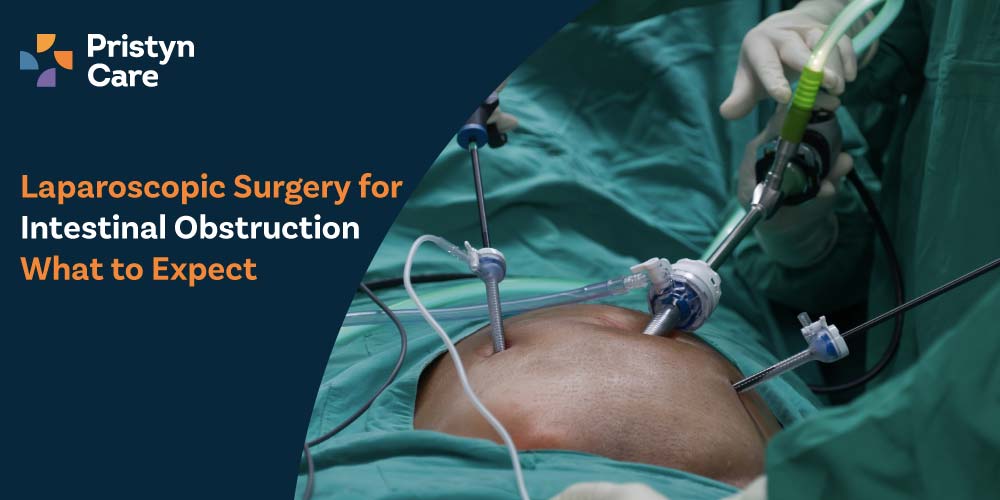
Intestinal obstruction is a serious condition where the normal movement of food, fluids, or gas through the intestines is blocked. When conservative treatment is not effective, laparoscopic surgery may be required to relieve the obstruction safely.



Dedicated Support at Every Step!
Our Doctors are available 24 hours a day, 7 days a week to help you!

Understanding what to expect from laparoscopic surgery for intestinal obstruction helps patients prepare for the procedure and recovery.
Table of Contents
What Is Intestinal Obstruction?
Intestinal obstruction occurs when:
- There is a blockage in the small or large intestine
- Movement of intestinal contents is partially or completely stopped
Common Causes
- Adhesions (scar tissue from previous surgeries)
- Hernias
- Tumors or growths
- Twisting of the intestine (volvulus)
No Cost EMI, Hassle-free Insurance Approval
When Is Surgery Needed?
Surgery is recommended when:
- Complete obstruction is present
- Symptoms are severe or worsening
- There is risk of intestinal damage or perforation
- Non-surgical treatment fails
What Is Laparoscopic Surgery for Intestinal Obstruction?
This is a minimally invasive procedure where:
- Small incisions are made in the abdomen
- A camera (laparoscope) is used to visualize the blockage
- Specialized instruments are used to remove or bypass the obstruction
Step-by-Step: What Happens During Surgery
1. Pre-Surgical Preparation
- Blood tests and imaging (CT scan, X-ray)
- Fluid correction and stabilization
- Fasting before surgery
2. Anesthesia
- General anesthesia is given
- Patient remains asleep during the procedure
3. Small Incisions
- 2–4 small cuts are made in the abdomen
4. Identification of Blockage
- Camera helps locate the obstruction
- Cause of blockage is identified
5. Treatment of Obstruction
- Adhesions are released
- Hernia is repaired
- Blocked segment may be removed if necessary
6. Closure
- Incisions are closed with sutures
 Doctor available
4.5/5

31+ Years Experience Overall
Doctor available
5.0/5
30+ Years Experience Overall
Doctor available
4.5/5
25+ Years Experience Overall
Doctor available
4.5/5
23+ Years Experience Overall
Doctor available
4.5/5
17+ Years Experience Overall
Doctor available
4.5/5
15+ Years Experience Overall
Doctor available
4.5/5
15+ Years Experience Overall
Doctor available
4.5/5
14+ Years Experience Overall
Doctor available
5.0/5
13+ Years Experience Overall
Doctor available
4.5/5
13+ Years Experience Overall
Doctor available
5.0/5
12+ Years Experience Overall
Doctor available
5.0/5
27+ Years Experience Overall
Doctor available
4.5/5
27+ Years Experience Overall
Doctor available.jpg/1681796287744_ban-Icon.png)
4.9/5
25+ Years Experience Overall
Doctor available
4.7/5
24+ Years Experience Overall
Doctor available
MBBS, DNB( General Surgery) MNAMS, FMAS, FIAGES, FAIS
₹1200₹600Consultation Fee
4.5/5
24+ Years Experience Overall
Doctor available
4.5/5
23+ Years Experience Overall
Doctor available
4.5/5
23+ Years Experience Overall
Doctor available
4.5/5
23+ Years Experience Overall
Doctor available
4.7/5
22+ Years Experience Overall
Doctor available
4.9/5
22+ Years Experience Overall
Doctor available
4.5/5
21+ Years Experience Overall
Doctor available
4.5/5
21+ Years Experience Overall
Doctor available
4.5/5
20+ Years Experience Overall
Doctor available
4.9/5
20+ Years Experience Overall
Doctor available
5.0/5
20+ Years Experience Overall
Doctor available
4.5/5
19+ Years Experience Overall
Doctor available
4.5/5
19+ Years Experience Overall
Doctor available
4.8/5
17+ Years Experience Overall
Doctor available
5.0/5
17+ Years Experience Overall
Doctor available
4.9/5
17+ Years Experience Overall
Doctor available
5.0/5
17+ Years Experience Overall
Doctor available
5.0/5
17+ Years Experience Overall
Doctor available
5.0/5
16+ Years Experience Overall
Doctor available
5.0/5
16+ Years Experience Overall
Doctor available
4.5/5
16+ Years Experience Overall
Doctor available
4.5/5
16+ Years Experience Overall
Doctor available
4.6/5
15+ Years Experience Overall
Doctor available
4.5/5
15+ Years Experience Overall
Doctor available
5.0/5
15+ Years Experience Overall
Doctor available
4.8/5
14+ Years Experience Overall
Doctor available
4.5/5
14+ Years Experience Overall
Doctor available
5.0/5
13+ Years Experience Overall
Doctor available
4.5/5
13+ Years Experience Overall
Doctor available
4.7/5
13+ Years Experience Overall
Doctor available
4.5/5
13+ Years Experience Overall
Doctor available
5.0/5
13+ Years Experience Overall
Doctor available
5.0/5
13+ Years Experience Overall
Doctor available
4.5/5
12+ Years Experience Overall
Doctor available
4.8/5
12+ Years Experience Overall
Doctor available
4.8/5
12+ Years Experience Overall
Doctor available
MBBS, M.S.(Gen. Surgery), DNB (Gen. Surgery), F.MAS, D.MAS, FAIS, FALS, FIAGES
₹1200₹600Consultation Fee
4.5/5
12+ Years Experience Overall
Doctor available.jpg/1681109066874_ban-Icon.png)
4.9/5
12+ Years Experience Overall
Doctor available
4.5/5
12+ Years Experience Overall
Doctor available
4.5/5
12+ Years Experience Overall
Doctor available.jpg/1685814002647_ban-Icon.png)
4.9/5
11+ Years Experience Overall
Doctor available
4.5/5
11+ Years Experience Overall
Doctor available
4.5/5
11+ Years Experience Overall
Doctor available
5.0/5
11+ Years Experience Overall
Doctor available
5.0/5
10+ Years Experience Overall
Doctor available
4.5/5
10+ Years Experience Overall
Doctor available
5.0/5
9+ Years Experience Overall
Doctor available
4.5/5
8+ Years Experience Overall
Doctor available
4.5/5
8+ Years Experience Overall
Doctor available
4.5/5
27+ Years Experience Overall
Doctor available
4.5/5
27+ Years Experience Overall
Doctor available
4.5/5
26+ Years Experience Overall
Doctor available
4.5/5
26+ Years Experience Overall
Doctor available
5.0/5
24+ Years Experience Overall
 Doctor available
4.5/5
21+ Years Experience Overall
Doctor available
4.5/5
21+ Years Experience Overall
Doctor available
5.0/5
21+ Years Experience Overall
Doctor available
4.5/5
20+ Years Experience Overall
Doctor available
4.5/5
20+ Years Experience Overall
Doctor available
4.5/5
19+ Years Experience Overall
Doctor available
4.5/5
18+ Years Experience Overall
Doctor available
4.8/5
18+ Years Experience Overall
Doctor available
4.5/5
15+ Years Experience Overall
Doctor available
Dr. Penmetsa Bhanu Prakash Raju
MBBS, MS-General Surgery, FNB-Minimal Acess Surgery
FREEConsultation Fee
4.5/5
15+ Years Experience Overall
Doctor available
5.0/5
14+ Years Experience Overall
Doctor available
4.5/5
14+ Years Experience Overall
Doctor available
4.9/5
14+ Years Experience Overall
Doctor available
4.5/5
14+ Years Experience Overall
Doctor available
4.5/5
14+ Years Experience Overall
Doctor available
5.0/5
13+ Years Experience Overall
Doctor available
4.7/5
13+ Years Experience Overall
Doctor available%20(1).png/1742636902782_ban-Icon.png)
4.5/5
13+ Years Experience Overall
Doctor available
4.5/5
13+ Years Experience Overall
Doctor available
4.5/5
12+ Years Experience Overall
Doctor available
4.5/5
11+ Years Experience Overall
Doctor available
4.5/5
10+ Years Experience Overall
Doctor available
4.5/5
10+ Years Experience Overall
Doctor available
4.5/5
9+ Years Experience Overall
Doctor available
4.5/5
7+ Years Experience Overall
Benefits of Laparoscopic Approach
- Smaller incisions and minimal scarring
- Less postoperative pain
- Faster recovery
- Reduced hospital stay
- Lower risk of infection
Recovery Timeline
First Few Days
- Hospital stay for monitoring
- Gradual return of bowel function
- Pain managed with medications
1 Week
- Light activities can be resumed
- Diet gradually normalized
2–4 Weeks
- Significant improvement
- Return to routine activities
4–6 Weeks
- Full recovery in most cases
Possible Risks and Complications
- Infection
- Bleeding
- Injury to surrounding organs
- Need to convert to open surgery in complex cases

Free Hernia Surgery Cost Calculator

Our care coordinator will call you shortly.
When Should You Seek Immediate Care?
- Severe abdominal pain
- Persistent vomiting
- Abdominal swelling
- Inability to pass stool or gas
These may indicate intestinal obstruction requiring urgent attention.


Final Thoughts
Laparoscopic surgery for intestinal obstruction is a safe and effective option in selected patients, offering faster recovery and fewer complications compared to open surgery.
Early diagnosis and timely surgical intervention are essential to prevent serious complications and ensure a smooth recovery.
Social share:






Related Calculators

Dedicated Support at Every Step!
Our Doctors are available 24 hours a day, 7 days a week to help you!
Related Calculators
Get In Touch with our expert doctors !
- please enter 10 digit number.


