


 Views: 1
When Is Laser Treatment Recommended for Anal Fistula Patients?
An anal fistula is a painful and often recurring condition that can significantly affect a person’s quality of life. While traditional surgical methods have been used for years, modern advancements like laser treatment have transformed the way anal fistulas are managed.

Social share:


Dedicated Support at Every Step!
Our Doctors are available 24 hours a day, 7 days a week to help you!

Table of Contents
Understanding the Right Time for Advanced, Minimally Invasive Care
No Cost EMI, Hassle-free Insurance Approval
What Is an Anal Fistula?
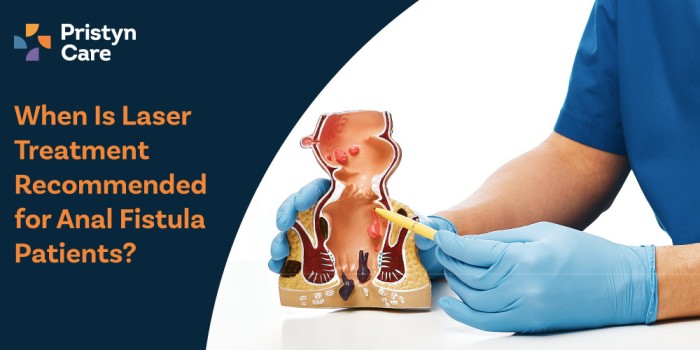
An anal fistula is an abnormal tunnel that forms between the inner lining of the anal canal and the skin near the anus. It usually develops after an untreated or poorly healed anal abscess.
Common Symptoms Include:
- Persistent pain around the anus
- Swelling and redness
- Discharge of pus or blood
- Recurrent infections
- Pain during sitting or bowel movements
Ignoring these symptoms can lead to chronic infection and complications, making timely treatment essential.
Traditional Treatment vs Laser Treatment
Conventional Surgery
Traditional fistula treatments include:
- Fistulotomy
- Seton placement
- Open surgery
While effective, these methods may involve:
- Longer recovery time
- Post-operative pain
- Risk of incontinence (in complex cases)
Laser Treatment (FiLaC Technique)
Laser treatment for anal fistula is a minimally invasive procedure where a radial laser fiber is used to close the fistula tract from within.
Key Advantages:
- Minimal pain
- Faster recovery
- Lower risk of complications
- No major cuts or stitches
When Is Laser Treatment Recommended for Anal Fistula?
Laser treatment is not always the first-line option for every patient. Doctors recommend it based on specific clinical factors.
1. When the Fistula Is Simple or Moderately Complex
Laser treatment works best for:
- Low fistulas
- Straight or single-tract fistulas
It may also be suitable for some moderately complex cases where the tract is well-defined.
2. When Preserving Sphincter Function Is Critical
The anal sphincter muscles control bowel movements. Any damage can lead to incontinence.
Laser treatment is recommended when:
- The fistula passes near sphincter muscles
- There is a high risk of muscle damage with open surgery
Why?
Laser techniques are sphincter-saving, meaning they minimize the risk of bowel control issues.
3. For Patients Seeking Minimally Invasive Treatment
Laser treatment is ideal for patients who:
- Prefer less pain and quicker recovery
- Want to avoid hospitalization
- Need faster return to daily activities
Most patients can resume normal routine within a few days.
4. In Recurrent Anal Fistula Cases
If a fistula has returned after previous surgery, laser treatment may be a better option because:
- It targets the tract precisely
- Reduces the risk of further recurrence
- Avoids repeated tissue damage
5. When There Is No Active Infection or Abscess
Laser treatment is usually recommended after:
- Proper drainage of any abscess
- Control of active infection
Performing laser therapy in the absence of infection improves success rates.
6. For Patients Fit for Day-Care Procedures
Laser treatment is typically done as a day-care procedure, meaning:
- No long hospital stay
- Discharge within 24 hours
It is recommended for patients who are medically stable and fit for short procedures.
When Laser Treatment May NOT Be Recommended
Laser may not be suitable in certain situations, such as:
- Highly complex or multiple branching fistulas
- Presence of untreated abscess
- Severe inflammatory conditions like Crohn’s disease (case-dependent)
In such cases, doctors may suggest alternative or combined surgical approaches.
Diagnosis Before Laser Treatment
Before recommending laser treatment, doctors perform detailed evaluation:
Common Diagnostic Methods:
- Clinical examination
- MRI fistulogram
- Ultrasound imaging
These tests help determine:
- Type of fistula
- Number of tracts
- Involvement of sphincter muscles
Accurate diagnosis is crucial for selecting the right treatment.
What Happens During Laser Treatment?
The procedure is simple and patient-friendly:
- The fistula tract is cleaned
- A laser probe is inserted into the tract
- Laser energy is delivered to close the tract internally
- The opening heals naturally over time
Duration: 20–40 minutes
Anesthesia: Usually local or regional
Recovery After Laser Treatment
One of the biggest advantages of laser treatment is quick recovery.
What to Expect:
- Mild discomfort for a few days
- Minimal wound care
- Early return to work (within 2–5 days)
Post-Treatment Care:
- Maintain hygiene
- Follow prescribed medications
- Avoid constipation
- Attend follow-up visits
Success Rate of Laser Treatment
Laser treatment has shown promising outcomes when used in the right patients.
Factors Affecting Success:
- Type and complexity of fistula
- Surgeon’s expertise
- Post-operative care
In suitable cases, success rates can be high with lower recurrence compared to traditional methods.
Benefits of Choosing Laser Treatment
- Minimally invasive
- No large surgical wounds
- Reduced pain and bleeding
- Faster healing
- Lower risk of complications
- Better patient comfort
When Should You Consult a Doctor?
Do not delay medical consultation if you notice:
- Persistent anal pain
- Pus discharge
- Recurrent swelling or infection
Early diagnosis increases the chances of successful treatment with advanced options like laser.
Final Thoughts
Laser treatment has revolutionized the management of anal fistula by offering a safer, less painful, and faster alternative to conventional surgery. However, it is not suitable for every case.
The decision to opt for laser treatment depends on multiple factors including the type of fistula, severity, and patient condition.
Consulting an experienced specialist is the best way to determine whether laser treatment is the right choice for you.


FAQs
1. Is laser treatment for anal fistula painful?
No, it is minimally invasive and causes significantly less pain compared to traditional surgery.
2. How long does recovery take?
Most patients recover within a few days and resume normal activities quickly.
3. Can fistula come back after laser treatment?
There is a lower recurrence rate, but it depends on the complexity of the fistula and proper care.
4. Is hospitalization required?
Usually not. It is a day-care procedure.
5. Is laser treatment safe?
Yes, it is considered safe when performed by experienced surgeons on suitable candidates.
Author:




Related Calculators

Dedicated Support at Every Step!
Our Doctors are available 24 hours a day, 7 days a week to help you!


