


 Views: 1
Common Treatment Options for Prostate Enlargement
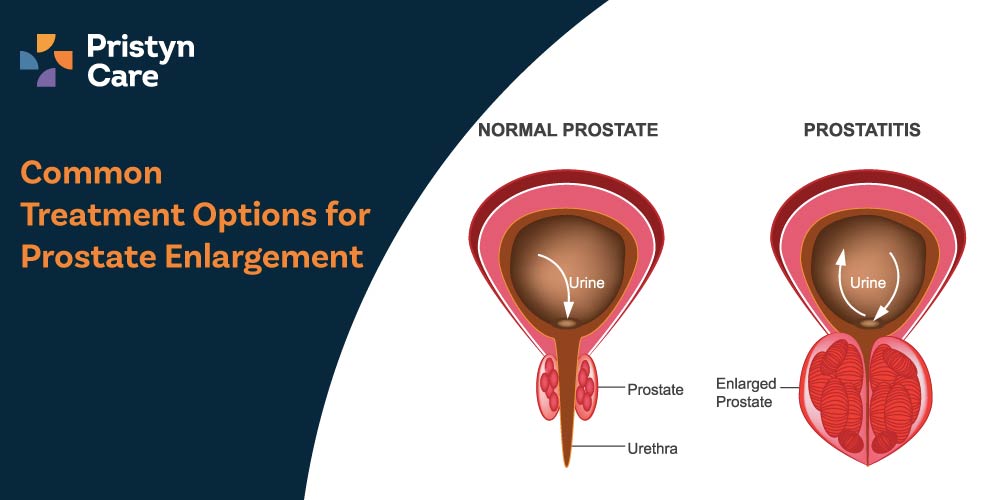
Prostate enlargement, medically known as Benign Prostatic Hyperplasia (BPH), is a common condition affecting men as they age. While it is non-cancerous, it can significantly impact quality of life by causing urinary difficulties and discomfort.

Social share:


Dedicated Support at Every Step!
Our Doctors are available 24 hours a day, 7 days a week to help you!

The good news is that multiple treatment options are available—from simple lifestyle changes to advanced minimally invasive procedures. The right treatment depends on the severity of symptoms, prostate size, age, and overall health.
Table of Contents
What Is Prostate Enlargement (BPH)?
BPH is the gradual increase in the size of the prostate gland, which can press against the urethra and interfere with normal urine flow.
Common Symptoms:
- Frequent urination, especially at night
- Weak urine stream
- Difficulty starting urination
- Dribbling at the end of urination
- Feeling of incomplete bladder emptying
No Cost EMI, Hassle-free Insurance Approval
When Is Treatment Required?
Not all cases of prostate enlargement need immediate treatment. Doctors usually recommend treatment if:
- Symptoms are moderate to severe
- Daily activities or sleep are affected
- There are complications like urinary retention or infections
- Medications are not effective
1. Lifestyle Changes and Home Management
For mild symptoms, lifestyle modifications can provide significant relief.
Recommended Changes:
- Limit caffeine and alcohol intake
- Reduce fluid intake before bedtime
- Practice timed urination (bladder training)
- Maintain a healthy weight
- Stay physically active
Benefits:
- Non-invasive
- No side effects
- Can delay or avoid the need for medication
2. Medications for Prostate Enlargement
Medications are usually the first line of treatment for moderate symptoms.
a. Alpha-Blockers
These medications relax the muscles of the prostate and bladder neck, improving urine flow.
Examples:
- Tamsulosin
- Alfuzosin
Benefits:
- Quick symptom relief
- Improved urinary flow
b. 5-Alpha Reductase Inhibitors
These drugs help shrink the prostate by reducing hormone levels responsible for growth.
Examples:
- Finasteride
- Dutasteride
Benefits:
- Reduce prostate size over time
- Lower risk of complications
c. Combination Therapy
In some cases, doctors prescribe both types of medications together for better results.
d. Antibiotics
If symptoms are due to prostatitis (infection), antibiotics may be prescribed.
3. Minimally Invasive Procedures
When medications are ineffective or not tolerated, minimally invasive procedures are recommended.
a. Laser Therapy
Laser procedures remove or shrink excess prostate tissue.
Types include:
- Holmium Laser Enucleation (HoLEP)
- Photoselective Vaporization (PVP)
Benefits:
- Minimal bleeding
- Faster recovery
- Short hospital stay
b. Transurethral Microwave Therapy (TUMT)
Uses microwave energy to destroy prostate tissue.
c. Transurethral Needle Ablation (TUNA)
Uses radiofrequency energy to reduce prostate size.
d. UroLift System
A newer technique that lifts and holds enlarged prostate tissue away from the urethra without cutting.
Benefits:
- Preserves sexual function
- Quick recovery
4. Surgical Treatment Options
Surgery is recommended for severe cases or when complications arise.
a. Transurethral Resection of the Prostate (TURP)
The most common surgical procedure for BPH.
Procedure:
- Excess prostate tissue is removed through the urethra
Benefits:
- Significant symptom relief
- Long-term effectiveness
b. Open or Robotic Prostate Surgery
Used for very large prostates.
c. Laser Enucleation Surgery
A more advanced alternative to TURP with reduced bleeding and faster recovery.
5. Emerging and Advanced Treatments
Modern advancements are improving patient outcomes with less invasive approaches.
Examples:
- Water vapor therapy (Rezūm)
- Prostatic artery embolization (PAE)
- Robotic-assisted procedures
These options are gaining popularity due to shorter recovery times and fewer complications.
 Doctor available

5.0/5

25 Years Experience Overall
 (4) (1).jpg/1682933853454_ban-Icon.png) Doctor available
Doctor available
5.0/5
32 Years Experience Overall
Doctor available.jpeg/1733376627597_ban-Icon.png)
4.5/5
29 Years Experience Overall
Doctor available
4.5/5
18 Years Experience Overall
Doctor available
5.0/5
17 Years Experience Overall
Doctor available
4.8/5
16 Years Experience Overall
Doctor available
5.0/5
15 Years Experience Overall
Doctor available
5.0/5
14 Years Experience Overall
Doctor available.jpg/1741267965873_ban-Icon.png)
4.5/5
13 Years Experience Overall
Doctor available
4.5/5
11 Years Experience Overall
Doctor available
4.8/5
5 Years Experience Overall
Choosing the Right Treatment
The best treatment depends on:
- Severity of symptoms
- Prostate size
- Age and overall health
- Presence of complications
- Patient preference
A urologist will recommend the most suitable option after proper evaluation.
Possible Complications If Left Untreated
Ignoring prostate enlargement can lead to:
- Acute urinary retention
- Bladder stones
- Recurrent infections
- Kidney damage
Timely treatment can prevent these complications.
Recovery and Long-Term Outlook
- Lifestyle changes and medications provide gradual relief
- Minimally invasive procedures offer quick recovery (few days to weeks)
- Surgical treatments provide long-term results
Most patients experience significant improvement in urinary symptoms after treatment.
Tips for Managing Symptoms
- Avoid delaying urination
- Limit evening fluid intake
- Maintain a healthy diet
- Exercise regularly
- Follow prescribed medications consistently
Common Myths About BPH Treatment
Myth 1: Surgery is always required
Reality: Most cases are managed without surgery.
Myth 2: Medications cure BPH permanently
Reality: They control symptoms but may not eliminate the condition.
Myth 3: Treatment affects sexual function in all cases
Reality: Many modern treatments preserve sexual health.
Conclusion
Prostate enlargement is a common but manageable condition. With a wide range of treatment options available—from lifestyle changes to advanced surgical procedures—patients can find effective solutions tailored to their needs.
Early diagnosis and timely treatment not only relieve symptoms but also prevent complications and improve overall quality of life. If you are experiencing urinary issues, consult a urologist to determine the best course of action.


FAQs
1. Can prostate enlargement be cured permanently?
It can be effectively managed, and surgical options may provide long-term relief.
2. Is surgery necessary for all patients?
No, only severe or complicated cases require surgery.
3. How long does recovery take after prostate surgery?
It varies but usually ranges from a few days to a few weeks.
4. Are medications safe for long-term use?
Yes, under medical supervision.
5. Which treatment is best for BPH?
It depends on individual factors; a urologist can guide the best option.
Author:





Related Calculators

Dedicated Support at Every Step!
Our Doctors are available 24 hours a day, 7 days a week to help you!


