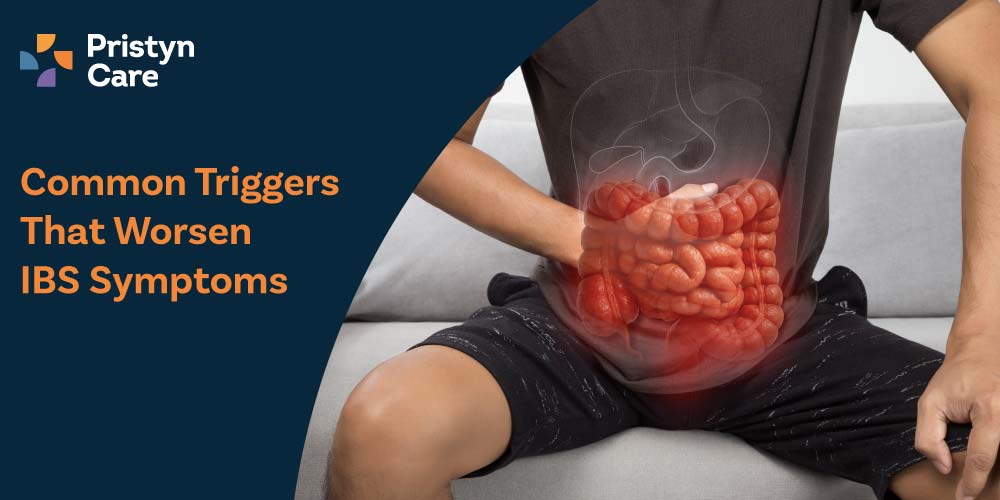
Irritable Bowel Syndrome symptoms can vary from person to person, but many individuals notice that certain factors consistently trigger or worsen their condition. Identifying and managing these triggers is key to controlling symptoms and improving daily comfort.
MEDICALLY REVIEWED CONTENT
✍WRITTEN & 🔍REVIEWED BY
Pristyn Care Team
Healthcare Expert
Updated On - April 25, 2026
Book Your FREE Consultation Now
Dedicated Support at Every Step!
Our Doctors are available 24 hours a day, 7 days a week to help you!
Understanding the common triggers that worsen IBS symptoms helps in better long-term management.
Table of Contents
Why Do IBS Symptoms Get Triggered?
IBS is influenced by:
Gut sensitivity
Digestive motility changes
Brain-gut interaction
This makes the intestines more reactive to certain foods, stress, and lifestyle factors.
We take care of you
Get Your Surgery Done with No Cost EMI, Hassle-free Insurance Approval
Common Triggers That Worsen IBS Symptoms
1. Certain Foods
High-Fat Foods
Fried foods, fast food
Can slow digestion and increase discomfort
Spicy Foods
May irritate the digestive tract
Can trigger pain or diarrhea
Dairy Products
Milk, cheese (especially in lactose intolerance)
Can cause bloating and gas
Gas-Producing Foods
Beans, cabbage, onions
Lead to bloating and discomfort
Caffeine
Coffee, tea, energy drinks
Stimulates bowel activity and may cause diarrhea
2. Stress and Anxiety
Emotional stress is one of the strongest triggers
Can worsen abdominal pain and bowel irregularities
Affects gut-brain communication
3. Irregular Eating Habits
Skipping meals
Overeating
Eating too quickly
These disrupt normal digestion.
4. Hormonal Changes
Many women experience symptom flare-ups during menstruation
Hormonal fluctuations affect gut function
5. Lack of Physical Activity
Sedentary lifestyle slows digestion
May worsen constipation and bloating
6. Poor Sleep
Inadequate or irregular sleep
Impacts overall gut health and symptom control
7. Certain Medications
Antibiotics
Some painkillers
These can alter gut bacteria or irritate the digestive system.
8. Alcohol and Smoking
Alcohol irritates the gut lining
Smoking may worsen digestive symptoms
How to Identify Your Personal Triggers
Maintain a food and symptom diary
Track what you eat and how you feel
Identify patterns over time
Tips to Manage IBS Triggers
Eat small, regular meals
Follow a balanced, low-trigger diet
Practice stress management techniques
Stay physically active
Maintain good sleep hygiene
Free IBS Surgery Cost Calculator
Fill details to get actual cost
Enter a valid name
Enter a valid 10-digit mobile number
Please enter a valid city
×
Your Form has been submitted successfully.
Our care coordinator will call you shortly.
When Should You See a Doctor?
Symptoms are severe or worsening
Difficulty managing triggers
New or unusual symptoms (e.g., weight loss, blood in stool)
Pristyncare App
Download app to get more features for free
Check Symptoms
Cowin Certificate
Period Tracker
Dental Aligners
Final Thoughts
IBS symptoms are often influenced by multiple triggers, including diet, stress, and lifestyle habits. Identifying and avoiding these triggers can significantly improve symptom control and quality of life.
A personalized approach, guided by awareness and medical advice, is the most effective way to manage IBS in the long term.



 Views: 31