


 Views: 272
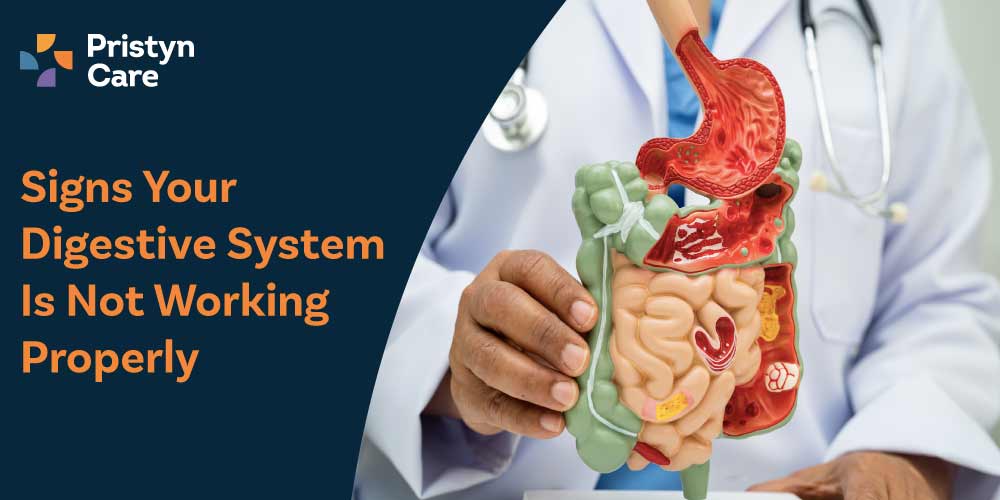
Signs Your Digestive System Is Not Working Properly




Dedicated Support at Every Step!
Our Doctors are available 24 hours a day, 7 days a week to help you!

Digestive problems are common, but persistent symptoms should not be ignored. Recognizing early warning signs may help identify underlying conditions before complications develop.
Table of Contents
Why Digestive Health Matters
The digestive system includes:
- Mouth
- Esophagus
- Stomach
- Small intestine
- Large intestine
- Rectum and anus
- Liver
- Gallbladder
- Pancreas
Each organ plays a role in digestion, nutrient absorption, and waste elimination. Problems affecting any part of this system may lead to noticeable symptoms.
No Cost EMI, Hassle-free Insurance Approval
Common Signs Your Digestive System Is Not Working Properly
1. Persistent Bloating
Occasional bloating after heavy meals is common, but frequent or severe bloating may indicate digestive dysfunction.
Possible Causes of Bloating
- Gas buildup
- Food intolerances
- Constipation
- Irritable bowel syndrome (IBS)
- Poor digestion
- Gut bacteria imbalance
Persistent bloating accompanied by pain or bowel changes may require medical evaluation.
2. Constipation
Constipation refers to infrequent or difficult bowel movements.
Symptoms of Constipation
- Hard stools
- Straining during bowel movements
- Feeling of incomplete evacuation
- Abdominal discomfort
- Fewer bowel movements than usual
Chronic constipation may result from poor diet, dehydration, low fiber intake, medication side effects, or digestive disorders.
3. Frequent Diarrhea
Repeated loose or watery stools may suggest digestive irritation or disease.
Causes of Chronic Diarrhea
- Infections
- Food intolerance
- Irritable bowel syndrome
- Inflammatory bowel disease
- Malabsorption disorders
- Medication side effects
Persistent diarrhea can lead to dehydration and nutrient deficiencies.
4. Acid Reflux or Heartburn
Heartburn occurs when stomach acid flows back into the esophagus.
Common Symptoms
- Burning sensation in the chest
- Sour taste in the mouth
- Difficulty swallowing
- Chronic cough
- Regurgitation after meals
Frequent acid reflux may indicate gastroesophageal reflux disease (GERD).
5. Abdominal Pain or Cramping
Ongoing abdominal pain should not be ignored.
Possible Digestive Causes
- Gastritis
- Ulcers
- IBS
- Gallstones
- Infections
- Inflammatory bowel disease
- Appendicitis
The location and severity of pain often provide clues about the underlying condition.
6. Excessive Gas
Passing gas occasionally is normal, but excessive gas may indicate digestive imbalance.
Causes of Excessive Gas
- Swallowing air
- Food intolerance
- Poor digestion
- Gut bacteria imbalance
- Constipation
Gas accompanied by pain, bloating, or diarrhea may require further evaluation.
7. Changes in Bowel Habits
Sudden or persistent changes in bowel habits may signal digestive issues.
Examples Include
- Increased bowel frequency
- Chronic constipation
- Narrow stools
- Urgency to pass stool
- Alternating constipation and diarrhea
Long-term bowel changes should be medically assessed.
8. Blood in Stool
Blood in stool is never considered normal.
Possible Causes
- Hemorrhoids
- Anal fissures
- Inflammatory bowel disease
- Colon polyps
- Colorectal cancer
- Intestinal infections
Blood may appear bright red, dark red, or black depending on the bleeding source.
9. Unexplained Weight Loss
Unexpected weight loss may occur when the digestive system cannot properly absorb nutrients.
Possible Causes
- Malabsorption disorders
- Chronic inflammation
- Digestive cancers
- Hyperthyroidism
- Severe gastrointestinal disease
Persistent unexplained weight loss requires medical attention.
10. Nausea and Vomiting
Frequent nausea or vomiting may indicate digestive dysfunction.
Common Causes
- Food poisoning
- Gastritis
- Acid reflux
- Gallbladder disease
- Intestinal blockage
- Stomach infections
Persistent vomiting can lead to dehydration and electrolyte imbalance.
 Doctor available
4.5/5

31+ Years Experience Overall
Doctor available
5.0/5
30+ Years Experience Overall
Doctor available
4.5/5
25+ Years Experience Overall
Doctor available
4.5/5
23+ Years Experience Overall
Doctor available
4.5/5
17+ Years Experience Overall
Doctor available
4.5/5
15+ Years Experience Overall
Doctor available
4.5/5
15+ Years Experience Overall
Doctor available
4.5/5
14+ Years Experience Overall
Doctor available
5.0/5
13+ Years Experience Overall
Doctor available
4.5/5
13+ Years Experience Overall
Doctor available
5.0/5
12+ Years Experience Overall
Doctor available
5.0/5
27+ Years Experience Overall
Doctor available
4.5/5
27+ Years Experience Overall
Doctor available.jpg/1681796287744_ban-Icon.png)
4.9/5
25+ Years Experience Overall
Doctor available
4.6/5
24+ Years Experience Overall
Doctor available
4.5/5
24+ Years Experience Overall
Doctor available
MBBS, DNB( General Surgery) MNAMS, FMAS, FIAGES, FAIS
₹1200₹600Consultation Fee
4.5/5
24+ Years Experience Overall
Doctor available
4.7/5
23+ Years Experience Overall
Doctor available
4.5/5
23+ Years Experience Overall
Doctor available
4.5/5
23+ Years Experience Overall
Doctor available
4.7/5
22+ Years Experience Overall
Doctor available
5.0/5
22+ Years Experience Overall
Doctor available
4.5/5
21+ Years Experience Overall
Doctor available
4.5/5
21+ Years Experience Overall
Doctor available
4.7/5
20+ Years Experience Overall
Doctor available
4.5/5
20+ Years Experience Overall
Doctor available
5.0/5
20+ Years Experience Overall
Doctor available
4.9/5
20+ Years Experience Overall
Doctor available
MBBS, DNB-General Surgery, FMAS, FCLS, FLHS, FICS, FIAGES, MCLS, MNAMS,
FREEConsultation Fee
5.0/5
19+ Years Experience Overall
Doctor available
4.5/5
19+ Years Experience Overall
Doctor available
4.8/5
17+ Years Experience Overall
Doctor available
5.0/5
17+ Years Experience Overall
Doctor available
4.9/5
17+ Years Experience Overall
Doctor available
5.0/5
17+ Years Experience Overall
Doctor available
5.0/5
17+ Years Experience Overall
Doctor available
5.0/5
16+ Years Experience Overall
Doctor available
4.5/5
16+ Years Experience Overall
Doctor available
4.8/5
16+ Years Experience Overall
Doctor available
5.0/5
16+ Years Experience Overall
Doctor available
4.5/5
16+ Years Experience Overall
Doctor available
4.6/5
15+ Years Experience Overall
Doctor available
4.9/5
15+ Years Experience Overall
Doctor available
4.5/5
15+ Years Experience Overall
Doctor available
4.5/5
15+ Years Experience Overall
Doctor available
4.9/5
14+ Years Experience Overall
Doctor available.jpg/1679651251511_ban-Icon.png)
5.0/5
14+ Years Experience Overall
Doctor available
4.5/5
14+ Years Experience Overall
Doctor available
5.0/5
13+ Years Experience Overall
Doctor available
4.6/5
13+ Years Experience Overall
Doctor available
4.5/5
13+ Years Experience Overall
Doctor available
4.5/5
13+ Years Experience Overall
Doctor available
5.0/5
13+ Years Experience Overall
Doctor available
5.0/5
13+ Years Experience Overall
Doctor available
4.5/5
12+ Years Experience Overall
Doctor available
4.8/5
12+ Years Experience Overall
Doctor available
4.8/5
12+ Years Experience Overall
Doctor available
MBBS, M.S.(Gen. Surgery), DNB (Gen. Surgery), F.MAS, D.MAS, FAIS, FALS, FIAGES
₹1200₹600Consultation Fee
4.5/5
12+ Years Experience Overall
Doctor available.jpg/1681109066874_ban-Icon.png)
4.9/5
12+ Years Experience Overall
Doctor available
4.5/5
12+ Years Experience Overall
Doctor available
4.5/5
12+ Years Experience Overall
Doctor available
4.5/5
12+ Years Experience Overall
Doctor available.jpg/1685814002647_ban-Icon.png)
4.9/5
11+ Years Experience Overall
Doctor available
4.5/5
11+ Years Experience Overall
Doctor available
4.5/5
11+ Years Experience Overall
Doctor available
5.0/5
11+ Years Experience Overall
Doctor available
4.5/5
10+ Years Experience Overall
Doctor available
5.0/5
10+ Years Experience Overall
Doctor available
4.5/5
9+ Years Experience Overall
Doctor available
4.5/5
8+ Years Experience Overall
Doctor available
4.5/5
8+ Years Experience Overall
Doctor available
4.5/5
27+ Years Experience Overall
Doctor available
4.5/5
27+ Years Experience Overall
Doctor available
4.5/5
26+ Years Experience Overall
Doctor available
4.5/5
26+ Years Experience Overall
Doctor available
5.0/5
24+ Years Experience Overall
 Doctor available
4.5/5
21+ Years Experience Overall
Doctor available
4.5/5
21+ Years Experience Overall
Doctor available
5.0/5
21+ Years Experience Overall
Doctor available
4.5/5
20+ Years Experience Overall
Doctor available
4.5/5
20+ Years Experience Overall
Doctor available
4.5/5
19+ Years Experience Overall
Doctor available
4.5/5
18+ Years Experience Overall
Doctor available
4.9/5
18+ Years Experience Overall
Doctor available
4.5/5
15+ Years Experience Overall
Doctor available
Dr. Penmetsa Bhanu Prakash Raju
MBBS, MS-General Surgery, FNB-Minimal Acess Surgery
₹1200₹600Consultation Fee
4.5/5
15+ Years Experience Overall
Doctor available
4.9/5
14+ Years Experience Overall
Doctor available
4.5/5
14+ Years Experience Overall
Doctor available
4.5/5
14+ Years Experience Overall
Doctor available
4.5/5
14+ Years Experience Overall
Doctor available
5.0/5
14+ Years Experience Overall
Doctor available%20(1).png/1742636902782_ban-Icon.png)
4.5/5
13+ Years Experience Overall
Doctor available
5.0/5
13+ Years Experience Overall
Doctor available
4.9/5
13+ Years Experience Overall
Doctor available
4.5/5
13+ Years Experience Overall
Doctor available
4.5/5
12+ Years Experience Overall
Doctor available
4.5/5
11+ Years Experience Overall
Doctor available
4.5/5
10+ Years Experience Overall
Doctor available
4.5/5
10+ Years Experience Overall
Doctor available
4.5/5
9+ Years Experience Overall
Doctor available
4.5/5
7+ Years Experience Overall
11. Fatigue and Low Energy
Digestive problems may interfere with nutrient absorption, leading to fatigue.
Nutrient Deficiencies Linked to Digestive Problems
- Iron deficiency
- Vitamin B12 deficiency
- Folate deficiency
- Protein malabsorption
Chronic digestive disorders may contribute to weakness and low energy levels.
12. Food Intolerance Symptoms
Difficulty digesting certain foods may signal digestive imbalance.
Common Symptoms
- Bloating after meals
- Gas
- Diarrhea
- Stomach cramps
- Nausea
Lactose intolerance and gluten sensitivity are common examples.
13. Persistent Bad Breath
Digestive issues can sometimes contribute to chronic bad breath.
Possible Digestive Causes
- Acid reflux
- Poor digestion
- Stomach infections
- Gum disease associated with digestive changes
If oral hygiene is adequate but bad breath persists, digestive evaluation may help.
14. Difficulty Swallowing
Trouble swallowing food or liquids may indicate problems involving the esophagus.
Possible Causes
- Acid reflux damage
- Esophageal narrowing
- Inflammation
- Neurological disorders
Difficulty swallowing should always be medically evaluated.
15. Feeling Full Quickly
Feeling full after eating small amounts may indicate digestive dysfunction.
Possible Causes
- Delayed stomach emptying
- Gastric inflammation
- Ulcers
- Digestive motility disorders
Persistent early fullness may affect nutrition and weight.
How Lifestyle Habits Affect Digestive Health
Several daily habits strongly influence digestive function.
Poor Diet
Low-fiber and highly processed foods may contribute to:
- Constipation
- Acid reflux
- Poor gut health
- Irregular digestion
Lack of Exercise
Physical inactivity can slow digestion and bowel movement.
Dehydration
Insufficient water intake may worsen constipation and digestive discomfort.
Stress
Stress affects the gut-brain connection and may worsen digestive symptoms such as bloating, IBS, and acid reflux.
Poor Sleep
Sleep disturbances may affect hormone balance and digestive function.
Signs That Require Immediate Medical Attention
Seek urgent medical care if digestive symptoms occur with:
- Severe abdominal pain
- Persistent vomiting
- Heavy rectal bleeding
- Black stool
- High fever
- Rapid weight loss
- Difficulty breathing
- Fainting or dizziness
These symptoms may indicate serious digestive emergencies.

Free Piles Surgery Cost Calculator

Our care coordinator will call you shortly.
Common Digestive Disorders
Several conditions can affect digestive function.
Common Digestive Diseases
- Irritable bowel syndrome (IBS)
- Gastroesophageal reflux disease (GERD)
- Gastritis
- Peptic ulcers
- Inflammatory bowel disease (IBD)
- Gallstones
- Celiac disease
- Colorectal cancer
Early diagnosis often improves treatment outcomes.
How Doctors Diagnose Digestive Problems
Doctors may use various tests depending on symptoms.
Common Diagnostic Tests
- Blood tests
- Stool tests
- Endoscopy
- Colonoscopy
- Ultrasound
- CT scan
- Food intolerance testing
Proper diagnosis helps identify the underlying cause accurately.
Tips to Improve Digestive Health
Eat a Balanced Diet
Focus on:
- Fruits
- Vegetables
- Whole grains
- Lean proteins
- Fiber-rich foods
Stay Hydrated
Adequate water intake supports digestion and bowel movement.
Exercise Regularly
Physical activity stimulates digestion and improves bowel regularity.
Reduce Stress
Relaxation techniques may help reduce digestive discomfort.
Avoid Smoking and Excess Alcohol
Smoking and alcohol may irritate the digestive tract.
Get Regular Medical Checkups
Routine screening may help detect digestive disorders early.
Frequently Asked Questions (FAQs)
What are the first signs of poor digestion?
Common early signs include bloating, constipation, acid reflux, gas, abdominal discomfort, and irregular bowel movements.
Can stress affect digestion?
Yes, stress can influence bowel habits, stomach acid production, and digestive sensitivity.
Is bloating always a digestive problem?
Not always, but persistent bloating may indicate digestive disorders or food intolerance.
When should I worry about digestive symptoms?
Symptoms such as blood in stool, unexplained weight loss, severe pain, or persistent vomiting require medical evaluation.
Can poor digestion cause fatigue?
Digestive disorders may interfere with nutrient absorption and contribute to low energy levels.
Conclusion
The digestive system affects many aspects of overall health, and persistent digestive symptoms should never be ignored. Signs such as bloating, constipation, acid reflux, abdominal pain, diarrhea, and blood in stool may indicate that the digestive system is not functioning properly.
Early recognition of warning signs allows timely diagnosis and treatment, helping prevent complications and improve quality of life. Maintaining healthy lifestyle habits, balanced nutrition, hydration, stress management, and regular medical checkups can support long-term digestive health.


SEO Keywords Included Naturally
- signs digestive system is not working properly
- symptoms of digestive problems
- poor digestion symptoms
- digestive health warning signs
- bloating and digestive disorders
- constipation causes
- acid reflux symptoms
- blood in stool causes
- unhealthy digestive system signs
- digestive problems symptoms
Social share:





Related Calculators

Dedicated Support at Every Step!
Our Doctors are available 24 hours a day, 7 days a week to help you!
Related Calculators
Get In Touch with our expert doctors !
- please enter 10 digit number.


