


 Views: 0
Difference Between Enlarged Prostate and Prostate Cancer
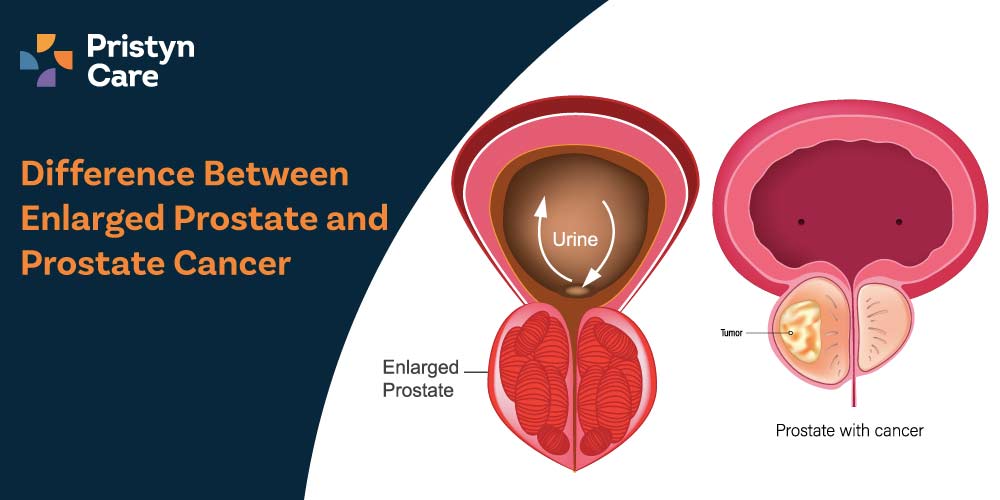
Prostate-related conditions are common in men, especially with increasing age. Two of the most frequently discussed conditions are an enlarged prostate and prostate cancer. While both affect the same gland and may share similar symptoms, they are fundamentally different in terms of cause, severity, and treatment.


Social share:


Dedicated Support at Every Step!
Our Doctors are available 24 hours a day, 7 days a week to help you!

Understanding the difference between an enlarged prostate and prostate cancer is crucial for early diagnosis, appropriate treatment, and peace of mind.
Table of Contents
What Is an Enlarged Prostate?
An enlarged prostate, medically known as Benign Prostatic Hyperplasia (BPH), is a non-cancerous increase in the size of the prostate gland.
Key Characteristics:
- Not cancerous
- Does not spread to other parts of the body
- Common in aging men
- Gradually worsens over time
As the prostate enlarges, it can press against the urethra, causing urinary symptoms.
No Cost EMI, Hassle-free Insurance Approval
What Is Prostate Cancer?
Prostate cancer occurs when cells in the prostate grow uncontrollably and form a malignant tumor.
Key Characteristics:
- Cancerous growth
- Can spread (metastasize) to other organs like bones and lymph nodes
- May be slow-growing or aggressive
- Requires early detection for better outcomes
Enlarged Prostate vs Prostate Cancer: Key Differences
1. Nature of the Condition
Enlarged Prostate (BPH):
- Benign (non-cancerous)
- Not life-threatening
Prostate Cancer:
- Malignant (cancerous)
- Can be life-threatening if untreated
2. Causes
BPH:
- Age-related hormonal changes
- Increased levels of dihydrotestosterone (DHT)
Prostate Cancer:
- Genetic mutations
- Family history
- Hormonal and environmental factors
3. Symptoms
Both conditions can cause similar urinary symptoms, which often leads to confusion.
Common Symptoms of BPH:
- Frequent urination (especially at night)
- Weak urine stream
- Difficulty starting urination
- Incomplete bladder emptying
Symptoms of Prostate Cancer:
- Similar urinary symptoms in early stages
- Blood in urine or semen
- Bone pain (advanced stages)
- Unexplained weight loss (later stages)
Important: Early-stage prostate cancer may not show noticeable symptoms.
4. Growth Pattern
BPH:
- Enlarges inward, compressing the urethra
Prostate Cancer:
- Typically develops in the outer part of the prostate
- May not affect urination initially
5. Risk Factors
BPH:
- Aging
- Hormonal imbalance
Prostate Cancer:
- Age (50+)
- Family history
- Obesity
- Lifestyle factors
6. Diagnosis
Doctors use similar diagnostic tools but interpret them differently.
For Both Conditions:
- Digital Rectal Examination (DRE)
- Prostate-Specific Antigen (PSA) test
- Imaging (ultrasound/MRI)
For Prostate Cancer (Confirmation):
- Biopsy (definitive diagnosis)
7. Treatment Options
BPH Treatment:
- Lifestyle changes
- Medications (alpha-blockers, 5-alpha reductase inhibitors)
- Minimally invasive procedures (laser therapy, TURP)
Prostate Cancer Treatment:
- Active surveillance (for slow-growing cases)
- Surgery (prostatectomy)
- Radiation therapy
- Hormone therapy
- Chemotherapy (advanced cases)
8. Severity and Outcomes
BPH:
- Manageable condition
- Rarely causes serious complications if treated
Prostate Cancer:
- Can be life-threatening
- Outcomes depend on stage at diagnosis
Quick Comparison Table
| Feature | Enlarged Prostate (BPH) | Prostate Cancer |
| Nature | Non-cancerous | Cancerous |
| Spread | Does not spread | Can spread to other organs |
| Symptoms | Urinary issues | Urinary + systemic symptoms |
| Risk | Age-related | Age + genetics |
| Diagnosis | PSA, DRE | PSA, DRE, biopsy |
| Treatment | Medication/surgery | Surgery, radiation, chemo |
Can BPH Turn Into Prostate Cancer?
No, BPH does not turn into prostate cancer. They are separate conditions. However, a person can have both conditions at the same time, which is why proper evaluation is essential.
 Doctor available

5.0/5

25 Years Experience Overall
 (4) (1).jpg/1682933853454_ban-Icon.png) Doctor available
Doctor available
5.0/5
32 Years Experience Overall
Doctor available.jpeg/1733376627597_ban-Icon.png)
4.5/5
29 Years Experience Overall
Doctor available
4.5/5
18 Years Experience Overall
Doctor available
5.0/5
17 Years Experience Overall
Doctor available
4.8/5
16 Years Experience Overall
Doctor available
5.0/5
15 Years Experience Overall
Doctor available
5.0/5
14 Years Experience Overall
Doctor available.jpg/1741267965873_ban-Icon.png)
4.5/5
13 Years Experience Overall
Doctor available
4.5/5
11 Years Experience Overall
Doctor available
4.8/5
5 Years Experience Overall
When Should You See a Doctor?
Consult a doctor if you experience:
- Persistent urinary problems
- Blood in urine or semen
- Difficulty urinating
- Pelvic discomfort
- Unexplained weight loss
Early diagnosis can significantly improve outcomes, especially in prostate cancer.
Importance of Regular Screening
Men above 50 (or 45 with risk factors) should undergo:
- Regular PSA testing
- Routine prostate exams
Screening helps detect problems early, even before symptoms appear.
Lifestyle Tips for Prostate Health
- Maintain a healthy weight
- Exercise regularly
- Eat a diet rich in fruits, vegetables, and healthy fats
- Limit red meat and processed foods
- Avoid smoking and excessive alcohol
- Stay hydrated
Common Myths
Myth 1: All prostate problems are cancer
Reality: Most cases are BPH, not cancer.
Myth 2: No symptoms means no risk
Reality: Prostate cancer can be silent in early stages.
Myth 3: Surgery is always required
Reality: Many cases, especially BPH, are managed without surgery.
Conclusion
While an enlarged prostate and prostate cancer may share similar symptoms, they are very different conditions. BPH is a common, non-cancerous enlargement that affects urinary function, whereas prostate cancer is a potentially serious disease that requires timely diagnosis and treatment.
Understanding these differences helps men take proactive steps toward their health. If you notice any urinary changes or unusual symptoms, do not ignore them—consult a doctor and get evaluated early.


FAQs
1. Is an enlarged prostate dangerous?
Not usually, but it can cause discomfort and complications if untreated.
2. How can I tell if I have BPH or prostate cancer?
Only medical tests like PSA and biopsy can confirm the diagnosis.
3. Can prostate cancer be cured?
Yes, especially if detected early.
4. Does every prostate enlargement require surgery?
No, many cases are managed with medication.
5. How often should prostate screening be done?
Annually after age 50, or earlier if at high risk.
Author:






Related Calculators

Dedicated Support at Every Step!
Our Doctors are available 24 hours a day, 7 days a week to help you!


