


 Views: 0
Fibroid Medicine: What Is the Best Medicine for Uterine Fibroids and Can Medicine Shrink Fibroids?


Dedicated Support at Every Step!
Our Doctors are available 24 hours a day, 7 days a week to help you!

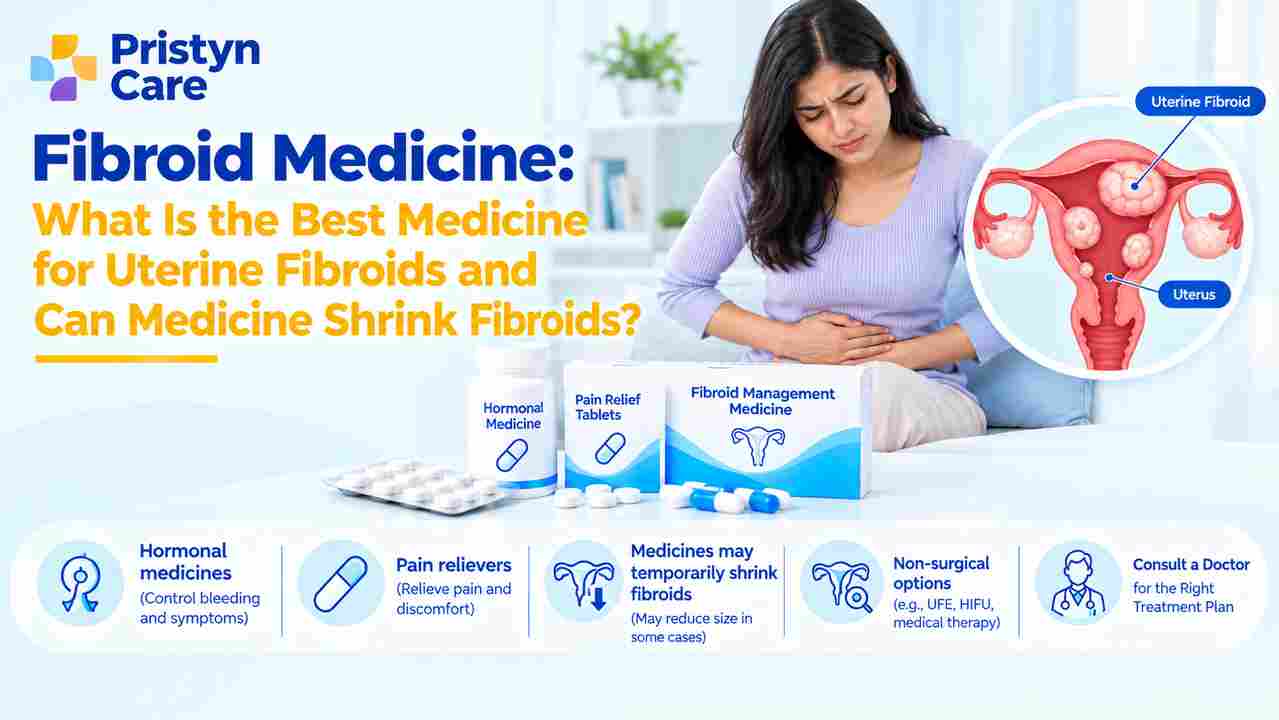
There is no single medicine that permanently removes every uterine fibroid. Some medicines can control symptoms such as heavy bleeding and pain, while certain hormone-based medicines can temporarily reduce fibroid size in selected women. However, the effect may not be permanent, and fibroids can grow again after treatment is stopped.
The appropriate treatment depends on the size, number and location of fibroids, symptoms, age, overall health and whether future pregnancy is desired.
Table of Contents
What Are Uterine Fibroids?
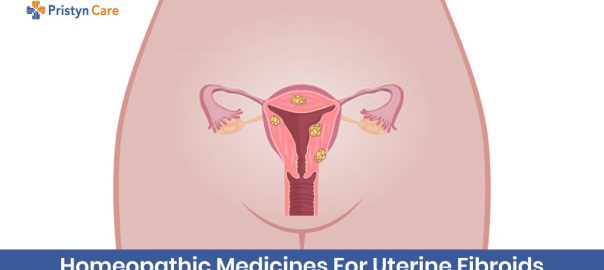
Uterine fibroids, also called leiomyomas or myomas, are growths that develop from the muscular tissue of the uterus.
They can occur:
- Inside the uterine cavity
- Within the muscular wall of the uterus
- On the outer surface of the uterus
- On a stalk-like structure attached to the uterus
Fibroids can range from very small growths to large fibroids that significantly enlarge the uterus.
No Cost EMI, Hassle-free Insurance Approval
What Are the Symptoms of Fibroids?
Many women with fibroids do not have symptoms. When symptoms occur, they may include:
- Heavy or prolonged menstrual bleeding
- Painful periods
- Pelvic pain or pressure
- Lower abdominal heaviness
- Back pain
- Frequent urination
- Difficulty emptying the bladder
- Constipation or pressure on the bowel
- Pain during sexual intercourse
- Abdominal enlargement
- Tiredness or weakness associated with anemia from heavy bleeding
- Difficulty conceiving in some cases
The location of a fibroid can be as important as its size. A relatively small fibroid that projects into the uterine cavity may cause significant bleeding, while a larger fibroid elsewhere may produce few symptoms.
Is There Any Medicine for Fibroids?
Yes, medicines can be used to manage certain fibroid-related symptoms, particularly heavy menstrual bleeding and pain.
However, medicine does not permanently eliminate most fibroids.
| Medicine or treatment | Main purpose | Can it permanently remove fibroids? |
| Pain relievers such as NSAIDs | Reduce menstrual pain | No |
| Tranexamic acid | Reduce heavy menstrual bleeding | No |
| Hormonal contraceptives | Control bleeding and menstrual symptoms | No |
| Progestin-based treatment | Manage abnormal bleeding in selected cases | No |
| GnRH agonists/antagonists | Temporarily reduce estrogen/progesterone activity and may shrink fibroids | Usually temporary |
| Iron supplements | Treat iron-deficiency anemia caused by heavy bleeding | No |
| Observation | Monitor asymptomatic or stable fibroids | No |
| Uterine artery embolization | Blocks blood supply to fibroids and causes them to shrink | Treats fibroids |
| Myomectomy | Surgically removes fibroids while preserving the uterus | Yes, removes existing fibroids |
| Hysterectomy | Removes the uterus | Definitive treatment |
The medicine chosen should depend on the individual's symptoms, diagnosis and treatment goals.
What Is the Best Medicine for Fibroids?
There is no universally best medicine for uterine fibroids.
Treatment is usually based on the main problem the fibroid is causing.
For heavy menstrual bleeding
Doctors may consider medicines such as:
- Tranexamic acid
- Hormonal contraceptives
- Progestin-based treatments
- Selected hormone-releasing intrauterine systems
- GnRH-based medicines in appropriate situations
These treatments can reduce bleeding, but they do not necessarily remove the fibroid.
For fibroid-related pain
Pain may sometimes be managed with:
- NSAIDs such as ibuprofen or naproxen when appropriate
- Other pain-relief medicines depending on individual circumstances
Pain medicine may make symptoms more manageable but does not treat the underlying fibroid.
For anemia caused by fibroid bleeding
If heavy periods have caused iron-deficiency anemia, iron supplementation may be recommended after appropriate evaluation.
Treating anemia is important, but iron does not shrink the fibroid.
Medicine for Shrinking Fibroids
The search for medicine for shrinking fibroids usually reflects an important distinction: some medicines can reduce fibroid size, but this does not mean that every fibroid can be permanently dissolved with medication.
GnRH medicines
GnRH agonists and antagonists can suppress ovarian hormone activity and may cause fibroids to shrink.
They may be used:
- Before surgery to reduce fibroid size
- To reduce heavy bleeding
- To improve anemia before a procedure
- As a temporary treatment in selected women
- Around menopause in certain situations
However, fibroids may grow again after treatment is discontinued.
These medicines can also have hormone-related side effects, so they require medical supervision.
Other hormonal medicines
Some hormonal treatments are useful primarily for controlling bleeding and menstrual symptoms rather than permanently shrinking fibroids.
Therefore, when searching for a medicine for uterine fibroid, it is important to understand whether the objective is:
- Reducing bleeding
- Relieving pain
- Treating anemia
- Temporarily shrinking fibroids
- Permanently removing fibroids
These are different treatment goals.
Can Fibroids Be Cured With Medicine?
Usually, medicines cannot permanently cure an established uterine fibroid.
Some small or asymptomatic fibroids may require nothing more than observation. Others may need medical treatment to control symptoms.
If the fibroid is large, persistent, symptomatic or affecting fertility, a procedure may be considered.
The treatment decision depends on:
- Fibroid size
- Number of fibroids
- Location
- Symptoms
- Age
- Menstrual status
- Desire for future pregnancy
- Previous treatments
- Overall health
Can Homeopathy Cure Uterine Fibroids?
Searches for fibroid medicine in homeopathy, homeopathic medicine for uterine fibroid and best homeopathic medicine for fibroids in uterus are common.
However, there is no scientifically established homeopathic medicine proven to permanently eliminate or reliably shrink uterine fibroids.
Homeopathic products may be promoted for symptoms such as:
- Heavy periods
- Pelvic pain
- Irregular bleeding
- Hormonal symptoms
- Fibroid-related discomfort
Symptom improvement does not necessarily mean that the fibroid has disappeared.
If you have a diagnosed fibroid, relying only on homeopathy can also delay appropriate imaging or treatment when the fibroid is causing significant bleeding, anemia, pain or fertility problems.
Is There a Best Homeopathic Medicine for Fibroids?
There is no scientifically established best homeopathic medicine for fibroids that can reliably dissolve or permanently remove uterine fibroids.
If you are considering homeopathy, discuss it with your gynecologist rather than replacing evidence-based evaluation and treatment.
Regular follow-up may be particularly important when a fibroid is growing or causing symptoms.
Can Ayurvedic Medicine Cure Fibroids?
People also search for ayurvedic medicine for fibroids and ayurvedic medicine for uterine fibroid as alternatives to conventional treatment.
There is currently no universally proven Ayurvedic medicine that can permanently eliminate all types of uterine fibroids.
Some Ayurvedic products may be marketed for:
- Hormonal balance
- Menstrual health
- Heavy bleeding
- Uterine health
- General reproductive health
However, these claims should not be considered equivalent to proven fibroid treatment.
Herbal products can also have active ingredients and may interact with other medicines. Tell your doctor about supplements or herbal preparations you are taking.
Patanjali Medicine for Uterine Fibroids
Searches for Patanjali medicine for uterine fibroids often come from women looking for a natural or non-surgical option.
However, no particular Patanjali product should be assumed to permanently shrink or remove an established uterine fibroid without reliable clinical evidence.
If you are considering a herbal product, check its ingredients and discuss it with your gynecologist, particularly if you have heavy bleeding or anemia.
Himalaya Medicine for Fibroids
Similarly, searches for Himalaya medicine for fibroids may refer to herbal or Ayurvedic products promoted for women's reproductive or menstrual health.
There is no established evidence that a particular Himalaya product can permanently eliminate uterine fibroids.
Do not delay gynecological evaluation because of an attempt to treat a fibroid with supplements alone.
Fibroid Treatment Medicine vs Fibroid Treatment Procedures
| Treatment | Controls symptoms | Shrinks fibroids | Removes fibroids |
| Pain medicines | Yes | No | No |
| Tranexamic acid | Yes | No | No |
| Hormonal medicines | Yes | Sometimes, depending on medicine | No |
| GnRH-based medicines | Yes | Yes, usually temporarily | No |
| Iron supplements | Yes, for anemia | No | No |
| Uterine artery embolization | Yes | Yes | No, fibroid tissue remains and shrinks |
| Myomectomy | Yes | Not applicable | Yes |
| Hysterectomy | Yes | Not applicable | Yes, uterus is removed |
When Is Fibroid Surgery or a Procedure Needed?
Not every fibroid requires surgery.
A gynecologist may recommend a procedure when:
- Bleeding is severe or persistent
- Fibroids cause significant pain or pressure
- The fibroid is large
- Fibroids continue to grow
- Medicines do not adequately control symptoms
- Anemia develops because of heavy menstrual bleeding
- The fibroid affects fertility in an appropriate clinical setting
- The fibroid distorts the uterine cavity
- The diagnosis is uncertain
- Symptoms significantly affect daily life
Myomectomy
Myomectomy removes fibroids while preserving the uterus.
Depending on the fibroid's size and location, it may be performed through:
- Hysteroscopy
- Laparoscopy
- Robotic-assisted surgery
- Open abdominal surgery
The choice depends on the number, size and location of fibroids and the patient's individual circumstances.
Uterine artery embolization
Uterine artery embolization is a minimally invasive procedure that reduces the blood supply to fibroids, causing them to shrink over time.
It can be an option for selected women who do not want major surgery. However, fertility considerations should be discussed carefully before choosing this treatment.
Hysterectomy
Hysterectomy involves removing the uterus and is a definitive treatment for uterine fibroids.
It is generally considered when appropriate based on symptoms, fibroid burden, age, reproductive plans and other medical factors.
Can Fibroids Affect Fertility?
Many women with fibroids become pregnant normally.
However, some fibroids can affect fertility depending on their:
- Location
- Size
- Number
- Effect on the uterine cavity
Fibroids that distort the uterine cavity may be more relevant to fertility and pregnancy outcomes.
If you are trying to conceive and have fibroids, discuss your fertility plans with a gynecologist before starting hormonal treatment or choosing a procedure.
Fibroids During Pregnancy
Fibroids can sometimes be discovered during pregnancy.
Most women with fibroids do not necessarily develop serious complications, but some may experience:
- Pain
- Pressure symptoms
- Changes in fibroid size
- Pregnancy-related complications depending on size and location
Do not take fibroid medicines during pregnancy without medical advice.

Free Uterine Fibroid Surgery Cost Calculator

Our care coordinator will call you shortly.
Do Fibroids Go Away on Their Own?
Fibroids may shrink naturally after menopause as hormone levels decline.
Before menopause, however, an established fibroid generally does not reliably disappear simply because of dietary changes or medicine.
Some small fibroids remain stable for years and may only require monitoring.
How Are Fibroids Diagnosed?
A gynecologist may use:
- Pelvic examination
- Ultrasound
- Transvaginal ultrasound
- MRI in selected cases
- Blood tests such as a complete blood count when heavy bleeding is present
Imaging helps determine the number, size and location of fibroids and helps guide treatment decisions.
When Should You See a Gynecologist?
You should seek medical evaluation if you have:
- Very heavy periods
- Periods lasting unusually long
- Bleeding between periods
- Persistent pelvic pain or pressure
- Increasing abdominal size
- Frequent urination without another obvious cause
- Unexplained anemia
- Difficulty conceiving
- A known fibroid that appears to be growing
- Persistent symptoms despite medicines
Seek urgent medical care for extremely heavy bleeding causing weakness, dizziness or fainting, severe sudden pelvic pain, or other rapidly worsening symptoms.
Frequently Asked Questions
1. What is the best medicine for uterine fibroids?
There is no single best medicine. Treatment depends on the symptoms and fibroid characteristics. Medicines may control bleeding and pain, while selected hormone-based treatments can temporarily shrink fibroids.
2. Can medicine permanently shrink fibroids?
Some hormone-based medicines can shrink fibroids temporarily, but fibroids may grow again after the medicine is stopped. Medicines generally do not permanently eliminate established fibroids.
3. What medicine is used for shrinking fibroids?
Certain GnRH-based medicines can temporarily reduce fibroid size. They are prescription treatments and should only be used under medical supervision.
4. Can homeopathy cure fibroids in the uterus?
There is no scientifically established homeopathic medicine proven to permanently eliminate or reliably shrink uterine fibroids.
5. What is the best homeopathic medicine for fibroids?
There is no scientifically established homeopathic medicine that can be considered the best proven treatment for uterine fibroids.
6. Can Ayurvedic medicine remove uterine fibroids?
No Ayurvedic medicine has been universally established as a proven permanent treatment for uterine fibroids. Do not delay gynecological evaluation while trying herbal treatments.
7. Is there a Patanjali medicine for uterine fibroids?
Patanjali products may be marketed for women's health or menstrual symptoms, but no specific product should be assumed to permanently cure or shrink uterine fibroids.
8. Is there a Himalaya medicine for fibroids?
There is no established evidence that a particular Himalaya product permanently removes uterine fibroids. Discuss supplements with your gynecologist before using them.
9. Can fibroids be treated without surgery?
Yes. Observation, medicines and selected minimally invasive treatments may be appropriate depending on the fibroid. However, medicines do not permanently remove most fibroids.
10. Do all fibroids need surgery?
No. Small, asymptomatic or stable fibroids may only require observation. Treatment is generally considered when symptoms, growth, fertility concerns or other clinical factors justify it.
11. Can fibroids cause heavy bleeding?
Yes. Fibroids, particularly those affecting the uterine cavity, can cause heavy or prolonged menstrual bleeding and may lead to iron-deficiency anemia.
12. Can fibroids come back after treatment?
It depends on the treatment. After myomectomy, new fibroids can develop over time. Treatments that shrink fibroids rather than remove them may also be followed by regrowth.


Conclusion
There is no single medicine that permanently cures every uterine fibroid. Medicines can be useful for controlling heavy menstrual bleeding, pain and anemia, while selected hormone-based medicines may temporarily shrink fibroids.
If symptoms are severe, fibroids are large or growing, medicines are not providing adequate relief, or fertility is affected, a gynecologist can determine whether treatments such as myomectomy, uterine artery embolization or other minimally invasive procedures are appropriate.
Homeopathic, Ayurvedic, Patanjali and Himalaya products should not be considered proven permanent cures for uterine fibroids without reliable clinical evidence.
Social share:



- Uterine Fibroids Treatment in Hyderabad
- Uterine Fibroids Treatment in Ghaziabad
- Uterine Fibroids Treatment in Bangalore
- Uterine Fibroids Treatment in Pune
- Uterine Fibroids Treatment in Mumbai
- Uterine Fibroids Treatment in Chennai
- Uterine Fibroids Treatment in Noida
- Uterine Fibroids Treatment in Delhi
- Uterine Fibroids Treatment in Faridabad
Related Calculators

Dedicated Support at Every Step!
Our Doctors are available 24 hours a day, 7 days a week to help you!
Related Calculators
Get In Touch with our expert doctors !
- please enter 10 digit number.


