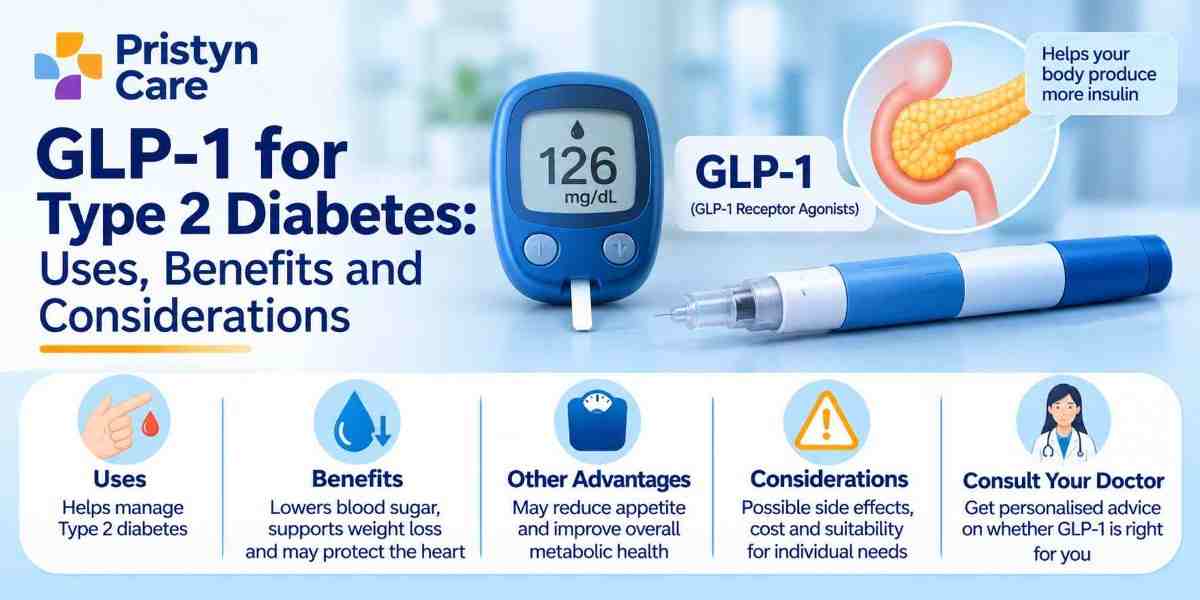
Managing type 2 diabetes involves more than controlling blood sugar levels. It also requires maintaining a healthy weight and reducing the risk of long-term complications. Along with medicines such as metformin and insulin, GLP-1 receptor agonists have become an important treatment option for eligible individuals.
These medicines help regulate blood sugar by stimulating insulin release, reducing glucagon production and slowing stomach emptying. They may also reduce appetite and support weight loss.
Understanding how GLP-1 medicines work, their benefits and possible side effects can help you make informed decisions about diabetes management.
Table of Contents
What Is GLP-1 in Diabetes?
GLP-1 stands for glucagon-like peptide-1, a natural hormone released by the intestine after eating. It helps regulate blood sugar by stimulating insulin release when glucose levels rise, reducing glucagon secretion and slowing stomach emptying.
GLP-1 receptor agonists are prescription medicines that mimic this hormone. They help improve blood sugar control and may also support weight management in people with type 2 diabetes.
What Are GLP-1 Drugs for Diabetes?
GLP-1 receptor agonists, also called GLP-1 analogues, are medicines that activate GLP-1 receptors to improve glucose regulation.
Common examples include:
- Semaglutide: Available as oral tablets and injectable formulations, depending on the brand and approved indication.
- Liraglutide: A once-daily injectable medicine.
- Dulaglutide: A once-weekly injectable medicine.
- Exenatide: Available in formulations with different dosing schedules.
- Lixisenatide: A once-daily injectable medicine.
The availability and approved uses of these medicines vary by country and formulation. Your doctor can recommend an appropriate option based on your health requirements.
How Do GLP-1 Receptor Agonists Work?
GLP-1 medicines help manage diabetes through four main mechanisms:
- Increase insulin release: They stimulate the pancreas to release insulin when blood sugar levels are elevated, helping glucose enter the body’s cells.
- Reduce glucagon production: They reduce glucagon secretion when blood sugar is high, limiting unnecessary glucose release from the liver.
- Slow stomach emptying: They slow the movement of food from the stomach into the intestine, which can reduce post-meal blood sugar spikes and increase fullness.
- Reduce appetite: They act on appetite-regulating pathways in the brain, helping some individuals feel less hungry and consume smaller portions.
Benefits of GLP-1 Medicines for Type 2 Diabetes
GLP-1 medicines offer several benefits beyond blood sugar control, although outcomes depend on the specific medicine and individual health conditions.
- Better blood sugar control
These medicines help lower blood glucose and improve HbA1c, which measures average blood sugar levels over approximately three months.
- Support for weight management
GLP-1 medicines can reduce appetite and increase feelings of fullness, helping eligible individuals lose weight. Weight reduction may also improve insulin sensitivity and support diabetes management.
For people exploring additional approaches, weight-loss treatment options can provide information about medical and procedural approaches to managing excess weight.
- Lower risk of hypoglycaemia when used alone
GLP-1 medicines generally have a low risk of causing hypoglycaemia because their effect on insulin release depends on blood glucose levels. However, this risk increases when they are combined with insulin or sulfonylureas.
- Potential cardiovascular and kidney benefits
Certain GLP-1 medicines have demonstrated cardiovascular benefits in people with type 2 diabetes. Some have also shown benefits for kidney-related outcomes in specific patient groups. These benefits vary between medicines.
GLP-1 vs Insulin: What Is the Difference?
Both GLP-1 medicines and insulin help manage type 2 diabetes, but they work differently.
| Feature | GLP-1 Medicines | Insulin |
| Main action | Stimulates glucose-dependent insulin release | Directly provides insulin |
| Glucagon effect | Reduces glucagon secretion | Depends on insulin regimen |
| Weight effect | Often supports weight loss | May cause weight gain |
| Low blood sugar risk | Generally low when used alone | Higher risk |
| Administration | Oral or injectable | Injectable |
| Main purpose | Blood sugar control and additional metabolic benefits | Blood sugar control |
GLP-1 medicines do not replace insulin in every situation. People with insufficient insulin production or significantly elevated blood sugar may require insulin therapy.
Can GLP-1 Medicines Be Used With Basal Insulin?
Yes. Doctors may prescribe a GLP-1 medicine alongside basal insulin for some people with type 2 diabetes.
Basal insulin is long-acting insulin that helps maintain blood sugar levels between meals and overnight. Adding a GLP-1 medicine may improve overall glucose control, reduce post-meal blood sugar increases and support weight management.
Potential benefits include:
- Improved overall blood sugar control.
- Better management of post-meal glucose levels.
- Potential weight reduction or less weight gain compared with increasing insulin alone.
- Possible reduction in insulin requirements in some patients.
However, combination treatment requires medical supervision. Insulin doses may need adjustment to reduce hypoglycaemia risk.
Possible Side Effects of GLP-1 Medicines
Most common side effects involve the digestive system, particularly when treatment begins or the dosage increases.
These include:
- Nausea and vomiting.
- Diarrhoea or constipation.
- Abdominal discomfort and bloating.
- Reduced appetite.
- Indigestion.
Less common but serious risks include pancreatitis and gallbladder problems. Dehydration from persistent vomiting or diarrhoea may also affect kidney function.
People with a history of certain pancreatic, gallbladder or severe digestive conditions should discuss treatment suitability with their doctor. Some GLP-1 medicines also carry specific thyroid-related warnings, particularly for people with a personal or family history of medullary thyroid carcinoma or MEN 2.
Seek medical attention if you experience severe abdominal pain, repeated vomiting or other unusual symptoms.
Who May Benefit From GLP-1 Treatment?
A doctor may recommend GLP-1 medicines for adults with type 2 diabetes who:
- Need better blood sugar control despite existing treatment.
- Have type 2 diabetes along with excess body weight.
- Have certain cardiovascular or kidney-related risk factors.
- Need an additional medicine alongside their current diabetes treatment.
- May benefit from treatment that supports both glucose control and weight management.
These medicines are not used to treat type 1 diabetes or diabetic ketoacidosis.
For individuals with obesity, doctors may also discuss other treatment approaches depending on BMI, medical history and previous weight-management outcomes. These may include bariatric surgery, which helps reduce food intake and support weight reduction.
Other options may include an intragastric balloon procedure, which temporarily occupies space in the stomach to promote fullness, or suitable weight-loss surgery options.
Not everyone with diabetes or excess weight requires these procedures. Treatment decisions should be based on an individual medical assessment.
Frequently Asked Questions
- Are GLP-1 medicines the same as insulin?
No. GLP-1 medicines stimulate the body’s own insulin release when blood sugar is elevated, whereas insulin medicines directly provide insulin to control blood glucose.
- Can GLP-1 medicines replace insulin in type 2 diabetes?
Not always. Some people may manage diabetes with GLP-1 medicines, while others still require insulin. The decision depends on insulin production, blood sugar levels and treatment response.
- Do GLP-1 medicines cause weight loss?
Yes. Many GLP-1 medicines reduce appetite and increase fullness, which can support weight loss. Results vary depending on the medicine, dosage and individual response.
- Can GLP-1 medicines cause low blood sugar?
The risk is generally low when used alone. However, it may increase when combined with insulin or certain other diabetes medicines.
- How long do GLP-1 medicines take to work?
Blood sugar improvements may begin within the first few weeks, although the full effect can take longer. Dosages are generally increased gradually depending on the medicine and individual tolerance.
Conclusion
GLP-1 receptor agonists have expanded treatment options for people with type 2 diabetes. They help improve blood sugar control, support weight management and may provide additional cardiovascular or kidney benefits with certain medicines.
However, they are not suitable for everyone. The right treatment depends on blood sugar levels, weight, existing health conditions, current medications and individual treatment goals.
Consult a qualified doctor or diabetologist to understand whether GLP-1 treatment is appropriate for you. A personalised treatment plan can help manage diabetes safely while supporting long-term health.