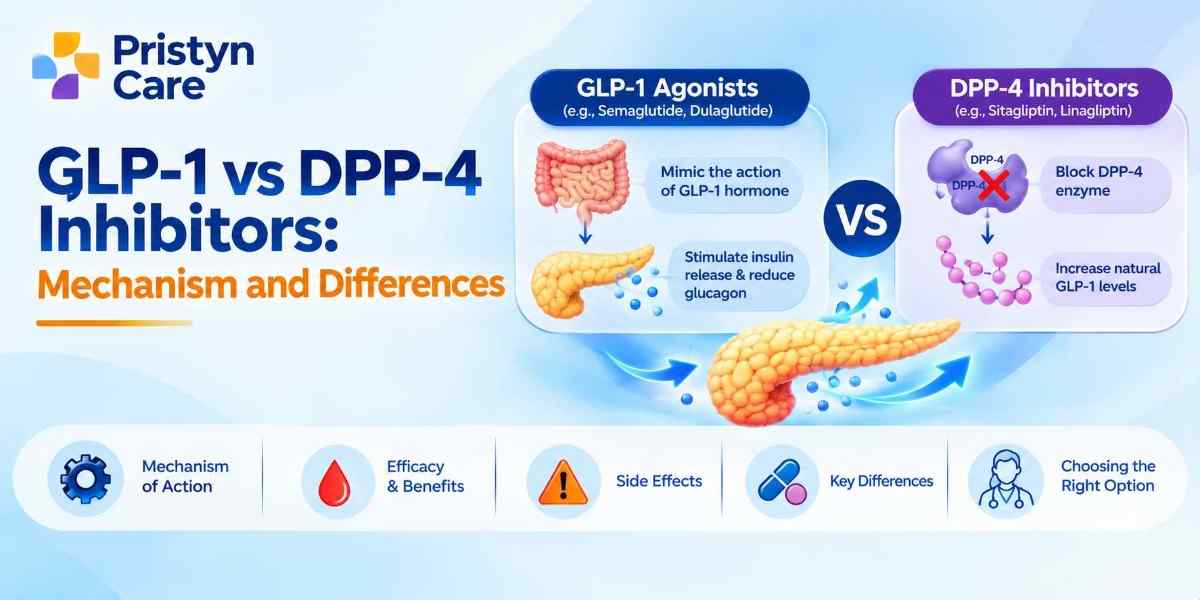
Several medicines are available to help people with type 2 diabetes manage their blood sugar levels. Among them, GLP-1 receptor agonists and DPP-4 inhibitors work through the body’s natural hormone system to improve glucose control.
Although both treatments involve a hormone called GLP-1, they work differently. GLP-1 medicines mimic this hormone, while DPP-4 inhibitors help preserve the GLP-1 naturally produced by the body.
Understanding their differences can help you discuss suitable treatment options with your doctor.
Table of Contents
What Is GLP-1?
GLP-1 stands for glucagon-like peptide-1. It is a natural hormone released by the intestine after eating. It helps regulate blood sugar by:
- Stimulating insulin release when blood glucose levels are high.
- Reducing glucagon secretion, which limits glucose release from the liver.
- Slowing stomach emptying.
- Increasing feelings of fullness and reducing appetite.
In people with type 2 diabetes, the body’s incretin response may not be sufficient to maintain healthy blood sugar levels. Certain medicines help improve the effects of these hormones.
What Are GLP-1 Receptor Agonists?
GLP-1 receptor agonists are prescription medicines that mimic the natural GLP-1 hormone. They activate GLP-1 receptors, helping the body regulate blood sugar.
These medicines can:
- Increase insulin release when blood sugar is elevated.
- Reduce glucagon secretion.
- Slow stomach emptying, although this effect varies between medicines.
- Reduce appetite and support weight loss.
Common examples include semaglutide, liraglutide, dulaglutide, exenatide and lixisenatide.
Depending on the medicine and formulation, treatment may involve daily or weekly injections. Oral semaglutide is also available for certain approved uses.
What Are DPP-4 Inhibitors?
DPP-4 inhibitors are oral diabetes medicines that increase the activity of natural incretin hormones, including GLP-1.
DPP-4 is an enzyme that breaks down GLP-1 and another incretin hormone called GIP. When this enzyme is blocked, these hormones remain active for longer. This helps the body release insulin when blood sugar rises and reduce glucagon secretion.
Common DPP-4 inhibitors include:
- Sitagliptin
- Linagliptin
- Vildagliptin
- Saxagliptin
- Alogliptin
These medicines are generally taken as tablets. Dosing may vary depending on the medicine and a person’s kidney function.
GLP-1 vs DPP-4 Inhibitors: Key Differences
Both medicine groups influence incretin hormones, but their mechanism of action, effectiveness and effects on body weight differ.
| Feature | GLP-1 receptor agonists | DPP-4 inhibitors |
| How they work | Directly activate GLP-1 receptors | Block the enzyme that breaks down incretin hormones |
| Blood sugar control | Generally greater HbA1c reduction | Usually modest HbA1c reduction |
| Weight effect | Often support weight loss | Generally weight-neutral |
| Administration | Oral or injectable, depending on medicine | Oral tablets |
| Stomach emptying | Some slow stomach emptying | Generally have little effect |
| Low blood sugar risk | Low when used alone | Low when used alone |
| Common side effects | Nausea, vomiting and diarrhoea | Headache, nasal congestion and mild digestive symptoms |
| Examples | Semaglutide, liraglutide, dulaglutide | Sitagliptin, linagliptin, vildagliptin |
The main difference is that GLP-1 receptor agonists often provide greater blood sugar reduction and weight-management benefits, while DPP-4 inhibitors are convenient oral treatments with a generally weight-neutral effect.
DPP-4 and GLP-1: Mechanism of Action
To understand how these medicines differ, it helps to look at how they affect the body’s incretin system.
How GLP-1 receptor agonists work
GLP-1 receptor agonists directly activate GLP-1 receptors. They mimic the natural hormone and help the pancreas release insulin when blood sugar levels rise.
They also reduce glucagon secretion, limiting the amount of glucose released by the liver. Some medicines slow stomach emptying and reduce appetite, which may support weight management.
How DPP-4 inhibitors work
After eating, the intestine releases incretin hormones such as GLP-1 and GIP. These hormones help the body respond to rising blood sugar levels.
However, the DPP-4 enzyme breaks down these hormones quickly. DPP-4 inhibitors block this enzyme, allowing natural incretin hormones to remain active for longer.
This supports insulin release and reduces glucagon secretion when blood glucose levels are elevated.
In simple terms: GLP-1 receptor agonists directly activate GLP-1 receptors, whereas DPP-4 inhibitors preserve the activity of naturally produced incretin hormones.
Benefits of GLP-1 Receptor Agonists
GLP-1 medicines may offer benefits beyond blood sugar management, depending on the specific medicine and a person’s health condition.
- Greater blood sugar reduction
Many GLP-1 receptor agonists provide greater HbA1c reduction than DPP-4 inhibitors. They may be considered when additional glucose control is needed.
- Support for weight loss
These medicines can reduce appetite and increase feelings of fullness, helping some people consume smaller portions and lose weight over time.
For individuals who need additional support with excess weight, weight-loss treatment options may also be discussed with a healthcare professional.
- Potential cardiovascular benefits
Certain GLP-1 medicines have demonstrated a reduction in major cardiovascular events in specific groups of people with type 2 diabetes. This may be an important consideration for patients with existing heart disease or increased cardiovascular risk.
- Low risk of hypoglycaemia when used alone
GLP-1 medicines generally have a low risk of causing low blood sugar when used alone. However, the risk can increase when combined with insulin or certain other diabetes medicines.
Benefits of DPP-4 Inhibitors
DPP-4 inhibitors can be useful for people with type 2 diabetes who need an oral medicine with a relatively low risk of hypoglycaemia.
- Convenient oral administration
DPP-4 inhibitors are available as tablets, making them suitable for people who prefer not to take injections.
- Weight-neutral effect
Unlike many GLP-1 receptor agonists, DPP-4 inhibitors generally do not cause significant weight loss or weight gain.
- Low risk of hypoglycaemia when used alone
These medicines support insulin release in a glucose-dependent manner, reducing the risk of hypoglycaemia when used alone.
- Generally well tolerated
Most people tolerate DPP-4 inhibitors well. However, side effects can occur, and the choice of medicine should take kidney function and other health conditions into account.
Can DPP-4 Inhibitors and GLP-1 Agonists Be Used Together?
Doctors generally do not recommend combining a DPP-4 inhibitor with a GLP-1 receptor agonist.
Both medicine groups target the incretin system. However, using them together usually provides little additional blood sugar benefit compared with using a GLP-1 medicine alone.
If a doctor decides to start GLP-1 treatment for someone already taking a DPP-4 inhibitor, they will usually review the existing prescription and discontinue the DPP-4 inhibitor.
Never combine, stop or change diabetes medicines without medical advice.
Possible Side Effects of GLP-1 and DPP-4 Medicines
Both medicine groups can cause side effects, although their effects on the digestive system and overall tolerability differ.
| GLP-1 receptor agonists | DPP-4 inhibitors |
| Nausea and vomiting | Headache |
| Diarrhoea or constipation | Nasal congestion |
| Abdominal discomfort | Upper respiratory symptoms |
| Reduced appetite | Mild digestive discomfort |
| Possible gallbladder problems | Joint pain in some cases |
GLP-1 medicines may also be associated with gallbladder problems and, rarely, pancreatitis. DPP-4 inhibitors have also been associated with rare cases of pancreatitis. Certain medicines in this class, particularly saxagliptin and alogliptin, require additional consideration in people with heart failure.
The specific risks vary by medicine. Seek medical advice if you experience severe or persistent symptoms.
Which Is Better for Type 2 Diabetes?
There is no single best option for everyone. The choice depends on blood sugar levels, weight, medical history, treatment goals and other health conditions.
| Patient requirement | Treatment a doctor may consider |
| Need for greater HbA1c reduction | GLP-1 receptor agonist |
| Support for weight loss | GLP-1 receptor agonist |
| Preference for oral medication | DPP-4 inhibitor |
| Need for a weight-neutral treatment | DPP-4 inhibitor |
| Certain cardiovascular risks | A GLP-1 medicine with proven cardiovascular benefits |
For people with obesity, doctors may also discuss other weight-management approaches. Depending on medical eligibility, these may include bariatric surgery, an intragastric balloon procedure or other suitable weight-loss surgery options. These are separate weight-management interventions, not direct substitutes for diabetes medicines.
A doctor may also consider other diabetes treatments, including metformin, SGLT2 inhibitors or insulin, depending on individual requirements.
Frequently Asked Questions
- Are GLP-1 and DPP-4 inhibitors the same?
No. GLP-1 receptor agonists directly activate GLP-1 receptors, while DPP-4 inhibitors prevent the breakdown of natural incretin hormones.
- Which is more effective: GLP-1 or DPP-4 inhibitors?
GLP-1 receptor agonists generally provide greater blood sugar reduction and may support weight loss. DPP-4 inhibitors usually offer a more modest reduction in blood sugar and are generally weight-neutral.
- Can DPP-4 inhibitors and GLP-1 agonists be taken together?
This combination is generally not recommended because it offers little additional benefit. A doctor will usually select an appropriate treatment approach based on the patient’s condition.
- Do DPP-4 inhibitors cause weight loss?
Significant weight loss is generally not expected with DPP-4 inhibitors. They are considered weight-neutral medicines.
- Do GLP-1 medicines increase the risk of low blood sugar?
The risk is generally low when GLP-1 medicines are used alone. However, it may increase when they are combined with insulin or certain other diabetes medicines.
Conclusion
GLP-1 receptor agonists and DPP-4 inhibitors both help manage type 2 diabetes by influencing the body’s incretin system. However, GLP-1 medicines directly activate hormone receptors and often provide greater blood sugar and weight-management benefits. DPP-4 inhibitors preserve natural incretin hormones and offer a convenient oral treatment option.
Neither medicine is suitable for everyone. The right choice depends on individual health needs, treatment goals, existing medications and possible side effects.
If your current diabetes treatment is not keeping your blood sugar within the recommended range, consult a diabetologist. They can assess your condition and recommend an appropriate treatment plan.