


 Views: 12
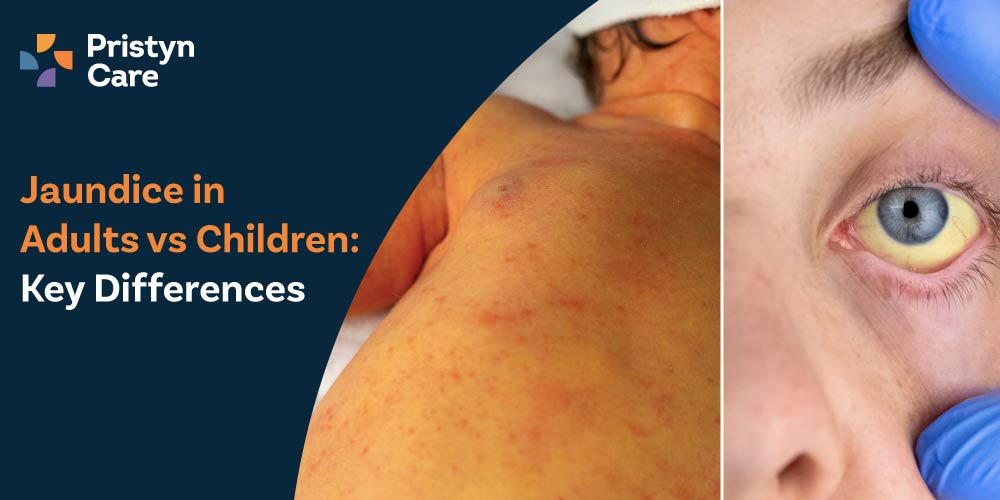
Jaundice in Adults vs Children: Key Differences
Jaundice can affect both adults and children, but its causes, severity, and management often differ significantly between the two groups. While it is commonly seen in newborns, jaundice in adults may indicate more serious underlying conditions.

Social share:


Dedicated Support at Every Step!
Our Doctors are available 24 hours a day, 7 days a week to help you!

Understanding the key differences between jaundice in adults vs children helps in early recognition and appropriate treatment.
Table of Contents
What Is Jaundice?
Jaundice is a condition characterized by:
- Yellowing of the skin and eyes
- Increased levels of bilirubin in the blood
It is a symptom of an underlying issue rather than a disease itself.
No Cost EMI, Hassle-free Insurance Approval
Why Does Jaundice Occur?
Jaundice occurs when:
- The liver cannot process bilirubin effectively
- There is excessive breakdown of red blood cells
- Bile flow is obstructed
Jaundice in Children (Especially Newborns)
Common Causes
- Immature liver function (physiological jaundice)
- Breastfeeding-related jaundice
- Blood group incompatibility
- Infections (in some cases)
Key Features
- Appears within the first few days after birth
- Usually mild and temporary
- Often resolves on its own
Symptoms
- Yellowing of skin and eyes
- Sleepiness
- Poor feeding (in some cases)
Treatment
- Often requires monitoring only
- Phototherapy (light therapy) in moderate cases
- Rarely requires advanced treatment
Jaundice in Adults
Common Causes
- Liver diseases (hepatitis, fatty liver)
- Alcohol-related liver damage
- Gallstones or bile duct blockage
- Hemolytic disorders
- Certain medications
Key Features
- Not considered normal
- Often indicates an underlying medical condition
- May require immediate evaluation
Symptoms
- Yellowing of skin and eyes
- Dark urine
- Pale stools
- Fatigue and weakness
- Abdominal pain or itching
Treatment
- Depends on the underlying cause
- May include medications, procedures, or lifestyle changes
Key Differences Between Adults and Children
1. Cause
- Children: Often due to immature liver
- Adults: Usually due to disease or obstruction
2. Severity
- Children: Typically mild and self-limiting
- Adults: May indicate serious health issues
3. Duration
- Children: Resolves within days to weeks
- Adults: Persists until the underlying cause is treated
4. Treatment Approach
- Children: Monitoring and supportive care
- Adults: Targeted treatment based on diagnosis
5. Risk of Complications
- Children: Low risk if monitored properly
- Adults: Higher risk if left untreated
When Should You Seek Medical Attention?
For Children
- Jaundice appears within 24 hours of birth
- Symptoms worsen or persist beyond expected duration
- Baby shows poor feeding or lethargy
For Adults
- Any sign of jaundice
- Dark urine or pale stools
- Abdominal pain or unexplained fatigue
Why Early Diagnosis Matters
Early identification helps:
- Prevent complications
- Identify underlying causes
- Start appropriate treatment


Final Thoughts
Jaundice in children is often temporary and harmless, especially in newborns, whereas jaundice in adults usually signals an underlying health issue that requires medical attention.
Recognizing these differences ensures timely care and better outcomes for both age groups.
Author:




Related Calculators

Dedicated Support at Every Step!
Our Doctors are available 24 hours a day, 7 days a week to help you!


