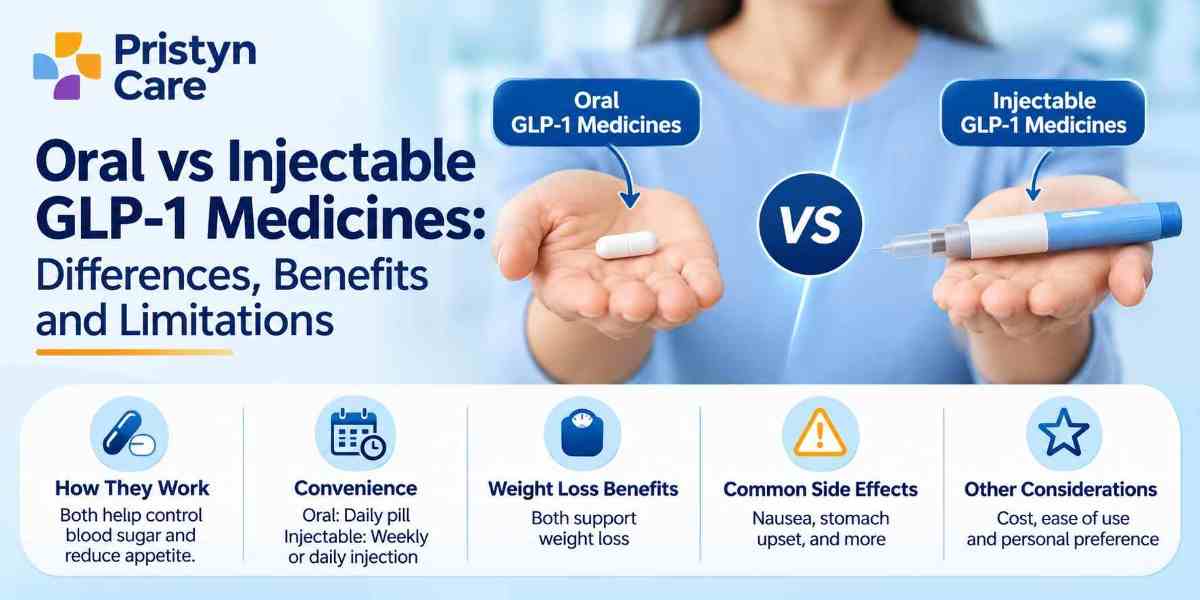
If you are exploring treatment options for type 2 diabetes or weight management, you may have come across GLP-1 medicines. These medications help regulate blood sugar, control appetite and support weight reduction. While most GLP-1 treatments were traditionally available as injections, oral tablets now offer an alternative for people who prefer needle-free medication.
Both forms work through the same hormone pathway but differ in absorption, dosage, administration and convenience. Understanding these differences can help you discuss suitable treatment options with your doctor.
Table of Contents
What Are GLP-1 Medicines?
GLP-1 (glucagon-like peptide-1) is a natural hormone released by the intestine after eating. GLP-1 receptor agonists mimic its action to:
- Stimulate insulin release when blood sugar is elevated.
- Reduce glucagon secretion and excess glucose production.
- Slow stomach emptying, helping you feel full longer.
- Reduce appetite and food intake.
Doctors prescribe specific GLP-1 medicines for type 2 diabetes and chronic weight management in eligible individuals.
What Are Oral GLP-1 Medicines?
Oral GLP-1 medicines are tablets generally taken once daily. Common examples include:
- Oral semaglutide: Available as Rybelsus for type 2 diabetes, it contains an absorption enhancer called SNAC that helps semaglutide pass through the stomach lining. It should be taken in the morning on an empty stomach with a small amount of plain water, at least 30 minutes before eating, drinking or taking other oral medicines.
Higher-dose oral semaglutide has also demonstrated weight-loss benefits in clinical trials, although approved indications vary by country and formulation.
- Orforglipron: This is a non-peptide, small-molecule oral GLP-1 receptor agonist studied for diabetes and obesity. Unlike oral semaglutide, it does not require strict fasting instructions in the clinical regimens studied. Check its current regulatory approval and availability before considering treatment.
What Are Injectable GLP-1 Medicines?
Injectable GLP-1 medicines are administered under the skin, usually in the abdomen, thigh or upper arm, using prefilled injection pens. Most long-acting formulations are taken weekly.
Examples include:
- Ozempic (semaglutide): Helps manage blood sugar in adults with type 2 diabetes.
- Wegovy (semaglutide): Used for chronic weight management in eligible individuals.
- Trulicity (dulaglutide): Helps improve blood sugar control in type 2 diabetes.
- Mounjaro (tirzepatide): Activates both GIP and GLP-1 receptors to support blood sugar and weight management.
Mounjaro is technically a dual GIP and GLP-1 receptor agonist rather than a pure GLP-1 medicine.
Oral vs Injectable GLP-1 Medicines: Key Differences
| Comparison Factor | Oral GLP-1 | Injectable GLP-1 |
| Administration | Tablet | Injection under the skin |
| Frequency | Usually daily | Usually weekly |
| Needles | Not required | Required |
| Food restrictions | Some require an empty stomach | Generally none |
| Absorption | Digestive system | Injection site |
| Storage | Generally easier to carry | Some require refrigeration |
| Convenience | Daily medication routine | Less frequent administration |
The right choice depends on the specific medicine, dosage, approved indication and individual treatment requirements.
Benefits and Limitations of Oral GLP-1 Medicines
Benefits:
- Needle-free treatment: Suitable for people uncomfortable with injections.
- Easy transportation: Tablets are generally convenient to carry while travelling.
- Daily routine: Can be incorporated into an existing medication schedule.
- Weight-management potential: Clinical trials have demonstrated meaningful weight reduction with higher-dose oral semaglutide.
- Newer formulations: Medicines such as orforglipron have been studied without strict fasting requirements.
Limitations:
- Daily dosing requires consistent medication adherence.
- Oral semaglutide must be taken on an empty stomach.
- Absorption may be affected by food and other beverages.
- Diabetes formulations are not automatically approved for weight loss.
- Digestive side effects such as nausea, vomiting and diarrhoea may occur.
Benefits and Limitations of Injectable GLP-1 Medicines
Benefits:
- Weekly administration: Many formulations require only one injection per week.
- Blood sugar control: Help regulate glucose levels and improve HbA1c.
- Weight reduction: Certain injectable medicines have demonstrated significant weight-loss outcomes.
- No fasting requirements: Most can be administered regardless of meal timing.
- Clinical evidence: Established medicines have demonstrated metabolic and cardiovascular benefits in selected patients.
Limitations:
- Needles may cause anxiety or discomfort.
- Certain injection pens require refrigeration.
- Redness, itching or swelling may develop at the injection site.
- Branded medicines can be expensive.
- Digestive side effects may occur.
Are Oral GLP-1 Medicines as Effective as Injections?
Both formulations can support weight reduction, but effectiveness depends on the active ingredient and prescribed dosage.
| Medicine | Clinical Trial | Average Weight Reduction |
| Oral semaglutide 25 mg | OASIS 4 | 13.6% at 64 weeks |
| Injectable semaglutide 2.4 mg | STEP 1 | 14.9% at 68 weeks |
| Orforglipron 36 mg | ATTAIN-1 | 11.2% at 72 weeks |
These findings come from separate clinical trials and should not be considered a direct comparison. Individual results vary according to lifestyle, treatment adherence, medical history and other factors.
Side Effects of Oral and Injectable GLP-1 Medicines
Both formulations can cause similar side effects, including:
- Nausea and vomiting.
- Diarrhoea or constipation.
- Abdominal discomfort and bloating.
- Indigestion and acid reflux.
- Reduced appetite.
Less common but serious risks include pancreatitis, gallbladder problems and dehydration-related kidney complications. Low blood sugar may occur when these medicines are combined with insulin or certain diabetes medications.
People with a personal or family history of medullary thyroid carcinoma or MEN 2 should discuss specific medicine contraindications with their doctor. These medicines also require careful consideration during pregnancy.
Seek medical attention for severe abdominal pain, repeated vomiting or signs of a serious allergic reaction.
How Do GLP-1 Medicines Fit into a Weight-Loss Treatment Plan?
GLP-1 medicines are one approach to weight management. A comprehensive plan may also include dietary changes, physical activity, behavioural support and, when medically appropriate, procedural or surgical treatments.
Depending on BMI, obesity-related conditions and previous treatment outcomes, doctors may discuss options such as:
- Bariatric surgery: These procedures modify stomach capacity and sometimes digestion to support weight reduction. Learn more about bariatric surgery and obesity management.
- Intragastric balloon: This minimally invasive procedure involves placing a temporary balloon inside the stomach to promote fullness and reduce food intake. Explore intragastric balloon treatment for weight management.
- Weight-loss surgery: Procedures such as sleeve gastrectomy and gastric bypass may be considered for eligible individuals. Understand the available weight-loss surgery options.
Explore different weight-loss treatment options to understand the approaches available for managing excess weight. Not everyone requires surgery or medication; treatment should be individualised after medical assessment.
How to Choose Between a GLP-1 Tablet and an Injection?
An oral medicine may suit you if you prefer tablets and can follow daily administration instructions. An injectable medicine may be appropriate if you prefer weekly dosing or find strict tablet-timing requirements difficult.
Your doctor will consider your BMI, blood sugar levels, medical history, existing medications and treatment goals before recommending an option. Neither formulation is automatically better for everyone.
Frequently Asked Questions
- Are oral GLP-1 tablets available for weight loss in India?
Rybelsus is used for type 2 diabetes management in India, but its approval for diabetes does not automatically extend to obesity treatment. Check current regulatory approvals for specific formulations.
- Why must oral semaglutide be taken on an empty stomach?
Food and beverages can interfere with absorption. Taking it with plain water and waiting at least 30 minutes before eating helps improve absorption.
- Which causes fewer side effects: tablets or injections?
Neither is guaranteed to cause fewer side effects. Both can cause digestive symptoms, depending on the medicine and individual tolerance.
- Can I switch from injections to tablets?
Switching may be possible, but your doctor must determine the appropriate medicine, dosage and timing. Never switch independently.
- Can people without diabetes take GLP-1 medicines?
Yes. Certain GLP-1-based medicines are approved for weight management in eligible adults without diabetes. Medical assessment is necessary before treatment.
- Are GLP-1 medicines a permanent solution for weight loss?
Not necessarily. Some individuals regain weight after stopping treatment. Long-term weight management requires lifestyle changes and medical monitoring.
Conclusion
Oral and injectable GLP-1 medicines offer different approaches to managing type 2 diabetes and supporting weight reduction. Tablets provide a needle-free alternative, while injections often offer less frequent administration and established clinical evidence.
The right treatment depends on your medical history, weight-management goals and individual requirements. Consult a qualified doctor to understand which option is appropriate. Never start, stop or switch GLP-1 medicines without medical advice.