


 Views: 1
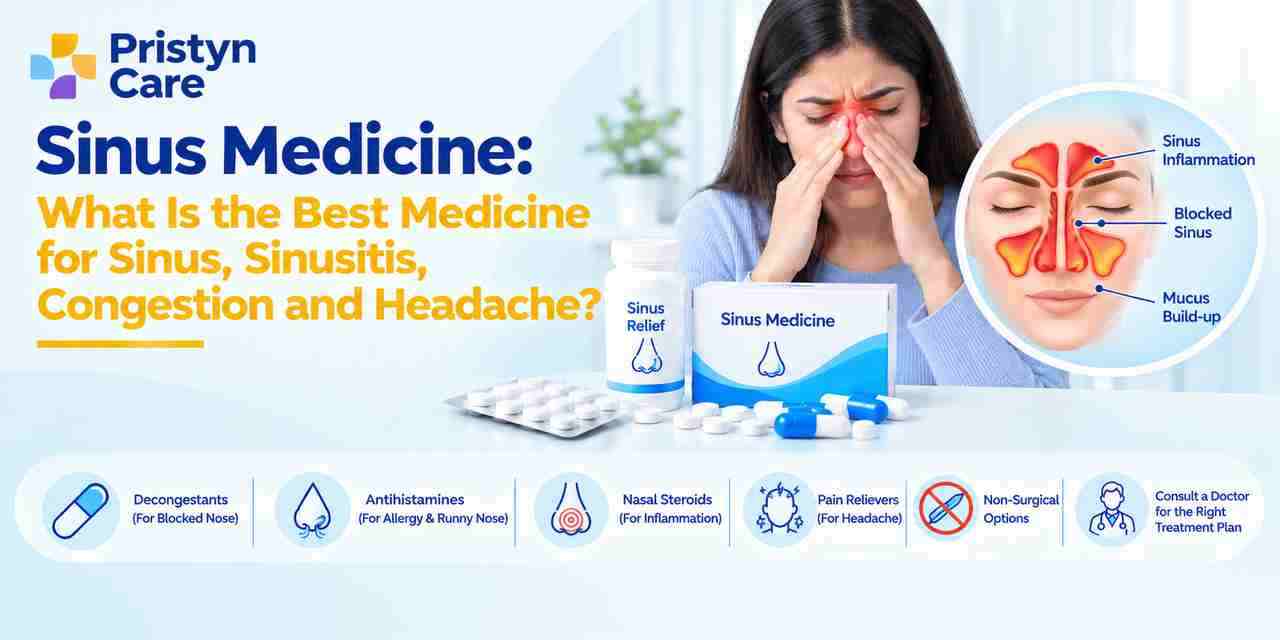
Sinus Medicine: What Is the Best Medicine for Sinus, Sinusitis, Congestion and Headache?
Sinus problems are common and can cause symptoms such as a blocked or stuffy nose, facial pressure, headache, nasal discharge, reduced sense of smell and difficulty breathing through the nose.



Dedicated Support at Every Step!
Our Doctors are available 24 hours a day, 7 days a week to help you!

If you are searching for the best sinus medicine, the right treatment depends on what is causing the symptoms. Sinus congestion caused by an allergy may require a different treatment from bacterial sinusitis, while chronic sinusitis with nasal polyps may need long-term medical treatment or a procedure.
There is no single best medicine for sinus that works for everyone.
Treatment may include saline nasal rinses, nasal sprays, antihistamines, pain-relieving medicines, corticosteroid nasal sprays or antibiotics in selected cases. Ayurvedic and homeopathic medicines are also commonly searched for, but they should not automatically be considered substitutes for evidence-based treatment.
Table of Contents
What Is a Sinus Problem?
The sinuses are air-filled spaces around the nose, cheeks, forehead and eyes. They produce mucus that normally drains into the nasal passages.
When the lining of the nose and sinuses becomes inflamed or the drainage pathways become blocked, sinus symptoms can develop.
Common causes include:
- Viral respiratory infections
- Allergies
- Acute sinusitis
- Chronic sinusitis
- Nasal polyps
- Deviated nasal septum
- Environmental irritants
- Recurrent respiratory infections
A “sinus problem” is therefore a broad term rather than one specific disease.
No Cost EMI, Hassle-free Insurance Approval
What Are the Symptoms of Sinusitis?
Common sinus symptoms include:
- Blocked or stuffy nose
- Runny nose
- Thick nasal discharge
- Postnasal drip
- Facial pressure
- Facial pain
- Headache
- Pain around the eyes or forehead
- Reduced sense of smell
- Bad breath
- Cough
- Sore throat
- Feeling of pressure in the face
- Fever in some infections
The symptoms and their duration help doctors determine the likely cause.
What Is the Best Medicine for Sinus?
There is no universal best sinus medicine.
Treatment depends on whether the symptoms are caused by:
- Viral infection
- Allergy
- Acute sinusitis
- Chronic sinusitis
- Bacterial infection
- Nasal polyps
- Structural blockage
For example, an antihistamine may be useful when allergies are driving symptoms, while a corticosteroid nasal spray may be more appropriate for persistent inflammation or allergic rhinitis.
Antibiotics are not routinely required for every case of sinusitis.
Sinus Medicine Names
Depending on the cause and symptoms, doctors may recommend different medicines.
| Medicine/Treatment | Common purpose |
| Saline nasal spray/rinse | Helps clear mucus and moisturise the nasal passages |
| Intranasal corticosteroid | Reduces nasal and sinus inflammation |
| Antihistamine | Helps control allergy-related symptoms |
| Pain reliever | Helps reduce headache or facial pain |
| Decongestant | Can temporarily reduce nasal congestion in suitable patients |
| Antibiotic | Used when bacterial infection is suspected or diagnosed |
| Mucus-thinning treatment | May help with thick secretions in selected cases |
| Other prescription medicines | Used according to the underlying condition |
The appropriate medicine depends on the cause rather than simply the intensity of congestion.
Sinus Congestion Medicine
A blocked nose is one of the most common sinus symptoms.
Treatment may include:
- Saline nasal spray
- Saline nasal irrigation
- Intranasal corticosteroid sprays
- Decongestants for selected patients
- Allergy treatment when allergies are responsible
- Treatment of an underlying infection when appropriate
Saline nasal rinse
Saline irrigation can help wash mucus, allergens and irritants from the nasal passages.
Use clean, appropriately prepared water for nasal irrigation. Improperly prepared water can introduce harmful microorganisms.
Decongestants
Decongestant medicines may temporarily relieve nasal blockage.
However, some decongestant nasal sprays should not be used continuously for prolonged periods because they can cause rebound congestion.
People with conditions such as high blood pressure, heart disease or certain other medical conditions may need medical advice before using some oral decongestants.
Sinus Headache Medicine
Sinus-related inflammation or congestion can cause facial pressure and headache.
Treatment may include:
- Paracetamol/acetaminophen or another suitable pain reliever
- Saline nasal irrigation
- Intranasal corticosteroids when inflammation is present
- Treatment of allergies
- Treatment of sinusitis when diagnosed
However, not every headache with facial pressure is caused by sinusitis.
Migraine can sometimes cause symptoms that feel like a sinus headache, including facial pressure, nasal congestion or watery eyes.
If headaches are recurrent or severe, the underlying cause should be evaluated rather than repeatedly taking sinus medicine.
Best Medicine for Sinus Headache and Pressure
The best treatment depends on why the pressure is occurring.
If congestion and inflammation are contributing to the symptoms, treating the nasal and sinus inflammation may help.
A suitable pain reliever may also provide temporary relief.
However, severe, recurrent or one-sided headaches should not automatically be attributed to sinus disease.
Sinus Pain Relief Medicine
For mild sinus-related pain, a suitable over-the-counter pain reliever may help.
Other measures can include:
- Warm compresses over the face
- Adequate fluids
- Saline nasal irrigation
- Rest
- Treating nasal congestion
- Treating allergies when present
Persistent facial pain should be evaluated because facial pain can have causes other than sinusitis.
Sinus Infection Medicine
“Sinus infection” may refer to viral or bacterial sinusitis.
Most acute sinus infections are associated with viral respiratory infections and may improve without antibiotics.
Antibiotics
Antibiotics may be considered when bacterial sinusitis is suspected based on the clinical pattern and severity.
They should not be taken simply because nasal mucus is thick, yellow or green.
Unnecessary antibiotic use can contribute to:
- Antibiotic resistance
- Diarrhoea
- Allergic reactions
- Other medicine-related side effects
A doctor can determine whether antibiotics are appropriate.
Sinus Infection Medicine Name
There is no single sinus infection medicine name that is appropriate for every infection.
When bacterial sinusitis requires antibiotics, the choice depends on:
- Patient age
- Allergy history
- Severity
- Duration of symptoms
- Previous antibiotic use
- Local resistance patterns
- Other medical conditions
Do not self-start leftover antibiotics or use antibiotics prescribed for someone else.
Over-the-Counter Sinus Medicine
Depending on the symptoms and individual health conditions, commonly available OTC options may include:
- Saline nasal sprays
- Saline rinse products
- Certain pain relievers
- Some antihistamines
- Selected decongestants
OTC medicines are useful for symptom relief, but they do not necessarily treat the underlying cause.
Read the label carefully and avoid taking multiple combination cold-and-flu products that contain the same active ingredient.
Sinus Medicine Tablet
Sinus symptoms can sometimes be treated with oral medicines, depending on the cause.
These may include:
- Pain-relieving tablets
- Antihistamine tablets
- Selected oral decongestants
- Other medicines prescribed according to the diagnosis
- Antibiotics when bacterial sinusitis requires them
A tablet is not necessarily better than a nasal treatment. For many inflammatory nasal conditions, a locally acting nasal medicine may be more appropriate.
Sinus Medicine Spray
Nasal sprays can be particularly useful because they deliver medicine directly to the nasal passages.
Different sprays serve different purposes.
Saline nasal spray
Helps moisturise the nose and clear mucus and irritants.
Steroid nasal spray
Intranasal corticosteroids reduce inflammation and can be particularly useful for:
- Allergic rhinitis
- Chronic rhinosinusitis
- Nasal polyps
- Persistent nasal inflammation
They are not the same as decongestant sprays.
Decongestant nasal spray
These sprays can provide short-term relief from nasal blockage but should generally not be used continuously for prolonged periods because of rebound congestion.
Sinus Allergy Medicine
Allergies can cause:
- Sneezing
- Runny nose
- Nasal congestion
- Itchy nose
- Watery eyes
- Postnasal drip
Treatment may include:
- Antihistamines
- Intranasal corticosteroids
- Saline irrigation
- Allergen avoidance
- Other allergy treatments in selected patients
If allergy symptoms are persistent, treating the allergy may help reduce recurring sinus-related symptoms.
Homeopathic Medicine for Sinus
Homeopathic medicine is commonly searched for sinusitis, sinus allergy, sinus headaches and chronic sinus problems.
However, there is no scientifically established homeopathic medicine proven to cure sinusitis or permanently remove the underlying cause of chronic sinus disease.
Symptoms of sinusitis can naturally improve and fluctuate, particularly when caused by viral infections or allergies. Therefore, improvement after using a homeopathic product does not necessarily demonstrate that it treated the underlying condition.
People with recurrent or chronic symptoms should obtain an appropriate diagnosis instead of relying exclusively on homeopathy.
Best Homeopathic Medicine for Sinus
There is no scientifically established best homeopathic medicine for sinus.
Different homeopathic products may be promoted for:
- Sinus headache
- Sinus congestion
- Sinus allergy
- Chronic sinusitis
- Sinus infection
However, there is insufficient high-quality evidence to establish any particular homeopathic medicine as a reliable cure for these conditions.
Homeopathic Medicine for Sinus Allergy
If sinus symptoms are triggered by allergies, the underlying problem is usually allergic inflammation of the nasal passages.
Evidence-based treatment may include antihistamines, intranasal corticosteroids, saline irrigation and other allergy treatments depending on the patient.
Homeopathic products should not replace effective allergy management, particularly when symptoms are persistent.
Homeopathic Medicine for Chronic Sinusitis
Chronic sinusitis lasts much longer than an ordinary short-term cold or viral infection.
Symptoms may include:
- Persistent nasal blockage
- Long-term nasal discharge
- Facial pressure
- Reduced smell
- Postnasal drip
- Chronic cough
There is no scientifically established homeopathic medicine proven to eliminate chronic sinusitis.
Persistent symptoms should be evaluated by an ENT specialist to determine whether allergies, nasal polyps, structural blockage or another condition is responsible.
Ayurvedic Medicine for Sinus
Ayurvedic medicines are frequently searched for sinusitis, sinus allergy and sinus headaches.
Some Ayurvedic formulations and traditional practices are marketed for respiratory and nasal health.
However, there is no universally proven Ayurvedic medicine that can permanently cure every type of sinusitis or sinus problem.
If symptoms are recurrent or severe, it is important to establish the diagnosis before relying on herbal treatment.
People taking prescription medicines should also tell their doctor about any Ayurvedic products they use because herbal ingredients can sometimes interact with medicines.
 Doctor available
4.5/5

15+ Years Experience Overall
Doctor available
4.5/5
15+ Years Experience Overall
Doctor available
4.8/5
21+ Years Experience Overall
Doctor available
5.0/5
18+ Years Experience Overall
Doctor available
4.5/5
18+ Years Experience Overall
Doctor available
4.5/5
17+ Years Experience Overall
Doctor available.jpg/1674658718382_ban-Icon.png)
4.5/5
16+ Years Experience Overall
Doctor available
4.5/5
15+ Years Experience Overall
Doctor available
5.0/5
15+ Years Experience Overall
Doctor available
4.6/5
14+ Years Experience Overall
Doctor available
5.0/5
14+ Years Experience Overall
Doctor available
5.0/5
10+ Years Experience Overall
Doctor available
5.0/5
8+ Years Experience Overall
Doctor available
4.5/5
26+ Years Experience Overall
Doctor available
4.5/5
23+ Years Experience Overall
Doctor available
5.0/5
16+ Years Experience Overall
Doctor available
4.5/5
16+ Years Experience Overall
Doctor available
4.5/5
15+ Years Experience Overall
Doctor available
5.0/5
13+ Years Experience Overall
Doctor available
4.5/5
12+ Years Experience Overall
Doctor available
5.0/5
12+ Years Experience Overall
Doctor available
4.5/5
11+ Years Experience Overall
Doctor available
4.5/5
10+ Years Experience Overall
Best Ayurvedic Medicine for Sinusitis
There is no single best Ayurvedic medicine for sinusitis supported by sufficient evidence to recommend it as a universal cure.
Ayurvedic products should not delay medical evaluation when sinus symptoms include:
- Persistent symptoms
- Recurrent sinus infections
- Severe facial pain
- High fever
- Vision changes
- Swelling around the eyes
- Severe headache
- Symptoms affecting daily life
Himalaya Medicine for Sinusitis
Searches for Himalaya Ayurvedic medicine for sinusitis and Himalaya medicine for sinus allergy reflect interest in branded herbal products.
However, a branded Ayurvedic product should not automatically be considered a proven treatment for sinusitis.
Before using any product, check:
- Complete ingredient list
- Recommended dosage
- Possible medicine interactions
- Whether it is suitable for the person's condition
- Whether an ENT or doctor has confirmed the diagnosis
Persistent sinus symptoms should not be treated indefinitely with OTC or herbal products without evaluation.
Kottakkal Ayurvedic Medicine for Sinusitis
Kottakkal is another brand frequently associated with Ayurvedic treatment searches.
However, there is no single Kottakkal product that can be considered a universal cure for sinusitis.
The cause of sinus symptoms should first be identified, particularly when symptoms are chronic or recurrent.
Patanjali Medicine for Sinus
Patanjali sinus medicines are also searched for by people looking for Ayurvedic or natural treatment.
A Patanjali product should not automatically be considered a substitute for conventional treatment.
If sinus symptoms persist despite using an Ayurvedic product, an ENT evaluation may be necessary to identify conditions such as:
- Chronic rhinosinusitis
- Nasal polyps
- Deviated septum
- Allergic rhinitis
- Recurrent infection
Baidyanath Medicine for Sinusitis
Baidyanath products are also searched for as Ayurvedic treatments for sinusitis.
However, there is no universally proven branded Ayurvedic medicine that can eliminate every type of sinus disease.
People should review the ingredients and discuss alternative medicines with their doctor, particularly when they are taking prescription medicines.
Siddha Medicine for Sinus
Siddha medicine is sometimes used or searched for sinus and respiratory symptoms.
However, there is insufficient evidence to establish a Siddha medicine as a universal cure for chronic sinusitis or recurrent sinus infections.
Persistent symptoms should be medically evaluated before relying exclusively on traditional treatment.
Unani Medicine for Sinus
Unani medicines are also searched for sinusitis and sinus congestion.
While some people may use traditional approaches, there is no universally established Unani medicine proven to permanently eliminate chronic sinus disease.
Medical evaluation remains important for persistent or recurrent symptoms.
Natural Sinus Medicine
Natural measures can provide symptom relief for some people.
These may include:
- Saline nasal irrigation
- Drinking adequate fluids
- Rest
- Warm compresses
- Avoiding cigarette smoke
- Avoiding known allergens
- Using a humidifier when appropriate
- Maintaining good indoor air quality
However, natural measures do not necessarily treat bacterial infection, structural nasal obstruction or chronic sinus disease.
Sinus Cough Medicine
Sinus problems can sometimes cause coughing because mucus drains from the nose into the throat. This is commonly called postnasal drip.
Treatment focuses on the underlying cause.
Depending on the cause, this may involve:
- Saline irrigation
- Nasal corticosteroids
- Antihistamines for allergies
- Treatment of sinus inflammation
- Adequate hydration
A persistent cough should not automatically be attributed to sinus disease because asthma, reflux, respiratory infection and other conditions can also cause chronic cough.

Free Sinusitis Surgery Cost Calculator

Our care coordinator will call you shortly.
Can Sinusitis Be Cured With Medicine?
Many episodes of acute sinusitis improve with medical treatment and time.
However, chronic or recurrent sinusitis may require longer-term management.
Medicine may help:
- Reduce inflammation
- Improve nasal drainage
- Control allergies
- Reduce congestion
- Treat bacterial infection when present
- Control symptoms
But medicines may not correct structural problems such as:
- Deviated nasal septum
- Significant anatomical blockage
- Certain nasal polyps
- Other drainage pathway problems
In such cases, an ENT specialist may discuss procedural treatment.
When Does Sinusitis Need Surgery?
Most sinus problems do not require surgery.
However, an ENT specialist may consider a procedure when:
- Chronic sinusitis persists despite appropriate medical treatment
- Nasal polyps cause significant obstruction
- Structural blockage prevents adequate sinus drainage
- Recurrent sinus infections significantly affect quality of life
- Complications develop
- Medical treatment does not adequately control symptoms
A common procedure is Functional Endoscopic Sinus Surgery (FESS).
FESS uses an endoscope through the nose to improve sinus drainage and ventilation without external facial incisions.
If a deviated nasal septum contributes significantly to obstruction, septoplasty may also be considered.
Sinus Medicine vs Sinus Surgery
| Treatment | Main purpose | Suitable for |
| Saline rinse | Clears mucus and allergens | Congestion and supportive care |
| Antihistamine | Controls allergy symptoms | Allergic rhinitis |
| Steroid nasal spray | Reduces inflammation | Allergic/chronic inflammatory disease |
| Decongestant | Short-term congestion relief | Selected acute symptoms |
| Antibiotic | Treats bacterial infection | Selected bacterial sinusitis |
| Ayurvedic medicine | Traditional/herbal approach | Evidence varies |
| Homeopathy | Alternative approach | No established cure |
| FESS | Improves sinus drainage | Selected chronic/refractory disease |
| Septoplasty | Corrects septal deviation | Structural nasal obstruction |
Sinusitis vs Sinus Allergy
These conditions can overlap but are not identical.
| Feature | Sinusitis | Sinus Allergy/Allergic Rhinitis |
| Main problem | Sinus/nasal inflammation | Allergy-driven nasal inflammation |
| Nasal congestion | Common | Common |
| Facial pressure | More common | Can occur |
| Sneezing | Less prominent | Common |
| Itchy nose/eyes | Less typical | Common |
| Thick discharge | Can occur | Usually less prominent |
| Fever | Can occur in some infections | Not typical |
| Treatment | Depends on cause | Allergy-focused treatment |
A person can also have both allergic rhinitis and chronic rhinosinusitis.
How Is Sinusitis Diagnosed?
An ENT specialist may evaluate:
- Duration of symptoms
- Nasal blockage
- Nasal discharge
- Facial pain or pressure
- Sense of smell
- Allergy history
- Previous sinus infections
- Medication response
Depending on the situation, examination may include nasal endoscopy.
A CT scan of the sinuses may be recommended for selected patients, particularly when chronic disease or surgery is being considered.
Not every person with a sinus headache needs a CT scan.
What Happens If Sinusitis Is Left Untreated?
Many mild acute sinus infections improve without complications.
However, persistent or poorly controlled chronic sinus disease can lead to:
- Ongoing nasal obstruction
- Reduced sense of smell
- Persistent facial pressure
- Sleep disturbance
- Recurrent infections
- Reduced quality of life
Rarely, severe sinus infections can spread to nearby structures, including the tissues around the eyes or, very rarely, the brain.
When Should You See an ENT Specialist?
Consider seeing an ENT specialist if:
- Sinus symptoms keep returning
- Symptoms persist for several weeks
- Nasal blockage is affecting sleep
- You have recurrent sinus infections
- You have persistent facial pressure
- Your sense of smell has significantly decreased
- Nasal sprays and other treatment are not helping
- You have suspected nasal polyps
- You are considering sinus surgery
When Is Sinusitis an Emergency?
Seek urgent medical attention if sinus symptoms are accompanied by:
- Swelling or redness around the eye
- Vision changes
- Severe headache unlike usual headaches
- Confusion
- Neck stiffness
- Significant facial swelling
- Severe illness or high fever
These symptoms can indicate a rare but potentially serious complication.
Frequently Asked Questions
What is the best medicine for sinus?
There is no single best sinus medicine. Treatment depends on whether symptoms are caused by allergies, infection, inflammation, nasal polyps or structural blockage.
What is the best medicine for sinus headache?
A suitable pain reliever may help, while treating the underlying congestion or inflammation can provide longer-term relief. However, recurrent headaches should be evaluated because migraines can mimic sinus headaches.
What is the best medicine for sinus congestion?
Saline nasal irrigation, intranasal corticosteroids and selected short-term decongestants may help depending on the cause. Persistent congestion needs evaluation.
What is the best medicine for sinus infection?
Most acute sinus infections are viral and do not require antibiotics. Antibiotics may be prescribed when bacterial sinusitis is suspected or diagnosed.
What is the sinus medicine name?
There is no single sinus medicine name. Common treatment categories include saline sprays, corticosteroid nasal sprays, antihistamines, pain relievers and selected decongestants.
Can I take sinus medicine without a prescription?
Some saline products, pain relievers, antihistamines and other OTC medicines may be available without a prescription. However, persistent symptoms should be evaluated rather than treated indefinitely with OTC medicines.
Is there a medicine that permanently cures sinusitis?
There is no single medicine that permanently cures every type of sinusitis. Treatment depends on the underlying cause and whether structural problems are present.
Does homeopathy cure sinusitis?
There is no scientifically established homeopathic medicine proven to permanently cure sinusitis.
What is the best Ayurvedic medicine for sinusitis?
There is no single Ayurvedic medicine proven to be the universally best or permanent cure for sinusitis.
Can Patanjali medicine cure sinus?
A Patanjali Ayurvedic product should not automatically be considered a permanent cure for sinusitis. Persistent or recurrent symptoms should be medically evaluated.
Is Himalaya medicine good for sinus allergy?
Himalaya has herbal products marketed for various health conditions, but suitability depends on the individual's symptoms and diagnosis. Evidence for herbal products varies, and they should not replace appropriate allergy treatment.
Can sinusitis be cured without surgery?
Yes. Many cases improve with medicines and supportive care. Surgery is generally considered only when appropriate medical treatment does not adequately control chronic disease or when structural problems require correction.
When does sinusitis require surgery?
Surgery may be considered for chronic or recurrent sinus disease that remains uncontrolled despite appropriate treatment, significant nasal polyps, structural obstruction or certain complications.


Conclusion
There is no single best sinus medicine because sinus symptoms can have different causes.
For sinus congestion, saline irrigation, appropriate nasal sprays and selected decongestants may provide relief. For sinus allergy, antihistamines and intranasal corticosteroids can be useful. For sinus infection, antibiotics are reserved for cases where bacterial infection is suspected or diagnosed.
Ayurvedic, Homeopathic, Siddha and Unani medicines are commonly searched for sinus problems, along with branded products such as Patanjali, Himalaya, Kottakkal, Baidyanath and SBL. However, there is no scientifically established alternative or branded medicine that can be considered a universal permanent cure for sinusitis.
Medical Disclaimer: This information is intended for educational purposes only and should not replace consultation with a qualified doctor or ENT specialist. Do not start antibiotics, corticosteroid medicines or other prescription treatments without appropriate medical advice.
Social share:




Related Calculators

Dedicated Support at Every Step!
Our Doctors are available 24 hours a day, 7 days a week to help you!
Related Calculators
Get In Touch with our expert doctors !
- please enter 10 digit number.


