


 Views: 0
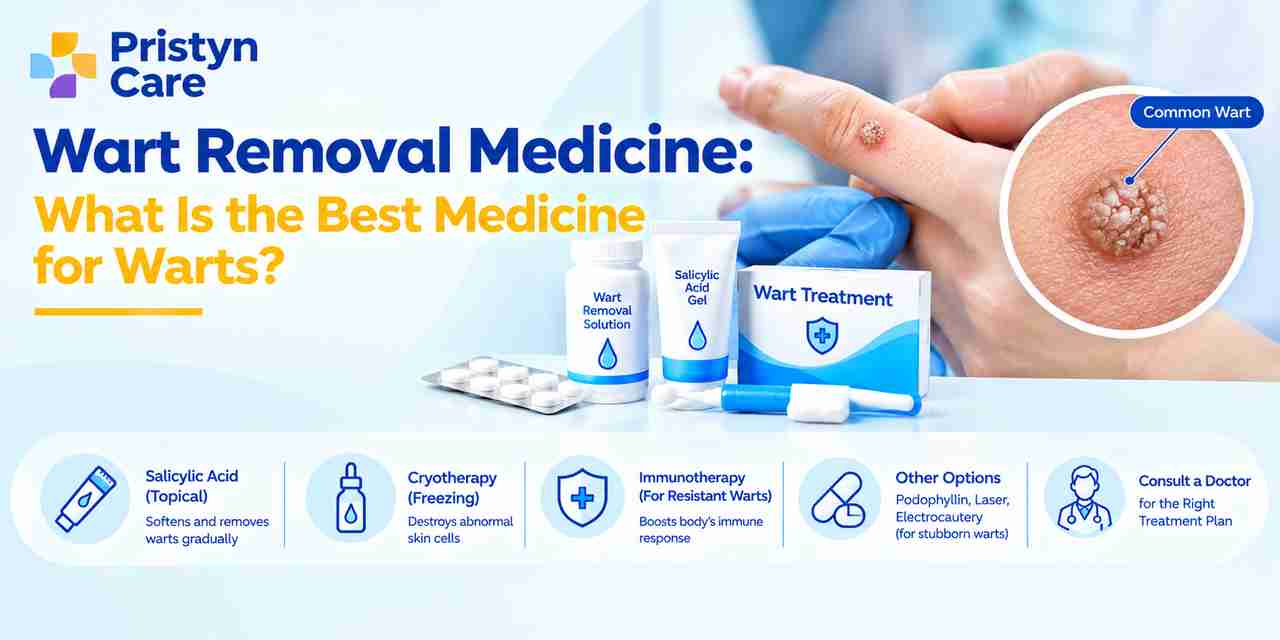
Wart Removal Medicine: What Is the Best Medicine for Warts?
Warts are small, rough or smooth growths that develop on the skin. Most common warts are caused by certain types of human papillomavirus (HPV) that infect the outer layer of the skin.




Dedicated Support at Every Step!
Our Doctors are available 24 hours a day, 7 days a week to help you!

Warts can appear on the:
- Hands and fingers
- Feet and soles
- Face
- Neck
- Around the nails
- Genital area
- Other parts of the body
There is no single best medicine for every wart. Treatment depends on the wart's location, size, number, duration and whether it is actually a wart rather than a mole, skin tag or another skin growth.
Important: Genital warts should be medically evaluated. Do not use over-the-counter wart-removal acids or home remedies on genital skin unless specifically advised by a healthcare professional.
Table of Contents
What Causes Warts?
Most common warts are caused by infection with certain types of HPV.
The virus can enter the skin through small cuts, scratches or damaged skin and can spread through:
- Direct skin-to-skin contact
- Sharing personal items
- Picking or scratching warts
- Contact with contaminated surfaces
- Walking barefoot in some communal wet areas
Genital warts are also caused by HPV, but the HPV types involved and the treatment approach can differ from those responsible for common hand or foot warts.
No Cost EMI, Hassle-free Insurance Approval
What Do Warts Look Like?
Depending on the type, warts may appear as:
- Rough, raised growths
- Small skin-coloured bumps
- Flat, smooth lesions
- Thickened areas on the sole of the foot
- Finger-like projections
- Multiple clustered growths
- Lesions around the nails
A wart may sometimes have tiny dark dots within it. These can represent small blood vessels.
Not every skin growth is a wart. Moles, skin tags, seborrheic keratoses, corns and some skin cancers can sometimes resemble warts.
What Is the Best Wart Removal Medicine?
There is no universal "best wart removal medicine."
Some warts disappear without treatment because the immune system eventually clears the HPV infection. Others persist for months or years and may require treatment.
Common wart treatments include:
| Treatment | Common use |
| Salicylic acid | Common treatment for many common and plantar warts |
| Cryotherapy | Freezes and destroys wart tissue |
| Cantharidin | Used by some dermatologists for selected warts |
| Prescription topical medicines | Used for selected types of warts |
| Electrosurgery/curettage | Removes selected persistent warts |
| Laser treatment | Considered for selected resistant or difficult warts |
| Immunotherapy | May be considered for multiple or resistant warts |
| Genital wart treatments | Specific prescription or clinician-applied treatments |
The right treatment depends on the location and type of wart.
Wart Removal Medicine
For common warts, salicylic acid is one of the commonly used topical treatments.
It gradually removes layers of the wart and may require repeated application over a period of time.
Treatment may work better when the thickened skin is carefully softened and treated according to product instructions.
However, salicylic acid should not be casually applied to:
- Genital warts
- Moles
- Unknown skin growths
- Irritated or infected skin
- Certain facial lesions
People with diabetes, poor circulation, reduced sensation or significant immune problems should seek medical advice before treating foot or other warts themselves.
Over-the-Counter Medicine for Warts
OTC wart treatments commonly contain ingredients such as salicylic acid.
They may be useful for selected common warts and plantar warts.
When using an OTC wart treatment:
- Follow the product instructions carefully
- Protect the surrounding healthy skin when instructed
- Do not cut or burn the wart yourself
- Avoid sharing files, towels or other personal items
- Stop if severe pain, bleeding or significant irritation develops
- Seek medical advice if the growth is uncertain
OTC treatment may take several weeks and sometimes does not work.
Plantar Wart Medicine
A plantar wart develops on the sole of the foot.
Because walking puts pressure on the lesion, plantar warts may grow inward and become painful.
Symptoms can include:
- A rough spot on the sole
- Pain while walking
- A thickened area of skin
- Black or dark pinpoint spots
- Interruption of normal skin lines around the lesion
Salicylic acid is commonly used for selected plantar warts.
Other options include:
- Cryotherapy
- Prescription treatments
- Professional removal
- Other dermatological procedures for resistant cases
A thickened lesion on the foot is not always a wart. Corns and calluses can look similar.
Foot Wart Medicine
Foot warts can sometimes be treated with OTC salicylic acid preparations.
However, professional assessment is advisable when:
- The lesion is very painful
- There are multiple lesions
- It keeps returning
- It bleeds
- The diagnosis is uncertain
- You have diabetes
- You have poor circulation
- You have reduced sensation in your feet
- Home treatment has failed
A dermatologist can distinguish plantar warts from corns, calluses and other lesions.
Genital Wart Medicine
Genital warts require a different treatment approach from ordinary hand or foot warts.
They may appear as:
- Small flesh-coloured bumps
- Multiple clustered growths
- Raised or cauliflower-like lesions
- Single or multiple lesions around the genital or anal area
Treatment options may include clinician-prescribed topical medicines or procedures such as:
- Cryotherapy
- Electrosurgical removal
- Excision
- Other clinician-applied treatments
The appropriate treatment depends on the location, size and number of lesions.
Do not use ordinary wart-removal medicine on genital warts
Products designed for common hand or foot warts can cause significant irritation or chemical burns when applied to genital skin.
A genital growth should also be properly diagnosed because not every genital bump is a wart.
Can Medicine Cure Genital Warts Permanently?
Treatment can remove visible genital warts, but it does not necessarily eliminate HPV from the body immediately.
Genital warts may recur after treatment, particularly during the period when HPV remains active.
Some HPV infections are eventually controlled by the immune system.
HPV vaccination can also help prevent infection with HPV types associated with several HPV-related diseases and is an important preventive measure where appropriate.
Homeopathic Medicine for Warts
People commonly search for:
- Homeopathic medicine for warts
- Best homeopathic medicine for warts
- Wart removal homeopathic medicine
- Homeo medicine for warts
- Warts homoeopathic medicine
- Homeopathic medicine for warts on the face
- Homeopathic medicine for warts on the neck
- Homeopathic medicine for filiform warts
- Homeopathic medicine for genital warts
However, there is no scientifically established homeopathic medicine proven to reliably remove or permanently cure warts.
Warts can sometimes disappear naturally, which can make it difficult to determine whether a treatment caused the improvement.
If a wart is persistent, changing or located in the genital area, appropriate medical assessment should not be delayed in favour of homeopathic treatment alone.
Homeopathic Medicine for Warts on the Face
Facial warts require additional caution because aggressive wart-removal products can cause:
- Burns
- Scarring
- Changes in skin colour
- Persistent irritation
For this reason, facial warts should generally be assessed by a dermatologist before attempting treatment.
There is no scientifically proven homeopathic medicine that can reliably remove facial warts.
Homeopathic Medicine for Warts on the Neck
Growths on the neck may not always be warts.
Possible causes include:
- Common warts
- Filiform warts
- Skin tags
- Seborrheic keratoses
- Other benign skin growths
A dermatologist can determine what the growth actually is before treatment.
Homeopathic medicine has not been scientifically established as a reliable treatment for removing these growths.
 Doctor available
4.5/5

48+ Years Experience Overall
Doctor available
MBBS, Diploma in Radio Diagnosis & MD-TB & Respiratory Diseases
₹1200₹600Consultation Fee
4.5/5
47+ Years Experience Overall
Doctor available
4.5/5
45+ Years Experience Overall
Doctor available
4.5/5
45+ Years Experience Overall
Doctor available
5.0/5
44+ Years Experience Overall
Doctor available
MBBS, Diploma in Ophthalmologist, MS-Ophthalmologist
₹1200₹600Consultation Fee
4.5/5
43+ Years Experience Overall
Doctor available
4.5/5
42+ Years Experience Overall
Doctor available
4.5/5
42+ Years Experience Overall
Doctor available
4.5/5
41+ Years Experience Overall
Doctor available
4.5/5
41+ Years Experience Overall
Filiform Warts
Filiform warts are thin, finger-like growths that commonly occur around:
- The face
- Mouth
- Nose
- Eyelids
- Neck
Because of their location, self-treatment can be risky.
A dermatologist may use techniques such as:
- Cryotherapy
- Excision
- Electrosurgery
- Other appropriate dermatological procedures
Avoid applying strong acids or wart-removal products near the eyes or other sensitive facial areas without professional guidance.
Homeopathic Medicine for Moles and Warts
Moles and warts are different types of skin growths.
A mole should not automatically be treated as a wart.
A changing mole, especially one that:
- Changes in size
- Changes in colour
- Develops irregular borders
- Bleeds
- Becomes painful
- Develops a persistent ulcer
should be evaluated by a dermatologist.
Self-treatment with wart-removal products can damage the lesion and potentially delay diagnosis.
Ayurvedic Medicine for Wart Removal
People may search for:
- Ayurvedic medicine for wart removal
- Ayurvedic medicine for warts
- Best Ayurvedic medicine for warts
- Patanjali Ayurvedic medicine for warts
Some traditional remedies are marketed for skin growths, but there is no universally proven Ayurvedic medicine that reliably removes all types of warts.
Some herbal or caustic preparations can irritate or burn the skin.
This is particularly important for:
- Facial warts
- Genital warts
- Warts near the eyes
- Large or bleeding lesions
A persistent skin growth should be diagnosed before applying any potentially irritating product.
Patanjali Ayurvedic Medicine for Warts
People specifically searching for Patanjali medicine for warts should understand that a brand name does not establish that a product will safely or permanently remove a wart.
Before using any herbal preparation:
- Check the ingredients
- Follow product directions
- Avoid applying unverified preparations to sensitive skin
- Do not apply them to genital skin or near the eyes without professional advice
- Stop if significant irritation occurs
Can Warts Be Removed Permanently With Medicine?
Sometimes a wart disappears completely after treatment or resolves naturally.
However, treatment does not guarantee that another wart will never appear.
This is because HPV can remain in surrounding skin even after the visible wart has disappeared.
Factors affecting recurrence include:
- Immune response
- Wart type
- Location
- Duration of infection
- Number of warts
- Treatment method
Persistent or recurrent warts may require a different treatment approach.
Wart Treatment Medicine vs Wart Removal Procedures
| Treatment | Suitable for | Main limitation |
| Salicylic acid | Selected common/plantar warts | Requires repeated treatment |
| Cryotherapy | Common and selected resistant warts | May require multiple sessions |
| Cantharidin | Selected warts | Usually clinician-applied |
| Prescription topical treatment | Selected wart types | Requires medical assessment |
| Electrosurgery/curettage | Persistent warts | May cause scarring |
| Laser treatment | Selected resistant warts | More specialised treatment |
| Immunotherapy | Selected multiple/resistant warts | Not suitable for every patient |
| Genital wart treatment | Genital warts | Requires site-specific treatment |
When Should a Wart Be Removed by a Dermatologist?
Professional treatment may be appropriate if:
- The wart is painful
- It keeps coming back
- There are many warts
- The wart is large
- It is on the face
- It is near the eye
- It is on or around the genitals
- It is bleeding
- The diagnosis is uncertain
- OTC treatment has failed
- You have diabetes or poor circulation
A dermatologist can select the safest treatment based on the location and appearance.
Can Warts Go Away Without Treatment?
Yes.
Some warts disappear spontaneously because the immune system eventually controls the HPV infection.
However, spontaneous resolution can take months or even longer.
Treatment may be considered when the wart:
- Causes pain
- Spreads
- Is cosmetically bothersome
- Interferes with walking or daily activities
- Persists for a long time
- Is in a sensitive location
How Are Warts Diagnosed?
Most warts can be diagnosed through a physical examination.
A dermatologist may examine:
- Surface appearance
- Location
- Size
- Number of lesions
- Skin lines
- Pattern of growth
A biopsy may occasionally be recommended when the diagnosis is uncertain or the lesion has unusual features.
How Can Warts Be Prevented From Spreading?
To reduce the chance of spreading warts:
- Avoid picking or scratching them
- Wash your hands after touching a wart
- Do not share towels or personal grooming items
- Avoid biting nails around wart-infected fingers
- Keep affected areas clean and covered when appropriate
- Avoid walking barefoot in communal wet areas
- Do not shave directly over warts
For genital warts, safer sexual practices and HPV vaccination can reduce HPV-related risks, although vaccination does not treat existing warts.
When Should You See a Doctor?
Consult a dermatologist if:
- You are unsure whether the growth is actually a wart
- The lesion changes in appearance
- It bleeds repeatedly
- It becomes painful
- It grows rapidly
- It does not respond to treatment
- There are multiple warts
- The wart is on the face or around the eyes
- The wart is on the genitals
- You have a weakened immune system
- You have diabetes or circulation problems
Frequently Asked Questions
What is the best wart removal medicine?
There is no single best medicine for every wart. Salicylic acid is commonly used for selected common and plantar warts, while other warts may require cryotherapy, prescription medicines or procedures.
Which medicine is used for wart removal?
Salicylic acid is a commonly used topical treatment for many common and plantar warts. Other treatments depend on the wart's location and type.
Can warts be removed with tablets?
There is no standard tablet that reliably removes ordinary warts. Treatment is usually topical, procedural or immune-directed depending on the situation.
What is the best homeopathic medicine for warts?
There is no scientifically established homeopathic medicine proven to reliably remove or permanently cure warts.
Can Ayurvedic medicine remove warts?
There is no universally proven Ayurvedic medicine that reliably removes every type of wart. Some preparations can also irritate or damage the skin.
Can I use OTC wart medicine on my face?
Many OTC wart-removal products are not suitable for facial skin. Facial lesions should preferably be assessed by a dermatologist before treatment.
Can I use wart-removal medicine for genital warts?
No. Ordinary OTC wart-removal products should not be used on genital skin unless specifically advised by a healthcare professional.
What medicine is used for plantar warts?
Salicylic acid is commonly used for selected plantar warts. Cryotherapy and other treatments may be considered when the wart persists.
Do warts disappear permanently?
Some warts disappear naturally or after treatment, but recurrence can occur.
Can a wart turn into cancer?
Common warts are generally benign. However, a growth that is changing, bleeding, rapidly growing or difficult to diagnose should be examined because not every wart-like lesion is actually a wart.
Are genital warts caused by HPV?
Yes. Genital warts are caused by certain types of human papillomavirus.
Should I remove a wart myself?
Some common warts can be treated with appropriate OTC products, but self-treatment should be avoided for facial, genital, uncertain, bleeding or unusual lesions.


Conclusion
There is no single best wart removal medicine for every type of wart. Salicylic acid is commonly used for selected common and plantar warts, while cryotherapy, prescription treatments and dermatological procedures may be appropriate for persistent or difficult lesions.
Homeopathic and Ayurvedic medicines are frequently searched for wart removal, but there is no scientifically established universal treatment from these systems that reliably removes or permanently cures warts.
Genital warts require particular care because ordinary wart-removal products can damage sensitive genital skin. Facial and neck growths should also be diagnosed before treatment because not every growth is a wart.
If a wart is persistent, painful, spreading, bleeding, changing or located on the face or genitals, consult a dermatologist for an appropriate diagnosis and treatment plan.
Social share:


Related Calculators

Dedicated Support at Every Step!
Our Doctors are available 24 hours a day, 7 days a week to help you!
Related Calculators
Get In Touch with our expert doctors !
- please enter 10 digit number.


