


 Views: 0
Skin Allergy Medicine: What Is the Best Medicine for Skin Allergy, Itching and Skin Diseases?
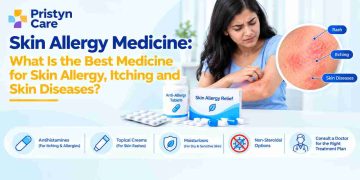
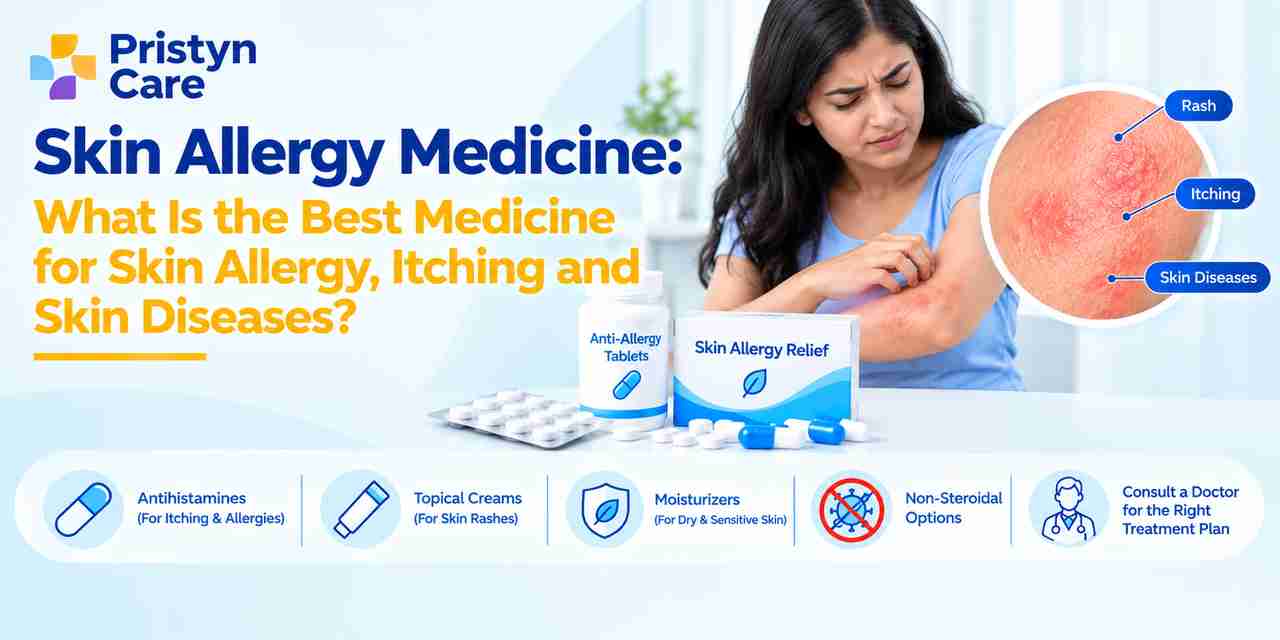
Skin allergies can cause itching, redness, rashes, bumps, dryness, swelling or irritation. Depending on the cause, treatment may include antihistamines, anti-inflammatory creams, moisturisers, medicines for infection, or treatment for an underlying skin condition.



Dedicated Support at Every Step!
Our Doctors are available 24 hours a day, 7 days a week to help you!

However, there is no single best skin allergy medicine that works for every type of skin allergy. The right medicine depends on whether the problem is caused by an allergy, eczema, contact dermatitis, fungal infection, insect bite, hives, bacterial infection or another skin disease.
People often search for terms such as skin allergy medicine, anti-allergy medicine for skin itching, skin allergy cream, skin allergy tablet, Ayurvedic medicine for skin allergy and homeopathic medicine for skin allergy. This guide explains what these medicines can and cannot do.
Important: The medicine suitable for one skin condition may make another condition worse. A persistent, spreading, infected or unexplained rash should be evaluated by a dermatologist.
Table of Contents
What Is a Skin Allergy?
A skin allergy occurs when the immune system reacts excessively to a substance that is normally harmless. Depending on the type of reaction, it can cause itching, redness, swelling, bumps, hives or irritation.
Common triggers include:
- Soaps and detergents
- Cosmetics and skincare products
- Hair dyes
- Jewellery and metals such as nickel
- Medicines
- Latex
- Certain plants
- Insect bites
- Food allergies
- Fragrances
- Dust and other allergens
Not every itchy rash is a skin allergy. Conditions such as eczema, psoriasis, fungal infections, scabies and bacterial infections can also cause itching and skin changes.
No Cost EMI, Hassle-free Insurance Approval
 Doctor available
4.5/5

48+ Years Experience Overall
Doctor available
MBBS, Diploma in Radio Diagnosis & MD-TB & Respiratory Diseases
₹1200₹600Consultation Fee
4.5/5
47+ Years Experience Overall
Doctor available
4.5/5
45+ Years Experience Overall
Doctor available
4.5/5
45+ Years Experience Overall
Doctor available
5.0/5
44+ Years Experience Overall
Doctor available
MBBS, Diploma in Ophthalmologist, MS-Ophthalmologist
₹1200₹600Consultation Fee
4.5/5
43+ Years Experience Overall
Doctor available
4.5/5
42+ Years Experience Overall
Doctor available
4.5/5
42+ Years Experience Overall
Doctor available
4.5/5
41+ Years Experience Overall
Doctor available
4.5/5
41+ Years Experience Overall


Common Symptoms of Skin Allergy
Skin allergy symptoms can include:
- Itching
- Red or inflamed skin
- Skin rash
- Small bumps
- Hives or raised patches
- Burning or stinging
- Dry or cracked skin
- Swelling
- Blisters
- Scaling
- Skin irritation
- Rash after contact with a particular product or substance
If itching is accompanied by breathing difficulty, swelling of the lips or tongue, dizziness or fainting, seek emergency medical attention because this may indicate a severe allergic reaction.
What Is the Best Medicine for Skin Allergy?
There is no universal "best" medicine for skin allergy.
Treatment depends on the type and severity of the reaction. For example, an antihistamine may help with hives and itching, while a topical corticosteroid may be prescribed for certain inflammatory skin conditions. Neither is an appropriate treatment for every rash.
Common treatments include:
| Medicine/treatment | Common purpose |
| Antihistamines | Reduce itching and allergic symptoms |
| Moisturisers/emollients | Repair the skin barrier and reduce dryness |
| Topical corticosteroids | Reduce inflammation in selected skin conditions |
| Calamine or soothing preparations | Provide temporary relief from irritation/itching in selected cases |
| Topical calcineurin inhibitors | Treat certain inflammatory skin conditions |
| Antibiotics | Used when a bacterial infection is diagnosed |
| Antifungal medicines | Used for fungal skin infections |
| Prescription allergy medicines | Used for selected persistent or severe allergic conditions |
| Epinephrine | Emergency treatment for severe anaphylaxis |
The medicine should be selected according to the actual diagnosis rather than simply the symptom of itching.
Skin Allergy Medicine Names
Depending on the condition, doctors may recommend medicines from several categories.
1. Antihistamines
Antihistamines are commonly used to control itching and hives caused by allergic reactions.
Examples include:
- Cetirizine
- Levocetirizine
- Loratadine
- Fexofenadine
- Desloratadine
Some antihistamines can cause drowsiness. The appropriate medicine and dose depend on factors such as age, other medicines and medical conditions.
2. Topical Corticosteroids
Corticosteroid creams or ointments reduce inflammation and may be prescribed for conditions such as allergic or irritant dermatitis and eczema.
Examples include medicines containing:
- Hydrocortisone
- Mometasone
- Betamethasone
- Other corticosteroids of varying strengths
The strength and duration matter. Stronger steroids should not be used casually, particularly on the face, groin, skin folds or in children.
Prolonged or inappropriate steroid use can cause:
- Skin thinning
- Stretch marks
- Changes in skin colour
- Visible blood vessels
- Worsening or masking of infections
- Steroid-related skin problems
3. Moisturisers and Emollients
For dry, irritated or eczema-prone skin, moisturisers are an important part of treatment.
They can help:
- Reduce dryness
- Strengthen the skin barrier
- Reduce irritation
- Reduce itching associated with dry skin
- Prevent recurrence of some inflammatory skin conditions
A fragrance-free moisturiser is often preferable for sensitive skin.
4. Antibiotics
Antibiotics are not routine skin allergy medicines.
They are used only when a bacterial infection is diagnosed or strongly suspected.
Signs that may suggest infection include:
- Pus
- Increasing warmth
- Spreading redness
- Increasing pain
- Fever
- Crusting associated with infection
Using antibiotics unnecessarily can cause side effects and contribute to antibiotic resistance.
5. Antifungal Medicines
Fungal infections can look similar to allergic rashes and may cause significant itching.
Antifungal medicines may be available as:
- Creams
- Lotions
- Powders
- Tablets in selected cases
An antifungal medicine will not treat a genuine allergy, so correct diagnosis is important.
Anti-Allergy Medicine for Skin Itching
If itching is caused by an allergic reaction, antihistamines are commonly used.
Depending on the cause, treatment may also involve:
- Removing the trigger
- Applying a suitable moisturiser
- Using a prescribed anti-inflammatory cream
- Treating an underlying skin disease
- Avoiding irritating soaps or cosmetics
If itching continues despite treatment, the problem may not be a simple allergy.
Conditions such as eczema, fungal infection, scabies, psoriasis and liver, kidney or thyroid disorders can also cause itching.
Skin Allergy Medicine Cream
A skin allergy cream may contain different ingredients depending on the diagnosis.
Possible categories include:
- Moisturising creams
- Anti-inflammatory creams
- Corticosteroid creams
- Calcineurin inhibitor creams
- Soothing preparations
- Antifungal creams when a fungal infection is confirmed
There is no single cream that is appropriate for every skin rash.
Can I use a steroid cream for any itchy rash?
No.
An itchy rash caused by a fungal infection, for example, can sometimes worsen or become harder to recognise when a steroid is used without appropriate treatment.
This is why repeatedly applying a combination "anti-itch" or steroid-containing cream without knowing the cause is not recommended.
Skin Allergy Medicine Tablet
Tablets may be prescribed or recommended depending on the underlying condition.
Antihistamine tablets are commonly used for:
- Hives
- Allergic itching
- Some allergic skin reactions
Other tablets may be required for specific diseases rather than allergy itself.
For example:
- Antibiotics for certain bacterial infections
- Antifungal tablets for selected extensive fungal infections
- Immunomodulatory medicines for selected severe inflammatory skin diseases
Therefore, the "best skin allergy tablet" depends on the diagnosis.
Over-the-Counter Skin Allergy Medicine
Some mild itching or irritation may improve with over-the-counter products such as:
- Moisturisers
- Fragrance-free emollients
- Selected antihistamines
- Calamine-based preparations
However, OTC treatment should not be used indefinitely when the diagnosis is uncertain.
See a dermatologist if:
- The rash keeps returning
- It lasts for several weeks
- It is spreading
- There is significant swelling
- The skin is painful
- There is pus or discharge
- There are blisters
- The rash affects the eyes, mouth or genitals
- There is unexplained hair loss or skin thickening
- Treatment is not working
What Is the Best Medicine for Allergy on Skin?
The answer depends on the type of allergy.
Contact dermatitis
Treatment generally focuses on identifying and avoiding the trigger, along with moisturisers and appropriate anti-inflammatory treatment.
Hives
Antihistamines are commonly used. Persistent or difficult-to-control hives may require specialist treatment.
Eczema
Treatment can include moisturisers, topical anti-inflammatory medicines and, for moderate-to-severe disease, phototherapy or systemic/biologic medicines in selected patients.
Drug allergy
The suspected medicine may need to be stopped under medical guidance, depending on the situation. Severe reactions require urgent medical care.
Insect-bite reaction
Treatment depends on the severity and may include measures to control itching and inflammation.
Skin Allergy Medicine for Severe Itching
Severe itching should not automatically be treated with stronger medicines.
The cause needs to be identified first.
A dermatologist may consider:
- Antihistamines
- Topical corticosteroids
- Non-steroidal anti-inflammatory creams
- Moisturisers
- Treatment for infection
- Prescription systemic medicines
- Phototherapy
- Biologic or immunomodulatory medicines for selected diseases
Persistent severe itching despite treatment may indicate another underlying condition.
Homeopathic Medicine for Skin Allergy
People commonly search for:
- Best homeopathic medicine for skin allergy
- Homeopathy medicine for skin allergy and itching
- Homeopathic medicine for allergy skin
- SBL homeopathic medicine for skin allergy
- Best homeopathic medicine for skin disease
- Homeo medicine for skin allergy
However, there is no scientifically established homeopathic medicine proven to permanently cure skin allergies or all types of skin disease.
Some people may use homeopathy for symptoms, but relying exclusively on it can delay diagnosis of conditions that require conventional treatment.
This is particularly important when the rash could actually be:
- Fungal infection
- Scabies
- Bacterial infection
- Eczema
- Psoriasis
- Drug reaction
- Autoimmune disease
- Skin cancer
Ayurvedic Medicine for Skin Allergy
Searches for Ayurvedic skin allergy medicines are also common.
Ayurvedic products may be marketed for:
- Skin itching
- Allergy
- Rashes
- Eczema
- General skin health
However, there is no universally proven Ayurvedic medicine that permanently cures every type of skin allergy or skin disease.
The quality and ingredients of herbal products can also vary. Some products may interact with conventional medicines or contain ingredients that are not suitable for everyone.
Ayurvedic treatment should therefore not replace appropriate diagnosis, particularly for persistent or severe skin problems.
Patanjali, Baidyanath and Hamdard Medicine for Skin Allergy
People may specifically search for:
- Patanjali medicine for skin allergy
- Baidyanath medicine for skin allergy
- Hamdard medicine for skin allergy
- Ayurvedic medicine for skin allergy itching
A brand name alone does not establish that a product is suitable for a particular rash.
Before using any branded herbal or traditional product:
- Check its ingredients
- Consider possible drug interactions
- Avoid applying unknown products to broken skin
- Stop if irritation worsens
- Do not delay medical evaluation for a persistent rash
There is no single branded product that can be considered the best medicine for every skin allergy.
Skin Disease Medicine
"Skin disease" is a broad term covering hundreds of different conditions.
Examples include:
- Eczema
- Psoriasis
- Fungal infections
- Acne
- Urticaria
- Contact dermatitis
- Scabies
- Bacterial skin infections
- Viral skin infections
- Vitiligo
- Rosacea
- Lichen planus
- Autoimmune skin diseases
Each condition requires a different approach.
For example, an antifungal medicine may treat ringworm but will not cure psoriasis. Similarly, a corticosteroid may be useful for certain inflammatory diseases but can worsen some infections.
Therefore, there is no single skin disease medicine name that can treat all skin diseases.
Ayurvedic Medicine for Skin Disease
Ayurvedic medicines are sometimes promoted for eczema, itching, pigmentation and other skin conditions.
However, the evidence varies significantly depending on the condition and product.
A persistent skin disease should first be diagnosed properly. Alternative treatments should not delay evidence-based treatment for infections, severe inflammation or potentially serious skin conditions.
Homeopathic Medicine for Skin Disease
There is no scientifically established homeopathic medicine that can permanently cure all skin diseases.
A skin condition that appears to be a simple allergy may actually require a completely different treatment.
For this reason, diagnosis should come before choosing a medicine.
What About “Lumpy Skin Disease Medicine”?
"Lumpy skin disease" is a specific viral disease primarily affecting cattle and other bovines, not simply another name for a human skin allergy.
It causes characteristic skin nodules and can be associated with fever and other systemic signs in affected animals.
Treatment and prevention are veterinary matters and may involve supportive care, management of secondary infections and disease-control measures recommended by veterinary authorities.
Human skin allergies should not be treated using medicines intended for livestock.
Dog Skin Allergy Medicine
Dogs can develop skin allergies due to:
- Fleas
- Food allergies
- Environmental allergens
- Contact allergens
- Mites
- Secondary bacterial or yeast infections
Symptoms may include:
- Excessive scratching
- Licking
- Chewing paws
- Red skin
- Hair loss
- Recurrent ear infections
- Hot spots
- Skin odour
- Crusting
The appropriate treatment depends on the cause.
A veterinarian may recommend:
- Flea control
- Medicated shampoos
- Treatment for bacterial or yeast infections
- Prescription anti-itch medicines
- Dietary elimination trials for suspected food allergy
- Allergy management
- Other veterinary medicines
Do not give a dog human allergy tablets or apply human skin creams without veterinary advice. Some medicines or formulations can be unsafe for animals.
Dog Skin Disease Medicine
"Dog skin disease" is also a broad term.
A dog with an itchy rash could have:
- Flea allergy dermatitis
- Mange
- Yeast infection
- Bacterial infection
- Food allergy
- Environmental allergy
- Parasites
- Hormonal disease
- Autoimmune disease
Therefore, there is no single best dog skin disease medicine.
A veterinarian may need to examine the skin, ears and coat and may perform tests such as skin scrapings, cytology or other investigations.
Skin Allergy Medicine vs Treating the Underlying Cause
| Situation | What medicine may do | What is also important |
| Mild allergic itching | Reduce itching | Avoid the trigger |
| Hives | Reduce allergic symptoms | Identify triggers if possible |
| Contact dermatitis | Reduce inflammation | Remove the irritant/allergen |
| Eczema | Control inflammation and dryness | Long-term skin care |
| Fungal infection | Kill/control fungus | Correct diagnosis and hygiene |
| Bacterial infection | Treat bacteria | Medical evaluation and wound care |
| Scabies | Kill mites | Treat close contacts/environment as advised |
| Severe allergic reaction | Emergency treatment | Immediate medical attention |
| Chronic inflammatory disease | Control inflammation | Long-term dermatology care |
Can Skin Allergy Be Cured Permanently With Medicine?
Sometimes a skin allergy can resolve completely after the trigger is identified and avoided.
However, many allergic and inflammatory skin conditions can be recurrent.
For example:
- Contact dermatitis may improve after avoiding the allergen.
- Hives may be temporary or chronic.
- Eczema can have periods of improvement and flare-ups.
- Environmental allergies can recur when the person is exposed to triggers.
Therefore, treatment is often about controlling symptoms, repairing the skin barrier and preventing future flare-ups, rather than taking one medicine permanently.
When Should You See a Dermatologist?
Consult a dermatologist if:
- The rash lasts more than a few days despite basic care
- It repeatedly comes back
- It is spreading
- It causes severe itching
- The skin becomes painful
- There are blisters or ulcers
- There is pus or discharge
- The rash affects the face, eyes, mouth or genitals
- There is unexplained swelling
- OTC medicines are not helping
- You are unsure whether the rash is an allergy or infection
A dermatologist can distinguish between allergy, eczema, fungal infection, scabies, psoriasis and other skin diseases.
When Is a Skin Allergy an Emergency?
Seek emergency medical attention if skin symptoms occur with:
- Difficulty breathing
- Wheezing
- Swelling of the tongue or throat
- Severe swelling of the lips
- Fainting or severe dizziness
- Rapidly worsening symptoms
- Widespread blistering or peeling
- Significant illness or fever
These symptoms can indicate a serious allergic or systemic reaction.
How Is a Skin Allergy Diagnosed?
Diagnosis may involve:
- Medical history
- Examination of the rash
- Review of medicines and skincare products
- Identification of possible allergens
- Skin scraping or testing when infection is suspected
- Patch testing for selected contact allergies
- Allergy testing in selected cases
- Blood tests when clinically appropriate
- Skin biopsy for certain unexplained or persistent conditions
Not every skin allergy requires an allergy test.
Frequently Asked Questions
What is the best medicine for skin allergy?
There is no single best medicine. Antihistamines, moisturisers, topical anti-inflammatory medicines and other treatments may be used depending on the cause.
Which tablet is best for skin allergy and itching?
Antihistamines such as cetirizine, levocetirizine, loratadine or fexofenadine are commonly used for allergic itching and hives, but the appropriate medicine depends on the individual and the cause of symptoms.
Which cream is best for skin allergy?
There is no universal best cream. Moisturisers, corticosteroids, calcineurin inhibitors or other creams may be used depending on the diagnosis.
Can I use an anti-allergy cream without seeing a doctor?
For mild, short-lived irritation, a suitable OTC product may provide relief. However, avoid repeatedly using steroid-containing or combination creams without knowing the cause.
Is there a permanent medicine for skin allergy?
Not always. Some allergic reactions disappear once the trigger is removed, while chronic conditions such as eczema or chronic urticaria may require long-term management.
Does homeopathy cure skin allergy?
There is no scientifically established homeopathic treatment proven to permanently cure skin allergy.
Is Ayurvedic medicine effective for skin allergy?
Some people use Ayurvedic products for skin conditions, but there is no universally proven Ayurvedic medicine that permanently cures every type of skin allergy. Persistent symptoms should be medically evaluated.
Can skin allergy be caused by food?
Yes. Certain foods can cause allergic reactions, which may include hives, itching or swelling. Severe reactions can cause anaphylaxis and require emergency treatment.
Can dogs have skin allergies?
Yes. Fleas, food, environmental allergens and other conditions can cause allergic skin disease in dogs. Veterinary evaluation is recommended rather than giving human medicines.
Is lumpy skin disease the same as human skin allergy?
No. Lumpy skin disease is a specific viral disease primarily affecting cattle and other bovines. It should not be confused with ordinary human skin allergy.
Conclusion
There is no single best skin allergy medicine for every person or every type of rash. Antihistamines can help control allergic itching and hives, while moisturisers, topical anti-inflammatory medicines, antifungal medicines or antibiotics may be appropriate for specific conditions.
The most important step is identifying the underlying cause. A rash caused by an allergy requires a different treatment from fungal infection, scabies, eczema or bacterial infection.
Homeopathic and Ayurvedic medicines are frequently searched for skin allergies, but there is no scientifically established universal medicine from these systems that can permanently cure all skin allergies or skin diseases.
If the rash is persistent, recurrent, spreading, painful, infected or unexplained, consulting a dermatologist can help ensure that the correct condition is diagnosed and treated.
Social share:


Related Calculators

Dedicated Support at Every Step!
Our Doctors are available 24 hours a day, 7 days a week to help you!
Related Calculators
Get In Touch with our expert doctors !
- please enter 10 digit number.


