Blog > Lasik > When Is LASIK Not Suitable for Vision Correction?
Views: 10
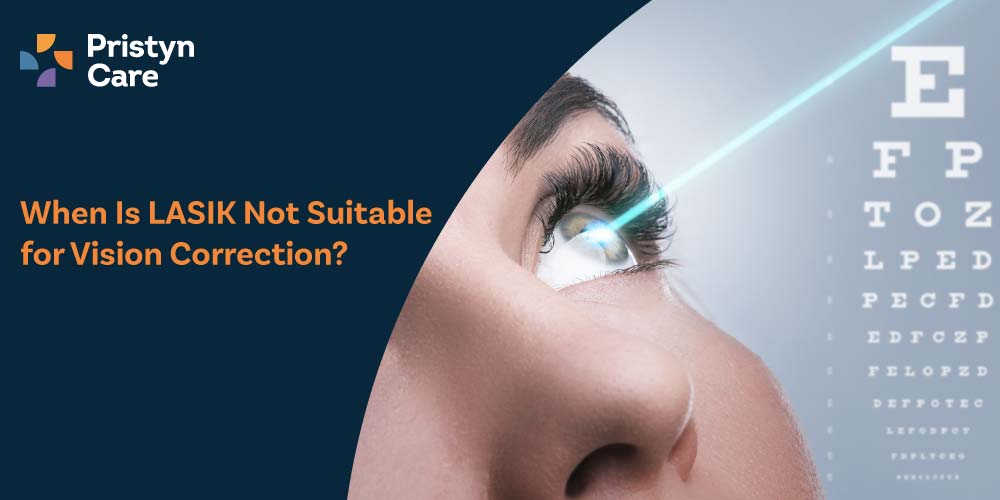
When Is LASIK Not Suitable for Vision Correction?
LASIK is a popular and effective procedure used to correct refractive errors like myopia, hyperopia, and astigmatism. However, LASIK is not suitable for everyone, and careful screening is essential to ensure safety and good outcomes.
MEDICALLY REVIEWED CONTENT
✍WRITTEN & 🔍REVIEWED BY
Pristyn Care Team
Healthcare Expert
Updated On - April 28, 2026
Book Your FREE Consultation Now
Dedicated Support at Every Step!
Our Doctors are available 24 hours a day, 7 days a week to help you!
Understanding when LASIK is not suitable for vision correction helps patients make informed decisions and avoid potential complications.
Table of Contents
What Is LASIK?
LASIK (Laser-Assisted In Situ Keratomileusis) involves:
Reshaping the cornea using a laser
Improving how light focuses on the retina
Reducing dependence on glasses or contact lenses
We take care of you
Get Your Surgery Done with No Cost EMI, Hassle-free Insurance Approval
When Is LASIK NOT Suitable?
1. Thin or Irregular Cornea
Insufficient corneal thickness
Conditions like keratoconus
Higher risk of complications after surgery
2. Unstable Vision Prescription
Frequent changes in glasses number
Vision should be stable for at least 1 year
3. Severe Dry Eyes
LASIK may worsen dryness
Can affect healing and visual quality
4. Very High Refractive Error
Extreme myopia, hyperopia, or astigmatism
Alternative procedures may be more suitable
5. Eye Diseases or Conditions
Glaucoma
Cataract
Retinal disorders
These conditions require separate management.
6. Pregnancy or Breastfeeding
Hormonal changes can affect vision
Surgery is usually postponed
7. Autoimmune or Healing Disorders
Conditions like rheumatoid arthritis
May impair healing after surgery
8. Age Considerations
Below 18 years (vision not fully stable)
Older patients with lens-related issues may benefit more from other procedures
Alternatives to LASIK
If LASIK is not suitable, options include:
PRK (surface laser treatment)
Implantable contact lenses (ICL)
Glasses or contact lenses
Why Proper Evaluation Matters
Ensures patient safety
Improves surgical outcomes
Reduces risk of complications
What Tests Are Done Before LASIK?
Corneal thickness measurement
Eye surface evaluation
Vision stability assessment
Overall eye health check
Free Lasik Surgery Cost Calculator
Fill details to get actual cost
Enter a valid name
Enter a valid 10-digit mobile number
Please enter a valid city
×
Your Form has been submitted successfully.
Our care coordinator will call you shortly.
When Should You Consult an Eye Specialist?
Considering permanent vision correction
Experiencing vision changes
History of eye conditions
Pristyncare App
Download app to get more features for free
Check Symptoms
Cowin Certificate
Period Tracker
Dental Aligners
Final Thoughts
LASIK is a safe and effective procedure for many people, but it is not universally suitable. Factors like corneal health, vision stability, and overall eye condition play a crucial role in determining eligibility.
A comprehensive eye evaluation is essential to decide whether LASIK or an alternative treatment is the best option for achieving clear and safe vision.



 Views: 10