The retina is a delicate layer at the back of the eye responsible for capturing light and sending visual signals to the brain. Any damage to the retina can lead to serious vision problems and, in some cases, permanent vision loss. Understanding retinal surgery—when it is required helps... ensure timely treatment and better visual outcomes.
Our Doctors are available 24 hours a day, 7 days a week to help you!
Table of Contents
What Is Retinal Surgery?
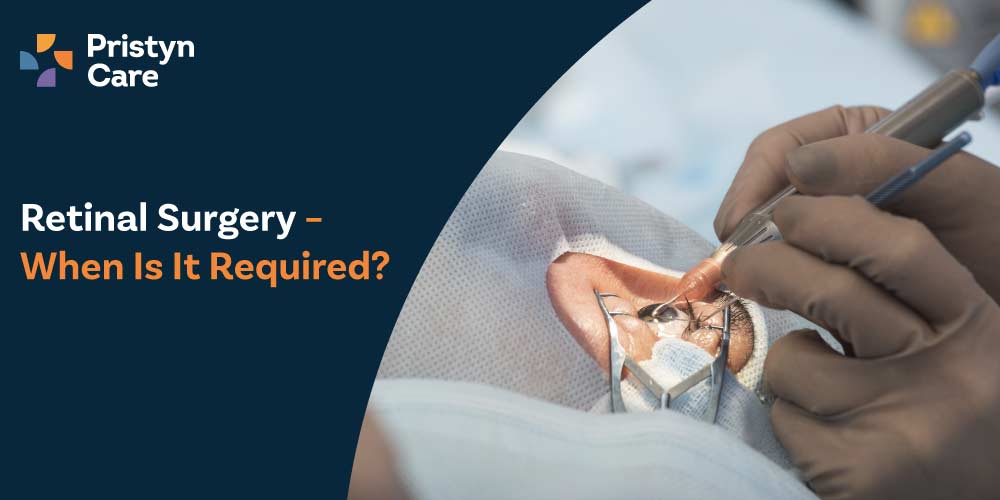
Retinal surgery refers to procedures used to repair or treat conditions affecting the retina. These may include techniques like vitrectomy, laser therapy, or retinal detachment repair.
We take care of you
Get Your Surgery Done with No Cost EMI, Hassle-free Insurance Approval
When Is Retinal Surgery Required?
1. Retinal Detachment
A medical emergency
Symptoms include flashes of light, floaters, or a curtain-like shadow in vision
Requires urgent surgical repair
2. Diabetic Retinopathy
Damage to retinal blood vessels due to diabetes
Surgery may be needed in advanced stages
3. Macular Hole
A small break in the central retina
Causes blurred or distorted central vision
4. Epiretinal Membrane (Macular Pucker)
Thin layer forming over the retina
Leads to vision distortion
5. Retinal Tears
Small breaks that can progress to detachment
Often treated early to prevent complications
6. Vitreous Hemorrhage
Bleeding into the gel inside the eye
Blocks vision and may require surgical removal
Common Types of Retinal Surgery
Vitrectomy: Removal of vitreous gel to access and repair the retina
Laser Surgery: Seals retinal tears or abnormal blood vessels
Scleral Buckling: Supports the retina to reattach it
Symptoms That May Indicate Need for Surgery
Sudden vision loss
Flashes of light
Increase in floaters
Distorted or blurred vision
Dark shadow or curtain over vision
Benefits of Timely Retinal Surgery
Prevents permanent vision loss
Restores or stabilizes vision
Treats underlying retinal conditions
Recovery After Retinal Surgery
Recovery time varies depending on the procedure
May require specific head positioning (in some cases)
Vision improves gradually over weeks to months
Risks and Considerations
Infection
Increased eye pressure
Cataract formation (in some cases)
Need for additional procedures
Free Lasik Surgery Cost Calculator
Fill details to get actual cost
Enter a valid name
Enter a valid 10-digit mobile number
Please enter a valid city
×
Your Form has been submitted successfully.
Our care coordinator will call you shortly.
When Should You See a Doctor Immediately?
Sudden onset of floaters or flashes
Partial loss of vision
Any rapid change in eyesight
Pristyncare App
Download app to get more features for free
Check Symptoms
Cowin Certificate
Period Tracker
Dental Aligners
Final Thoughts
Retinal surgery is required in serious eye conditions where the retina is damaged or at risk. Early diagnosis and prompt treatment are critical to preserving vision.
If you experience sudden visual changes or symptoms related to retinal problems, seeking immediate medical attention can make a significant difference in treatment success and long-term eye health.



 Views: 13