


 Views: 0
Cataract Medicine: Is There Any Medicine to Cure Cataract Without Surgery?


Dedicated Support at Every Step!
Our Doctors are available 24 hours a day, 7 days a week to help you!

Cataracts are one of the most common causes of gradually worsening vision. When vision becomes blurry, hazy or cloudy, many people search for cataract medicine, cataract medicine names, or homeopathic and Ayurvedic medicines for cataract.
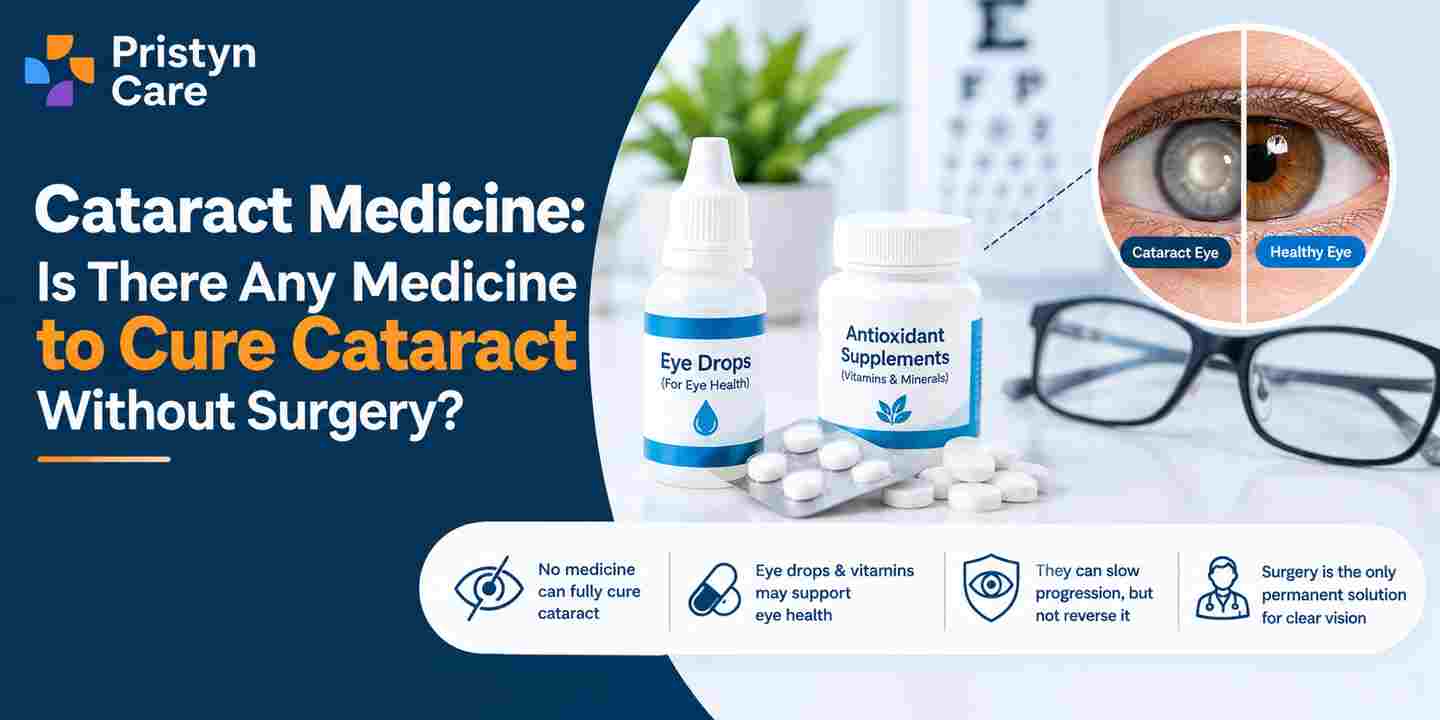
It is important to understand that a cataract is a clouding of the natural lens of the eye. Once a significant cataract has developed, there is no proven medicine, eye drop, Ayurvedic medicine or homeopathic medicine that can reliably dissolve or reverse the cloudy lens.
In the early stages, your eye doctor may recommend regular monitoring and treatment for associated eye conditions. When the cataract starts interfering with daily activities, cataract surgery is the established treatment for removing the cloudy lens and replacing it with an artificial intraocular lens (IOL).
Table of Contents
What Is a Cataract?
A cataract occurs when the normally clear natural lens inside the eye becomes cloudy.
The lens helps focus light onto the retina so that you can see clearly. As the lens becomes cloudy, light does not pass through it normally, resulting in progressively blurred vision.
Common symptoms include:
- Blurred or cloudy vision
- Difficulty seeing at night
- Increased sensitivity to bright lights
- Glare around headlights
- Halos around lights
- Faded or dull-looking colours
- Frequent changes in spectacle prescription
- Difficulty reading or seeing distant objects
- Double vision in one eye in some cases
Cataracts usually develop gradually, although some can progress faster than others.
No Cost EMI, Hassle-free Insurance Approval
Is There Any Medicine for Cataract?
There is currently no medicine proven to reverse an established cataract.
Depending on the situation, an ophthalmologist may recommend:
- Regular eye examinations
- Updated spectacles
- Better lighting for reading
- Anti-glare measures
- Treatment of associated eye conditions
- Cataract surgery when vision becomes significantly affected
Eye drops or medicines may sometimes be prescribed for other eye conditions or symptoms, but they should not be considered a cure for the cataract itself.
What Is the Cataract Medicine Name?
People often search for a specific cataract medicine name that can remove or dissolve cataracts.
However, there is no clinically established medicine that can reliably make an established cataract disappear.
You may find products marketed as cataract drops, supplements or herbal formulations. Their claims should be evaluated carefully, particularly if they promise to completely reverse a cataract without surgery.
Do not use an eye drop or medicine without checking with an ophthalmologist, especially because inappropriate eye drops can potentially harm the eye.
Can Eye Drops Cure Cataracts?
Eye drops cannot be considered a proven cure for an established cataract.
Some eye drops may be prescribed for other conditions that occur alongside cataracts, but this is different from removing the cloudy natural lens.
If cataract-related vision loss becomes significant, the definitive treatment is to remove the cloudy lens and replace it with an artificial intraocular lens.
Homeopathic Medicine for Cataract
Homeopathy is another commonly searched alternative for cataract treatment.
However, there is no good-quality scientific evidence that homeopathic medicines can reverse or remove an established cataract.
A person may feel that their symptoms have improved temporarily, particularly when vision fluctuates for another reason, but this does not mean that the cataract itself has disappeared.
If cataract is diagnosed, regular ophthalmic evaluation remains important.
Can Homeopathic Medicine Cure Cataract?
No homeopathic medicine has been scientifically established as a treatment that can dissolve or reverse an established cataract.
Delaying an appropriate eye examination or cataract surgery because of reliance on unproven treatment may allow vision impairment to progress.
If you prefer complementary or alternative treatments, discuss them with your ophthalmologist rather than replacing recommended eye care.
Ayurvedic Medicine for Cataract
Many people also search for Ayurvedic medicine for cataract because they want to treat the condition naturally.
Ayurvedic formulations and herbal products may be promoted for eye health, but there is no established Ayurvedic medicine proven to reverse an established cataract.
This does not mean that maintaining good nutrition and general eye health is unimportant. A healthy lifestyle can support overall health, but it should not be presented as a way to dissolve a cataract.
Can Ayurvedic Medicine Remove Cataract?
An established cataract involves structural clouding of the eye's natural lens.
There is currently no reliable evidence that Ayurvedic medicine can remove this cloudy lens.
If a cataract is interfering with your vision, an ophthalmologist can determine its severity and discuss whether monitoring or cataract surgery is appropriate.
Can Cataract Be Cured Without Surgery?
In the early stages, cataracts may not require immediate surgery.
If the cataract is small and vision remains adequate for daily activities, your ophthalmologist may recommend monitoring it periodically.
However, once the cataract causes significant visual impairment, cataract surgery is the established treatment.
The decision is not based only on the appearance or grade of the cataract. It also depends on how much the cataract affects your daily life.
When Is Cataract Surgery Recommended?
Cataract surgery may be recommended when vision loss starts interfering with activities such as:
- Reading
- Driving
- Working
- Watching television
- Recognising faces
- Using a computer or mobile phone
- Walking safely
- Performing daily household activities
Your ophthalmologist will assess your eyes and determine whether surgery is appropriate.
What Happens During Cataract Surgery?
During cataract surgery, the cloudy natural lens is removed and replaced with an artificial intraocular lens (IOL).
Modern cataract surgery is generally performed through a small incision in the eye.
The surgeon removes the cloudy lens, places the selected IOL inside the eye and closes the incision according to the surgical technique used.
The choice of IOL depends on several factors, including:
- Eye measurements
- Existing spectacle prescription
- Astigmatism
- Lifestyle requirements
- Visual expectations
- Overall eye health
Can Cataract Surgery Restore Vision?
Cataract surgery can significantly improve vision when the cataract is the main cause of visual impairment.
However, the final visual outcome also depends on the health of other parts of the eye, including the retina, optic nerve and cornea.
Conditions such as glaucoma, diabetic retinopathy or macular disease may also affect vision even after cataract surgery.
Cataract Medicine vs Cataract Surgery
| Treatment | Main purpose | Can it remove an established cataract? |
| Spectacles | Improve focus when appropriate | No |
| Eye drops | Treat selected eye conditions or symptoms | No |
| Homeopathic medicine | Alternative approach | Not scientifically proven to remove cataract |
| Ayurvedic medicine | Complementary/traditional approach | Not scientifically proven to remove cataract |
| Observation | Monitor an early or non-disabling cataract | No, but surgery may not yet be necessary |
| Cataract surgery | Remove cloudy natural lens and replace it with an IOL | Yes |
Can Cataracts Go Away on Their Own?
An established cataract generally does not disappear naturally.
Cataracts usually progress over time, although the speed of progression varies considerably between individuals.
Some people may have cataracts for years before they require surgery, while others may experience faster progression.
Regular eye examinations can help monitor changes in vision and lens opacity.
What Can You Do When Cataract Is in the Early Stage?
If the cataract is not significantly affecting your vision, your ophthalmologist may recommend observation.
You may also find it helpful to:
- Use brighter lighting while reading
- Keep your spectacles prescription updated
- Reduce glare where possible
- Wear appropriate sunglasses outdoors
- Control conditions such as diabetes if applicable
- Avoid smoking
- Attend regular eye examinations
These measures can support eye health and visual function, but they do not dissolve an existing cataract.
What Causes Cataracts?
Several factors can increase the likelihood of developing cataracts.
These include:
- Ageing
- Diabetes
- Previous eye injury
- Previous eye surgery
- Long-term use of certain medicines such as corticosteroids
- Excessive exposure to ultraviolet radiation
- Smoking
- Certain medical conditions
- Congenital or childhood causes in some cases
Age-related cataracts are the most common type.

Free Cataract Surgery Cost Calculator

When Should You See an Ophthalmologist?
You should schedule an eye examination if you experience:
- Gradually worsening vision
- Persistent blurry vision
- Difficulty seeing at night
- Glare or halos around lights
- Increasing sensitivity to bright light
- Frequent changes in spectacle prescription
- Difficulty reading despite appropriate glasses
- Difficulty driving because of reduced vision
Do not assume that blurred vision is caused by cataracts. Other eye conditions can produce similar symptoms.
Is Cataract Surgery Necessary for Everyone?
No.
A cataract does not automatically mean that surgery is immediately required.
If your cataract is mild and does not significantly interfere with your daily activities, your doctor may recommend monitoring.
Surgery becomes appropriate when the cataract is causing enough visual impairment to affect your quality of life or when there is another medical reason to intervene.
What Happens If Cataract Is Left Untreated?
An early cataract may have little effect on daily activities.
As it progresses, it can cause increasingly poor vision and difficulty performing routine tasks.
In advanced cases, a very dense cataract can make treatment more challenging and may be associated with complications.
Regular eye examinations help your ophthalmologist determine the appropriate time for treatment.
Frequently Asked Questions
1. What is the best medicine for cataract?
There is no proven medicine that can reverse an established cataract. Early cataracts may be monitored, while significant cataract-related vision loss is generally treated with cataract surgery.
2. What is the cataract medicine name?
There is no clinically proven medicine that can dissolve an established cataract. Be cautious about products claiming to completely remove cataracts through medicines or eye drops.
3. Can homeopathic medicine cure cataract?
Homeopathic medicine has not been scientifically established as a treatment that can reverse an established cataract.
4. Is there Ayurvedic medicine for cataract?
Ayurvedic products may be promoted for eye health, but there is no established Ayurvedic medicine proven to remove an established cataract.
5. Can cataract be cured without surgery?
Early cataracts may be monitored without immediate surgery. However, there is no proven medicine that reverses an established cataract. When the cataract significantly affects vision, surgery is the established treatment.
6. Can cataract eye drops remove cataracts?
No currently established eye-drop treatment can reliably remove an established cataract. Eye drops may be prescribed for other eye conditions but should not be considered a cataract cure.
7. At what stage should cataract surgery be done?
Cataract surgery is generally considered when the cataract causes enough vision loss to interfere with daily activities or when the ophthalmologist identifies another reason for surgery.
8. Can cataract come back after surgery?
A cataract itself does not grow back because the cloudy natural lens has been removed. However, some patients can develop posterior capsule opacification, sometimes called a "secondary cataract," which can cause vision to become cloudy again and can usually be treated with a YAG laser procedure.


Conclusion
Searching for cataract medicine, cataract medicine names, homeopathic medicine for cataract, or Ayurvedic medicine for cataract is understandable, especially if you want to avoid surgery.
However, there is currently no scientifically established medicine, homeopathic remedy or Ayurvedic medicine that can reliably reverse an established cataract.
If a cataract is mild, your ophthalmologist may recommend monitoring and visual aids. If it begins to significantly affect your daily activities, cataract surgery can remove the cloudy natural lens and replace it with an artificial intraocular lens.
The safest approach is to get your vision evaluated and choose treatment based on the severity of the cataract and the overall health of your eyes.
Disclaimer: This content is intended for general informational purposes only and should not be considered a substitute for professional medical diagnosis or treatment. Do not use eye drops, medicines, Ayurvedic products or homeopathic remedies for cataracts without discussing them with a qualified ophthalmologist.
Social share:




Related Calculators

Dedicated Support at Every Step!
Our Doctors are available 24 hours a day, 7 days a week to help you!


