


 Views: 0
Medicine for Vaginal Infection: What Is the Best Medicine for Vaginal Yeast and Bacterial Infections?
Vaginal infections are common and can cause symptoms such as unusual vaginal discharge, itching, burning, irritation, redness, unpleasant odor and discomfort while urinating or having sex.



Dedicated Support at Every Step!
Our Doctors are available 24 hours a day, 7 days a week to help you!

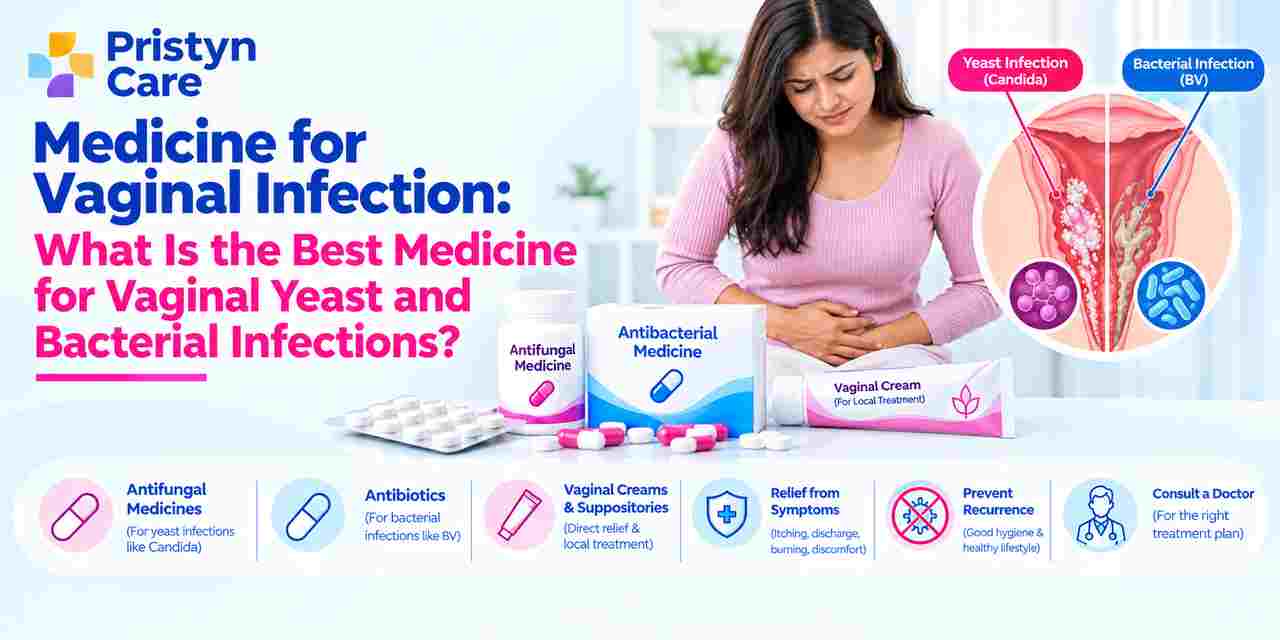
There is no single medicine that works for every vaginal infection. The treatment depends on the cause.
A yeast infection is usually caused by an overgrowth of Candida fungus and requires antifungal treatment. Bacterial vaginosis (BV) is caused by an imbalance of vaginal bacteria and is treated differently. Sexually transmitted infections such as trichomoniasis require their own specific treatment.
Because several conditions can cause similar symptoms, self-treating based only on discharge or itching may lead to the wrong medicine.
Table of Contents
What Is a Vaginal Infection?
A vaginal infection occurs when the normal vaginal environment is disrupted or when an infectious organism affects the vagina.
Common causes include:
- Candida yeast
- Bacterial vaginosis
- Trichomoniasis
- Sexually transmitted infections
- Certain skin conditions
- Irritation from soaps, washes or other products
The symptoms can overlap, so identifying the cause is important before choosing a medicine.
No Cost EMI, Hassle-free Insurance Approval
Common Symptoms of Vaginal Infection
Symptoms may include:
- Vaginal itching
- Burning or irritation
- Abnormal vaginal discharge
- Change in discharge color or consistency
- Unpleasant vaginal odor
- Vaginal redness or swelling
- Pain while urinating
- Pain during sexual intercourse
- Pelvic discomfort
Not every change in vaginal discharge means there is an infection. Normal vaginal discharge can vary during the menstrual cycle.
What Is the Best Medicine for Vaginal Infection?
There is no universal best medicine for vaginal infection.
The treatment depends on the underlying cause.
| Type of infection | Common treatment approach | Typical medicine category |
| Vaginal yeast infection | Antifungal treatment | Azole antifungals or other appropriate antifungals |
| Bacterial vaginosis | Antibiotic treatment | Metronidazole or clindamycin in appropriate cases |
| Trichomoniasis | Specific antimicrobial treatment | Metronidazole or tinidazole |
| Certain STIs | Infection-specific treatment | Depends on the organism |
| Non-infectious irritation | Remove trigger and treat inflammation when needed | Cause-specific treatment |
The medicine, dose and duration should be selected according to the diagnosis and individual circumstances.
Vaginal Yeast Infection Medicine
A vaginal yeast infection, also called vulvovaginal candidiasis, occurs when Candida grows excessively in the vagina.
Typical symptoms include:
- Intense itching
- Burning
- Redness or swelling
- Thick, white discharge
- Discomfort during sex
- Burning while urinating, particularly when urine contacts irritated tissue
The discharge associated with yeast infection is often described as thick or curd-like, but symptoms alone cannot always confirm the diagnosis.
What Is the Best Medicine for Vaginal Yeast Infection?
Antifungal medicines are used to treat vaginal yeast infections.
Depending on the situation, treatment may include:
- Vaginal antifungal creams
- Vaginal antifungal suppositories or tablets
- Oral antifungal medicine in selected patients
Common antifungal medicines include clotrimazole, miconazole and fluconazole, but the appropriate medicine depends on the patient's circumstances and the type of Candida involved.
For uncomplicated infections, certain topical antifungal products may be available without a prescription in some settings.
However, recurrent, severe or unusual infections should be evaluated by a healthcare professional rather than repeatedly self-treated.
Vaginal Fungal Infection Medicine
The term vaginal fungal infection medicine generally refers to antifungal treatment.
Treatment may involve:
- Antifungal vaginal creams
- Antifungal vaginal tablets or suppositories
- Oral antifungal medicines when appropriate
Not every case of vaginal itching or discharge is fungal. Using an antifungal medicine when the actual problem is bacterial vaginosis, an STI or a skin condition may not improve the symptoms.
Can a Vaginal Yeast Infection Be Treated at Home?
Some uncomplicated yeast infections can be treated with appropriate antifungal products.
However, medical evaluation is recommended when:
- This is the first time you have these symptoms
- Symptoms are severe
- Symptoms keep returning
- Treatment does not work
- You are pregnant
- You have diabetes or another condition affecting immunity
- You have fever or pelvic pain
- The discharge has a strong or unusual odor
- You are unsure whether it is actually a yeast infection
Avoid repeatedly using antifungal medicines without confirming the cause.
Medicine for Vaginal Bacterial Infection
A common bacterial condition affecting the vagina is bacterial vaginosis (BV).
BV occurs when the normal balance of vaginal bacteria changes.
Symptoms may include:
- Thin vaginal discharge
- White, grayish or unusual discharge
- Strong or fishy odor
- Increased odor after sex
- Mild irritation in some women
Unlike a typical yeast infection, BV does not usually cause intense itching as the main symptom.
What Medicine Is Used for Bacterial Vaginal Infection?
Bacterial vaginosis is commonly treated with antibiotics.
Depending on the individual situation, a doctor may prescribe:
- Metronidazole
- Clindamycin
- Other appropriate treatment depending on the diagnosis
These may be available as oral medicines or vaginal preparations depending on the treatment plan.
Do not use leftover antibiotics or take antibiotics simply because you have vaginal discharge.
Using the wrong antibiotic can fail to treat the actual condition and can contribute to antibiotic resistance.
Vaginal Infection Medicine vs Yeast Infection Medicine
Although the terms are sometimes used interchangeably online, vaginal infection medicine is a broader category.
| Feature | Yeast infection | Bacterial vaginosis |
| Cause | Candida fungus | Imbalance of vaginal bacteria |
| Typical discharge | Often thick and white | Often thin and white/gray |
| Odor | Usually not strongly fishy | Fishy odor may occur |
| Itching | Common | Usually less prominent |
| Main treatment | Antifungal | Antibiotic |
| Antifungal medicine works? | Yes, when Candida is responsible | No |
| Antibiotic medicine works? | No | Yes, when BV is diagnosed |
This is why choosing a medicine based only on symptoms can sometimes lead to incorrect treatment.
Can I Use Yeast Infection Medicine for Bacterial Infection?
No.
Antifungal medicines treat fungal infections. They do not treat bacterial vaginosis.
Similarly, taking antibiotics for a suspected bacterial infection will not treat a Candida yeast infection.
If you are unsure whether your symptoms are caused by yeast, bacteria or another condition, proper evaluation is preferable to trying multiple medicines one after another.
Can Vaginal Infection Medicine Be Taken During Pregnancy?
Vaginal symptoms during pregnancy should be evaluated carefully.
Some medicines that are appropriate for non-pregnant women may not be suitable during pregnancy.
For example, treatment choices for vaginal yeast infection during pregnancy can differ from those used outside pregnancy.
Do not take oral antifungal medicines or antibiotics during pregnancy without medical advice.
Recurrent Vaginal Infections
If vaginal infections keep returning, simply repeating the same medicine may not solve the problem.
Recurrent infections can be associated with:
- Repeated antibiotic use
- Diabetes or high blood sugar
- Pregnancy or hormonal changes
- Immune system problems
- Resistant or less common Candida species
- Incorrect initial diagnosis
- Other vaginal or vulvar conditions
A doctor may recommend testing to determine the actual cause.
Vaginal Infection and Antibiotics
Antibiotics are useful when a bacterial infection requires treatment, but unnecessary antibiotic use can disturb the normal vaginal microbiome and may increase the risk of yeast overgrowth.
Therefore:
- Do not take antibiotics without appropriate medical advice.
- Do not use leftover antibiotics.
- Complete the prescribed course when instructed.
- Do not assume every vaginal infection is bacterial.
Vaginal Infection and Sexually Transmitted Infections
Some vaginal or genital symptoms can be caused by sexually transmitted infections.
Possible symptoms include:
- Unusual discharge
- Vaginal irritation
- Pain while urinating
- Pelvic pain
- Bleeding after sex
- Genital sores
- Unusual genital odor
Conditions such as trichomoniasis require specific antimicrobial treatment.
If an STI is suspected, both diagnosis and treatment of sexual partners may be important depending on the infection.
Avoid sexual contact until you have received appropriate medical advice and treatment where indicated.
Can Vaginal Infection Go Away Without Medicine?
Some mild symptoms may resolve when caused by temporary irritation rather than infection.
However, a confirmed bacterial, fungal or sexually transmitted infection may require specific treatment.
Ignoring persistent symptoms can allow the underlying condition to continue or lead to complications.
Do not assume that every vaginal infection will disappear on its own.
Home Remedies for Vaginal Infection
Some measures can help reduce irritation while you arrange appropriate treatment:
- Keep the genital area clean and dry.
- Wash gently with water or a mild, unscented product.
- Avoid douching.
- Avoid strongly perfumed intimate washes.
- Wear breathable cotton underwear.
- Change out of wet clothing promptly.
- Avoid scratching irritated skin.
- Avoid inserting unprescribed substances into the vagina.
Home remedies should not replace appropriate treatment for a diagnosed infection.

Free Vaginal Infection Surgery Cost Calculator

What Should You Avoid During a Vaginal Infection?
Avoid:
- Vaginal douching
- Strongly perfumed soaps
- Scented intimate products
- Random antibiotic use
- Repeated antifungal treatment without diagnosis
- Inserting household substances into the vagina
- Using someone else's prescription medicine
These practices can worsen irritation or interfere with the normal vaginal environment.
When Should You See a Gynecologist?
Consult a gynecologist if:
- This is your first episode of vaginal symptoms
- Symptoms are severe
- Symptoms keep coming back
- Treatment does not improve the symptoms
- You have unusual or foul-smelling discharge
- You have pelvic pain
- You have bleeding unrelated to your period
- You have pain during sex
- You may have been exposed to an STI
- You are pregnant
- You have diabetes or reduced immunity
When Is Vaginal Infection an Emergency?
Seek prompt medical attention if vaginal symptoms occur with:
- Severe pelvic or abdominal pain
- High fever or chills
- Fainting or severe weakness
- Heavy vaginal bleeding
- Vomiting with significant pelvic pain
- Severe illness during pregnancy
These symptoms may indicate a condition that requires urgent evaluation rather than routine treatment for a vaginal infection.
How Is a Vaginal Infection Diagnosed?
Depending on the symptoms, a gynecologist may perform:
- Medical history
- Pelvic examination
- Vaginal discharge examination
- Vaginal swab
- Microscopy
- pH testing
- STI testing when indicated
- Other laboratory tests for recurrent or unusual infections
Accurate diagnosis helps determine whether the appropriate treatment is an antifungal, antibiotic, antimicrobial treatment or something else entirely.
Frequently Asked Questions
1. What is the best medicine for vaginal infection?
There is no single best medicine. Treatment depends on whether the infection is caused by Candida, bacteria, an STI or another condition.
2. What is the best medicine for vaginal yeast infection?
Antifungal medicines such as clotrimazole, miconazole or fluconazole may be used depending on the individual situation. The appropriate treatment depends on the diagnosis and whether the infection is uncomplicated, recurrent or severe.
3. What medicine is used for vaginal fungal infection?
Vaginal fungal infections are treated with antifungal medicines. These may include vaginal creams, suppositories/tablets or oral antifungal treatment when appropriate.
4. What medicine is used for bacterial vaginal infection?
Bacterial vaginosis is commonly treated with antibiotics such as metronidazole or clindamycin when appropriate.
5. Can I use antifungal medicine for bacterial vaginosis?
No. Antifungal medicines treat fungal infections and do not treat bacterial vaginosis.
6. Can antibiotics treat a vaginal yeast infection?
No. Antibiotics do not treat Candida yeast infections and unnecessary antibiotic use can sometimes contribute to yeast overgrowth.
7. Can vaginal infection be treated without medicine?
Some symptoms may be caused by irritation rather than infection and can improve after removing the trigger. However, confirmed bacterial, fungal or sexually transmitted infections may require specific medical treatment.
8. How long does a vaginal yeast infection take to go away?
Many uncomplicated yeast infections improve after appropriate antifungal treatment, but the duration varies depending on the severity and type of infection. Persistent or recurrent symptoms should be evaluated.
9. Can a vaginal infection cause urinary burning?
Yes. Vaginal irritation can cause burning when urine comes into contact with inflamed tissue. However, burning urination can also be caused by a UTI, so the symptoms should not automatically be assumed to be a vaginal infection.
10. Can vaginal infection cause abnormal discharge?
Yes. Yeast infections, bacterial vaginosis and some STIs can cause abnormal discharge. The color, consistency and odor can provide clues but cannot always establish the diagnosis.
11. Is vaginal infection common during pregnancy?
Vaginal infections can occur during pregnancy, but treatment should be selected carefully. Pregnant women should consult a healthcare professional before taking antifungal or antibiotic medicines.
12. Can vaginal infection come back after treatment?
Yes. Recurrent infections can occur. If symptoms repeatedly return, the diagnosis should be confirmed and underlying risk factors should be evaluated.


Conclusion
There is no single medicine for vaginal infection because different vaginal conditions require different treatments.
A vaginal yeast infection generally requires antifungal medicine, while bacterial vaginosis requires appropriate antibiotic treatment. Other infections, including sexually transmitted infections, require different medicines altogether.
Using the wrong medicine can delay recovery and may worsen the imbalance of the vaginal microbiome. If symptoms are new, severe, recurrent or unclear, a gynecologist can identify the cause and recommend the appropriate treatment.
Do not self-medicate repeatedly with antibiotics or antifungal medicines, particularly during pregnancy or when symptoms include pelvic pain, fever, bleeding or recurrent infections.
Social share:





Related Calculators

Dedicated Support at Every Step!
Our Doctors are available 24 hours a day, 7 days a week to help you!


