


 Views: 94
Modern Surgical Techniques for Treating Pilonidal Sinus
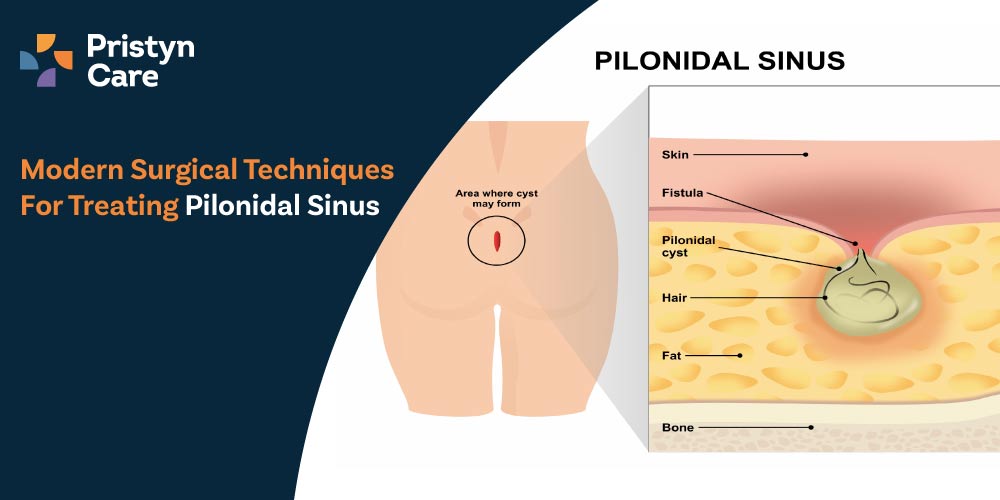
Pilonidal sinus is a chronic condition in which a small tunnel or cyst forms near the tailbone, often filled with hair and debris. It can lead to pain, swelling, discharge, and recurrent infections if not treated properly.


Dedicated Support at Every Step!
Our Doctors are available 24 hours a day, 7 days a week to help you!

With advancements in medical science, modern surgical techniques for treating pilonidal sinus now focus on faster healing, minimal pain, and reduced recurrence.
Table of Contents
What Is Pilonidal Sinus?
Pilonidal sinus is characterized by:
- A small opening or tract near the tailbone
- Accumulation of hair, dirt, and debris
- Recurrent infection or abscess formation
It is more common in young adults and individuals with prolonged sitting habits.
No Cost EMI, Hassle-free Insurance Approval
Why Modern Techniques Are Preferred
Traditional open surgery often involved:
- Large wounds
- Longer healing time
- Higher risk of recurrence
Modern techniques aim to:
- Minimize tissue damage
- Promote faster recovery
- Improve patient comfort
Modern Surgical Techniques for Pilonidal Sinus
1. Laser Pilonidal Sinus Treatment
- Uses laser energy to destroy the sinus tract
- Minimally invasive with small or no incision
- Less pain and quicker healing
2. Endoscopic Treatment (EPSiT)
- Endoscopic Pilonidal Sinus Treatment (EPSiT) uses a small camera
- Allows precise visualization and removal of infected tissue
- Minimal scarring and faster recovery
3. Bascom Cleft Lift Procedure
- Reshapes the natal cleft to prevent recurrence
- Removes diseased tissue and flattens the area
- Reduces hair accumulation and friction
4. Karydakis Flap Surgery
- Excision of sinus followed by flap closure
- Shifts the incision away from the midline
- Lower recurrence rates compared to traditional methods
5. Limberg Flap Procedure
- Uses a rhomboid-shaped incision and flap
- Covers the defect with healthy tissue
- Effective in recurrent or complex cases
How Surgeons Choose the Right Technique
The choice depends on:
- Severity and extent of the sinus
- Presence of infection or abscess
- Recurrent vs first-time cases
- Patient’s lifestyle and health condition
 Doctor available
5.0/5

31+ Years Experience Overall
Doctor available
5.0/5
30+ Years Experience Overall
Doctor available
4.5/5
25+ Years Experience Overall
Doctor available
4.6/5
23+ Years Experience Overall
Doctor available
4.5/5
15+ Years Experience Overall
Doctor available
4.5/5
15+ Years Experience Overall
Doctor available
4.5/5
14+ Years Experience Overall
Doctor available
5.0/5
13+ Years Experience Overall
Doctor available
4.5/5
13+ Years Experience Overall
Doctor available
5.0/5
12+ Years Experience Overall
Doctor available
5.0/5
27+ Years Experience Overall
Doctor available
4.6/5
27+ Years Experience Overall
Doctor available.jpg/1681796287744_ban-Icon.png)
5.0/5
25+ Years Experience Overall
Doctor available
4.6/5
24+ Years Experience Overall
Doctor available
4.6/5
24+ Years Experience Overall
Doctor available
MBBS, DNB( General Surgery) MNAMS, FMAS, FIAGES, FAIS
₹1200₹600Consultation Fee
4.5/5
24+ Years Experience Overall
Doctor available
4.5/5
23+ Years Experience Overall
Doctor available
4.7/5
23+ Years Experience Overall
Doctor available
5.0/5
23+ Years Experience Overall
Doctor available
4.5/5
22+ Years Experience Overall
Doctor available
4.8/5
22+ Years Experience Overall
Doctor available
5.0/5
21+ Years Experience Overall
Doctor available
4.8/5
21+ Years Experience Overall
Doctor available
4.5/5
20+ Years Experience Overall
Doctor available
5.0/5
20+ Years Experience Overall
Doctor available
4.8/5
20+ Years Experience Overall
Doctor available
4.5/5
20+ Years Experience Overall
Doctor available
5.0/5
19+ Years Experience Overall
Doctor available
4.7/5
19+ Years Experience Overall
Doctor available
5.0/5
17+ Years Experience Overall
Doctor available
4.8/5
17+ Years Experience Overall
Doctor available
4.9/5
17+ Years Experience Overall
Doctor available
5.0/5
17+ Years Experience Overall
Doctor available
5.0/5
17+ Years Experience Overall
Doctor available
5.0/5
16+ Years Experience Overall
Doctor available
5.0/5
16+ Years Experience Overall
Doctor available
5.0/5
16+ Years Experience Overall
Doctor available
4.7/5
16+ Years Experience Overall
Doctor available
4.8/5
16+ Years Experience Overall
Doctor available
4.7/5
15+ Years Experience Overall
Doctor available
4.5/5
15+ Years Experience Overall
Doctor available
5.0/5
15+ Years Experience Overall
Doctor available
5.0/5
15+ Years Experience Overall
Doctor available
4.7/5
14+ Years Experience Overall
Doctor available.jpg/1679651251511_ban-Icon.png)
4.9/5
14+ Years Experience Overall
Doctor available
4.9/5
14+ Years Experience Overall
Doctor available
5.0/5
13+ Years Experience Overall
Doctor available
4.5/5
13+ Years Experience Overall
Doctor available
4.7/5
13+ Years Experience Overall
Doctor available
4.9/5
13+ Years Experience Overall
Doctor available
5.0/5
13+ Years Experience Overall
Doctor available
5.0/5
13+ Years Experience Overall
Doctor available
4.5/5
12+ Years Experience Overall
Doctor available
5.0/5
12+ Years Experience Overall
Doctor available.jpg/1681109066874_ban-Icon.png)
4.8/5
12+ Years Experience Overall
Doctor available
MBBS, M.S.(Gen. Surgery), DNB (Gen. Surgery), F.MAS, D.MAS, FAIS, FALS, FIAGES
₹1200₹600Consultation Fee
4.6/5
12+ Years Experience Overall
Doctor available
4.5/5
12+ Years Experience Overall
Doctor available
4.7/5
12+ Years Experience Overall
Doctor available
4.7/5
12+ Years Experience Overall
Doctor available
4.5/5
11+ Years Experience Overall
Doctor available.jpg/1685814002647_ban-Icon.png)
5.0/5
11+ Years Experience Overall
Doctor available
5.0/5
11+ Years Experience Overall
Doctor available
4.5/5
11+ Years Experience Overall
Doctor available
4.5/5
11+ Years Experience Overall
Doctor available
4.5/5
10+ Years Experience Overall
Doctor available
5.0/5
10+ Years Experience Overall
Doctor available
5.0/5
9+ Years Experience Overall
Doctor available
5.0/5
8+ Years Experience Overall
Doctor available
4.5/5
8+ Years Experience Overall
Doctor available
4.9/5
27+ Years Experience Overall
Doctor available
4.5/5
27+ Years Experience Overall
Doctor available
4.5/5
26+ Years Experience Overall
Doctor available
5.0/5
24+ Years Experience Overall
 Doctor available
5.0/5
21+ Years Experience Overall
Doctor available
4.5/5
21+ Years Experience Overall
Doctor available
4.5/5
21+ Years Experience Overall
Doctor available
4.5/5
20+ Years Experience Overall
Doctor available
4.8/5
20+ Years Experience Overall
Doctor available
4.5/5
19+ Years Experience Overall
Doctor available
4.5/5
18+ Years Experience Overall
Doctor available
4.7/5
18+ Years Experience Overall
Doctor available
Dr. Penmetsa Bhanu Prakash Raju
MBBS, MS-General Surgery, FNB-Minimal Acess Surgery
₹1200₹600Consultation Fee
4.5/5
15+ Years Experience Overall
Doctor available
4.8/5
15+ Years Experience Overall
Doctor available
4.7/5
14+ Years Experience Overall
Doctor available
5.0/5
14+ Years Experience Overall
Doctor available
4.9/5
14+ Years Experience Overall
Doctor available
4.5/5
14+ Years Experience Overall
Doctor available
4.5/5
14+ Years Experience Overall
Doctor available
4.8/5
13+ Years Experience Overall
Doctor available
5.0/5
13+ Years Experience Overall
Doctor available%20(1).png/1742636902782_ban-Icon.png)
5.0/5
13+ Years Experience Overall
Doctor available
4.5/5
13+ Years Experience Overall
Doctor available
4.5/5
12+ Years Experience Overall
Doctor available
4.5/5
11+ Years Experience Overall
Doctor available
5.0/5
10+ Years Experience Overall
Doctor available
4.5/5
10+ Years Experience Overall
Doctor available
4.5/5
10+ Years Experience Overall
Doctor available
4.5/5
9+ Years Experience Overall
Doctor available
4.5/5
7+ Years Experience Overall
Doctor available
4.5/5
7+ Years Experience Overall
Benefits of Modern Surgical Techniques
- Minimally invasive approach
- Reduced postoperative pain
- Faster recovery and early return to work
- Lower risk of recurrence
- Better cosmetic outcomes
Recovery After Modern Surgery
- Most patients can go home the same day
- Resume light activities within a few days
- Complete healing varies by procedure (usually 2–4 weeks for minimally invasive methods)
When Should You Consider Surgery?
- Recurrent pain or swelling near the tailbone
- Persistent discharge or infection
- Formation of abscess
- Failure of conservative treatment

Free Pilonidal Sinus Surgery Cost Calculator

Our care coordinator will call you shortly.
Post-Surgery Care Tips
- Maintain proper hygiene
- Keep the area clean and dry
- Avoid prolonged sitting initially
- Remove hair regularly (if advised)


Final Thoughts
Modern surgical techniques have significantly improved the treatment of pilonidal sinus, offering less pain, quicker recovery, and better long-term outcomes. The choice of procedure is individualized, ensuring both effective treatment and reduced risk of recurrence.
Early intervention and appropriate surgical planning can help patients achieve long-lasting relief and return to normal life quickly.
Social share:





Related Calculators

Dedicated Support at Every Step!
Our Doctors are available 24 hours a day, 7 days a week to help you!
Related Calculators
Get In Touch with our expert doctors !
- please enter 10 digit number.


