


 Views: 4
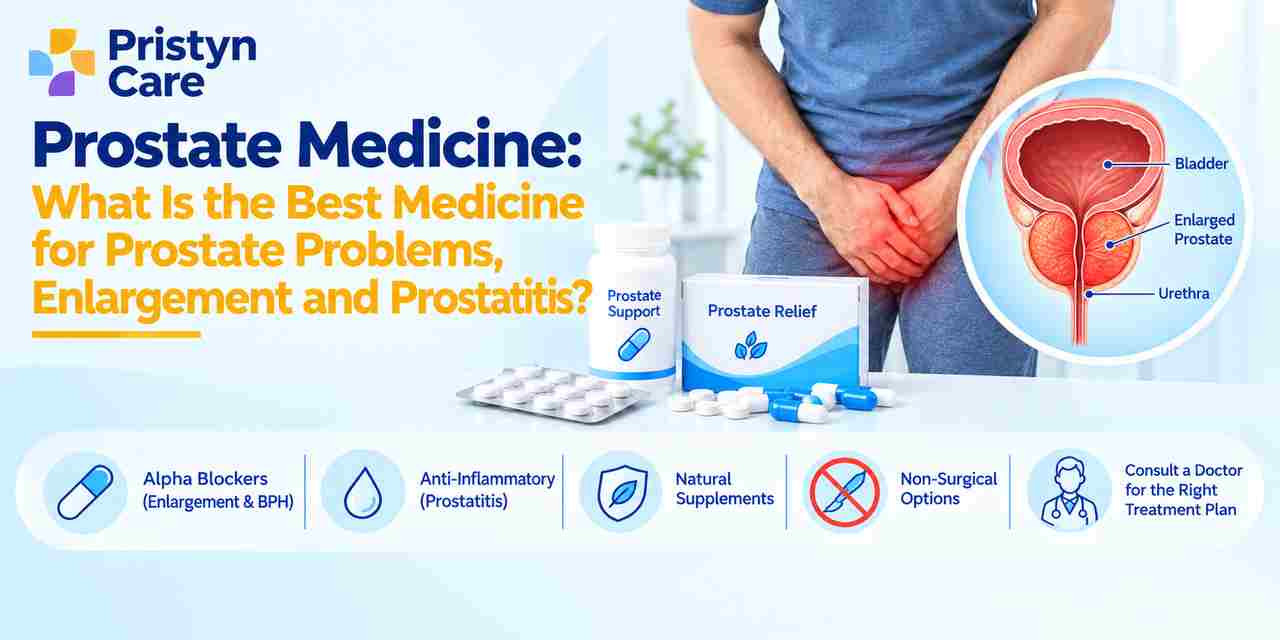
Prostate Medicine: What Is the Best Medicine for Prostate Problems, Enlargement and Prostatitis?
Because the cause can be different, there is no single best prostate medicine that works for everyone.



Dedicated Support at Every Step!
Our Doctors are available 24 hours a day, 7 days a week to help you!

Table of Contents
Prostate problems are common, particularly in men as they get older. However, “prostate problem” can refer to several different conditions, including benign prostatic hyperplasia (BPH), prostatitis, prostate infection, urinary symptoms and, less commonly, prostate cancer.
Medicines may help reduce urinary symptoms, control prostate inflammation or infection, or improve urine flow. In some cases, procedures or surgery may be required, particularly when an enlarged prostate causes significant or persistent urinary obstruction.
What Is the Prostate?
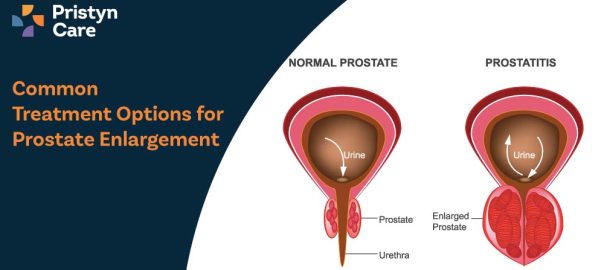
The prostate is a small gland located below the urinary bladder in men. It surrounds part of the urethra, the tube through which urine leaves the body.
The prostate can become enlarged or inflamed with age or because of infection.
Common prostate-related conditions include:
- Benign prostatic hyperplasia (BPH)
- Prostatitis
- Bacterial prostate infection
- Chronic pelvic pain associated with prostatitis
- Urinary obstruction caused by prostate enlargement
- Prostate cancer
The appropriate prostate treatment medicine depends on the underlying condition.
No Cost EMI, Hassle-free Insurance Approval
Is There a Best Medicine for Prostate Problems?
No single medicine can be called the best medicine for every prostate problem.
Treatment depends on:
- Age
- Symptoms
- Prostate size
- Urine flow
- Whether an infection is present
- PSA level when clinically indicated
- Urine test results
- Other medical conditions
- Medicines already being taken
- Severity of urinary obstruction
For example, the medicine used for BPH can be completely different from the medicine used for bacterial prostatitis.
Therefore, taking a prostate medicine simply because it worked for someone else may not be appropriate.
Medicine for Enlarged Prostate and BPH
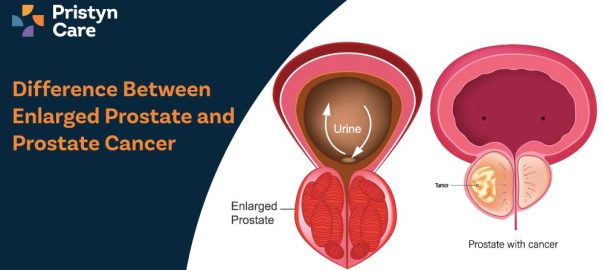
Benign prostatic hyperplasia (BPH) is a non-cancerous enlargement of the prostate. It becomes increasingly common with age.
An enlarged prostate can press against the urethra and make it difficult for urine to pass.
Common symptoms of BPH include:
- Difficulty starting urination
- Weak urine stream
- Interrupted urine flow
- Frequent urination
- Increased nighttime urination
- Urgency to urinate
- Feeling that the bladder has not emptied completely
- Dribbling after urination
- Needing to strain to urinate
Not every man with an enlarged prostate needs medicine immediately. Mild symptoms may sometimes be managed through monitoring and lifestyle measures.
What Medicines Are Used for BPH?
Depending on the patient's symptoms and prostate characteristics, doctors may prescribe different medicines.
| Medicine group | How it may help |
| Alpha-blockers | Relax prostate/bladder-neck muscles and improve urine flow |
| 5-alpha-reductase inhibitors | Gradually reduce prostate size in suitable patients |
| PDE-5 inhibitors | May improve urinary symptoms and erectile dysfunction in selected men |
| Combination therapy | May be used when both symptom relief and prostate-size reduction are needed |
| Other medicines | May be considered for specific bladder-related symptoms |
Alpha-blockers
Examples include medicines such as:
- Tamsulosin
- Alfuzosin
- Silodosin
- Doxazosin
- Terazosin
These medicines relax muscles around the prostate and bladder outlet, which can make urination easier.
They can improve symptoms relatively quickly, but they generally do not shrink the prostate.
Possible side effects can include:
- Dizziness
- Low blood pressure
- Ejaculatory changes
- Headache
- Weakness
The choice of medicine depends on the individual's condition and other medications.
5-alpha-reductase inhibitors
Examples include:
- Finasteride
- Dutasteride
These medicines reduce the hormonal stimulation responsible for prostate growth and can gradually reduce prostate size in appropriate patients.
They generally take longer to produce their full effect than alpha-blockers.
Possible side effects may include:
- Reduced libido
- Erectile difficulties
- Ejaculatory changes
- Breast tenderness or enlargement
They may also affect PSA interpretation, so the doctor should know if a patient is taking one.
Combination treatment
Some men with moderate or severe BPH may benefit from a combination of an alpha-blocker and a 5-alpha-reductase inhibitor.
This approach can provide symptom relief while also addressing prostate enlargement.
Medicine to Shrink the Prostate
If the search intent is specifically “medicine to shrink prostate”, the most relevant conventional medicines are generally 5-alpha-reductase inhibitors, such as finasteride or dutasteride, for appropriately selected men with BPH.
However, they do not work immediately.
The prostate may gradually become smaller over months, and these medicines are not suitable for every person with urinary symptoms.
An enlarged prostate should therefore be assessed before starting treatment.
Allopathic Medicine for Prostate Enlargement
Allopathic or conventional medical treatment for BPH can include:
- Alpha-blockers
- 5-alpha-reductase inhibitors
- Combination therapy
- PDE-5 inhibitors in selected patients
- Medicines targeting specific bladder symptoms
- Lifestyle modification
- Procedures or surgery when medicines are insufficient
The term “allopathic prostate medicine” does not refer to one particular medicine. The appropriate treatment depends on the diagnosis.
Can Medicine Cure an Enlarged Prostate?
Medicines can effectively control symptoms and, in selected cases, gradually reduce prostate size.
However, medicine does not guarantee that an enlarged prostate will completely return to its original size.
If the prostate continues to obstruct urine despite medication, a procedure may be recommended.
Procedures used for BPH can include:
- TURP
- HoLEP
- Laser prostate procedures
- Aquablation in selected patients
- Other minimally invasive BPH procedures
- Open or robotic surgery in selected large prostates
The appropriate procedure depends on prostate size, anatomy, symptoms and overall health.
Natural Medicine for Enlarged Prostate
Many men search for natural or herbal medicines for prostate enlargement.
Some plant-based ingredients have been studied for urinary symptoms, including saw palmetto, but evidence regarding their effectiveness is inconsistent, and they should not automatically be considered substitutes for established BPH treatment.
“Natural” does not necessarily mean:
- Proven to shrink the prostate
- Safe for everyone
- Free from drug interactions
- Appropriate for severe urinary obstruction
If symptoms are persistent, medical evaluation is more important than trying multiple supplements.
Ayurvedic Medicine for Prostate
Ayurvedic prostate medicines are widely searched for, particularly for prostate enlargement and prostate health.
Ayurvedic formulations may contain combinations of herbs and other ingredients intended to support urinary or prostate health.
However, there is no universally proven Ayurvedic medicine that can reliably shrink every enlarged prostate or permanently cure BPH.
If a person chooses to use an Ayurvedic product, they should:
- Check the complete ingredient list
- Inform their doctor about its use
- Avoid replacing prescribed BPH treatment without medical advice
- Avoid products making guaranteed “prostate cure” claims
- Seek evaluation if urinary symptoms are worsening
Best Ayurvedic Medicine for Prostate Enlargement
There is no single best Ayurvedic medicine for prostate enlargement that can be recommended universally.
BPH is a structural and hormonal condition, and the treatment should depend on prostate size, symptoms and urinary obstruction.
Ayurvedic or herbal products should not delay assessment when symptoms include:
- Very weak urine flow
- Increasing difficulty urinating
- Blood in urine
- Repeated urinary infections
- Bladder stones
- Urinary retention
- Kidney-related complications
Patanjali Medicine for Prostate
Searches for Patanjali prostate medicine and Patanjali Ayurvedic medicine for prostate enlargement reflect interest in branded Ayurvedic products.
However, a branded herbal product should not automatically be considered a proven treatment for BPH.
Before using a Patanjali or any other Ayurvedic product for prostate symptoms, check:
- Its ingredients
- Potential drug interactions
- Whether it is appropriate for the diagnosed condition
- Whether the product has evidence for the specific prostate problem
Most importantly, do not use an herbal product as a replacement for evaluation when urinary obstruction is suspected.
Himalaya Medicine for Prostate
Himalaya prostate products are also commonly searched for as Himalaya medicine for prostate, Himalaya prostate medicine and Himalaya medicine for prostate enlargement.
Herbal products may be marketed for urinary or prostate support, but they should not be assumed to:
- Permanently shrink an enlarged prostate
- Remove prostate obstruction
- Cure prostatitis
- Treat prostate cancer
Men with persistent urinary symptoms should first determine what is causing those symptoms.
Dabur and Hamdard Medicine for Prostate
Similar searches include:
- Dabur prostate medicine
- Hamdard medicine for prostate enlargement
- Herbal prostate medicine
- Unani medicine for prostate
- Natural prostate medicine
These products may be marketed for prostate or urinary health, but there is no universal branded medicine that can be considered a permanent cure for every prostate condition.
A product that may support mild symptoms cannot be assumed to treat significant urinary obstruction.
Homeopathic Medicine for Prostate
Homeopathic medicines are frequently searched for in relation to:
- Prostate enlargement
- BPH
- Prostatitis
- Prostate pain
- Urinary symptoms
However, there is no scientifically established homeopathic medicine proven to shrink an enlarged prostate or permanently cure BPH.
Homeopathy should not be used as a substitute for appropriate evaluation, particularly when a man has difficulty urinating, recurrent infections, blood in urine or significant urinary obstruction.
Best Homeopathic Medicine for Enlarged Prostate
There is no scientifically established “best homeopathic medicine” that can reliably reverse BPH.
Because urinary symptoms can also occur due to other conditions, including infection, bladder disorders or prostate cancer, treating symptoms without identifying the cause can delay appropriate care.
 Doctor available
4.5/5

29+ Years Experience Overall
Doctor available
4.5/5
19+ Years Experience Overall
Doctor available
4.5/5
19+ Years Experience Overall
Doctor available
4.5/5
15+ Years Experience Overall
Doctor available
4.5/5
12+ Years Experience Overall
Doctor available
4.5/5
12+ Years Experience Overall
Doctor available
5.0/5
25+ Years Experience Overall
 (4) (1).jpg/1682933853454_ban-Icon.png) Doctor available
Doctor available.jpeg/1777541472938_ban-Icon.png)
4.8/5
17+ Years Experience Overall
Doctor available
4.5/5
18+ Years Experience Overall
Doctor available
4.8/5
16+ Years Experience Overall
Doctor available
4.8/5
15+ Years Experience Overall
Doctor available
MBBS, MS - General Surgery, MCh - Urology/Genito-Urinary Surgery
₹1200₹600Consultation Fee
5.0/5
15+ Years Experience Overall
Doctor available
5.0/5
14+ Years Experience Overall
Doctor available
5.0/5
14+ Years Experience Overall
Doctor available
4.5/5
13+ Years Experience Overall
Doctor available
4.5/5
13+ Years Experience Overall
Doctor available
4.5/5
12+ Years Experience Overall
Doctor available
4.5/5
11+ Years Experience Overall
Prostatitis Medicine
Prostatitis refers to inflammation of the prostate. It can occur with or without bacterial infection.
There are several forms of prostatitis, and treatment differs between them.
Symptoms can include:
- Pain or burning during urination
- Frequent urination
- Urinary urgency
- Pelvic pain
- Pain between the scrotum and anus
- Lower abdominal pain
- Pain during or after ejaculation
- Difficulty urinating
- Fever and chills in acute bacterial prostatitis
Medicine for Prostate Infection
If prostatitis is caused by bacteria, antibiotics may be required.
The choice of antibiotic depends on factors such as:
- Suspected or confirmed bacteria
- Urine culture results
- Local antibiotic resistance
- Previous antibiotic use
- Allergies
- Kidney function
- Severity of infection
Treatment may sometimes need to continue for an extended period because antibiotics need to reach prostate tissue effectively.
Antibiotics should not be taken randomly for prostate pain.
Important distinction
Prostate pain does not always mean prostate infection.
Chronic pelvic pain and non-bacterial prostatitis may require a different treatment approach.
Prostatitis Ayurvedic Medicine
Ayurvedic medicines are also searched for as a treatment for prostatitis.
However, there is no established Ayurvedic medicine proven to reliably eradicate bacterial prostatitis.
If a bacterial infection is present, delaying appropriate antimicrobial treatment can allow the infection to worsen.
Herbal products should therefore not replace diagnostic testing or prescribed treatment.
Homeopathic Medicine for Prostatitis
There is no scientifically established homeopathic medicine proven to eradicate bacterial prostate infection.
A man experiencing fever, chills, severe pelvic pain or difficulty urinating should seek medical assessment rather than relying only on homeopathic treatment.
Prostate Pain Relief Medicine
The appropriate treatment for prostate pain depends on its cause.
Doctors may recommend pain-relieving medicines or anti-inflammatory treatment in suitable patients.
Other measures may include:
- Adequate hydration when appropriate
- Warm baths
- Avoiding activities that aggravate symptoms
- Treating an underlying infection when present
- Managing urinary symptoms
- Treatment directed at chronic pelvic pain when appropriate
Severe or sudden prostate/pelvic pain, particularly when accompanied by fever or inability to urinate, requires prompt medical attention.
Prostate Medicine Names
Some commonly prescribed medicines associated with prostate conditions include:
For BPH
- Tamsulosin
- Alfuzosin
- Silodosin
- Doxazosin
- Terazosin
- Finasteride
- Dutasteride
- Tadalafil in selected patients
For bacterial prostatitis
- Antibiotics selected according to the suspected or confirmed infection
These are examples of medicine classes or commonly used medicines, not a recommendation to self-medicate.
The right medicine depends on the diagnosis.
Can Prostate Problems Be Cured With Medicine?
It depends on the prostate problem.
| Prostate problem | Can medicine help? | Is medicine always enough? |
| Mild BPH | Yes | Often, but not always |
| Moderate/severe BPH | Yes | Some patients eventually need a procedure |
| Bacterial prostatitis | Yes, antibiotics may be required | Depends on severity and response |
| Chronic prostatitis/chronic pelvic pain | Yes, symptom-directed treatment may help | May require multiple treatment approaches |
| Urinary retention due to BPH | Medicines may be part of treatment | Often requires immediate bladder drainage and further management |
| Prostate cancer | Treatment depends on stage/type | Requires specialist cancer management |
When Does an Enlarged Prostate Need Surgery?
Medicine may not be sufficient when BPH causes significant obstruction or complications.
A procedure may be considered when there is:
- Recurrent urinary retention
- Repeated urinary tract infections
- Bladder stones
- Significant blood in urine related to BPH
- Kidney or upper urinary tract complications
- Severe symptoms despite medication
- Persistent obstruction
- Poor response or intolerance to medicines
The goal is to improve urine flow and relieve the obstruction.
What Happens if an Enlarged Prostate Is Left Untreated?
Mild BPH does not necessarily cause serious complications.
However, significant untreated obstruction can potentially result in:
- Increasing difficulty urinating
- Urinary retention
- Recurrent urinary infections
- Bladder stones
- Bladder dysfunction
- Kidney-related complications
Therefore, worsening urinary symptoms should not simply be attributed to ageing.

Free Prostate Enlargement Surgery Cost Calculator

Prostate Medicine vs BPH Procedure
| Treatment | Main purpose | Does it shrink/remove the prostate? |
| Alpha-blocker | Improve urine flow and symptoms | No |
| 5-alpha-reductase inhibitor | Gradually reduce prostate size | Can reduce prostate size |
| Combination medicine | Symptom relief + prostate-size reduction | May reduce prostate size |
| Herbal/Ayurvedic products | May be marketed for urinary/prostate support | Not reliably established |
| Homeopathy | Alternative treatment | Not scientifically proven to shrink BPH |
| BPH procedure | Relieve physical obstruction | Depends on procedure |
How Is a Prostate Problem Diagnosed?
Before choosing a prostate medicine, a doctor may evaluate:
- Medical history
- Urinary symptoms
- Digital rectal examination when appropriate
- Urine tests
- PSA testing when clinically indicated
- Ultrasound
- Post-void residual urine measurement
- Uroflowmetry
- Kidney function tests
- Other investigations depending on symptoms
Not every man needs every test.
The evaluation is tailored to the symptoms and risk factors.
BPH vs Prostatitis: What Is the Difference?
| Feature | BPH | Prostatitis |
| Main problem | Prostate enlargement | Prostate inflammation/infection |
| More common with age | Yes | Can occur at different ages |
| Urinary symptoms | Common | Common |
| Pelvic pain | Less typical | Common in some forms |
| Fever/chills | Not typical | Can occur in bacterial prostatitis |
| Antibiotics | Not routinely needed | Needed when bacterial infection is present |
| Prostate-shrinking medicines | May be used | Not the primary treatment |
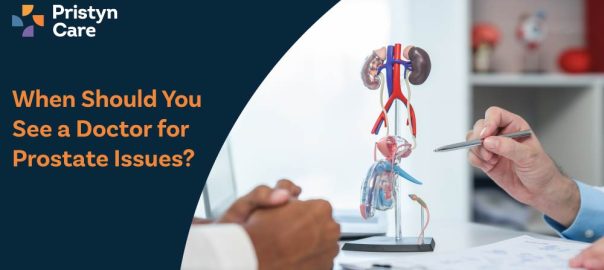
When Should You See a Doctor for Prostate Symptoms?
Consult a doctor if you have:
- Difficulty starting urination
- Weak urine stream
- Frequent nighttime urination
- Persistent urinary urgency
- Incomplete bladder emptying
- Pelvic or prostate pain
- Painful urination
- Recurrent urinary infections
- Blood in urine
- Persistent symptoms despite medicines
Do not assume that every urinary symptom is caused by an enlarged prostate.
When Is Prostate Trouble an Emergency?
Seek urgent medical care if you:
- Cannot urinate at all
- Have severe lower abdominal pain with inability to urinate
- Have high fever and chills with urinary symptoms
- Have severe pelvic pain
- Become confused, very weak or faint
- Have significant blood in urine with clots or difficulty urinating
Acute urinary retention and severe bacterial prostatitis can require urgent treatment.
Prostate Health Tips
While lifestyle changes cannot guarantee prevention of prostate disease, they may help manage urinary symptoms in some men.
Consider:
- Limiting excessive evening fluids if nighttime urination is troublesome
- Reducing caffeine if it worsens urgency
- Limiting alcohol if it aggravates urinary symptoms
- Staying physically active
- Managing constipation
- Reviewing medicines that may worsen urinary symptoms with a doctor
- Attending recommended medical check-ups
- Avoiding self-medication
Frequently Asked Questions
What is the best medicine for prostate problems?
There is no single best prostate medicine. Treatment depends on whether the problem is BPH, prostatitis, infection or another condition.
What is the best medicine for an enlarged prostate?
Alpha-blockers may improve urinary symptoms, while medicines such as finasteride or dutasteride can gradually reduce prostate size in selected men. The appropriate medicine depends on prostate size and symptoms.
Is there medicine to shrink the prostate?
Yes. 5-alpha-reductase inhibitors such as finasteride and dutasteride can gradually reduce prostate size in appropriate men with BPH.
Can Ayurveda cure an enlarged prostate?
There is no universally proven Ayurvedic medicine that permanently cures or reliably shrinks every enlarged prostate.
Is there a Patanjali medicine for prostate enlargement?
Patanjali markets Ayurvedic products, but a branded product should not automatically be considered a proven treatment for BPH. Persistent urinary symptoms should be medically evaluated.
Is Himalaya medicine good for prostate problems?
Himalaya has products marketed for urinary/prostate health, but suitability depends on the underlying condition. Such products should not replace medical evaluation or established BPH treatment.
Can homeopathy cure an enlarged prostate?
There is no scientifically established homeopathic medicine proven to shrink or permanently cure BPH.
What medicine is used for prostate infection?
Bacterial prostatitis may require antibiotics selected by a doctor. The appropriate antibiotic depends on the suspected or confirmed organism and the patient's medical history.
Can prostatitis be treated with Ayurvedic medicine?
There is no established Ayurvedic medicine proven to reliably eradicate bacterial prostatitis. A suspected infection should be medically evaluated.
Is prostate pain always caused by an enlarged prostate?
No. Prostate or pelvic pain can occur with prostatitis, urinary problems and other conditions. The cause should be identified before selecting treatment.
Can an enlarged prostate be cured permanently?
BPH can often be managed effectively with medicines or procedures. Medicines may control symptoms and, in selected cases, reduce prostate size, while procedures can relieve physical obstruction.
Can I take prostate medicine without seeing a doctor?
It is better not to self-medicate. Urinary symptoms can have multiple causes, and some prostate conditions require testing and specific treatment.


Conclusion
There is no single best prostate medicine for every prostate problem.
For BPH or an enlarged prostate, medicines such as alpha-blockers and 5-alpha-reductase inhibitors may improve urinary symptoms or gradually reduce prostate size in suitable patients. Some men may eventually require a minimally invasive procedure or surgery if the prostate continues to obstruct urine.
For prostatitis or prostate infection, treatment depends on whether bacteria are actually responsible. Antibiotics may be required for bacterial infection, while chronic non-bacterial prostatitis may need a different treatment strategy.
If urinary symptoms are persistent, worsening or associated with fever, blood in urine, severe pain or inability to urinate, medical evaluation should not be delayed.
Social share:



Related Calculators

Dedicated Support at Every Step!
Our Doctors are available 24 hours a day, 7 days a week to help you!


