


 Views: 0
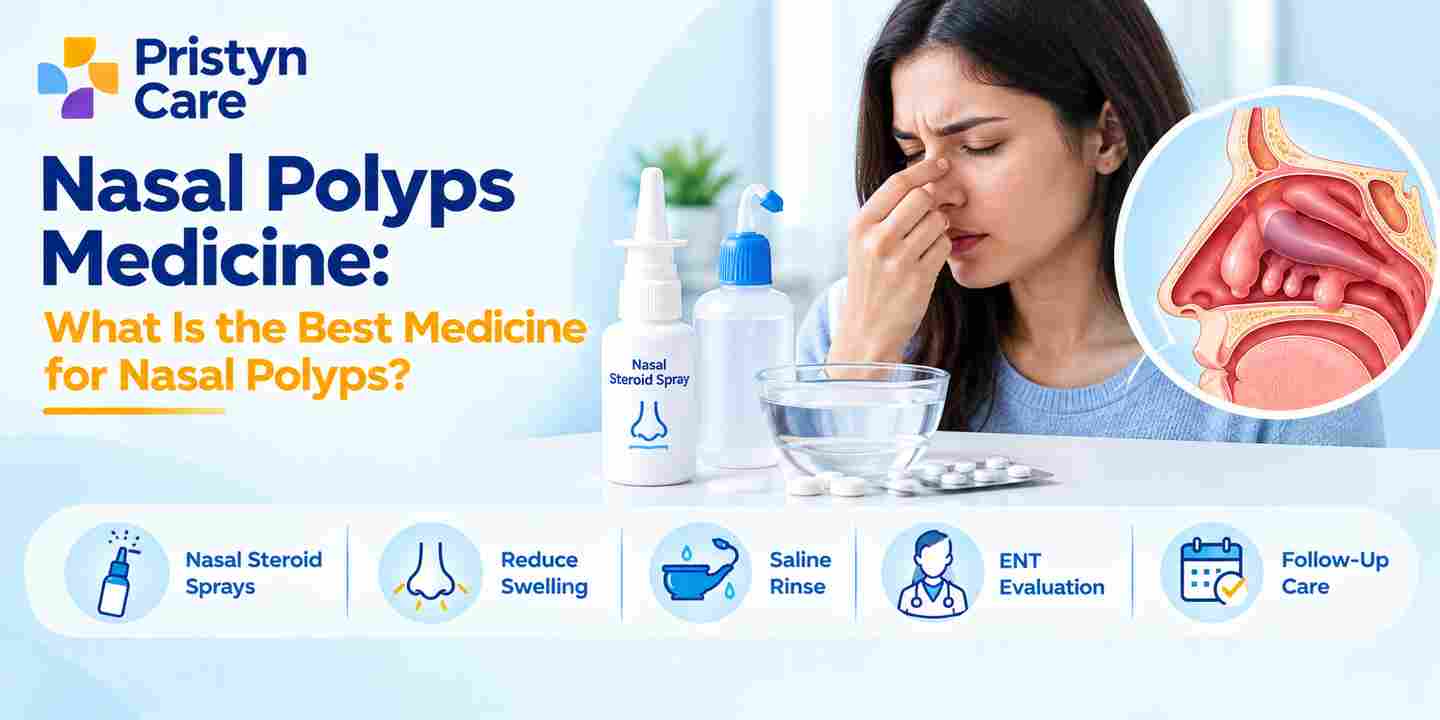
Nasal Polyps Medicine: What Is the Best Medicine for Nasal Polyps?
People often search for nasal polyps medicine, Ayurvedic medicine for nasal polyps, or homeopathic medicine for nasal polyps because they want to avoid surgery.



Dedicated Support at Every Step!
Our Doctors are available 24 hours a day, 7 days a week to help you!

Table of Contents
Nasal polyps are soft, non-cancerous growths that develop inside the lining of the nose or sinuses. They are commonly associated with long-term inflammation and may cause a blocked nose, reduced sense of smell, postnasal drip, facial pressure, and difficulty breathing through the nose.
The good news is that medicines are an important part of nasal polyp treatment. However, there is no single medicine that works for everyone. Treatment depends on the size and number of polyps, severity of symptoms, underlying inflammation, allergies, asthma, sinus disease, and whether the polyps respond to medical treatment.
What Are Nasal Polyps?
Nasal polyps are soft, painless, usually non-cancerous swellings of the mucous membrane inside the nose or sinuses.
They can occur in one or both nasal passages and may vary in size.
Common symptoms include:
- Persistent blocked nose
- Difficulty breathing through the nose
- Reduced or lost sense of smell
- Reduced sense of taste
- Runny nose
- Postnasal drip
- Facial pressure
- Headache
- Snoring
- Frequent sinus infections
Small polyps may cause few symptoms, while larger or multiple polyps can significantly obstruct the nasal passages.
No Cost EMI, Hassle-free Insurance Approval
Is There Medicine for Nasal Polyps?
Yes. Medicines are commonly used to control inflammation and symptoms associated with nasal polyps.
The most commonly used treatments include:
| Medicine/Treatment | Main Purpose | Can It Help Nasal Polyps? |
| Steroid nasal sprays | Reduce inflammation and swelling | Yes |
| Saline nasal irrigation | Clears mucus and irritants | Helps symptoms and nasal hygiene |
| Short-course oral corticosteroids | Rapidly reduce significant inflammation | May shrink polyps temporarily |
| Antihistamines | Control allergy symptoms when present | Helps associated symptoms |
| Antibiotics | Treat bacterial infection when diagnosed | Do not directly remove polyps |
| Leukotriene-modifying medicines | May help selected patients with associated airway inflammation | Case-dependent |
| Biologic medicines | Target specific inflammatory pathways | Used for selected severe cases |
| Endoscopic sinus surgery | Removes polyps and opens blocked sinus passages | Used when appropriate |
Therefore, the best medicine for nasal polyps depends on the severity and underlying cause.
What Is the Best Medicine for Nasal Polyps?
There is no single "best" medicine for every person with nasal polyps.
For many patients, intranasal corticosteroid sprays are an important first-line medical treatment because they reduce inflammation and can help shrink polyps and improve nasal symptoms.
A doctor may also recommend saline irrigation.
For more severe symptoms, a short course of oral corticosteroids may sometimes be prescribed. Because systemic steroids can cause significant side effects, they should only be taken under medical supervision.
Patients with severe, recurrent nasal polyps may be considered for biologic treatments or surgery depending on their condition.
Nasal Steroid Spray for Polyps
Steroid nasal sprays are commonly used to control inflammation associated with nasal polyps.
They may:
- Reduce nasal congestion
- Improve airflow
- Reduce inflammation
- Improve sense of smell
- Reduce the size of polyps in some patients
- Reduce the likelihood of symptoms returning
Examples of intranasal corticosteroids include medicines containing:
- Fluticasone
- Mometasone
- Budesonide
- Beclometasone
The appropriate medicine and duration should be determined by a doctor.
Does Nasal Spray Remove Polyps Permanently?
Nasal steroid sprays can reduce inflammation and may shrink polyps, but they do not guarantee permanent removal.
Nasal polyps are associated with underlying inflammation, so they can return even after successful medical or surgical treatment.
Consistent long-term treatment may be necessary for some people.
Can Oral Steroids Treat Nasal Polyps?
Oral corticosteroids can sometimes reduce severe nasal inflammation and temporarily shrink polyps.
They may be considered when:
- Symptoms are severe
- Polyps are significantly obstructing the nose
- Smell is substantially reduced
- Nasal sprays have not provided sufficient relief
However, oral steroids are not suitable for routine long-term self-treatment because they can cause side effects.
They should be prescribed and monitored by a qualified doctor.
Can Antibiotics Cure Nasal Polyps?
Antibiotics do not directly remove nasal polyps.
They may be prescribed when there is a bacterial infection occurring alongside sinus disease.
Taking antibiotics unnecessarily will not make nasal polyps disappear and can contribute to antibiotic resistance and other side effects.
Can Nasal Polyps Be Cured Without Surgery?
Yes, some patients can achieve significant improvement with medical treatment alone.
Depending on the case, treatment may involve:
- Steroid nasal sprays
- Saline irrigation
- Allergy management
- Treatment of associated asthma
- Short-term oral steroids when appropriate
- Other prescription anti-inflammatory treatments
If the polyps are small and respond well to medical treatment, surgery may not be necessary.
However, large or persistent polyps that continue to block the nose despite appropriate medical treatment may require an ENT evaluation for procedural treatment.
Can Homeopathic Medicine Cure Nasal Polyps?
Searches for homeopathic medicine for nasal polyps and best homeopathic medicine for nasal polyps are common.
Homeopathic remedies are sometimes promoted as a way to shrink or permanently eliminate nasal polyps.
However, there is no strong scientific evidence that homeopathic medicines can reliably shrink or eliminate established nasal polyps.
If symptoms are persistent, relying solely on homeopathy may delay appropriate treatment and allow significant nasal obstruction or sinus disease to continue.
Homeopathy should not replace evaluation and treatment recommended by an ENT specialist.
Best Homeopathic Medicine for Nasal Polyps
There is no scientifically established "best homeopathic medicine" for nasal polyps.
Different homeopathic products may be recommended based on individual symptoms, but this does not establish that they can physically remove polyps or treat the underlying inflammatory process.
If you are considering homeopathy, discuss it with your healthcare provider and do not discontinue prescribed nasal or sinus treatment without medical advice.
Can Ayurveda Cure Nasal Polyps?
Ayurvedic treatment for nasal polyps is also frequently searched for, including:
- Ayurvedic medicine for nasal polyps
- Best Ayurvedic medicine for nasal polyps
- Ayurvedic treatment for nasal polyps
Some Ayurvedic preparations and therapies are promoted for nasal congestion and sinus problems.
However, there is insufficient high-quality clinical evidence to establish Ayurvedic medicines as a reliable method for shrinking or eliminating established nasal polyps.
Because nasal polyps can obstruct the nose and affect smell and breathing, persistent symptoms should be evaluated by an ENT specialist.
Best Ayurvedic Medicine for Nasal Polyps
There is no scientifically established Ayurvedic medicine that can be considered the universally best treatment for nasal polyps.
Ayurvedic products should not be used as a replacement for proven medical treatment, particularly when polyps are large, recurrent, or causing significant breathing or smell problems.
 Doctor available
4.5/5

48+ Years Experience Overall
Doctor available
MBBS, Diploma in Radio Diagnosis & MD-TB & Respiratory Diseases
₹1200₹600Consultation Fee
4.5/5
47+ Years Experience Overall
Doctor available
4.5/5
45+ Years Experience Overall
Doctor available
4.5/5
45+ Years Experience Overall
Doctor available
5.0/5
44+ Years Experience Overall
Doctor available
MBBS, Diploma in Ophthalmologist, MS-Ophthalmologist
₹1200₹600Consultation Fee
4.5/5
43+ Years Experience Overall
Doctor available
4.5/5
42+ Years Experience Overall
Doctor available
4.5/5
42+ Years Experience Overall
Doctor available
4.5/5
41+ Years Experience Overall
Doctor available
4.5/5
41+ Years Experience Overall
Can Nasal Polyps Go Away on Their Own?
Small nasal polyps may sometimes fluctuate in size as inflammation changes.
However, established nasal polyps do not reliably disappear permanently without treatment.
Symptoms may improve temporarily but return when inflammation becomes active again.
If you have persistent nasal blockage or loss of smell, an ENT evaluation can help determine whether nasal polyps are actually responsible.
Nasal Polyps and Loss of Smell
Loss or reduction of smell is one of the common symptoms of nasal polyps.
Polyps can:
- Physically block airflow to the smell receptors
- Be associated with chronic inflammation
- Occur alongside chronic sinus disease
Medical treatment may improve the sense of smell when inflammation and obstruction are reduced.
However, persistent loss of smell should be evaluated because other conditions can also cause it.
When Does Nasal Polyp Surgery Become Necessary?
Surgery may be considered when:
- Polyps significantly block the nasal passages
- Symptoms remain despite appropriate medical treatment
- Recurrent sinus infections continue
- Smell remains severely reduced
- Polyps are extensive
- Structural blockage prevents adequate medical treatment
- The diagnosis is uncertain
The most commonly used procedure is endoscopic sinus surgery, which allows an ENT surgeon to remove polyps and improve drainage and ventilation of the sinuses.
Surgery is generally considered part of a broader treatment plan rather than a replacement for ongoing inflammation control.
What Is Endoscopic Sinus Surgery for Nasal Polyps?
Endoscopic sinus surgery is performed through the nostrils using a small camera and specialized instruments.
Depending on the condition, the surgeon may:
- Examine the nasal passages and sinuses.
- Remove obstructing polyps.
- Open blocked sinus drainage pathways.
- Remove diseased tissue where necessary.
- Improve access for postoperative nasal medication.
The exact procedure depends on the extent and location of the disease.
Can Nasal Polyps Come Back After Surgery?
Yes.
Surgery can remove existing polyps and improve nasal and sinus airflow, but it does not necessarily eliminate the underlying inflammatory tendency that caused them.
Polyps may therefore recur.
Long-term management may include:
- Steroid nasal sprays
- Saline irrigation
- Allergy management
- Treatment of associated asthma
- Regular ENT follow-up
- Biologic treatment in selected severe cases
Nasal Polyps Medicine vs Surgery
| Treatment | Main Purpose | Can It Remove Existing Polyps? |
| Saline irrigation | Clears mucus and irritants | No |
| Steroid nasal spray | Controls inflammation and may shrink polyps | May reduce polyp size |
| Oral corticosteroids | Rapidly suppress inflammation | May temporarily shrink polyps |
| Antihistamines | Control allergy symptoms | No |
| Antibiotics | Treat bacterial infection when present | No |
| Homeopathic medicine | Marketed for polyp symptoms | Not scientifically proven to remove polyps |
| Ayurvedic medicine | Traditionally used for sinus/nasal complaints | Not scientifically proven to remove polyps |
| Biologic medicines | Control specific inflammatory pathways | Can reduce polyp burden in selected patients |
| Endoscopic sinus surgery | Removes obstructing polyps and improves sinus drainage | Yes |
How Can You Manage Nasal Polyps at Home?
Home measures can support medical treatment but should not be considered a substitute for treatment when symptoms are significant.
You may be advised to:
- Use saline nasal irrigation appropriately.
- Follow your prescribed nasal spray routine.
- Avoid known allergens and irritants.
- Manage allergic rhinitis.
- Avoid cigarette smoke.
- Keep indoor air reasonably humidified when dry air worsens symptoms.
- Follow treatment for associated asthma if prescribed.
If using a nasal irrigation device, use appropriately prepared water according to medical guidance rather than untreated tap water.
When Should You See an ENT Specialist?
Consult an ENT specialist if you have:
- Persistent nasal blockage
- Reduced or lost sense of smell
- Repeated sinus infections
- Persistent postnasal drip
- Facial pressure
- Difficulty breathing through the nose
- Symptoms that do not improve with appropriate treatment
- Recurrent nasal polyps
A doctor may examine the nose using nasal endoscopy and may recommend imaging such as a CT scan when appropriate.
Are Nasal Polyps Dangerous?
Most nasal polyps are benign.
However, a one-sided nasal mass, persistent nosebleed, severe facial pain, vision changes, or an unusual growth should be assessed by an ENT specialist rather than automatically assumed to be a nasal polyp.
Rarely, other conditions can resemble nasal polyps.
Frequently Asked Questions
1. What is the best medicine for nasal polyps?
Intranasal corticosteroids are commonly used to control inflammation and may shrink nasal polyps. The best treatment depends on the severity and underlying cause.
2. Can nasal polyps be cured with medicine?
Medicines can significantly reduce symptoms and may shrink polyps. Some patients can avoid surgery, while others with persistent or extensive polyps may require a procedure.
3. Can nasal polyps disappear naturally?
They do not reliably disappear permanently on their own. Their size and symptoms may fluctuate depending on inflammation.
4. Can homeopathic medicine cure nasal polyps?
There is no strong scientific evidence that homeopathic medicines can reliably eliminate established nasal polyps.
5. What is the best homeopathic medicine for nasal polyps?
There is no scientifically established homeopathic medicine that can be considered a proven cure for nasal polyps.
6. Can Ayurveda remove nasal polyps?
There is insufficient high-quality evidence to establish Ayurvedic medicine as a reliable method for removing established nasal polyps.
7. Can nasal spray shrink polyps?
Yes. Intranasal corticosteroid sprays can reduce inflammation and may shrink nasal polyps in some patients.
8. Do antibiotics remove nasal polyps?
No. Antibiotics treat bacterial infections when present but do not directly remove nasal polyps.
9. When is surgery needed for nasal polyps?
Surgery may be considered when polyps are extensive, significantly obstruct the nose, or continue causing symptoms despite appropriate medical treatment.
10. Can nasal polyps return after treatment?
Yes. Because nasal polyps are associated with chronic inflammation, they can recur after both medical and surgical treatment. Long-term management may help reduce recurrence.


Conclusion
Searching for nasal polyps medicine, Ayurvedic medicine for nasal polyps, or homeopathic medicine for nasal polyps is common, particularly for people hoping to avoid surgery.
The good news is that nasal polyps can often be managed medically. Steroid nasal sprays, saline irrigation, and other anti-inflammatory treatments can reduce symptoms and may shrink polyps. In selected cases, oral steroids or newer biologic medicines may also be considered.
However, there is no single medicine that permanently cures every case. Homeopathic and Ayurvedic medicines have not been scientifically established as reliable treatments for eliminating nasal polyps.
When polyps are large, recurrent, or resistant to appropriate medical treatment, an ENT specialist may recommend endoscopic sinus surgery to remove the obstructing tissue and improve sinus drainage.
The best treatment therefore depends on the size and location of the polyps, severity of symptoms, underlying inflammation, associated allergies or asthma, and response to medical treatment.
Disclaimer: This information is for educational purposes only and should not replace consultation with a qualified ENT specialist. Do not start prescription steroids, antibiotics, biologic medicines, or other treatments without appropriate medical advice.
Social share:



Related Calculators

Dedicated Support at Every Step!
Our Doctors are available 24 hours a day, 7 days a week to help you!
Related Calculators
Get In Touch with our expert doctors !
- please enter 10 digit number.


