


 Views: 1
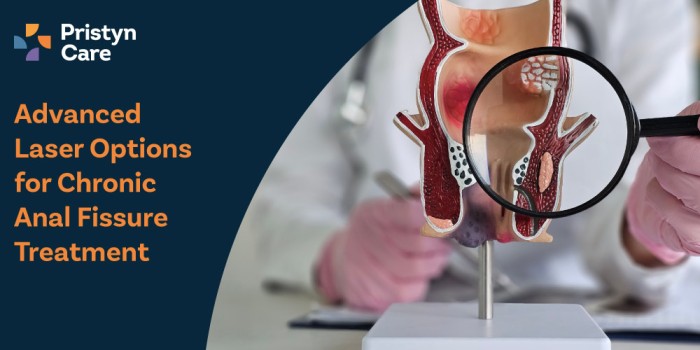
Advanced Laser Options for Chronic Anal Fissure Treatment
Chronic anal fissure is a painful condition that can disrupt daily life, making even simple activities like sitting or passing stool extremely uncomfortable. While many fissures heal with medications and lifestyle changes, some cases persist and require advanced treatment.

Social share:


Dedicated Support at Every Step!
Our Doctors are available 24 hours a day, 7 days a week to help you!

Table of Contents
A Modern, Minimally Invasive Approach to Long-Standing Anal Pain
With the evolution of medical technology, laser treatment has emerged as a highly effective and minimally invasive option for chronic anal fissures.
This blog explains when laser treatment is needed, how it works, and why it is becoming the preferred choice for many patients.
No Cost EMI, Hassle-free Insurance Approval
What Is a Chronic Anal Fissure?
An anal fissure is a small tear in the lining of the anus. When the tear does not heal within 6–8 weeks, it is classified as a chronic anal fissure.
Common Symptoms:
- Sharp pain during and after bowel movements
- Bright red bleeding
- Burning or itching sensation
- Visible tear or crack near the anus
- Skin tag (sentinel pile) in chronic cases
Chronic fissures often involve muscle spasm, which reduces blood flow and delays healing.
Why Do Some Fissures Become Chronic?
Not all fissures heal naturally. Some progress into chronic conditions due to:
- Persistent constipation
- Repeated trauma during bowel movements
- Tight anal sphincter muscles
- Poor blood supply to the affected area
- Delayed or inadequate treatment
In such cases, advanced intervention becomes necessary.
Conventional Treatments vs Advanced Laser Options
Non-Surgical Treatments
Initially, doctors recommend:
- High-fiber diet
- Stool softeners
- Topical ointments
- Sitz baths
These methods are effective in early-stage fissures but may fail in chronic cases.
Traditional Surgery (Lateral Internal Sphincterotomy - LIS)
This involves cutting a portion of the anal sphincter muscle to reduce pressure.
Limitations:
- Risk of incontinence (rare but possible)
- Post-operative discomfort
- Longer healing time
Advanced Laser Treatment
Laser fissure surgery is a minimally invasive alternative that uses focused laser energy to treat the fissure and reduce sphincter spasm without major cuts.
When Are Advanced Laser Options Recommended?
Laser treatment is typically advised in the following situations:
1. Chronic Fissure Not Healing with Medications
If symptoms persist beyond 6–8 weeks despite:
- Proper diet
- Medications
- Lifestyle changes
Laser treatment becomes a highly effective next step.
2. Severe Pain Affecting Daily Life
Patients experiencing:
- Intense pain during bowel movements
- Pain lasting hours after passing stool
are often ideal candidates for laser treatment due to its pain-relieving benefits.
3. Presence of Sentinel Pile or Skin Tag
A visible skin tag indicates a long-standing fissure. Laser treatment helps:
- Remove the underlying cause
- Promote faster healing
4. High Sphincter Pressure (Muscle Spasm)
Chronic fissures are often associated with tight sphincter muscles.
Laser treatment helps:
- Reduce muscle spasm
- Improve blood flow
- Accelerate healing
5. Recurrence After Previous Treatment
If a fissure returns after:
- Medical therapy
- Conventional surgery
Laser treatment offers a targeted and effective solution with lower recurrence risk.
6. Preference for Minimally Invasive Surgery
Laser treatment is ideal for patients who want:
- Less pain
- Faster recovery
- No large wounds or stitches
Types of Advanced Laser Techniques for Anal Fissure
Modern proctology uses different laser-assisted approaches:
1. Laser Sphincterotomy
- Controlled laser energy is used to relax the sphincter muscle
- Reduces pressure without major cutting
2. Laser Ablation of Fissure Tissue
- The fissure area is treated with laser to promote healing
- Removes unhealthy tissue
3. Combined Laser Approach
- Both sphincter relaxation and fissure treatment are done together
- Ensures comprehensive healing
How Does Laser Treatment Work?
The procedure is simple and patient-friendly:
- The patient is given local or regional anesthesia
- A laser probe is used to target the fissure
- Laser energy reduces muscle tension and promotes healing
- No major incisions are made
Duration: 15–30 minutes
Hospital Stay: Same-day discharge
Benefits of Advanced Laser Treatment
1. Minimally Invasive
No large cuts or stitches are required.
2. Less Pain
Significantly reduced post-procedure discomfort.
3. Faster Recovery
Patients can return to normal routine within a few days.
4. Lower Risk of Incontinence
Unlike traditional surgery, laser minimizes sphincter damage.
5. Minimal Bleeding
Precision laser technology reduces tissue trauma.
Recovery After Laser Treatment
Recovery is smooth and quick compared to traditional methods.
What to Expect:
- Mild discomfort for 2–3 days
- Improved bowel movement comfort
- Gradual healing of fissure
Post-Treatment Care:
- Follow a high-fiber diet
- Drink plenty of water
- Avoid constipation
- Maintain proper hygiene
- Take prescribed medications
Success Rate of Laser Treatment
Laser treatment has shown excellent results in chronic fissure cases when:
- Proper patient selection is done
- Post-operative care is followed
It provides long-term relief with minimal complications.
Who Should Avoid Laser Treatment?
Laser may not be suitable for:
- Acute fissures (early stage)
- Patients with underlying conditions like Crohn’s disease (case-specific)
- Severe infections requiring alternative treatment
A proper medical evaluation is necessary before deciding the treatment.
When Should You See a Doctor?
Seek medical help if you experience:
- Persistent anal pain
- Bleeding during bowel movements
- Symptoms lasting more than a few weeks
Early treatment prevents complications and improves outcomes.
Final Thoughts
Chronic anal fissure can be a distressing condition, but modern medical advancements have made treatment much easier and more effective.
Advanced laser options offer:
- A minimally invasive approach
- Faster recovery
- Long-lasting relief
However, the decision to undergo laser treatment should always be made after consultation with a qualified specialist who can evaluate your condition and recommend the most appropriate treatment plan.


FAQs
1. Is laser treatment safe for anal fissure?
Yes, it is considered safe and effective when performed by experienced surgeons.
2. How long does the procedure take?
It usually takes around 15–30 minutes.
3. Is laser treatment painful?
No, it is minimally invasive and causes less pain than traditional surgery.
4. How soon can I return to work?
Most patients resume normal activities within 2–3 days.
5. Can fissures recur after laser treatment?
Recurrence is less common, especially with proper lifestyle changes.
Author:





Related Calculators

Dedicated Support at Every Step!
Our Doctors are available 24 hours a day, 7 days a week to help you!


