


 Views: 0
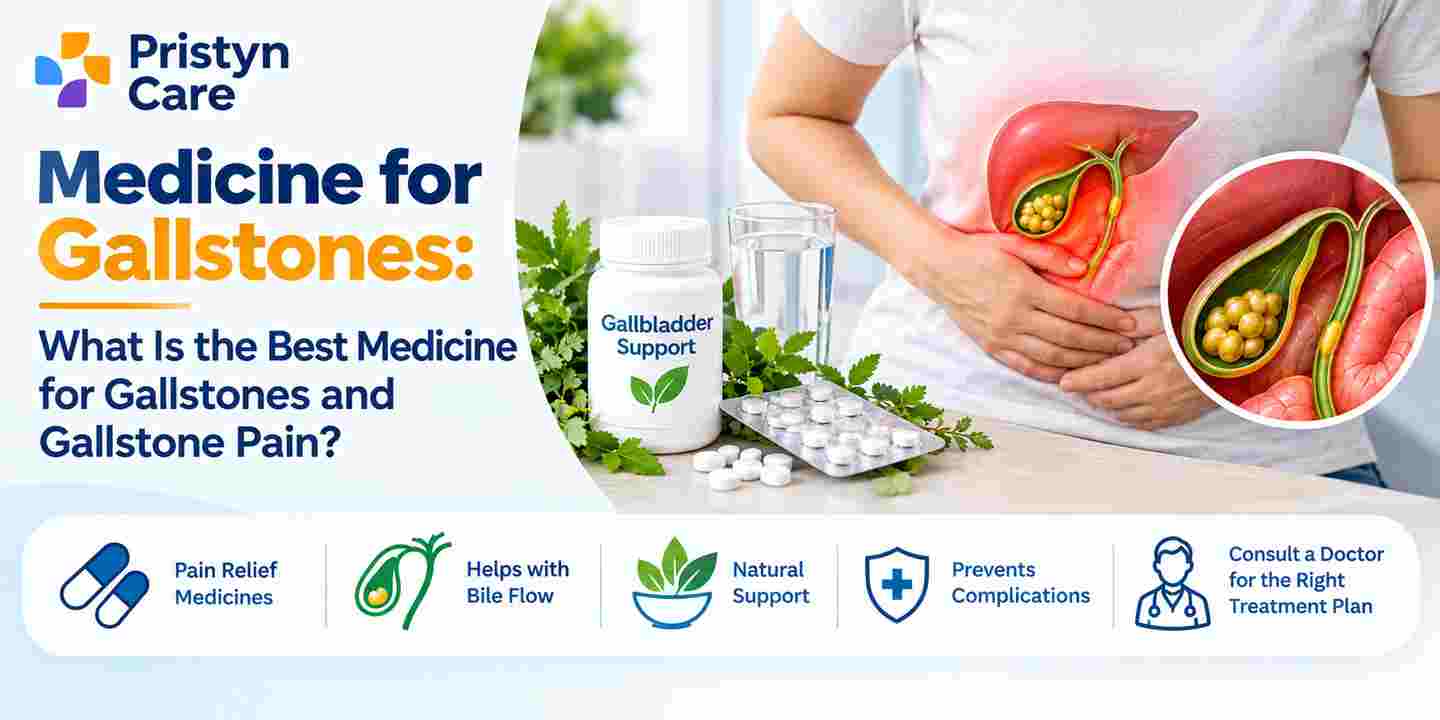
Medicine for Gallstones: What Is the Best Medicine for Gallstones and Gallstone Pain?


Dedicated Support at Every Step!
Our Doctors are available 24 hours a day, 7 days a week to help you!

People commonly search for the best medicine for gallstones, medicine for gallstone pain, homeopathic medicine for gallstones, Ayurvedic medicine for gallstones, or specific products such as Baidyanath medicine for gallstones.
However, there is no single medicine that can safely dissolve or permanently cure every type of gallstone. Treatment depends on the size and number of stones, their composition, symptoms, and whether complications have developed.
Table of Contents
What Are Gallstones?
Gallstones are solid particles that form when substances in bile become imbalanced and crystallize inside the gallbladder.
The two main types are:
- Cholesterol stones: The most common type
- Pigment stones: Formed mainly from bilirubin
Some people have a single gallstone, while others develop multiple stones.
No Cost EMI, Hassle-free Insurance Approval
What Causes Gallstones?
Gallstones can develop when the gallbladder does not empty properly or when bile contains excessive amounts of certain substances.
Risk factors include:
- Obesity
- Rapid weight loss
- A diet high in unhealthy fats
- Diabetes
- Pregnancy
- Female sex
- Increasing age
- Family history
- Certain liver or blood disorders
- Some medications
- Previous gallbladder problems
Having a risk factor does not necessarily mean that a person will develop gallstones.
What Are the Symptoms of Gallstones?
Many gallstones cause no symptoms.
When a stone blocks the gallbladder outlet or bile duct, symptoms may include:
- Sudden pain in the upper right abdomen
- Pain in the upper middle abdomen
- Pain after eating, particularly after a fatty meal
- Pain spreading to the back or right shoulder
- Nausea
- Vomiting
- Abdominal discomfort
- Indigestion or bloating
A typical gallstone attack is sometimes called biliary colic.
Is There Any Medicine for Gallstones?
Medicines can be used in certain situations, but they do not work for every type of gallstone.
Treatment may involve:
| Medicine/Treatment | Main purpose |
| Pain-relieving medicines | Control gallstone pain |
| Anti-nausea medicines | Reduce nausea and vomiting when prescribed |
| Ursodeoxycholic acid | May dissolve selected cholesterol stones in specific patients |
| Antibiotics | Treat infection when present |
| Dietary changes | Reduce symptoms and prevent triggers |
| Laparoscopic cholecystectomy | Definitive treatment for symptomatic gallstones |
The appropriate treatment depends on the individual's condition.
What Is the Best Medicine for Gallstones?
There is no universally best medicine for gallstones.
For someone with an occasional uncomplicated gallstone attack, a doctor may recommend appropriate pain management.
For selected patients with small cholesterol stones who cannot or do not undergo surgery, medicines such as ursodeoxycholic acid may sometimes be considered.
However, medical dissolution therapy has important limitations and can take a long time. Gallstones may also return after treatment.
Medicine for Gallstone Pain
Gallstone pain can be severe and may require pain-relieving medicine.
Depending on your medical history, a doctor may recommend an appropriate analgesic or anti-inflammatory medicine.
Pain associated with gallstones often occurs when a stone temporarily blocks the flow of bile.
Pain medicine can reduce symptoms, but it does not remove the gallstone or prevent another attack.
If abdominal pain is severe, persistent, or accompanied by fever, jaundice, or repeated vomiting, medical evaluation is important.
Can Pain Medicine Cure Gallstones?
No.
Pain medicines can help control symptoms during a gallstone attack, but they do not dissolve or remove the stone.
If gallstones repeatedly cause symptoms, simply taking painkillers whenever pain occurs may allow the underlying problem to continue and can delay treatment of complications.
Ursodeoxycholic Acid for Gallstones
Ursodeoxycholic acid, also known as ursodiol, is a medicine that can dissolve certain cholesterol gallstones in carefully selected patients.
It may be considered when:
- The stones are suitable for dissolution
- The gallbladder is functioning adequately
- Surgery is not suitable or is being avoided for a specific reason
- The treating doctor believes medical dissolution is appropriate
However, it has limitations.
Treatment may require months or longer, and it is not effective for every type of gallstone.
Gallstones can also recur after successful dissolution.
Can Medicine Dissolve Gallstones?
Sometimes, but only under specific circumstances.
Medical dissolution therapy is more likely to work for certain small cholesterol stones than for large, calcified, or pigment stones.
Most people with symptomatic gallstones are not candidates for successful medical dissolution.
Therefore, taking a "stone-dissolving" medicine without knowing the type and characteristics of the gallstones is not recommended.
Homeopathic Medicine for Gallstones
Homeopathic medicine for gallstones is a commonly searched treatment option.
However, there is no reliable scientific evidence that homeopathic medicines can dissolve established gallstones or permanently cure gallstone disease.
Gallstones are physical deposits within the gallbladder. If a stone is blocking the bile duct or causing recurrent attacks, relying exclusively on homeopathy can delay appropriate treatment.
If you choose to use homeopathy as a complementary approach, discuss it with your doctor rather than replacing recommended medical care.
Can Homeopathy Dissolve Gallstones?
There is no established evidence that homeopathic medicines can reliably dissolve gallstones.
Symptoms can fluctuate, and a gallstone may occasionally remain silent for long periods. This does not mean that the stone has disappeared.
An ultrasound or appropriate imaging is needed to determine whether gallstones are still present.
Gallstone Medicine in Homeopathy
Various homeopathic products may be marketed for gallstones or gallbladder pain.
However, there is no scientifically established homeopathic medicine that can be recommended as a reliable treatment for removing gallstones.
If you have recurrent gallstone pain, the priority should be determining:
- Number of stones
- Size of stones
- Location of stones
- Gallbladder inflammation
- Bile duct involvement
- Presence of complications
Ayurvedic Medicine for Gallstones
Ayurvedic medicine for gallstones is another frequently searched treatment option.
Ayurvedic approaches may involve herbal preparations, dietary changes, or traditional formulations.
However, there is no established Ayurvedic medicine proven to reliably dissolve all types of gallstones or replace definitive treatment for symptomatic or complicated gallstone disease.
Herbal products can also interact with prescription medicines or may not be appropriate for people with liver, kidney, or other medical conditions.
Discuss any Ayurvedic preparation with your healthcare professional before using it.
Best Ayurvedic Medicine for Gallstones
There is no scientifically established best Ayurvedic medicine for gallstones.
Products marketed for gallbladder cleansing or stone dissolution should not be assumed to remove gallstones.
A person with recurrent abdominal pain should first undergo appropriate evaluation rather than relying on herbal treatment alone.
Baidyanath Medicine for Gallstones
People may specifically search for Baidyanath medicine for gallstones or other branded Ayurvedic products.
However, the brand name does not establish that a product can dissolve gallstones.
Before using any branded herbal or Ayurvedic medicine, consider:
- Whether your diagnosis has been confirmed
- The type and size of your gallstones
- Whether there is gallbladder inflammation
- Whether a bile duct is blocked
- Potential interactions with your other medicines
- Whether delaying definitive treatment could be harmful
A healthcare professional should guide treatment when gallstones are causing symptoms.
Can Gallstones Go Away on Their Own?
Gallstones usually do not simply disappear on their own.
Some people may have gallstones for years without symptoms. This is known as asymptomatic or silent gallstones.
If gallstones are discovered incidentally and are not causing problems, treatment may not always be necessary.
However, once gallstones start causing repeated symptoms or complications, treatment may be recommended.
Can Gallstones Be Treated Without Surgery?
In some cases, yes.
People with asymptomatic gallstones may simply need observation.
Selected patients may also be considered for medical dissolution therapy.
However, for people with recurrent symptomatic gallstones, surgery is commonly recommended because it provides definitive treatment.
When Is Gallbladder Surgery Needed?
Gallbladder removal may be recommended when gallstones cause:
- Repeated biliary colic
- Acute cholecystitis
- Chronic gallbladder inflammation
- Gallstone pancreatitis
- Obstruction of the bile duct
- Recurrent complications
- Certain high-risk gallbladder findings
The most common surgical treatment is laparoscopic cholecystectomy.
What Is Laparoscopic Gallbladder Surgery?
Laparoscopic cholecystectomy is a minimally invasive procedure in which the gallbladder is removed through small abdominal incisions.
It is commonly performed for symptomatic gallstone disease.
During the procedure:
- The patient receives anesthesia.
- Small incisions are made in the abdomen.
- A laparoscopic camera and surgical instruments are inserted.
- The gallbladder is separated from surrounding structures.
- The gallbladder containing the stones is removed.
- The incisions are closed.
Because the gallbladder itself is removed, the source of gallstone formation is also removed.
Can Gallstones Be Removed Without Removing the Gallbladder?
In selected situations, procedures may be used to remove stones from the bile duct without removing the gallbladder.
For example, ERCP may be used to remove a stone that has entered and obstructed the common bile duct.
However, removing a bile duct stone is different from treating the gallbladder itself. If the gallbladder continues to contain symptomatic stones, further treatment may still be required.
Medicine vs Gallstone Surgery
| Treatment | Main purpose | Removes the source of gallstones? |
| Pain medicine | Controls gallstone pain | No |
| Anti-nausea medicine | Controls nausea/vomiting | No |
| Ursodeoxycholic acid | Dissolves selected cholesterol stones | No, and not effective for all stones |
| Homeopathic medicine | Alternative treatment | Not proven |
| Ayurvedic medicine | Traditional/complementary treatment | Not proven |
| ERCP | Removes selected bile duct stones | Does not remove the gallbladder |
| Laparoscopic cholecystectomy | Removes gallbladder | Yes |

Free Gallstone Surgery Cost Calculator

What Happens If Gallstones Are Left Untreated?
Silent gallstones may remain harmless for years.
However, symptomatic or complicated gallstones can lead to:
- Acute cholecystitis
- Gallbladder infection
- Bile duct obstruction
- Jaundice
- Cholangitis
- Pancreatitis
- Gallbladder perforation in severe cases
Repeated attacks should not be managed indefinitely with pain medicine without medical evaluation.
When Is Gallstone Pain an Emergency?
Seek urgent medical attention if abdominal pain is accompanied by:
- Fever or chills
- Yellowing of the eyes or skin
- Persistent vomiting
- Severe or worsening abdominal pain
- Dark urine
- Pale stools
- Significant abdominal tenderness
- Confusion or extreme weakness
These symptoms may indicate infection, bile duct obstruction, pancreatitis, or another serious condition.
What Can You Eat With Gallstones?
Diet does not dissolve existing gallstones, but certain dietary changes may help reduce symptoms.
You may be advised to:
- Avoid very fatty meals if they trigger pain
- Choose smaller meals
- Eat more fibre-rich foods
- Include fruits and vegetables
- Maintain a healthy weight
- Avoid crash diets and rapid weight loss
- Stay adequately hydrated
Individual triggers can vary.
Can Weight Loss Cure Gallstones?
Rapid weight loss can actually increase the risk of gallstone formation.
If you are trying to lose weight, gradual and sustainable weight management is generally preferable to crash dieting.
Existing gallstones should not be assumed to disappear simply because body weight decreases.
How Are Gallstones Diagnosed?
The most common initial investigation is an abdominal ultrasound.
Depending on symptoms, doctors may also recommend:
- Blood tests
- Liver function tests
- Additional ultrasound evaluation
- MRCP
- CT scan in selected situations
- Endoscopic ultrasound
- ERCP when a bile duct stone needs treatment
The choice depends on the suspected location and complications.
Frequently Asked Questions
What is the best medicine for gallstones?
There is no single best medicine for every gallstone. Pain medicines may control symptoms, while ursodeoxycholic acid may dissolve certain cholesterol stones in selected patients.
What medicine is used for gallstone pain?
Appropriate pain-relieving medicines may be used to control biliary pain. The choice depends on your health and other medicines.
Can painkillers remove gallstones?
No. Painkillers can reduce pain but do not remove or dissolve gallstones.
Can homeopathic medicine cure gallstones?
Homeopathic medicines have not been proven to reliably dissolve or cure established gallstones.
What is the best homeopathic medicine for gallstones?
There is no scientifically established homeopathic medicine proven to remove gallstones.
Can Ayurvedic medicine dissolve gallstones?
There is no established evidence that Ayurvedic medicines can reliably dissolve all types of gallstones. Treatment should depend on the type of stone and whether symptoms or complications are present.
What is the best Ayurvedic medicine for gallstones?
There is no scientifically established best Ayurvedic medicine for gallstones. Herbal products should not replace appropriate diagnosis and treatment.
Is Baidyanath medicine effective for gallstones?
Baidyanath and other Ayurvedic products may be marketed for gallstone-related problems, but a branded product should not be assumed to dissolve gallstones. Consult a healthcare professional before using it.
Can gallstones be cured without surgery?
Some people with silent gallstones need no treatment, and selected patients may be candidates for medical dissolution therapy. Recurrent symptomatic gallstones often require gallbladder removal for definitive treatment.
Can gallstones disappear naturally?
Most gallstones do not naturally disappear. Some remain asymptomatic for long periods, while selected cholesterol stones may respond to medical dissolution therapy.
Does every gallstone require surgery?
No. Asymptomatic gallstones often do not require immediate surgery. Surgery is generally considered when gallstones cause symptoms or complications.
Can gallstones come back after surgery?
After the gallbladder is removed, gallstones cannot form inside the gallbladder because it is no longer present. Stones can, however, occasionally remain or form in the bile ducts.
Can I take gallstone medicine without an ultrasound?
It is better to confirm the diagnosis before treating recurrent abdominal pain as gallstones. Similar symptoms can occur with ulcers, pancreatitis, liver conditions, gastrointestinal disorders, and other problems.


Conclusion
People searching for medicine for gallstones should know that treatment depends on whether the stones are silent, symptomatic, or causing complications.
Pain medicines can help control gallstone pain, while ursodeoxycholic acid may be appropriate for a small group of carefully selected patients with suitable cholesterol stones. However, medicines do not reliably dissolve most gallstones.
Similarly, although homeopathic medicine for gallstones, Ayurvedic medicine for gallstones, and products such as Baidyanath medicines are commonly searched for, there is no reliable evidence that these approaches can permanently remove established gallstones.
If gallstones repeatedly cause pain or lead to inflammation, infection, bile duct obstruction, or pancreatitis, laparoscopic gallbladder removal is commonly the definitive treatment.
Medical Disclaimer: This information is intended for general educational purposes only and should not be considered a substitute for professional medical diagnosis or treatment. Do not start, stop, or replace prescription medicines with homeopathic, Ayurvedic, herbal, or other alternative treatments without consulting a qualified healthcare professional.
Social share:




Related Calculators

Dedicated Support at Every Step!
Our Doctors are available 24 hours a day, 7 days a week to help you!


