


 Views: 1,269
Recurrent Piles After Surgery – Causes and Prevention Strategies
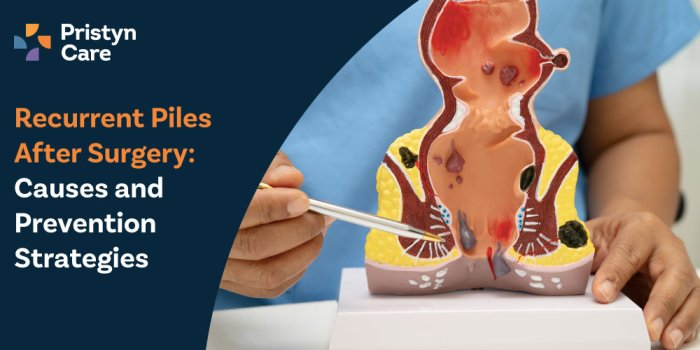
Piles (hemorrhoids) surgery is often considered a long-term solution for patients suffering from severe pain, bleeding, and prolapse. However, in some cases, patients may experience recurrence of piles even after surgery, which can be frustrating and concerning.



Dedicated Support at Every Step!
Our Doctors are available 24 hours a day, 7 days a week to help you!

Understanding why piles come back and how to prevent recurrence is crucial for maintaining long-term relief and avoiding repeat procedures.
Table of Contents
Can Piles Come Back After Surgery?
Yes, piles can recur after surgery, although the chances are generally low with advanced procedures like laser surgery. Recurrence usually happens due to underlying lifestyle factors, bowel habits, or incomplete management of root causes.
It’s important to note that surgery removes existing hemorrhoids-but does not eliminate the risk factors that caused them in the first place.
No Cost EMI, Hassle-free Insurance Approval
Common Causes of Recurrent Piles
1. Chronic Constipation
One of the leading causes of recurrence is ongoing constipation. Straining during bowel movements puts repeated pressure on rectal veins, leading to new hemorrhoids.
2. Poor Dietary Habits
A diet low in fiber and fluids can result in hard stools and irregular bowel movements, increasing the risk of recurrence.
3. Sedentary Lifestyle
Lack of physical activity slows down digestion and contributes to constipation, which can trigger piles again.
4. Straining During Bowel Movements
Excessive pushing while passing stool increases pressure in the anal region, leading to vein swelling.
5. Obesity
Being overweight puts additional pressure on the pelvic and rectal veins, increasing recurrence risk.
6. Pregnancy and Childbirth
Hormonal changes and increased abdominal pressure during pregnancy can cause hemorrhoids to reappear.
7. Incomplete Treatment or Advanced Disease
In some cases, especially with severe Grade 4 piles, recurrence may occur if:
- The condition was very advanced
- Multiple hemorrhoidal columns were involved
- Additional contributing conditions were not addressed
Symptoms of Recurrent Piles
Recurrent hemorrhoids may present with similar symptoms as before:
- Rectal bleeding during bowel movements
- Pain or discomfort in the anal region
- Swelling or lumps near the anus
- Itching and irritation
- Mucus discharge
If you notice these symptoms after surgery, early consultation is important.
How Soon Can Piles Recur After Surgery?
Recurrence timelines vary:
- Early recurrence (within months): Often due to incomplete healing or persistent constipation
- Late recurrence (after years): Usually linked to lifestyle habits and dietary patterns
With proper care, many patients remain symptom-free for years.
Prevention Strategies to Avoid Recurrence
Preventing recurrence largely depends on lifestyle modifications and bowel management.
1. Follow a High-Fiber Diet
Include fiber-rich foods such as:
- Whole grains
- Fruits (papaya, apple, banana)
- Vegetables (spinach, broccoli)
- Legumes
Fiber helps soften stool and reduces straining.
2. Stay Hydrated
Drink at least 2–3 liters of water daily to maintain smooth bowel movements.
3. Avoid Straining
- Do not force bowel movements
- Respond promptly to the urge to pass stool
- Avoid prolonged sitting on the toilet
4. Maintain Regular Physical Activity
Exercise improves digestion and prevents constipation. Even 30 minutes of walking daily can make a difference.
5. Manage Weight
Maintaining a healthy weight reduces pressure on rectal veins and lowers recurrence risk.
6. Practice Good Toilet Habits
- Limit toilet time to 5–10 minutes
- Avoid mobile phone usage while sitting on the toilet
- Use proper posture (slight squat position if possible)
7. Use Stool Softeners if Needed
Doctors may recommend mild stool softeners temporarily to prevent strain during recovery.
8. Follow Post-Surgery Care Instructions
Adhering to your doctor’s advice after surgery is critical:
- Take prescribed medications
- Follow dietary guidelines
- Attend follow-up appointments
 Doctor available
4.5/5

31+ Years Experience Overall
Doctor available
5.0/5
30+ Years Experience Overall
Doctor available
4.5/5
25+ Years Experience Overall
Doctor available
4.5/5
23+ Years Experience Overall
Doctor available
4.5/5
17+ Years Experience Overall
Doctor available
4.5/5
15+ Years Experience Overall
Doctor available
4.5/5
15+ Years Experience Overall
Doctor available
4.5/5
14+ Years Experience Overall
Doctor available
5.0/5
13+ Years Experience Overall
Doctor available
4.5/5
13+ Years Experience Overall
Doctor available
5.0/5
12+ Years Experience Overall
Doctor available
5.0/5
27+ Years Experience Overall
Doctor available
4.5/5
27+ Years Experience Overall
Doctor available.jpg/1681796287744_ban-Icon.png)
4.9/5
25+ Years Experience Overall
Doctor available
4.6/5
24+ Years Experience Overall
Doctor available
4.5/5
24+ Years Experience Overall
Doctor available
MBBS, DNB( General Surgery) MNAMS, FMAS, FIAGES, FAIS
₹1200₹600Consultation Fee
4.5/5
24+ Years Experience Overall
Doctor available
4.7/5
23+ Years Experience Overall
Doctor available
4.5/5
23+ Years Experience Overall
Doctor available
4.5/5
23+ Years Experience Overall
Doctor available
4.7/5
22+ Years Experience Overall
Doctor available
5.0/5
22+ Years Experience Overall
Doctor available
4.5/5
21+ Years Experience Overall
Doctor available
4.5/5
21+ Years Experience Overall
Doctor available
4.7/5
20+ Years Experience Overall
Doctor available
4.5/5
20+ Years Experience Overall
Doctor available
5.0/5
20+ Years Experience Overall
Doctor available
4.9/5
20+ Years Experience Overall
Doctor available
MBBS, DNB-General Surgery, FMAS, FCLS, FLHS, FICS, FIAGES, MCLS, MNAMS,
FREEConsultation Fee
5.0/5
19+ Years Experience Overall
Doctor available
4.5/5
19+ Years Experience Overall
Doctor available
4.8/5
17+ Years Experience Overall
Doctor available
5.0/5
17+ Years Experience Overall
Doctor available
4.9/5
17+ Years Experience Overall
Doctor available
5.0/5
17+ Years Experience Overall
Doctor available
5.0/5
17+ Years Experience Overall
Doctor available
5.0/5
16+ Years Experience Overall
Doctor available
4.5/5
16+ Years Experience Overall
Doctor available
4.8/5
16+ Years Experience Overall
Doctor available
5.0/5
16+ Years Experience Overall
Doctor available
4.5/5
16+ Years Experience Overall
Doctor available
4.6/5
15+ Years Experience Overall
Doctor available
4.9/5
15+ Years Experience Overall
Doctor available
4.5/5
15+ Years Experience Overall
Doctor available
4.5/5
15+ Years Experience Overall
Doctor available
4.9/5
14+ Years Experience Overall
Doctor available.jpg/1679651251511_ban-Icon.png)
5.0/5
14+ Years Experience Overall
Doctor available
4.5/5
14+ Years Experience Overall
Doctor available
5.0/5
13+ Years Experience Overall
Doctor available
4.6/5
13+ Years Experience Overall
Doctor available
4.5/5
13+ Years Experience Overall
Doctor available
4.5/5
13+ Years Experience Overall
Doctor available
5.0/5
13+ Years Experience Overall
Doctor available
5.0/5
13+ Years Experience Overall
Doctor available
4.5/5
12+ Years Experience Overall
Doctor available
4.8/5
12+ Years Experience Overall
Doctor available
4.8/5
12+ Years Experience Overall
Doctor available
MBBS, M.S.(Gen. Surgery), DNB (Gen. Surgery), F.MAS, D.MAS, FAIS, FALS, FIAGES
₹1200₹600Consultation Fee
4.5/5
12+ Years Experience Overall
Doctor available.jpg/1681109066874_ban-Icon.png)
4.9/5
12+ Years Experience Overall
Doctor available
4.5/5
12+ Years Experience Overall
Doctor available
4.5/5
12+ Years Experience Overall
Doctor available
4.5/5
12+ Years Experience Overall
Doctor available.jpg/1685814002647_ban-Icon.png)
4.9/5
11+ Years Experience Overall
Doctor available
4.5/5
11+ Years Experience Overall
Doctor available
4.5/5
11+ Years Experience Overall
Doctor available
5.0/5
11+ Years Experience Overall
Doctor available
4.5/5
10+ Years Experience Overall
Doctor available
5.0/5
10+ Years Experience Overall
Doctor available
4.5/5
9+ Years Experience Overall
Doctor available
4.5/5
8+ Years Experience Overall
Doctor available
4.5/5
8+ Years Experience Overall
Doctor available
4.5/5
27+ Years Experience Overall
Doctor available
4.5/5
27+ Years Experience Overall
Doctor available
4.5/5
26+ Years Experience Overall
Doctor available
4.5/5
26+ Years Experience Overall
Doctor available
5.0/5
24+ Years Experience Overall
 Doctor available
4.5/5
21+ Years Experience Overall
Doctor available
4.5/5
21+ Years Experience Overall
Doctor available
5.0/5
21+ Years Experience Overall
Doctor available
4.5/5
20+ Years Experience Overall
Doctor available
4.5/5
20+ Years Experience Overall
Doctor available
4.5/5
19+ Years Experience Overall
Doctor available
4.5/5
18+ Years Experience Overall
Doctor available
4.9/5
18+ Years Experience Overall
Doctor available
4.5/5
15+ Years Experience Overall
Doctor available
Dr. Penmetsa Bhanu Prakash Raju
MBBS, MS-General Surgery, FNB-Minimal Acess Surgery
₹1200₹600Consultation Fee
4.5/5
15+ Years Experience Overall
Doctor available
4.9/5
14+ Years Experience Overall
Doctor available
4.5/5
14+ Years Experience Overall
Doctor available
4.5/5
14+ Years Experience Overall
Doctor available
4.5/5
14+ Years Experience Overall
Doctor available
5.0/5
14+ Years Experience Overall
Doctor available%20(1).png/1742636902782_ban-Icon.png)
4.5/5
13+ Years Experience Overall
Doctor available
5.0/5
13+ Years Experience Overall
Doctor available
4.9/5
13+ Years Experience Overall
Doctor available
4.5/5
13+ Years Experience Overall
Doctor available
4.5/5
12+ Years Experience Overall
Doctor available
4.5/5
11+ Years Experience Overall
Doctor available
4.5/5
10+ Years Experience Overall
Doctor available
4.5/5
10+ Years Experience Overall
Doctor available
4.5/5
9+ Years Experience Overall
Doctor available
4.5/5
7+ Years Experience Overall
Does Type of Surgery Affect Recurrence?
Yes, the type of procedure can influence recurrence rates.
- Laser Piles Surgery: Lower recurrence when combined with lifestyle changes
- Stapled Hemorrhoidopexy: Slightly higher recurrence in some prolapse cases
- Conventional Surgery: Effective but depends heavily on post-operative care
However, long-term success depends more on patient habits than the procedure itself.
When Should You See a Doctor?
Consult a specialist if you experience:
- Persistent bleeding after surgery
- Severe pain or swelling
- Reappearance of lumps
- Difficulty passing stool
Early diagnosis can prevent complications and may avoid the need for another surgery.

Free Piles Surgery Cost Calculator

Our care coordinator will call you shortly.
Can Recurrent Piles Be Treated Again?
Yes, recurrent piles can be treated effectively. Options include:
- Medications and lifestyle management (for mild cases)
- Minimally invasive procedures like laser treatment
- Repeat surgery in severe cases
Your doctor will recommend the best approach based on the severity and symptoms.
Long-Term Outlook
Most patients can avoid recurrence by maintaining healthy habits. Surgery provides relief, but lasting results depend on consistent lifestyle changes.
With proper care, diet, and follow-up, the chances of recurrence can be significantly minimized.


FAQs
1. Is it common for piles to come back after surgery?
Recurrence is not very common but can happen if risk factors like constipation and poor diet persist.
2. Which surgery has the lowest recurrence rate?
Laser piles surgery generally has a lower recurrence rate when combined with proper lifestyle changes.
3. Can I prevent piles permanently?
While you cannot guarantee permanent prevention, maintaining healthy habits can significantly reduce the risk.
4. How do I know if my piles have returned?
Symptoms like bleeding, pain, swelling, and itching are common signs of recurrence.
5. Do I need surgery again for recurrent piles?
Not always. Mild cases can be managed with medications and lifestyle changes. Surgery is only needed in advanced cases.
Social share:






Related Calculators

Dedicated Support at Every Step!
Our Doctors are available 24 hours a day, 7 days a week to help you!
Related Calculators
Get In Touch with our expert doctors !
- please enter 10 digit number.


