


 Views: 1
Tinnitus Medicine: What Is the Best Medicine for Tinnitus and Can It Be Cured?
Tinnitus is the perception of ringing, buzzing, humming, hissing, clicking or other sounds in the ear when there is no external sound producing them. It may occur in one ear or both ears and can be temporary or persistent.



Dedicated Support at Every Step!
Our Doctors are available 24 hours a day, 7 days a week to help you!

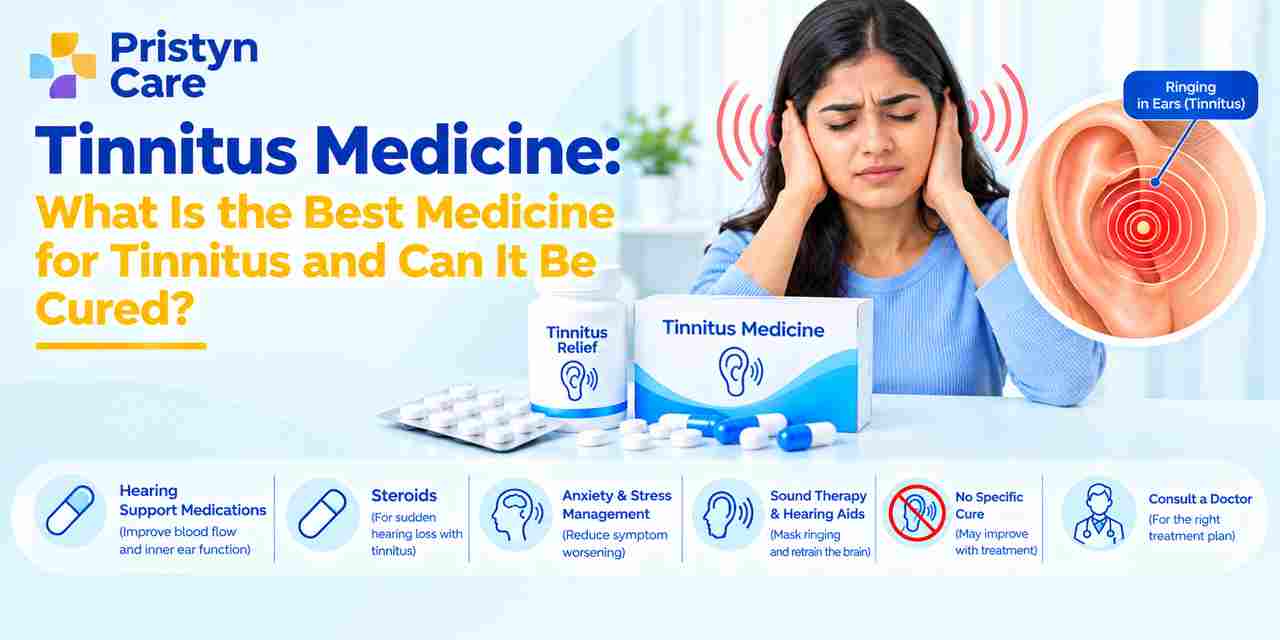
The important thing to understand is that there is no single medicine that permanently cures tinnitus for everyone. Treatment depends on what is causing the tinnitus. Medicines may be useful when tinnitus is associated with an underlying condition, ear infection, inflammation, allergies, anxiety, sleep problems or another medical issue. In some cases, treating the underlying cause can reduce or eliminate the tinnitus.
When no reversible cause is found, management usually focuses on reducing how noticeable or bothersome the tinnitus is rather than simply taking a tablet to make the sound disappear.
Table of Contents
What Is Tinnitus?
Tinnitus is the perception of sound without an external source.
People may describe it as:
- Ringing
- Buzzing
- Hissing
- Whistling
- Clicking
- Humming
- Pulsing or whooshing
- A high-pitched or low-pitched tone
Tinnitus may occur:
- In one ear
- In both ears
- Inside the head
- Continuously
- Intermittently
The sound can range from barely noticeable to severe enough to interfere with concentration, sleep, work or daily activities.
No Cost EMI, Hassle-free Insurance Approval
What Causes Tinnitus?
Tinnitus is a symptom rather than a single disease. Possible causes include:
- Hearing loss
- Exposure to loud sounds
- Earwax buildup
- Ear infections
- Certain medications
- Age-related changes in hearing
- Inner-ear disorders
- Ménière's disease
- Jaw joint problems
- Head or neck injuries
- Certain neurological conditions
- Anxiety and stress
- Problems affecting blood vessels, particularly in pulsatile tinnitus
Sometimes no specific cause can be identified.
Finding the underlying cause is therefore more important than simply choosing a "best" tinnitus medicine.
What Is the Best Medicine for Tinnitus?
There is no universally best medicine for tinnitus.
The appropriate treatment depends on why tinnitus is occurring.
| Medicine or treatment | When it may be considered | Does it permanently cure tinnitus? |
| Treatment for ear infection | When infection is responsible | May resolve tinnitus caused by the infection |
| Earwax removal | When impacted wax is responsible | May resolve tinnitus caused by wax |
| Medicines for allergies/nasal problems | When associated congestion or allergy contributes | May improve symptoms in selected cases |
| Hearing aids | When hearing loss is associated with tinnitus | Can make tinnitus less noticeable for many people |
| Sleep/anxiety treatment | When these significantly worsen tinnitus | May reduce tinnitus-related distress |
| Sound therapy | Persistent bothersome tinnitus | Helps reduce perception/bother |
| Tinnitus-focused counselling/CBT | Persistent bothersome tinnitus | Helps reduce distress and impact |
| Prescription medicines | Only for specific underlying conditions or associated symptoms | Depends on the cause |
There is currently no universally proven tablet that simply switches off chronic tinnitus.
Tinnitus Medicine Name: Is There a Specific Tablet?
There is no single tinnitus medicine name that can be recommended for everyone.
A doctor may prescribe medication when tinnitus is associated with a condition that requires treatment. For example, medicines may be used for an underlying ear infection, allergies, anxiety, sleep disturbance or another diagnosed condition.
However, taking medicines specifically marketed as a "tinnitus cure" without identifying the cause can be ineffective and may delay proper evaluation.
Some medicines themselves can also contribute to tinnitus in certain circumstances. Therefore, if tinnitus started after beginning a new medicine, inform your doctor rather than stopping prescribed medication on your own.
Can Tinnitus Be Cured by Medicine?
Sometimes tinnitus improves when an underlying reversible cause is treated.
For example:
- Removing impacted earwax may resolve tinnitus caused by the blockage.
- Treating an ear infection may improve associated ringing.
- Addressing certain medication-related causes may help.
- Treating an underlying hearing or ear disorder may reduce symptoms.
However, chronic tinnitus associated with permanent hearing changes often cannot be permanently eliminated with medicine alone.
The goal is therefore to determine whether the tinnitus has a treatable cause and then select the appropriate management.
New Medicine for Tinnitus
People frequently search for new medicine for tinnitus because research into tinnitus treatment is ongoing.
Several approaches are being investigated, including:
- New drug treatments
- Neuromodulation
- Combination therapies
- Digital therapeutics
- Treatments targeting specific neurological pathways
- Therapies designed for particular tinnitus subtypes
However, a treatment being studied or marketed as "new" does not automatically mean that it is a proven cure.
Patients should be cautious about products claiming to permanently cure tinnitus with a tablet, herbal formula or supplement.
Homeopathic Medicine for Tinnitus
Searches for homeopathic medicine for tinnitus, best homeopathic medicine for tinnitus, homeopathic medicine for tinnitus in left ear, and homeopathic medicine for vertigo and tinnitus are common.
There is no scientifically established homeopathic medicine proven to permanently eliminate chronic tinnitus.
Homeopathic products may be promoted for:
- Ringing in the ears
- Buzzing
- Ear pressure
- Vertigo
- Dizziness
- Hearing-related symptoms
However, tinnitus can have many different causes, and treating it solely with homeopathy may delay evaluation of potentially treatable ear or neurological conditions.
If tinnitus is persistent, one-sided or associated with hearing loss or vertigo, appropriate medical assessment is particularly important.
Homeopathic Medicine for Tinnitus in the Left Ear
Tinnitus occurring only in the left ear does not automatically mean that a particular homeopathic medicine is required.
One-sided tinnitus deserves attention because it can sometimes be associated with an underlying hearing or ear condition.
A doctor or ENT specialist may recommend:
- Ear examination
- Hearing test
- Assessment of associated symptoms
- Additional investigations when clinically appropriate
Rather than choosing a homeopathic medicine based only on which ear is affected, the underlying cause should first be evaluated.
Homeopathic Medicine for Vertigo and Tinnitus
Vertigo accompanied by tinnitus may occur in several conditions affecting the inner ear.
One example is Ménière's disease, although tinnitus and vertigo can have other causes as well.
There is no scientifically established homeopathic medicine proven to cure the underlying causes of vertigo with tinnitus.
If you experience recurrent episodes of spinning sensation, hearing changes, ear fullness and tinnitus, an ENT evaluation can help determine the cause.
Can Ayurvedic Medicine Cure Tinnitus?
Searches for ayurvedic medicine for tinnitus and best ayurvedic medicine for tinnitus reflect interest in natural treatment options.
There is currently no universally established Ayurvedic medicine proven to permanently cure chronic tinnitus.
Some Ayurvedic products may be marketed for:
- Ear health
- Circulation
- Hearing support
- Stress management
- General neurological health
However, "natural" does not automatically mean effective or risk-free.
Some herbal products can interact with prescription medicines or contain ingredients that may not be suitable for everyone. Discuss supplements with your doctor, particularly if you already take medicines for another condition.
Patanjali Ayurvedic Medicine for Tinnitus
People searching for Patanjali Ayurvedic medicine for tinnitus may find products promoted for general wellness, stress, circulation or ear health.
However, no specific Patanjali product should be considered a scientifically established permanent cure for tinnitus.
If tinnitus persists despite using an Ayurvedic product, do not continue self-treatment indefinitely without identifying the underlying cause.
 Doctor available
4.5/5

15+ Years Experience Overall
Doctor available
4.5/5
15+ Years Experience Overall
Doctor available
4.8/5
21+ Years Experience Overall
Doctor available
5.0/5
18+ Years Experience Overall
Doctor available
4.5/5
18+ Years Experience Overall
Doctor available
4.5/5
17+ Years Experience Overall
Doctor available
4.5/5
15+ Years Experience Overall
Doctor available
5.0/5
15+ Years Experience Overall
Doctor available
4.6/5
14+ Years Experience Overall
Doctor available
5.0/5
14+ Years Experience Overall
Doctor available
5.0/5
10+ Years Experience Overall
Doctor available
5.0/5
8+ Years Experience Overall
Doctor available
4.5/5
26+ Years Experience Overall
Doctor available
5.0/5
16+ Years Experience Overall
Doctor available
5.0/5
13+ Years Experience Overall
Doctor available
4.5/5
12+ Years Experience Overall
Doctor available
5.0/5
12+ Years Experience Overall
Doctor available
4.5/5
11+ Years Experience Overall
Doctor available
4.5/5
10+ Years Experience Overall
SBL Medicine for Tinnitus
SBL homeopathic products may also appear in searches for tinnitus treatment.
However, there is no scientifically established SBL medicine proven to permanently eliminate chronic tinnitus.
Persistent tinnitus should be evaluated based on its duration, severity, whether it affects one or both ears, hearing status and associated symptoms.
Tinnitus Medicine in India
For people searching for tinnitus medicine in India, treatment should be based on the cause rather than a particular brand or medicine name.
An ENT specialist may evaluate:
- Earwax
- Ear infection
- Hearing loss
- Medication history
- Middle and inner ear conditions
- Vertigo
- Jaw-related symptoms
- Pulsatile tinnitus
- Other associated symptoms
A hearing test is commonly useful when tinnitus is persistent or associated with hearing changes.
Tinnitus Treatment Without Medicine
Many people with tinnitus do not necessarily need a medicine specifically for tinnitus.
Depending on the cause, management may include:
1. Treating earwax
If excessive earwax is blocking the ear canal and contributing to tinnitus, professional removal may improve the symptom.
2. Treating an ear infection
When an infection is responsible, appropriate treatment may reduce the tinnitus as the infection resolves.
3. Hearing aids
When tinnitus occurs along with hearing loss, hearing aids can amplify environmental sounds and make tinnitus less noticeable for many people.
4. Sound therapy
Background sounds such as:
- White noise
- Fans
- Soft music
- Nature sounds
- Dedicated sound therapy devices
may make tinnitus less prominent, particularly in quiet environments.
5. Tinnitus-focused counselling
Counselling and approaches such as cognitive behavioural therapy can help reduce the distress and functional impact associated with persistent tinnitus.
6. Sleep management
Poor sleep can make tinnitus feel more intrusive. Improving sleep habits and treating significant sleep problems can therefore be an important part of management.
Tinnitus and Hearing Loss
Tinnitus frequently occurs alongside hearing loss.
If you have both symptoms, a hearing evaluation can help determine whether hearing loss is contributing to the tinnitus.
Hearing aids may be recommended when appropriate.
They do not "cure" tinnitus in every person, but improving hearing can reduce the contrast between tinnitus and surrounding sounds and make the ringing less noticeable.
Tinnitus and Vertigo
Tinnitus combined with dizziness or vertigo can point toward an inner-ear problem.
Possible causes include:
- Ménière's disease
- Inner-ear inflammation
- Vestibular disorders
- Migraine-related conditions
- Other ear or neurological conditions
The treatment depends on the underlying diagnosis.
Do not assume that tinnitus with vertigo can be treated with a general tinnitus tablet or homeopathic medicine.
Pulsatile Tinnitus
Pulsatile tinnitus is different from ordinary ringing.
People often describe it as hearing:
- A heartbeat
- Pulsing
- Whooshing
- Throbbing
If tinnitus consistently matches your heartbeat, medical evaluation is important because vascular causes may need to be ruled out.
A medicine marketed as a general tinnitus cure should not be used as a substitute for investigating pulsatile tinnitus.

Free Ear Infection Surgery Cost Calculator

Is Tinnitus Permanent?
Tinnitus may be:
- Temporary
- Intermittent
- Long-lasting
- Persistent
Some cases resolve when the underlying cause is treated.
Others, particularly tinnitus associated with permanent hearing changes, may persist.
Even when tinnitus does not completely disappear, its impact can often be reduced through hearing treatment, sound therapy, counselling and management of contributing conditions.
When Should You See an ENT Specialist?
Consult an ENT specialist if:
- Tinnitus lasts more than a short period
- It repeatedly comes back
- It occurs only in one ear
- You have hearing loss
- You experience vertigo or dizziness
- You have ear pain or discharge
- Tinnitus started after a head injury
- The sound is pulsatile or matches your heartbeat
- Tinnitus is interfering with sleep or concentration
Seek urgent medical attention if:
- Tinnitus begins suddenly along with sudden hearing loss
- You develop severe dizziness or neurological symptoms
- There is significant head trauma
- You experience sudden severe headache or other concerning neurological symptoms
- Pulsatile tinnitus develops suddenly or is associated with other concerning symptoms
Sudden hearing loss accompanied by tinnitus should be assessed urgently because some causes are time-sensitive.
How Is Tinnitus Diagnosed?
A doctor may perform:
- Ear examination
- Hearing test/audiometry
- Review of medicines
- Assessment of hearing loss
- Evaluation for earwax or infection
- Assessment of vertigo or balance symptoms
- Further imaging or investigations when clinically indicated
Not everyone with tinnitus needs extensive imaging. The need for additional tests depends on the symptoms and clinical findings.
Tinnitus Medicine vs Tinnitus Management
| Approach | Main purpose | Treats underlying cause? |
| Pain medicine | Ear discomfort when appropriate | Depends on cause |
| Antibiotics | Treat diagnosed bacterial infection | Yes, if infection is responsible |
| Allergy treatment | Manage allergic symptoms | May help when allergy contributes |
| Earwax removal | Remove blockage | Yes, when wax is responsible |
| Hearing aids | Improve hearing and reduce tinnitus perception | Helps associated hearing loss |
| Sound therapy | Reduce tinnitus awareness | No |
| CBT/counselling | Reduce tinnitus-related distress | No |
| Homeopathic medicine | Marketed for tinnitus | No proven permanent cure |
| Ayurvedic medicine | Marketed for ear health/tinnitus | No proven permanent cure |
| ENT-directed treatment | Address identified cause | Depends on diagnosis |
Frequently Asked Questions
1. What is the best medicine for tinnitus?
There is no single best medicine for tinnitus. Treatment depends on the underlying cause. Some medicines may treat associated conditions, while hearing treatment, sound therapy or counselling may be more useful for persistent tinnitus.
2. What is the tinnitus medicine name?
There is no universal tinnitus medicine name or tablet that permanently cures tinnitus. The appropriate treatment depends on the cause.
3. Can tinnitus be cured by medicine?
Some tinnitus caused by a reversible problem, such as earwax or an ear infection, may improve when that problem is treated. Chronic tinnitus does not usually have a universal medication-based cure.
4. What is the best homeopathic medicine for tinnitus?
There is no scientifically established homeopathic medicine proven to permanently cure chronic tinnitus.
5. What is the best Ayurvedic medicine for tinnitus?
No Ayurvedic medicine has been universally established as a proven permanent cure for chronic tinnitus. Any herbal treatment should be discussed with a healthcare professional.
6. Is there a Patanjali Ayurvedic medicine for tinnitus?
Some products may be marketed for general wellness or ear health, but no specific Patanjali product should be assumed to permanently cure tinnitus.
7. Is there a Dr Reckeweg medicine for tinnitus?
Dr Reckeweg homeopathic products may be marketed for tinnitus, but there is no scientifically established product proven to permanently eliminate chronic tinnitus.
8. Is there an SBL medicine for tinnitus?
SBL homeopathic products may be marketed for tinnitus symptoms, but there is no scientifically established SBL medicine proven to permanently cure chronic tinnitus.
9. What medicine is used for tinnitus in India?
There is no single medicine prescribed for everyone with tinnitus in India. Treatment depends on the cause and may involve treating ear disease, hearing loss, infection, allergies or associated symptoms.
10. Can tinnitus and vertigo be treated together?
Yes, but treatment depends on the underlying cause. Tinnitus accompanied by vertigo should be evaluated rather than treated only with a general tinnitus medicine.
11. Can tinnitus in one ear be cured?
It depends on the cause. One-sided tinnitus may be associated with conditions that require specific evaluation, so persistent unilateral tinnitus should be assessed by an ENT specialist.
12. Is there a new medicine that permanently cures tinnitus?
Research into new tinnitus treatments is ongoing, but there is currently no universally established medicine that permanently cures all forms of chronic tinnitus.


Conclusion
There is no single best medicine for tinnitus and no universal tablet that permanently eliminates chronic tinnitus. The most effective approach is to identify whether the tinnitus has a treatable underlying cause.
Treating earwax, infection, hearing loss or another diagnosed condition may improve tinnitus in appropriate cases. For persistent tinnitus without a reversible cause, approaches such as hearing aids, sound therapy, counselling and tinnitus-focused behavioural treatment may help reduce its impact.
Homeopathic, Ayurvedic, Patanjali, Dr Reckeweg and SBL products should not be considered proven permanent cures for tinnitus without reliable clinical evidence.
Social share:





Related Calculators

Dedicated Support at Every Step!
Our Doctors are available 24 hours a day, 7 days a week to help you!


