Select City


Call Us
Book FREE Appointment
Ear infections are among the most common ENT conditions affecting both children and adults. While many ear infections improve with medications, some cases become recurrent or chronic and may lead to hearing loss, eardrum damage, dizziness, or other complications. In such situations, surgical treatment may be recommended. At Pristyn Care, experienced ENT specialists provide comprehensive diagnosis and advanced surgical treatment for chronic and complicated ear infections to relieve symptoms, prevent complications, and restore ear health.
Ear infections are among the most common ENT conditions affecting both children and ... adults. While many ear infections improve with medications, some cases become recurrent or chronic and may lead to hearing loss, eardrum damage, dizziness, or other complications. In such situations, surgical treatment may be recommended. At Pristyn Care, experienced ENT specialists provide comprehensive diagnosis and advanced surgical treatment for chronic and complicated ear infections to relieve symptoms, prevent complications, and restore ear health. Read More




3M+
Happy Patients
50+
Disease
200+
Hospitals
30+
Cities

Free Cab Facility

No-Cost EMI

Support in Insurance Claim

1-day Hospitalization

USFDA-Approved Procedure
Choose Your City
It help us to find the best doctors near you.

Bangalore
Delhi
Hyderabad
Kochi
Mumbai
Delhi
Hyderabad
Pune
Mumbai
Bangalore
 Doctor Not Found
4.5/5
15+ Years Experience
 Kochi, Ernakulam, Kerala 682025
4.5/5
15+ Years Experience
Pristyn Care Zoi Hospital, ShivBagh, Ameerpet, Hyd
4.8/5
21+ Years Experience
Pristyn Care La Midas, Main, Nathupur Rd, nr. 38, DLF Phase 3, Sector 24, Gurugram, Haryana 122002
5.0/5
18+ Years Experience
Shop No, 1, petrol pump, Ground Floor, Shram Safalya Building, 2, Veer Savarkar Marg, near Teen, Naupada, Thane West, Thane, Maharashtra 400602
An ear infection occurs when bacteria, viruses, or fungi cause inflammation in any part of the ear. It can affect the outer ear, middle ear, or inner ear and may lead to pain, hearing problems, fluid buildup, dizziness, and discomfort.
Ear infections are among the most common ENT conditions affecting both children and adults. While some infections resolve with medication, repeated infections or chronic disease may require surgical intervention to restore ear health and hearing.
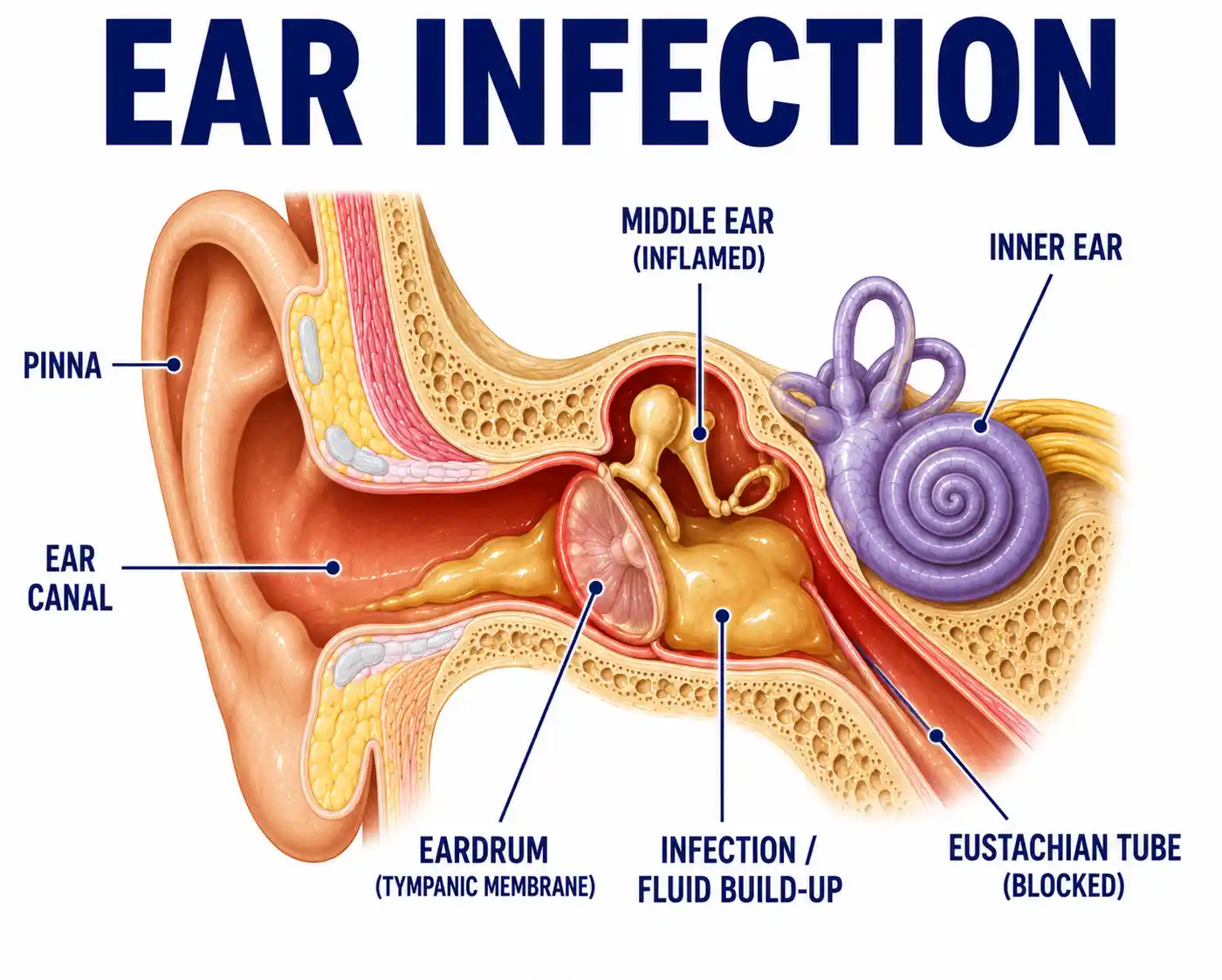
This is the most common type of ear infection and occurs behind the eardrum. It often develops after a cold, sinus infection, or upper respiratory infection.
This infection affects the outer ear canal and is commonly caused by moisture trapped inside the ear.
An infection affecting the inner ear structures responsible for hearing and balance.
A long-standing middle ear infection associated with persistent ear discharge and eardrum perforation.
Free Neurology Others Surgery Cost Calculator
Fill details to get actual cost
Several factors can increase the risk of ear infections.
Symptoms may vary depending on the location and severity of the infection.
You should consult an ENT specialist if:
Persistent infections can damage the eardrum and middle ear structures, making timely treatment essential.

Diet & Lifestyle Consultation

Post-Surgery Recovery Follow up

Free Cab Facility

24*7 Patient Support
The best treatment depends on the underlying cause and severity.
Non-Surgical Ear Infection Treatment
Many ear infections can be managed with:
However, when infections become chronic or cause structural damage, surgery may be recommended.
Surgical treatment may be necessary when:
An experienced ENT surgeon will evaluate the condition and recommend the most suitable procedure.
Myringoplasty Surgery for Ear Infection
Myringoplasty is a procedure used to repair a perforated or damaged eardrum.
Benefits of Myringoplasty
Tympanoplasty for Ear Infection
Tympanoplasty repairs the eardrum and damaged middle ear structures.
Benefits of Tympanoplasty
Mastoidectomy Surgery for Ear Infection
A mastoidectomy is performed when infection spreads to the mastoid bone behind the ear.
Benefits of Mastoidectomy
Canal Wall Down Mastoidectomy
This advanced procedure is recommended for extensive infection or cholesteatoma.
The surgeon removes infected tissue while creating a safe and dry ear environment, reducing the risk of future infections.
Bilateral Myringotomy and Tube Insertion
This procedure involves making a tiny incision in the eardrum and inserting ventilation tubes.
Recommended For:
Benefits
Ear Drum Repair Surgery
Ear drum repair surgery restores the integrity of the tympanic membrane damaged due to trauma or chronic infection.
A comprehensive evaluation helps determine the most appropriate treatment plan.
Diagnostic Tests May Include:
Otoscopy
Visual examination of the ear canal and eardrum.
Audiometry
A hearing test used to assess hearing loss.
Tympanometry
Measures eardrum movement and middle ear function.
CT Scan
Recommended in advanced infections involving the mastoid bone or cholesteatoma.
Ear Culture Test
Identifies bacteria or fungi causing the infection.
The exact procedure depends on the type of surgery being performed.
General Steps Include:
Most ear infection surgeries are performed as daycare or short-stay procedures.
The duration varies depending on the procedure.
| Procedure | Average Duration |
| Myringoplasty | 30–60 minutes |
| Tympanoplasty | 1–2 hours |
| Mastoidectomy | 2–4 hours |
| Ear Tube Insertion | 15–30 minutes |
Patients can usually return home the same day or within 24 hours.
Recovery time depends on the procedure and individual healing response.
Recovery Timeline
First Week
Two to Four Weeks
Four to Eight Weeks
Recovery Tips
Long-Term Infection Control
Surgery removes infected tissue and prevents recurrence.
Improved Hearing
Many patients experience better hearing after treatment.
Prevention of Serious Complications
Early intervention helps prevent:
Patients experience relief from pain, discharge, and recurring infections.
Yes. Modern ENT procedures are highly safe when performed by experienced ENT surgeons.
Most surgeries have excellent success rates and are performed using advanced microscopic and endoscopic techniques that improve precision and recovery.
The success rate varies according to the procedure performed.
Average Success Rates
Outcomes are generally better when treatment is not delayed.
Although uncommon, potential risks include:
Choosing an experienced ENT specialist significantly reduces these risks.
Yes. Most medically necessary ear infection surgeries are covered under health insurance policies.
Coverage may be available for:
Coverage depends on policy terms, waiting periods, and insurer guidelines. Insurance assistance teams can help with approvals and claim processing.
The best treatment depends on the type and severity of infection. Mild infections may respond to medications, while chronic or recurrent infections may require surgery.
Yes. Many chronic ear infections can be permanently treated through procedures such as tympanoplasty, myringoplasty, mastoidectomy, or ear tube insertion.
Most procedures take between 30 minutes and 4 hours depending on the surgical technique used.
Most medically necessary ear surgeries are covered by health insurance plans, subject to policy terms and conditions.
Untreated ear infections can lead to hearing loss, eardrum perforation, cholesteatoma, mastoid infection, balance problems, and rare but serious intracranial complications.
Tympanoplasty is a surgical procedure that repairs a damaged eardrum and restores middle ear function, helping prevent repeated infections and hearing loss.
Mastoidectomy removes infected mastoid bone tissue behind the ear and is often recommended for chronic ear infections or cholesteatoma.
It is a procedure in which tiny ventilation tubes are inserted into the eardrum to drain fluid and reduce recurrent middle ear infections.
Patients with chronic infections, persistent eardrum perforations, hearing loss, cholesteatoma, or recurrent infections that do not improve with medication may benefit from surgery.
Most patients can resume light daily activities within a few days, while complete recovery typically takes several weeks depending on the procedure performed.



 AA
AA
Aaradhya

 Recommends
Recommends
My child was so much in pain but now he feels relieved
.svg) LU
LU
Lucky
Recommends
Recommends
My father got severe ear infection but by the doctoe everything was managed well
.svg) RE
RE
Renuka
Recommends
Recommends
The ENT treatment worked effectively and the doctor was very supportive
SA
Sarita
Recommends
Recommends
Ear pain is reduced quickly with the treatment, doctors are skilled, service are really very supportive, medication was effective.
AR
Arun
Recommends
Recommends
I had my ear wax removed and it was done in a smooth manner using suctions with zero pain or discomfort. Overall very satisfied!
PU
Pushpa, 31 Yrs
Recommends
Recommends
Very helpful and good behaviour, always there to help. Dr bhumika was good. she got me free from my ear infection.
.svg)
Avail FREE Doctor Consultation

Consult with our expert surgeon for more than 50+ diseases

Once you share your details, our care coordinator will get in touch with you.

The coordinator will understand your symptoms and health condition in detail.

Your consultation will be scheduled at the earliest.
3M +
Happy Patients
150 +
Clinics
30 +
Cities

120Cr—Patient Savings Delivered
so patients focus on recovery, not bills.

Complete Transparency
No hidden charges or surprise bills

End-to-End Insurance Handling
Complete insurance processing support

Up to 20% Savings on Every Surgery
powered by smarter insurance handling

Easy EMI Options
Flexible payment plans available
120Cr—Patient Savings Delivered
so patients focus on recovery, not bills.
Complete Transparency
No hidden charges or surprise bills
Your Form Has Been Submitted Successfully.
Our care coordinator will call you shortly.

Book Your FREE Consultation
Consult with our expert surgeon for more than 50+ diseases
Once you share your details, our care coordinator will get in touch with you.
The coordinator will understand your symptoms and health condition in detail.
Your consultation will be scheduled at the earliest.
3M +
Happy Patients
150 +
Clinics
30 +
Cities