Select City

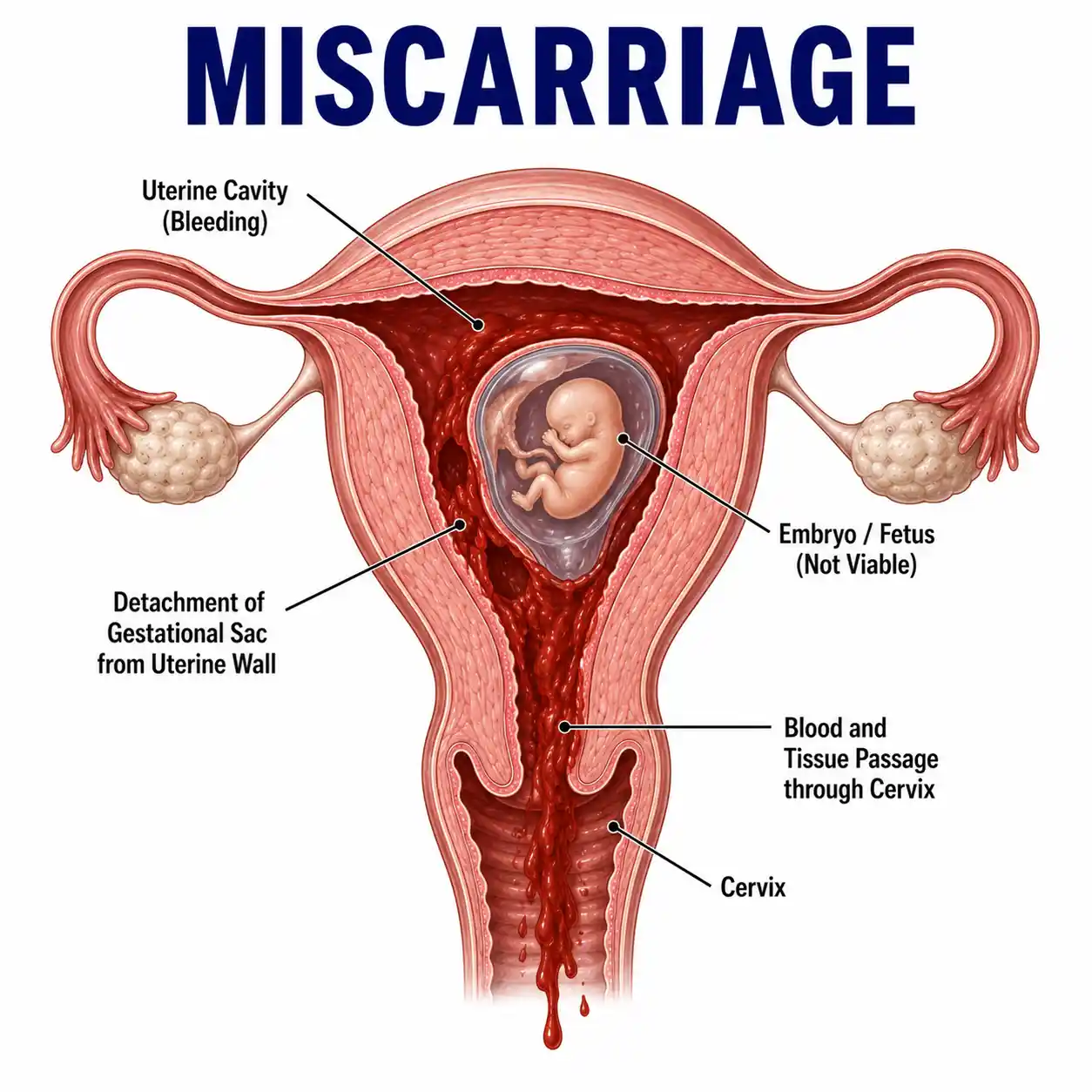
50% of miscarriages occur in the first trimester of pregnancy. For miscarriage treatment, you can consult with some of the best gynaecologists in India at Pristyn Care.
50% of miscarriages occur in the first trimester of pregnancy. For miscarriage treatment, ... Read More



Free Cab Facility

No-Cost EMI

Support in Insurance Claim

1-day Hospitalization

USFDA-Approved Procedure
Choose Your City
It help us to find the best doctors near you.

Bangalore
Chennai
Coimbatore
Delhi
Hyderabad
Kolkata
Madurai
Mumbai
Pune
Thiruvananthapuram
Delhi
Hyderabad
Pune
Mumbai
Bangalore
 Pristyn Care Diyos Hospital, Safdarjung Enclave, Delhi
Pristyn Care Elantis Hospital, Lajpat Nagar, Delhi
Pristyn Care Sheetla Hospital, Sector 8, Gurgaon
Pristyn Care Sheetla, New Railway Rd, Gurugram
Pristyn Care Diyos Hospital, Safdarjung Enclave, Delhi
Pristyn Care Elantis Hospital, Lajpat Nagar, Delhi
Pristyn Care Sheetla Hospital, Sector 8, Gurgaon
Pristyn Care Sheetla, New Railway Rd, Gurugram
Miscarriage might or might not cause any symptoms in the woman. Some of the reported signs of miscarriage that women have faced are:
However, in other cases, women might not experience any signs and symptoms of miscarriage.
Consult your gynaecologist and seek help in case you experience any of the symptoms mentioned above.
Free Miscarriage Surgery Cost Calculator
Fill details to get actual cost
Miscarriage is a traumatic and very sensitive phase for any woman, if you are seeking treatment help, then visit Pristyn Care to consult our gynaecologist, who will diagnose and plan a suitable treatment for miscarriage and also guide you for future pregnancy. Some of the reasons to choose Pristyn Care-
Diagnosis of Miscarriage
Doctors may prescribe any of the following diagnostic tests to identify the type of miscarriage and the severity of the condition.
Treatment of Miscarriage-
In some cases of complete miscarriage, the uterus itself expels all the fetal tissues. However, if the body doesn’t remove all the pregnancy tissues, then the doctor recommends the removal of pregnancy tissues either with medication or surgery, depending on the severity of the condition.
Medication is usually prescribed if you had a miscarriage before 10 weeks of pregnancy to expel the pregnancy tissue and placenta. Misoprostol and ibuprofen are two effective medicines that stimulate the uterus to expel the pregnancy tissue. They also help in reducing cramps, nausea, vomiting and chills. However, after medication, you may experience heavy bleeding, which indicates the treatment has been effective.
Surgery is quite an effective treatment for miscarriage in the later weeks. Dilation and curettage (D&C) is the surgical procedure performed to expel the pregnancy tissues from the birth canal. In this procedure, doctors give methotrexate to dilate the cervix completely, and after that surgeon uses a curette to remove all the tissues from the uterine cavity and clear the uterine lining.

 Patient arrives at the hospital or emergency department.
Registration and admission formalities are completed.
Vital signs (blood pressure, pulse, temperature, and oxygen level) are checked.
The gynecologist reviews the patient's symptoms, ultrasound findings, and blood test reports.
Patient arrives at the hospital or emergency department.
Registration and admission formalities are completed.
Vital signs (blood pressure, pulse, temperature, and oxygen level) are checked.
The gynecologist reviews the patient's symptoms, ultrasound findings, and blood test reports.
 vThe gynecologist confirms the diagnosis and discusses the treatment plan.
The anesthetist reviews the patient's condition if a surgical procedure is planned.
Consent forms are signed.
An IV line is started for fluids and medications.
vThe gynecologist confirms the diagnosis and discusses the treatment plan.
The anesthetist reviews the patient's condition if a surgical procedure is planned.
Consent forms are signed.
An IV line is started for fluids and medications.
 The patient is taken to the procedure room or operation theatre.
Short general anesthesia or intravenous sedation is usually administered for surgical management.
The patient becomes pain-free and comfortable before the procedure begins.
The patient is taken to the procedure room or operation theatre.
Short general anesthesia or intravenous sedation is usually administered for surgical management.
The patient becomes pain-free and comfortable before the procedure begins.
 A speculum is gently inserted to visualize the cervix.
The cervix is dilated if necessary.
The gynecologist removes the remaining pregnancy tissue using suction (vacuum aspiration) and/or specialized surgical instruments.
The uterine cavity is checked to ensure it has been completely cleared.
Bleeding is assessed and controlled before completing the procedure.
A speculum is gently inserted to visualize the cervix.
The cervix is dilated if necessary.
The gynecologist removes the remaining pregnancy tissue using suction (vacuum aspiration) and/or specialized surgical instruments.
The uterine cavity is checked to ensure it has been completely cleared.
Bleeding is assessed and controlled before completing the procedure.
 The patient is shifted to the recovery room.
Nurses monitor blood pressure, pulse, oxygen level, and vaginal bleeding.
Mild cramping and light bleeding are expected and managed with medications.
Once fully awake and stable, the patient can start taking fluids.
The patient is shifted to the recovery room.
Nurses monitor blood pressure, pulse, oxygen level, and vaginal bleeding.
Mild cramping and light bleeding are expected and managed with medications.
Once fully awake and stable, the patient can start taking fluids.
 Most patients are discharged on the same day.
Pain relief medications and antibiotics (if prescribed) are provided.
The patient receives instructions on recovery, activity restrictions, and warning signs such as heavy bleeding, fever, or severe pain.
A follow-up appointment is scheduled to ensure complete recovery and discuss future pregnancy planning if needed.
Most patients are discharged on the same day.
Pain relief medications and antibiotics (if prescribed) are provided.
The patient receives instructions on recovery, activity restrictions, and warning signs such as heavy bleeding, fever, or severe pain.
A follow-up appointment is scheduled to ensure complete recovery and discuss future pregnancy planning if needed.
Complete miscarriage- Complete miscarriage does not require any specific treatment as the uterus itself expels all the pregnancy tissues from the uterine cavity. Doctors suggest an ultrasound to ensure a complete miscarriage.
Missed miscarriage- It is also known as a silent miscarriage. In this type of miscarriage, the body is unable to recognize the pregnancy loss and can’t expel the pregnancy tissues. Missed miscarriage is usually treated by either medication or surgery. Medication is suggested to speed up the natural process. But if the medication is not successful, then the doctor suggests surgery to expel the complete pregnancy tissues. Doctors suggest an ultrasound to confirm the complete miscarriage.
Recurrent miscarriage- The most commonly identified cause of recurrent miscarriage is often associated with chromosomal abnormalities and hormonal disorders. Recurrent miscarriage treatment involves- lifestyle changes, medication like low-dose aspirin, injectable blood thinners and surgery, depending on the condition.

Diet & Lifestyle Consultation

Post-Surgery Recovery Follow up

FREE Cab Facility

24*7 Patient Support
Your doctor is likely to suggest a list of ways to prepare you well for the surgery treatment-
Some tips for quicker recovery after the D&C surgery-
You can not prevent a miscarriage if it is caused by chromosomal abnormalities and hormonal disorders. However, you can adopt some lifestyle changes to increase the chances of a healthy pregnancy.
Before undergoing miscarriage treatment, it is very important to get aware of the treatment procedure and the risk & complications associated with the treatment. You should ask the following questions to your gynaecologist to understand the treatment procedure-
You should consult a qualified gynecologist or obstetrician (OB-GYN) for miscarriage treatment. The doctor will confirm the miscarriage through an ultrasound and blood tests, assess your condition, and recommend the most appropriate treatment, which may include observation, medication, or a minor surgical procedure such as D&C.
D&C (Dilation and Curettage) surgery may be recommended if the miscarriage is incomplete, there is retained pregnancy tissue in the uterus, heavy bleeding, signs of infection, or if medication has not completely cleared the uterus. Your gynecologist will determine whether D&C is the safest treatment option.
Yes. Many miscarriages can be managed without surgery. Depending on your condition, the doctor may recommend expectant management (allowing the body to pass the pregnancy tissue naturally) or medications to help empty the uterus. Surgery is usually reserved for specific medical situations.
The cost of miscarriage treatment in India depends on factors such as the type of treatment, hospital, city, doctor’s experience, diagnostic tests, and whether surgery is required. A gynecologist can provide an accurate cost estimate after evaluating your medical condition.
Recovery varies depending on the type of miscarriage and treatment received. Most women recover physically within one to two weeks after medical or surgical treatment, while emotional recovery may take longer. Your doctor will advise when you can safely resume normal activities.
Light to moderate bleeding is common after miscarriage treatment and may last for one to two weeks. The duration varies among individuals. If you experience very heavy bleeding, severe abdominal pain, fever, or foul smelling vaginal discharge, contact your gynecologist immediately.
Many women can have a healthy pregnancy after a miscarriage. The ideal time to try again depends on your physical recovery, emotional readiness, and the cause of the miscarriage. Your gynecologist will recommend the safest time based on your individual health and treatment history.
Insurance coverage for miscarriage treatment depends on your health insurance policy and the hospital where you receive treatment. Many plans cover medically necessary hospitalization and surgical procedures, but it is advisable to verify your coverage details with your insurer before treatment.
After miscarriage treatment, follow your doctor’s instructions carefully. Avoid sexual intercourse, tampons, and douching until advised otherwise, maintain good personal hygiene, take prescribed medications, attend follow up appointments, and seek immediate medical attention if you develop heavy bleeding, fever, or severe pain.
Yes. Follow up appointments are important to ensure the uterus has completely cleared, monitor your recovery, and address any physical or emotional concerns. Your gynecologist may recommend an ultrasound or additional tests if needed before advising you on future pregnancy planning.



Sonam

 Recommends
Doctors were supportive during a difficult time and treatment was handled carefully
Rupal Singh
Recommends
The whole staff and doctor was really supportive at that tough time
Naina
Recommends
Hospital and services was really appreciable
sagarika dey
Recommends
Going through a miscarriage was emotionally very difficult for me. The doctor handled my case with care and explained everything calmly. I’m grateful for the support and proper treatment.
Shalu Singh
Recommends
Doctor was very supportive during a difficult phase of miscarriage. Didn’t feel judged or rushed. Truly grateful for his calm approach.
.svg)




.jpg/1756293297805_ban-Icon.png)





.svg)
.svg)