Select City

Experiencing chronic pain, stiffness, and movement issues around your shoulder? It can be an indication of shoulder dislocation. Get in touch with us to book a consultation with an orthopedic surgeon for comprehensive shoulder dislocation treatment.
Experiencing chronic pain, stiffness, and movement issues around your shoulder? It can be ... Read More




Free Cab Facility

No-Cost EMI

Support in Insurance Claim

1-day Hospitalization

USFDA-Approved Procedure
Choose Your City
It help us to find the best doctors near you.

Bangalore
Delhi
Hyderabad
Indore
Jaipur
Kochi
Mumbai
Pune
Delhi
Hyderabad
Pune
Mumbai
Bangalore
 Pristyn Care Elantis, Ring Road, Lajpat Nagar
Pristyn Care Diyos Hospital, Safdarjung Enclave, Delhi
Manorama Ganj, Old Palasia, Indore, Madhya Pradesh 452003
Pristyn Care Sheetla Hospital, Sector 8, Gurgaon
Pristyn Care Elantis, Ring Road, Lajpat Nagar
Pristyn Care Diyos Hospital, Safdarjung Enclave, Delhi
Manorama Ganj, Old Palasia, Indore, Madhya Pradesh 452003
Pristyn Care Sheetla Hospital, Sector 8, Gurgaon
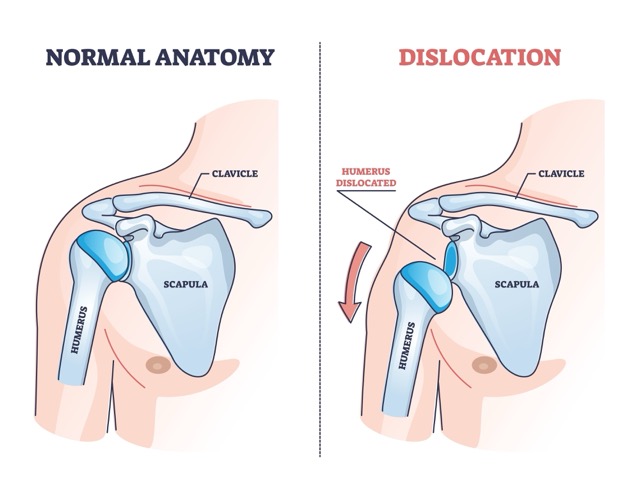
A shoulder dislocation occurs when the upper arm bone (humeral head) comes out of the socket (glenoid) of the shoulder blade. The shoulder is the most mobile joint in the human body, allowing movement in multiple directions. However, this flexibility also makes it more susceptible to dislocation.
A shoulder dislocation may be partial (subluxation) or complete. In many cases, the injury also damages the surrounding ligaments, cartilage (labrum), capsule, and tendons, increasing the risk of repeated dislocations if left untreated.
While some first-time dislocations can be treated without surgery, patients with recurrent shoulder instability or significant soft tissue damage often require surgical stabilization to prevent future episodes.
Free Bankart Surgery Cost Calculator
Fill details to get actual cost
Shoulder dislocations are classified according to the direction in which the humeral head moves out of the socket.
Anterior shoulder dislocation is the most common type, accounting for nearly 90–95% of all shoulder dislocations. It usually occurs after a fall on an outstretched arm, sports injuries, or road accidents. Patients often experience severe pain, visible shoulder deformity, and difficulty moving the arm.
Posterior shoulder dislocations are less common and are often associated with seizures, electric shock, or high-impact trauma. Symptoms include severe shoulder pain, limited external rotation, stiffness, and difficulty lifting the arm. Because the signs can be subtle, this type is sometimes missed during the initial evaluation.
Also known as luxatio erecta, inferior shoulder dislocation is a rare injury in which the arm remains raised above the head. It usually results from severe trauma and often requires immediate medical attention due to the higher risk of nerve and blood vessel injuries.
The symptoms of a shoulder dislocation appear suddenly after the injury and can range from mild to severe depending on the extent of damage.
Common symptoms include:
Patients with recurrent shoulder dislocation may experience repeated episodes even during simple daily activities.
A shoulder dislocation usually occurs due to significant force or trauma. Certain factors also increase the likelihood of repeated shoulder instability.
Sports Injuries: Contact sports such as football, wrestling, rugby, cricket, and basketball commonly cause shoulder dislocations due to sudden impact.
Falls: Falling on an outstretched hand is one of the leading causes of anterior shoulder dislocation.
Road Traffic Accidents: High-impact collisions can force the shoulder joint out of its socket.
Direct Blow to the Shoulder: A strong impact during accidents or physical activities may damage the shoulder joint.
Previous Shoulder Dislocation: Once the shoulder has dislocated, the supporting ligaments become weaker, increasing the risk of recurrence.

Diet & Lifestyle Consultation

Post-Surgery Recovery Follow up

Free Cab Facility

24*7 Patient Support
Early diagnosis helps determine the severity of the injury and guides the most appropriate treatment.
An orthopedic specialist begins with a detailed physical examination, reviewing your symptoms, medical history, and the mechanism of injury.
Diagnostic tests may include:
An X-ray confirms whether the shoulder is dislocated and helps identify associated fractures.
MRI provides detailed images of the ligaments, labrum, rotator cuff, and other soft tissues. It is particularly useful for diagnosing Bankart lesions, Hill-Sachs lesions, and rotator cuff injuries.
A CT scan evaluates complex fractures and bone loss around the shoulder socket, especially when surgery is being planned.
Musculoskeletal ultrasound may be used to assess tendon injuries and guide treatment in selected cases.
Based on these findings, the orthopedic surgeon determines whether conservative treatment or surgery is the most suitable option.

 The orthopedic specialist evaluates the shoulder, symptoms, and mechanism of injury.
X-rays or other imaging tests are performed to confirm the dislocation and identify associated fractures or ligament injuries.
A personalized treatment plan is prepared based on the severity of the injury.
The orthopedic specialist evaluates the shoulder, symptoms, and mechanism of injury.
X-rays or other imaging tests are performed to confirm the dislocation and identify associated fractures or ligament injuries.
A personalized treatment plan is prepared based on the severity of the injury.
 The orthopedic surgeon explains the treatment procedure, expected outcomes, and possible risks.
Consent forms are signed before treatment.
Pain-relieving medications, sedation, or anesthesia are administered if required.
The patient is prepared for shoulder reduction or surgery.
The orthopedic surgeon explains the treatment procedure, expected outcomes, and possible risks.
Consent forms are signed before treatment.
Pain-relieving medications, sedation, or anesthesia are administered if required.
The patient is prepared for shoulder reduction or surgery.
 Local anesthesia, sedation, or general anesthesia is administered depending on the treatment approach.
The patient is made comfortable before the procedure begins.
The shoulder muscles are relaxed to facilitate safe treatment.
Local anesthesia, sedation, or general anesthesia is administered depending on the treatment approach.
The patient is made comfortable before the procedure begins.
The shoulder muscles are relaxed to facilitate safe treatment.
 The orthopedic specialist gently repositions the dislocated shoulder back into its normal position (closed reduction) when appropriate.
If the joint is unstable or associated with severe soft tissue injury, arthroscopic or open surgery may be performed to repair the damaged ligaments or labrum.
The shoulder joint is checked for proper alignment and stability after the procedure.
The arm is placed in a sling or shoulder immobilizer for support.
The orthopedic specialist gently repositions the dislocated shoulder back into its normal position (closed reduction) when appropriate.
If the joint is unstable or associated with severe soft tissue injury, arthroscopic or open surgery may be performed to repair the damaged ligaments or labrum.
The shoulder joint is checked for proper alignment and stability after the procedure.
The arm is placed in a sling or shoulder immobilizer for support.
 The patient is monitored for pain relief, circulation, and nerve function.
X-rays may be repeated to confirm proper shoulder alignment.
Pain medications and post-treatment instructions are provided before discharge.
The patient is monitored for pain relief, circulation, and nerve function.
X-rays may be repeated to confirm proper shoulder alignment.
Pain medications and post-treatment instructions are provided before discharge.
 Most patients return home the same day or within 24 hours, depending on the treatment performed.
Patients are advised to wear the sling as recommended and avoid strenuous shoulder movements.
Physiotherapy is started gradually to restore shoulder strength, flexibility, and stability.
Follow-up appointments are scheduled to monitor healing and recovery.
Patients should seek immediate medical attention if they experience severe pain, increasing swelling, numbness, weakness, fever, or recurrent shoulder dislocation.
Most patients return home the same day or within 24 hours, depending on the treatment performed.
Patients are advised to wear the sling as recommended and avoid strenuous shoulder movements.
Physiotherapy is started gradually to restore shoulder strength, flexibility, and stability.
Follow-up appointments are scheduled to monitor healing and recovery.
Patients should seek immediate medical attention if they experience severe pain, increasing swelling, numbness, weakness, fever, or recurrent shoulder dislocation.
Not every shoulder dislocation requires surgery. First-time dislocations without significant structural damage can often be managed with conservative treatment.
Treatment options include:
The orthopedic surgeon gently guides the dislocated shoulder back into its normal position under appropriate pain relief or sedation.
A sling or shoulder immobilizer is worn for several weeks to allow the ligaments and soft tissues to heal.
Pain-relieving and anti-inflammatory medications help reduce discomfort and swelling during the early recovery phase.
Rehabilitation exercises strengthen the shoulder muscles, improve flexibility, restore range of motion, and reduce the risk of future dislocations.
Many patients recover well with conservative treatment, although the risk of recurrence remains higher in younger individuals and athletes.
Surgery is recommended when the shoulder repeatedly dislocates, remains unstable, or when there is significant damage to the ligaments, labrum, or shoulder bones. The goal of surgery is to restore shoulder stability, relieve pain, and prevent future dislocations. Most procedures are performed using minimally invasive arthroscopic (keyhole) techniques, which offer faster recovery, smaller scars, and less postoperative discomfort.
1.Bankart Repair
The most common procedure for recurrent anterior shoulder dislocation. The surgeon repairs the torn labrum and ligaments using suture anchors to stabilize the shoulder joint.
2. Latarjet Procedure
Recommended for patients with significant bone loss or repeated shoulder dislocations. A small piece of bone is transferred to the shoulder socket to improve joint stability.
3.Capsular Shift Surgery
Performed to tighten a loose or stretched shoulder capsule, helping prevent recurrent instability.
4.Remplissage Procedure
Used when a shoulder dislocation has caused a Hill-Sachs lesion. It fills the defect in the humeral head to reduce the risk of future dislocations and is often combined with Bankart repair.
Shoulder dislocation surgery helps restore the stability and function of the shoulder joint, especially in patients with recurrent dislocations or significant ligament damage.
Surgery may be recommended when non-surgical treatment fails or when the shoulder remains unstable.
You may require shoulder stabilization surgery if:
Modern arthroscopic shoulder stabilization procedures restore shoulder function while minimizing surgical trauma, reducing pain, and supporting a faster recovery.
Recovery varies depending on the type of surgery, the severity of the injury, and the patient’s rehabilitation progress.
First Week
2–6 Weeks
6–12 Weeks
3–6 Months
6–9 Months
Following the prescribed rehabilitation program is essential for achieving the best long-term results.
If you are experiencing any of the following signs or symptoms, you may require immediate medical assistance for shoulder dislocation treatment-
Suture anchors are tiny screws that are used to attach soft tissues like tendons, ligaments, or the meniscus to the bone to promote healing in minimally invasive surgeries. At Pristyn Care, we use PEEK and other biocomposite suture anchor material for bankart or labrum tear repair.
Anchor sutures are spiral screws usually used to fix tendons and ligaments to the bone. Depending on the patient’s need and the surgeon’s preference, they can be made of plastic, metal, or a bio-dissolvable material.
It is very important to personalize the rehabilitation program based on the patient’s needs, the extent of the injury, and their normal activity level. For example, rehabilitation for an unstable shoulder after arthroscopic surgery, especially in patients with repeated shoulder joint dislocations, depends on the cause of the tear, degree of joint instability, frequency of joint dislocation, the direction of the dislocation/instability, neuromuscular control over the joint, and patient’s activity level.
Arthroscopic bankart surgery repair has a 90-95% success rate. In most cases, people usually resume daily activities, including sports, in 2-3 months. In general, you can begin weight training 3 months after the surgery. However, complete internal recovery may take about 4-6 months.
Though arthroscopic bankart repair operation is very safe, in rare cases, it may be associated with complications such as nerve injury, poor suture attachment, wound infection, rupture of the repair, shoulder stiffness, recurrence of the injury, and long-term complications due to low-quality anchors.
Although shoulder dislocations are common, they can be serious and mostly require professional medical care. It isn’t advisable to try to pop your own shoulder or push it back in. If you have or have had a dislocated shoulder, talk to your doctor about the cause and how to prevent it from happening again.
The first treatment for a dislocated shoulder is to put the upper arm bone back into the shoulder socket, which quickly brings significant pain relief. Simple therapies such as applying ice packs, taking oral pain medication, and wearing an arm sling for a few weeks can further reduce pain and swelling. In some severe cases, surgery is required.
Treatment for dislocated shoulder depends on the severity of the condition. Some common treatment options for the dislocated shoulder are as follows:
No, a dislocated shoulder cannot heal itself. Prompt treatment is required to properly relocate the shoulder joint and ensure proper healing and rehabilitation. If the dislocated shoulder is left untreated, it can lead to complications and long-term damage.
The symptoms of a shoulder dislocation include:
The most common causes of shoulder dislocations are sports injuries, accidents, and falling on your shoulder or outstretched arm.
Shravan Joshi

 Recommends
Shoulder dislocation ke baad treatment aur physiotherapy yahan se li. Fast recovery and good doctors
Sombul Kaul
Recommends
I had a shoulder dislocation and the treatment was excellent. The doctor reduced it smoothly, explained care and exercises, and my shoulder is recovering well. Very satisfied with the care.
Ramprasad Kushwaha
Recommends
Thanks to Pristyn Care's shoulder dislocation treatment, I experienced a swift recovery and expert care. Their team's dedication and modern techniques ensured that the procedure was effective and hassle-free. I'm grateful for the results and the care I received.
Raj Gavaskar
Recommends
I had a shoulder dislocation and received treatment at Pristyn Care. The orthopedic specialist promptly performed a reduction procedure, and my shoulder is stable again. Pristyn Care's team provided excellent support throughout my recovery. I'm grateful for their efficient and compassionate care.
Rupali Shaw
Recommends
Choosing Pristyn Care for my shoulder displacement surgery was a game-changer. The doctors were not only highly skilled but also caring, creating a comfortable environment for discussing my concerns. They thoroughly assessed my shoulder condition and recommended the most suitable treatment plan. Pristyn Care's team provided personalized post-operative care, ensuring a smooth and painless recovery. They were attentive to my needs and provided valuable guidance. Thanks to Pristyn Care, my shoulder displacement is now successfully treated, and I feel more confident and relieved. I highly recommend their services for shoulder displacement surgery.
Shashank Modi
Recommends
Dealing with a shoulder dislocation was distressing, but Pristyn Care's orthopedic specialists were quick to respond and provided excellent treatment. The reduction procedure was successful, and the rehabilitation guidance was helpful. I'm grateful for the compassionate care I received at Pristyn Care.
.svg)










.svg)
.svg)