Select City

Tonsillectomy is a surgical procedure in which both palatine tonsils are fully removed from the back of the throat. Visit Pristyn Care and undergo a safe and effective tonsillectomy surgery in India. We work with expert and experienced ENT surgeons who have years of experience in performing various surgeries, including tonsillectomy. Book an appointment with us now.
Tonsillectomy is a surgical procedure in which both palatine tonsils are fully removed ... Read More




Free Cab Facility

No-Cost EMI

Support in Insurance Claim

1-day Hospitalization

USFDA-Approved Procedure
Choose Your City
It help us to find the best doctors near you.

Bangalore
Chennai
Delhi
Hyderabad
Kochi
Mumbai
Pune
Delhi
Hyderabad
Pune
Mumbai
Bangalore
 Pristyn Care Zoi Hospital, ShivBagh, Ameerpet, Hyd
Pristyn Care La Midas, Main, Nathupur Rd, nr. 38, DLF Phase 3, Sector 24, Gurugram, Haryana 122002
First Floor, B- 1-6 Dev Corpora, Eastern Express Hwy, Khopat, Thane West, Thane, Maharashtra 400601
Pristyn Care Zoi Hospital, ShivBagh, Ameerpet, Hyd
Pristyn Care La Midas, Main, Nathupur Rd, nr. 38, DLF Phase 3, Sector 24, Gurugram, Haryana 122002
First Floor, B- 1-6 Dev Corpora, Eastern Express Hwy, Khopat, Thane West, Thane, Maharashtra 400601
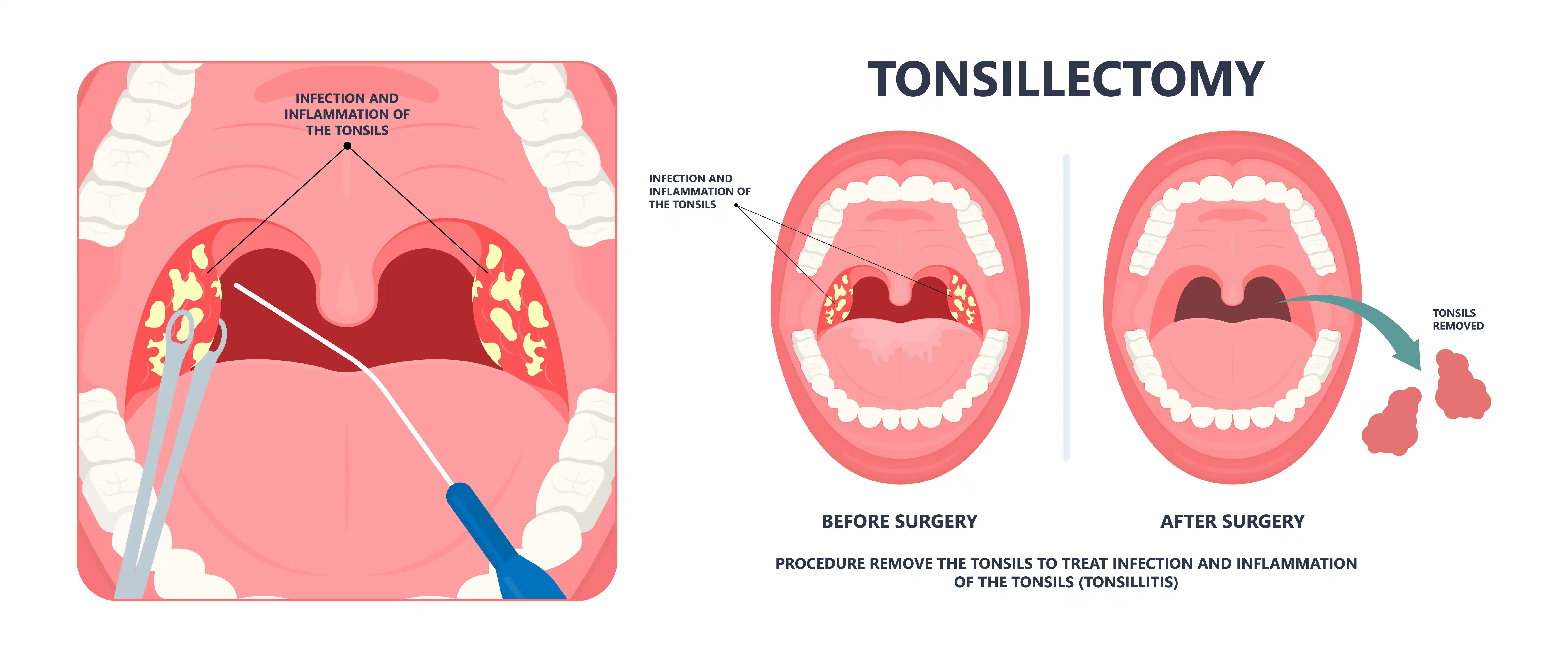
Tonsillectomy is the surgical procedure to remove tonsils. Tonsils are two fleshy, oval-shaped pads of tissue at the back of the throat. Tonsillectomy surgery is the most effective and long-lasting treatment for sore throat. It drastically improves the quality of life for people suffering from chronic tonsillitis.
It also helps in treating breathing and other problems related to enlarged tonsils and rare diseases of the tonsils. The recovery time for a tonsillectomy is usually at least 10 days to 2 weeks. However, the recovery period can vary from person to person, depending on their overall health condition.
Disease name
Surgery name
Duration
Treated by
Free Tonsils Removal Surgery Cost Calculator
Fill details to get actual cost
Tonsillectomy is required to treat the following conditions:
Tonsillectomy is also considered if the symptoms related to tonsillitis, such as pain and difficulty in swallowing, breathing difficulties, sleep apnea, swelling in the neck glands, etc., severely impact your life.
Different types of tonsillectomy surgery are as follows:
It is a laser procedure in which the tonsils are removed using a focused, high-energy radiofrequency beam. It is also known as radiofrequency tonsil ablation.
In this surgery, a harmonic scalpel cuts the inflamed tonsils through vibration energy. It generates heat and friction, leading to protein denaturation and dissection of the tonsils.
In this procedure, the surgeon uses low-energy electrocautery to remove the inflamed tonsils. It is one of the oldest or most conventional methods for tonsil removal.
A cold knife dissection is traditional open surgery for tonsil removal. The surgeon uses a cold or sharp knife to cut the tonsils and their capsules from the surrounding tissues.
Prior to the surgery, a comprehensive diagnostic evaluation is necessary to determine the severity of the condition and ensure that tonsillectomy is the appropriate treatment. The ENT doctor will perform the following diagnostic tests:
In some cases, additional diagnostic tests such as a complete blood count (CBC), X-ray, or CT scan may be required for more severe presentations.

Diet & Lifestyle Consultation

Post-Surgery Recovery Follow up

Free Cab Facility

24*7 Patient Support
Tonsillectomy surgery is typically performed under general anesthesia to ensure a pain-free experience for the patient. Once the diagnosis is established, the surgeon and patient collaborate to determine the most suitable treatment approach. Coblation and cauterization tonsillectomy are commonly regarded as the most effective techniques to remove tonsils.
During electrocautery or cauterization tonsillectomy, the surgeon employs low-energy electrocautery to remove the inflamed tonsils. Coblation tonsillectomy, on the other hand, utilizes low-temperature radiofrequency and a saline solution to gently and precisely extract the tonsils. Both methods minimize damage to surrounding tissues, leading to a faster recovery.
The tonsillectomy procedure generally lasts around 20-30 minutes, after which the patient is transferred to a recovery ward. In most cases, patients are discharged within 24 hours, even if they undergo overnight observation in the hospital.
What Happens During Tonsillectomy?
 Step 1 · 30-60 mins
Hospital Admission
 The patient arrives at the hospital on the scheduled day of surgery.
Registration and admission formalities are completed.
Vital signs such as blood pressure, pulse, temperature, and oxygen levels are checked.
Blood tests, medical history, and other pre-operative investigations are reviewed.
The patient arrives at the hospital on the scheduled day of surgery.
Registration and admission formalities are completed.
Vital signs such as blood pressure, pulse, temperature, and oxygen levels are checked.
Blood tests, medical history, and other pre-operative investigations are reviewed.
 Step 2 · 20–40 mins
Pre-surgery Preparation
The ENT surgeon reviews the patient's symptoms, history of recurrent tonsillitis or enlarged tonsils, and confirms the surgical plan.
The anesthetist performs a final pre-anesthesia assessment.
Consent forms are signed after discussing the procedure, expected benefits, recovery, and possible risks.
An IV line is started for fluids, antibiotics, and medications.
The patient is shifted to the operation theatre.
 Step 3 · 10–15 mins
Anesthesia Administration
General anesthesia is administered to ensure a pain-free procedure.
The patient remains asleep and comfortable throughout the surgery.
A mouth retractor is gently placed to provide clear access to the tonsils.
 Step 4 · 30–60 mins
Tonsillectomy Procedure Begins
The ENT surgeon removes one or both tonsils through the mouth without making any external incisions.
Depending on the patient's condition, techniques such as cold steel dissection, coblation, electrocautery, or other advanced methods may be used.
Bleeding is carefully controlled using cauterization or other hemostatic techniques.
The surgical area is examined to ensure complete tonsil removal and effective bleeding control.
No external stitches or visible scars are required.
 Step 5 · 1–2 Hours
Recovery Room Observation
The patient is shifted to the recovery room for monitoring.
Nurses monitor blood pressure, pulse, oxygen levels, breathing, pain control, and any signs of bleeding.
Once fully awake and medically stable, small amounts of oral fluids are introduced gradually.
 Step 6 · Same Day or Within 24 Hours
Discharge & Recovery
Most patients return home on the same day or within 24 hours after tonsillectomy.
Pain relief medicines, antibiotics (if prescribed), and detailed post-operative care instructions are provided.
The patient is advised to stay well-hydrated, consume soft and cool foods, and avoid spicy, hard, or hot foods during the recovery period.
Strenuous activities, smoking, and vigorous throat clearing should be avoided until healing is complete.
Follow-up appointments are scheduled to monitor recovery and ensure proper healing.
Patients should seek immediate medical attention if they experience heavy bleeding from the mouth, difficulty breathing, persistent high fever, severe dehydration, or uncontrolled pain.
Some common benefits of tonsil surgery are as follows:
Before undergoing a surgical procedure, it is essential for the physician to assess the individual’s medical history and current medications. This evaluation provides a comprehensive understanding of the patient’s overall health status.
Listed below are some preparation tips to follow before tonsils surgery:
After a tonsillectomy, it usually takes around 2-3 weeks to fully recover. To facilitate your recovery, here are some simple tips to follow:
Please note that these tips are general recommendations, and it’s crucial to follow the specific instructions provided by your surgeon or healthcare team for your recovery.
Tonsillectomy, like any surgical procedure, carries certain risks:
It’s important to remember that these risks are generally low, and healthcare professionals take precautions to minimize them.
Following a tonsillectomy, the ENT surgeon typically provides post-operative instructions that are important to adhere to for a smooth and prompt recovery. Immediately after the surgery, scabs may form in the area where the tonsils were removed. These scabs typically remain in place for approximately 5 to 10 days before naturally falling off. However, if they detach prematurely, it can lead to bright red bleeding, necessitating medical attention.
The recovery period after a tonsillectomy generally spans around 2-3 weeks, but this duration can vary depending on the patient’s overall health. Once you consult with the doctor, you can return to work within two weeks after the procedure. To alleviate discomfort and expedite recovery during this time, the following lifestyle changes can be helpful.
Remember, it is important to adhere to your surgeon’s specific instructions and recommendations to ensure a smooth and successful recovery following tonsil removal surgery.
The Average tonsillectomy surgery cost in India is INR. . However, the cost is variable and depends on a variety of factors, including:
Yes, tonsillectomy is generally covered by most major insurance policies, however, this coverage may be subject to specific policy terms such as waiting period, sub-limit, etc. If you are unsure about your insurance policy coverage, you must contact your insurance provider to find out your exact policy terms and coverage.
Medications
Here are some medications that may be prescribed for tonsil infections:
Here are some home remedies that can provide relief for tonsil infections:
While these non-surgical treatments can alleviate symptoms and aid healing, they may not fully address chronic or recurrent tonsil infections. In such cases, surgical interventions like tonsillectomy (tonsil removal) may be recommended. Consult a medical professional for an accurate diagnosis and appropriate treatment plan.
Before surgery, you must ask the following questions to your surgeon to have a better understanding of the procedure and the risks and complications associated with it:
At most you may have to skip work for about 2-3 days after a tonsillectomy, especially if you have a desk job. However, if you have a physically straining job, you may need to forego work for at least a week.
No, the tonsillectomy procedure remains almost the same for both kids and adults. The size of the endoscope and laser may be different depending on the size of the throat opening, but the rest of the surgery remains the same.
No, tonsillectomy is the removal of tonsils, permanently in most cases, therefore, the recurrence of tonsillitis after a tonsillectomy is incredibly rare.
There is very little pain after a tonsillectomy and it can be easily managed through NSAID painkillers, such as ibuprofen, paracetamol, etc.
No, you should consult an ENT specialist for the best tonsillectomy procedure without any postsurgical complications.
Tonsillectomy surgery carries certain risks like any other surgical procedure, including bleeding, headache, anesthesia-related complications, nausea, vomiting or muscle soreness, etc. However, the chances of severe complications are quite rare.
The seriousness of a tonsillectomy for adults depends on various factors, including the patient’s overall health and any underlying health condition of the patient.
Yes, the removal of tonsils in adults significantly helps in reducing the symptoms of tonsillitis, throat infections & others such as coughing, headache, high temperature, etc. It may be recommended if adults experience frequent chronic tonsillitis that significantly impacts their well-being. You must consult your healthcare to understand the severity of the condition. The decision to remove tonsils in adults is made after careful consideration and consultation with a healthcare professional.



.jpg)
Coblation tonsillectomy
The surgeon removes the infected tonsils by eliminating the surrounding tissues that attach them to the pharynx using low radiofrequency and a saline solution. The saline cools down the heat from the radiofrequency before it can damage the surrounding tissues.
.jpg)
Electrocautery or Cauterization
In this treatment, the surgeon removes the infected tonsils by simply burning away the infected tissues through electric cauterization.
.jpg)
Cold knife dissection
As the name suggests, the surgeon ablates the swollen tonsils using a steel scalpel. There is no pain since the patient is under anesthesia, however, the risk of bleeding is high. It is the conventional treatment technique and is usually not preferred nowadays.
Anshula

 Recommends
Baar baar throat infection se bahut problem ho rahi thi ab pehle se kaafi better feel ho rha hai
Arjuna
Recommends
Frequent throat infections stopped after surgery and recovery was smooth.
Radhika Goyal
Recommends
I was really ina lot of pain because of tonsil but after treatment now i feel much better
Ravi
Recommends
I was having a frequent throat infection at that time but after treatment my throat is in good condition
Tanvi
Recommends
My child was in pain bcoz of tonsills but after treatment he is feeling better.
Pooja
Recommends
Now I feels like I achievved a long term relief now
.svg)








.svg)
.svg)