


 Views: 1
Kidney Stone Medicine: What Is the Best Medicine for Kidney Stone Pain and Removal?



Dedicated Support at Every Step!
Our Doctors are available 24 hours a day, 7 days a week to help you!

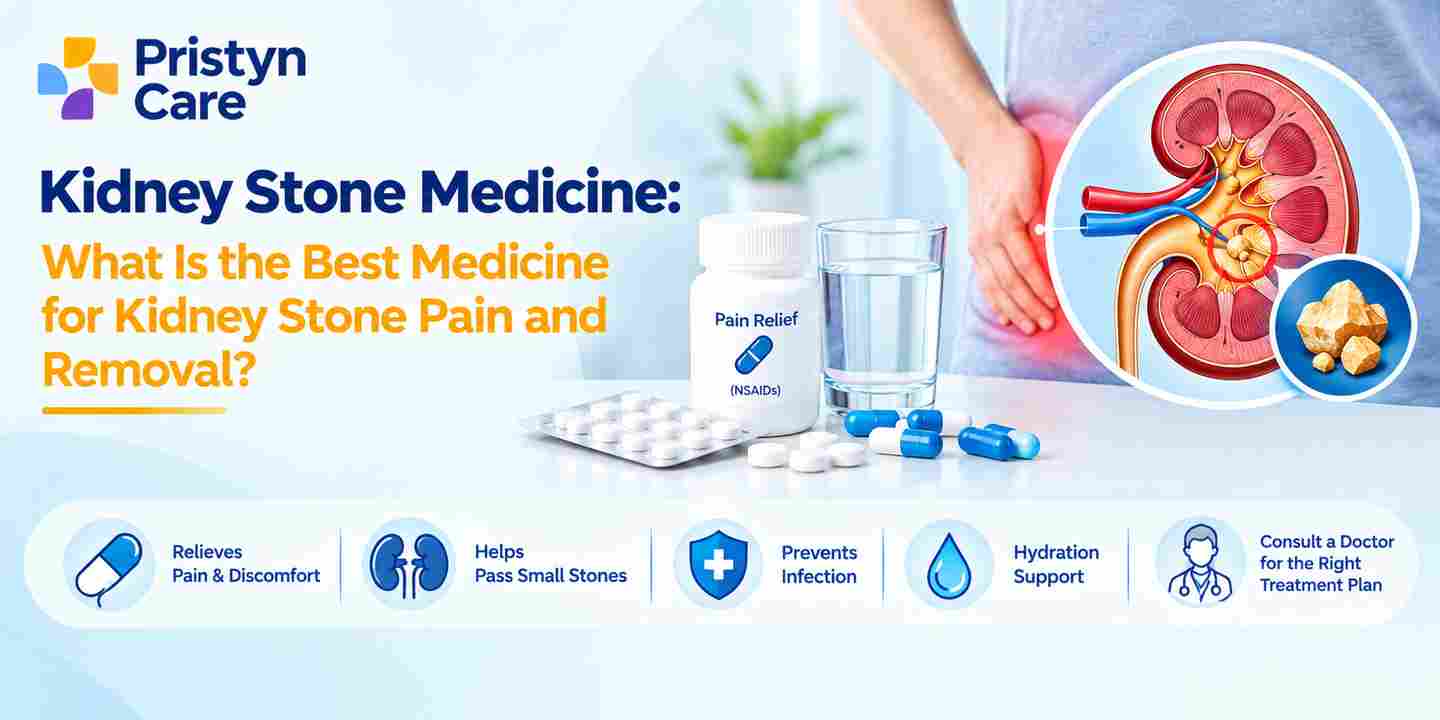
This is why people searching for the best medicine for kidney stone, kidney stone medicine name, or medicine to dissolve kidney stones should know that there is no single medicine that works for every type and size of stone.
Some medicines can help control pain, reduce nausea, or relax the ureter to help a suitable stone pass. However, medicines cannot reliably break up or dissolve every kidney stone.
Table of Contents
What Is a Kidney Stone?
A kidney stone is a hard crystal-like deposit that develops when minerals and other substances in urine become concentrated and form crystals.
Common types include:
| Type of Kidney Stone | Common Characteristics |
| Calcium stones | The most common type, usually calcium oxalate or calcium phosphate |
| Uric acid stones | Can occur when urine is persistently acidic |
| Struvite stones | Often associated with certain urinary infections |
| Cystine stones | Rare and associated with an inherited condition |
The type, size, location, and degree of obstruction influence whether a stone can pass naturally or requires treatment.
No Cost EMI, Hassle-free Insurance Approval
Is There Medicine for Kidney Stones?
Yes, medicines are used in kidney stone treatment, but their purpose depends on the situation.
They may be used to:
- Relieve kidney stone pain
- Control nausea and vomiting
- Help a suitable stone pass through the ureter
- Treat an associated urinary infection
- Prevent certain types of stones from forming again
- In selected cases, alter urine chemistry to help dissolve certain stones
There is no universal kidney stone medicine that can dissolve or remove every stone.
What Is the Best Medicine for Kidney Stone?
The "best" medicine depends on the stone and the symptoms.
| Medicine/Treatment | Main Purpose | Does It Remove Every Kidney Stone? |
| Pain relievers such as NSAIDs | Relieve renal colic/kidney stone pain | No |
| Other pain medicines | Pain control when appropriate | No |
| Alpha-blockers | May help selected ureteral stones pass | No |
| Anti-nausea medicines | Control nausea/vomiting | No |
| Antibiotics | Treat bacterial urinary infection when present | No |
| Potassium citrate/urine alkalinisation | May help prevent or dissolve selected uric acid stones | Only selected stones |
| Increased fluids | Support hydration and stone passage when appropriate | No |
| Shock wave lithotripsy | Break selected stones into smaller fragments | Yes, for appropriate stones |
| Ureteroscopy/laser lithotripsy | Break and/or remove stones | Yes, for appropriate stones |
| PCNL | Removes larger/complex kidney stones | Yes, for appropriate stones |
Therefore, the right treatment should be selected after considering the stone's size, location, composition, symptoms, and whether it is blocking urine flow.
Kidney Stone Medicine Name: Which Medicines Are Commonly Used?
There is no single kidney stone medicine name that applies to everyone.
Depending on the situation, a doctor may prescribe:
1. Pain Medicines
Kidney stone pain can be severe because the ureter contracts around the stone.
NSAIDs are commonly used for renal colic when medically appropriate. Other analgesics may be considered when NSAIDs are unsuitable or insufficient.
Do not repeatedly self-medicate with painkillers, particularly if you have kidney disease, stomach ulcers, are taking blood thinners, or have other medical conditions.
2. Alpha-Blockers
Medicines such as tamsulosin may sometimes be used as part of medical expulsive therapy for selected ureteral stones.
They may help relax the ureter and improve the chance of passage in appropriate cases.
However, they do not physically dissolve or break the stone.
3. Medicines for Nausea
A kidney stone can cause nausea and vomiting, particularly during severe pain.
Anti-nausea medicines may be prescribed when needed.
4. Antibiotics
Antibiotics are used when a bacterial urinary infection is diagnosed or strongly suspected.
They do not dissolve kidney stones.
A blocked urinary system with infection can become a medical emergency and needs urgent treatment.
Medicine for Kidney Stone Pain
Kidney stone pain medicine is one of the most common searches because renal colic can be extremely painful.
Pain may:
- Start suddenly
- Occur in waves
- Begin in the back or side
- Move toward the lower abdomen or groin
- Be accompanied by nausea or vomiting
- Occur with urinary symptoms when the stone is near the bladder
Pain medicine can provide relief, but pain relief does not mean that the stone has been removed.
If the pain repeatedly returns, the stone may still be present or may be causing ongoing obstruction.
Best Medicine for Kidney Stone Pain
For many adults with renal colic, NSAIDs are commonly used when there is no medical reason to avoid them.
However, the appropriate medicine depends on factors such as:
- Kidney function
- Age
- Pregnancy
- Stomach health
- Other medicines being taken
- Blood-thinner use
- Allergy history
- Severity of pain
If pain is severe or persistent despite medication, medical evaluation is important rather than repeatedly increasing the dose yourself.
Can Medicine Break Up Kidney Stones?
This depends on the stone type.
Most kidney stones cannot simply be broken up by taking a tablet or syrup.
Some selected uric acid stones can potentially be dissolved by raising urine pH using appropriate medical treatment.
This is very different from physically breaking a stone using a procedure.
Medicine to Break Up Kidney Stones
Searches such as kidney stone breaking medicine, medicine to break up kidney stones, and kidney stone removal medicine can create the impression that there is a universal tablet that destroys stones.
There is not.
For stones that are too large to pass naturally, doctors may recommend procedures such as:
- Shock wave lithotripsy
- Ureteroscopy with laser lithotripsy
- Percutaneous nephrolithotomy
The choice depends on the stone's size and location and the patient's individual circumstances.
Can Medicine Dissolve Kidney Stones?
Some stones can be dissolved under specific circumstances, but this does not apply to all kidney stones.
Uric acid stones may sometimes be dissolved by making the urine less acidic through medically supervised urine alkalinisation.
Calcium-based stones, which are very common, generally do not dissolve simply by taking a medicine.
This is why identifying the stone type is important before assuming that a "dissolving" medicine will work.
Kidney Stone Liquid Medicine or Syrup
People often search for:
- Kidney stone syrup
- Kidney stone liquid medicine
- Kidney stone medicine syrup
- Liquid medicine for kidney stones
A liquid preparation may contain medicines or ingredients intended for symptom management or urinary health, but the liquid form itself does not mean that it can dissolve a kidney stone.
Treatment should be based on the actual stone rather than the dosage form.
Allopathic Medicine for Kidney Stone
Allopathic or modern medical treatment for kidney stones may include:
- Pain medicines
- Anti-nausea medicines
- Alpha-blockers for selected ureteral stones
- Antibiotics for diagnosed infection
- Medicines to prevent recurrence
- Urine alkalinisation for selected uric acid stones
- Procedures for stones unlikely to pass naturally
The treatment is individualized rather than based solely on the word "kidney stone."
Can Homeopathic Medicine Cure Kidney Stones?
Searches for homeopathic medicine for kidney stone, best homeopathic medicine for kidney stone, and kidney stone ki homeopathic medicine are common.
Homeopathic remedies such as Berberis are sometimes promoted for kidney stones.
However, there is no strong scientific evidence that homeopathic medicines can reliably dissolve or remove established kidney stones.
Homeopathy should not be used as a substitute for appropriate diagnosis or treatment, particularly when a stone is causing obstruction, infection, kidney-function problems, or severe pain.
What About Berberis Kidney Stone Medicine?
Berberis is frequently mentioned in homeopathic discussions about kidney stones.
However, there is insufficient reliable clinical evidence to establish Berberis as a medicine that can dissolve or remove kidney stones.
If you have a confirmed stone, the important factors are its size, location, composition, and whether it is obstructing urine flow.
What About Dr. Reckeweg Kidney Stone Medicine?
Dr. Reckeweg products may also appear in searches related to homeopathic kidney stone treatment.
A branded product should not be assumed to dissolve or remove kidney stones simply because it is marketed for urinary or stone-related symptoms.
Persistent symptoms or a confirmed kidney stone should be evaluated using evidence-based medical care.
Can Ayurveda Cure Kidney Stones?
Ayurvedic medicines are commonly searched for under terms such as:
- Ayurvedic medicine for kidney stone
- Best Ayurvedic medicine for kidney stone
- Ayurvedic kidney stone medicine
- Kidney stone medicine in Ayurveda
Some Ayurvedic preparations are marketed for urinary stones, but there is not enough reliable clinical evidence to conclude that Ayurvedic medicines can consistently dissolve or remove all types of kidney stones.
A stone that is blocking urine flow should not be allowed to progress while relying only on alternative remedies.
What About Patanjali Kidney Stone Medicine?
Patanjali kidney stone medicine and related Ayurvedic products may be searched for by people looking for non-surgical treatment.
However, the brand or herbal nature of a product does not establish that it can dissolve an established kidney stone.
If you are considering an Ayurvedic product, discuss it with a qualified healthcare professional, especially if you have a large stone, reduced kidney function, infection, or are taking other medicines.
What About Himalaya Medicine for Kidney Stone?
Himalaya and other herbal brands may have products marketed around urinary health.
However, these should not automatically be considered proven kidney stone removal medicines.
The appropriate treatment depends on the actual stone and whether it is likely to pass naturally.
 Doctor available
4.5/5

29+ Years Experience Overall
Doctor available
4.5/5
19+ Years Experience Overall
Doctor available
4.5/5
19+ Years Experience Overall
Doctor available
4.5/5
15+ Years Experience Overall
Doctor available
4.5/5
12+ Years Experience Overall
Doctor available
4.5/5
12+ Years Experience Overall
Doctor available
5.0/5
25+ Years Experience Overall
 (4) (1).jpg/1682933853454_ban-Icon.png) Doctor available
Doctor available.jpeg/1777541472938_ban-Icon.png)
4.8/5
17+ Years Experience Overall
Doctor available
4.5/5
18+ Years Experience Overall
Doctor available
4.8/5
16+ Years Experience Overall
Doctor available
4.8/5
15+ Years Experience Overall
Doctor available
MBBS, MS - General Surgery, MCh - Urology/Genito-Urinary Surgery
₹1200₹600Consultation Fee
5.0/5
15+ Years Experience Overall
Doctor available
5.0/5
14+ Years Experience Overall
Doctor available
5.0/5
14+ Years Experience Overall
Doctor available
4.5/5
13+ Years Experience Overall
Doctor available
4.5/5
13+ Years Experience Overall
Doctor available
4.5/5
12+ Years Experience Overall
Doctor available
4.5/5
11+ Years Experience Overall
Unani and Siddha Medicine for Kidney Stones
Unani and Siddha systems also have traditional approaches for urinary and stone-related complaints.
However, there is insufficient high-quality evidence to establish these systems as reliable methods for removing every type of kidney stone.
They should not replace timely medical evaluation when there is obstruction, infection, severe pain, or impaired kidney function.
Can Kidney Stone Be Cured by Medicine?
Sometimes a small stone can pass naturally with appropriate medical management.
Selected uric acid stones may also be dissolved through medically supervised urine alkalinisation.
But many stones, particularly larger stones or stones causing persistent obstruction, cannot be reliably cured with medicines alone.
The treatment decision depends on:
- Stone size
- Stone location
- Stone type
- Degree of obstruction
- Pain
- Infection
- Kidney function
- Whether the stone is growing
- Previous stone-passage history
Can Kidney Stones Pass Without Surgery?
Yes.
Many small stones can pass naturally through the urinary tract.
Doctors may recommend observation and medical treatment when the stone has a reasonable chance of passing safely.
But waiting is not appropriate for every stone.
A larger stone, significant obstruction, infection, uncontrolled pain, or deteriorating kidney function may require an intervention.
When Is Kidney Stone Removal Needed?
A procedure may be recommended when:
- The stone is too large to pass naturally
- Pain remains severe despite medication
- The stone causes persistent obstruction
- The stone is not progressing
- There is recurrent infection
- Kidney function is affected
- The stone is causing repeated episodes
- The patient prefers definitive treatment after discussing options
Kidney Stone Removal Treatment
1. Shock Wave Lithotripsy
Shock waves are used to break a suitable stone into smaller fragments that can then pass through the urinary tract.
2. Ureteroscopy With Laser Lithotripsy
A thin scope is passed through the urinary tract to reach the stone.
A laser may be used to fragment the stone, and the pieces may be removed or allowed to pass.
This is commonly used for appropriately located kidney or ureteral stones.
3. RIRS
Retrograde Intrarenal Surgery (RIRS) uses a flexible ureteroscope to reach stones inside the kidney and fragment them, commonly with a laser.
It can be considered for selected kidney stones depending on size and location.
4. PCNL
Percutaneous nephrolithotomy (PCNL) is generally used for larger or complex kidney stones.
A small access tract is created through the skin into the kidney, allowing the surgeon to remove or fragment the stone.
Kidney Stone Medicine vs Stone Removal Procedures
| Treatment | Main Purpose | Can Remove the Stone? |
| Pain medicine | Controls pain | No |
| Alpha-blocker | May help selected ureteral stones pass | May facilitate natural passage |
| Antibiotics | Treat infection | No |
| Urine alkalinisation | Can dissolve selected uric acid stones | Yes, selected stones |
| Homeopathic medicine | Marketed for symptom/stone management | Not scientifically established |
| Ayurvedic medicine | Traditionally used for urinary conditions | Not scientifically established as a universal stone cure |
| Shock wave lithotripsy | Breaks suitable stones | Yes |
| Ureteroscopy + laser | Breaks/removes stones | Yes |
| RIRS | Treats selected kidney stones | Yes |
| PCNL | Removes larger/complex stones | Yes |

Free Kidney Stones Surgery Cost Calculator

What Happens If a Kidney Stone Is Left Untreated?
A small stone may pass without causing long-term problems.
However, a stone that remains stuck can potentially cause:
- Persistent urinary obstruction
- Recurrent severe pain
- Hydronephrosis
- Recurrent urinary infections
- Reduced kidney function in serious or prolonged cases
An infected and obstructed urinary system can be particularly dangerous.
Kidney Stone Pain With Fever: Is It an Emergency?
Seek urgent medical attention if you have a known or suspected kidney stone along with:
- Fever or chills
- Severe or worsening pain
- Repeated vomiting
- Difficulty passing urine
- Very little urine
- Blood in urine with severe symptoms
- Weakness or feeling extremely unwell
A urinary infection behind an obstruction can require urgent drainage in addition to antibiotics.
Do not rely on home remedies or painkillers alone in this situation.
Does Kidney Stone Medicine Affect Sperm?
Some people search for questions such as "I am using kidney stone medicine, sperm not coming."
Kidney stones themselves and some medicines or procedures may be associated with reproductive or ejaculation-related concerns in particular circumstances, but "sperm not coming" is not something that should automatically be attributed to kidney stone medicine.
If you experience:
- No ejaculation
- Reduced semen volume
- Pain during ejaculation
- Blood in semen
- Erectile problems
- Fertility concerns
speak with a urologist rather than stopping prescribed medicine on your own.
The specific medicine and the timing of the symptom matter.
How Is a Kidney Stone Diagnosed?
A doctor may use:
- Medical history
- Physical examination
- Urine testing
- Blood tests
- Ultrasound
- CT scan when appropriate
Imaging helps determine the size and location of the stone and whether it is blocking urine flow.
These details are important because they help determine whether medicines and observation are reasonable or whether a procedure would provide a better solution.
How Can You Prevent Kidney Stones?
After a stone episode, prevention depends partly on the type of stone.
General measures may include:
- Drink enough water unless your doctor has advised fluid restriction.
- Avoid excessive salt intake.
- Maintain a balanced diet.
- Do not make extreme dietary changes without medical advice.
- Maintain a healthy body weight.
- Follow specific dietary recommendations if stone analysis or metabolic testing identifies a particular risk.
- Take preventive medicines when prescribed.
People who repeatedly develop stones may benefit from stone analysis and metabolic evaluation.
Frequently Asked Questions
1. What is the best medicine for kidney stone?
There is no single best medicine for every kidney stone. Pain medicines, alpha-blockers, antibiotics, and urine-alkalinising medicines may have specific roles depending on the stone and the patient's condition.
2. What is the best medicine for kidney stone pain?
NSAIDs are commonly used for renal colic when medically appropriate. The safest choice depends on kidney function, other medical conditions, and the medicines you already take.
3. Is there a medicine to dissolve kidney stones?
Selected uric acid stones may be dissolved through medically supervised urine alkalinisation. Most calcium stones do not dissolve with medicines.
4. Can medicine break up kidney stones?
Medicines generally cannot physically break up most kidney stones. Procedures such as shock wave lithotripsy or laser lithotripsy are used when stone fragmentation is required.
5. Can homeopathic medicine cure kidney stones?
There is no strong scientific evidence that homeopathic medicines can reliably dissolve or remove established kidney stones.
6. Is Berberis good for kidney stones?
Berberis is used in homeopathic practice, but there is insufficient reliable evidence that it can dissolve or remove kidney stones.
7. Can Ayurveda remove kidney stones?
Some Ayurvedic products are marketed for kidney stones, but there is insufficient evidence to establish them as a reliable treatment for all kidney stones.
8. Can a kidney stone pass naturally?
Yes. Many small stones can pass naturally. The likelihood depends on the stone's size, location, and other clinical factors.
9. When does a kidney stone require surgery?
A procedure may be required when the stone is unlikely to pass, causes persistent obstruction or severe pain, leads to infection, affects kidney function, or continues to cause problems.
10. Does kidney stone medicine remove the stone?
Some medicines may help selected stones pass or dissolve certain uric acid stones. However, pain medicines and most medications do not physically remove kidney stones.
11. Is kidney stone surgery always necessary?
No. Small stones that are likely to pass safely may be managed conservatively. Larger, obstructing, infected, or persistent stones may need a procedure.


Conclusion
Searching for the best kidney stone medicine, a kidney stone medicine tablet, syrup, homeopathic remedy, or Ayurvedic medicine is common, particularly when you want to avoid a procedure.
However, there is no universal medicine that can break up or dissolve every kidney stone.
Medicines can play an important role in pain relief, nausea control, selected stone passage, infection treatment, and prevention of future stones. In selected cases, uric acid stones can be dissolved through appropriate urine alkalinisation.
When a stone is too large to pass, causes persistent obstruction, severe pain, infection, or kidney-related complications, treatments such as shock wave lithotripsy, ureteroscopy with laser lithotripsy, RIRS, or PCNL may be recommended.
The most appropriate treatment starts with knowing the stone's size, location, type, and effect on the urinary system, rather than simply choosing a medicine by name.
Disclaimer: This information is for educational purposes only and should not replace consultation with a qualified urologist. Do not start antibiotics, prescription medicines, homeopathic remedies, or Ayurvedic products for kidney stones without appropriate medical advice. Severe kidney stone pain accompanied by fever, chills, vomiting, or difficulty passing urine requires prompt medical evaluation.
Social share:



Related Calculators

Dedicated Support at Every Step!
Our Doctors are available 24 hours a day, 7 days a week to help you!


