


Kidney stones are hardened or crystallized masses of minerals that form inside the kidneys. Kidney stones are of different types depending on their cause and composition. Therefore, the treatment and medications may vary depending on the type of kidney stone and the underlying cause. A proper diagnosis is important before starting any medication.
Table of Contents
Most Common Types of Kidney Stones
- Calcium oxalate kidney stones
- Uric acid kidney stones
- Struvite kidney stones
- Cystine kidney stones
A quick note to remember: Do not self-medicate for kidney stones without consulting a doctor. The appropriate medicine depends on the size, location, type of stone, symptoms, kidney function, and other health conditions.
Also read: 8 Signs that you have kidney stones
Medicines Used for Kidney Stones
Medicines for kidney stones are mainly used to control pain, help certain stones pass through the urinary tract, or reduce the risk of new stones forming. The choice of medicine depends on the type and size of the stone and the person’s overall health.
-
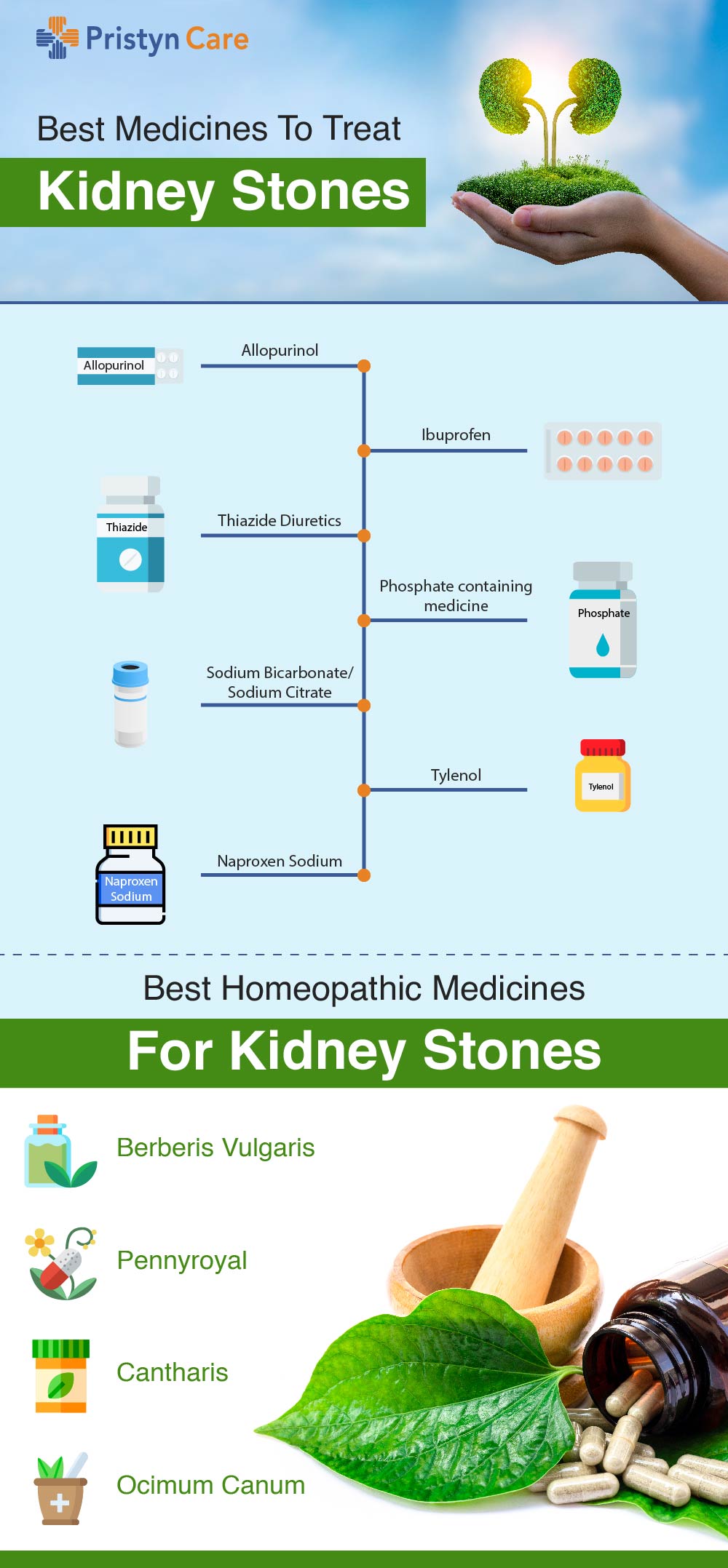
Allopurinol
Allopurinol is a prescription medicine that may be used to lower uric acid production in people who form uric acid kidney stones. It does not directly dissolve every type of kidney stone. Doctors may prescribe it when high uric acid levels contribute to recurrent stone formation.
Important: Allopurinol should be taken only when prescribed by a doctor after evaluating uric acid levels and the underlying cause of stone formation.
-
Ibuprofen
Ibuprofen is a non-steroidal anti-inflammatory drug (NSAID) that can help relieve the pain associated with kidney stones. Kidney stone pain can occur when a stone moves through the urinary tract or causes obstruction.
NSAIDs may not be suitable for everyone, particularly people with certain kidney problems, stomach ulcers, bleeding disorders, or specific cardiovascular conditions. Use them only according to medical advice.
-
Thiazide Diuretics
Thiazide diuretics may be prescribed to people who repeatedly develop calcium-containing kidney stones, particularly when high levels of calcium are being passed in the urine. These medicines reduce the amount of calcium excreted through urine and may help lower the risk of recurrent stones.
-
Phosphate-Containing Medicines
Phosphate-containing medicines may be considered in selected cases of recurrent calcium kidney stones. Their use depends on the individual’s stone type, urine composition, kidney function, and other medical factors. They should not be taken without medical supervision.
-
Sodium Bicarbonate
Medicines that make urine less acidic may be used in selected people with uric acid kidney stones. Sodium bicarbonate can increase urine pH, which may help prevent uric acid from crystallizing. However, it is not suitable for everyone because excessive sodium intake can be problematic for people with certain heart, blood pressure, or kidney conditions.
-
Tylenol (Acetaminophen)
Tylenol, also known as acetaminophen, may be used to relieve mild to moderate pain associated with kidney stones. The appropriate dose depends on individual factors, and excessive use can damage the liver.
-
Naproxen Sodium
Naproxen sodium is another NSAID that may be prescribed to control kidney stone pain. Like other NSAIDs, it may not be appropriate for people with certain kidney, stomach, bleeding, or cardiovascular conditions. A doctor should determine whether it is safe for you.
These medicines may help manage kidney stone pain or reduce the risk of recurrent stones in selected cases. However, medication alone may not be enough when a stone is large, causes significant blockage, leads to infection, or does not pass naturally.

What About Homeopathic Medicines for Kidney Stones?
Various homeopathic products are marketed for kidney stones, but there is not enough high-quality clinical evidence to establish that homeopathic medicines can dissolve or remove kidney stones. They should not replace evidence-based medical treatment, particularly when a stone is causing severe pain, blockage, infection, or other complications.
Commonly Promoted Homeopathic Remedies
-
Berberis Vulgaris
Berberis Vulgaris is commonly promoted as a homeopathic remedy for kidney stone-related discomfort. However, there is insufficient clinical evidence to confirm that it can dissolve or remove kidney stones.
-
Pennyroyal
Pennyroyal is sometimes promoted in traditional or alternative medicine for urinary problems. However, it should not be used as a treatment for kidney stones without medical guidance, as evidence of its effectiveness is lacking and concentrated pennyroyal products can be unsafe.
-
Cantharis
Cantharis is another homeopathic preparation promoted for urinary symptoms. There is insufficient reliable clinical evidence to show that it can dissolve kidney stones or prevent their formation.
-
Ocimum Canum
Ocimum Canum is also used in some homeopathic preparations for urinary complaints. However, it should not be considered a proven treatment for kidney stones because adequate clinical evidence is lacking.
A quick note: If you prefer complementary or Ayurvedic approaches, discuss them with your doctor before using them alongside conventional treatment. Your diet and hydration habits can also influence kidney stone risk. Certain
foods can make kidney stones worse, depending on the type of stone you have.
When Is Medical Treatment or Surgery Needed?
Small kidney stones may pass naturally with appropriate medical management. However, a doctor may recommend a procedure when the stone is too large to pass, causes persistent or severe pain, blocks urine flow, causes repeated infections, affects kidney function, or does not pass despite observation and medication.
Depending on the stone’s size and location, treatment options may include shock wave lithotripsy, ureteroscopy, or other minimally invasive procedures. Your urologist can recommend the most appropriate option after imaging and other necessary tests.
Take Away
The right medicine for kidney stones depends on the type, size, location, and cause of the stone. Pain-relieving medicines can help manage symptoms, while certain prescription medicines can reduce the risk of specific types of recurrent stones. However, no single medicine works for every kidney stone.
Always consult a specialist before starting medication. If kidney stones keep recurring or do not pass naturally, a urologist can evaluate whether a minimally invasive procedure is required.
Learn more about kidney stone laser treatment and discuss the most appropriate treatment option with a qualified urologist.
Also Read:
 Doctor available







%20(4)%20(1).jpg/1682933853454_ban-Icon.png)
.jpeg/1777541472938_ban-Icon.png)