Select City

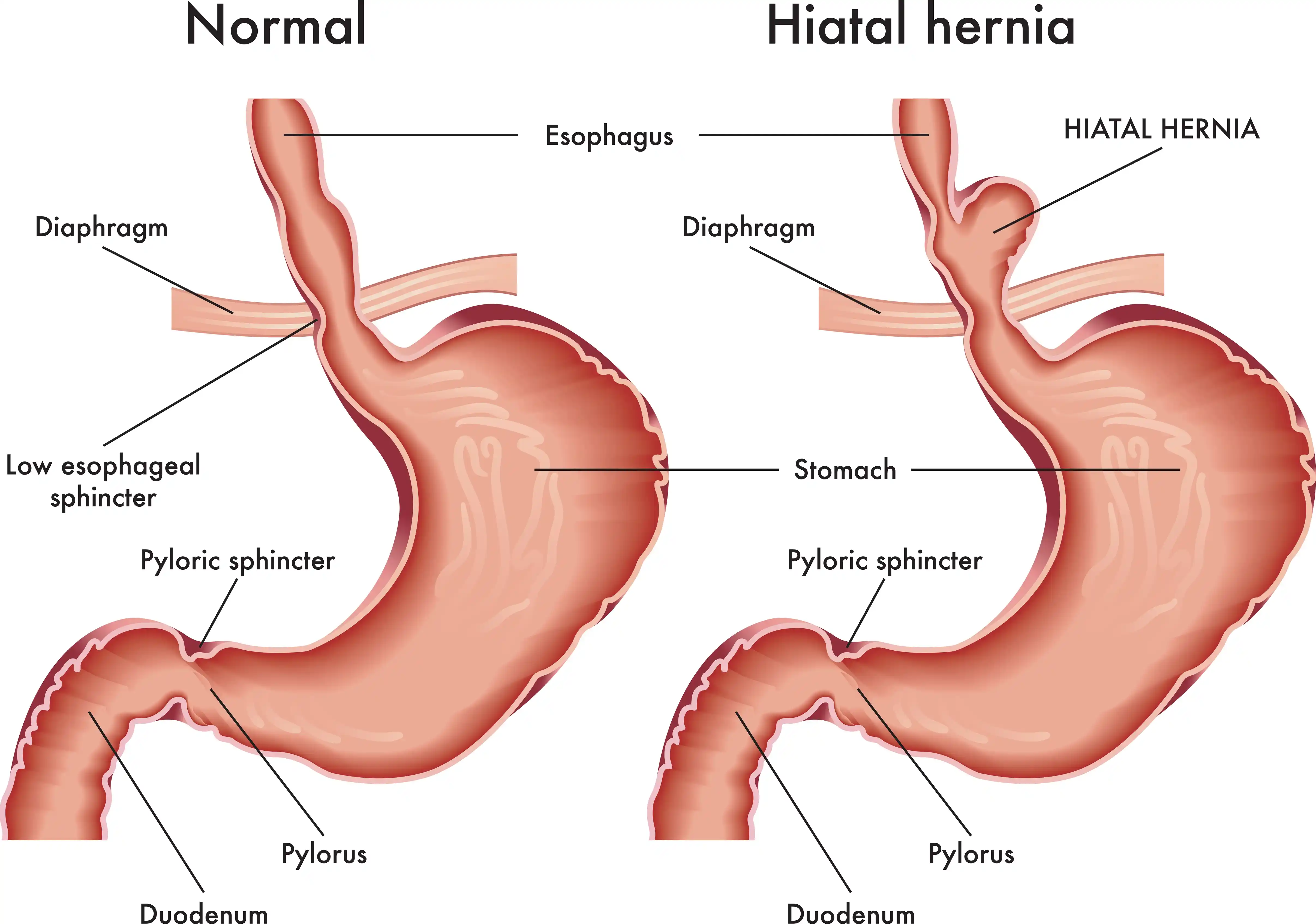
A hiatal hernia occurs when a portion of the stomach pushes upward through the diaphragm into the chest cavity. While many small hiatal hernias cause no symptoms, larger hernias can lead to acid reflux, GERD, chest pain, heartburn, and difficulty swallowing. Hiatal hernia treatment depends on symptom severity and may include lifestyle changes, medications, or hiatal hernia repair surgery. When symptoms are severe, recurrent, or associated with complications, laparoscopic hiatal hernia surgery is often the most effective long-term treatment.
A hiatal hernia occurs when a portion of the stomach pushes upward through ... Read More




Free Cab Facility

No-Cost EMI

Support in Insurance Claim

1-day Hospitalization

USFDA-Approved Procedure
A hiatal hernia develops when the upper part of the stomach moves through the hiatus, an opening in the diaphragm through which the food pipe (esophagus) passes before connecting to the stomach.
The diaphragm normally helps keep stomach contents from moving upward. When a hiatal hernia develops, stomach acid can more easily flow back into the esophagus, leading to acid reflux and GERD symptoms.
Hiatal hernias are common, especially in adults over 50 years of age, and many cases are diagnosed during evaluation for persistent heartburn or digestive discomfort.
Free Hernia Surgery Cost Calculator
Fill details to get actual cost
Sliding Hiatal Hernia
A sliding hiatal hernia is the most common type. In this condition, the stomach and lower esophagus slide upward through the diaphragm into the chest.
Most patients with sliding hiatal hernia experience:
A paraesophageal hiatal hernia is less common but potentially more serious. In this type, part of the stomach pushes through the hiatus and remains beside the esophagus.
This condition can increase the risk of:
Several factors can contribute to the development of a hiatal hernia.
Common hiatal hernia causes include:
Many small hiatal hernias do not cause symptoms. Larger hernias can produce symptoms that significantly affect daily life.
Common hiatal hernia symptoms include:
Can a Hiatal Hernia Cause Chest Pain?
Yes. A hiatal hernia can cause chest pain, pressure, or discomfort, especially after meals or when lying down. Because chest pain can also indicate heart disease, prompt medical evaluation is important.
Can a Hiatal Hernia Cause Difficulty Swallowing?
Yes. Larger hiatal hernias may interfere with the normal passage of food through the esophagus, resulting in difficulty swallowing or a sensation of food getting stuck.

Diet & Lifestyle Consultation

Post-Surgery Follow-Up

Free Cab Facility

24*7 Patient Support
A hiatal hernia and GERD are closely related conditions.
The lower esophageal sphincter normally prevents stomach acid from moving upward. A hiatal hernia can weaken this mechanism, making acid reflux more frequent and severe.
Patients may experience:
In many patients, treating the hiatal hernia also improves GERD symptoms.
Hiatal hernia diagnosis typically involves a combination of symptom assessment and imaging tests.
The doctor reviews:
A flexible camera is used to examine the esophagus and stomach.
X-ray imaging after swallowing a contrast liquid helps identify the size and position of the hernia.
Measures pressure and muscle function within the esophagus.
Evaluates acid reflux severity and confirms GERD.
Not every hiatal hernia requires surgery.
For mild symptoms, treatment may include:
These measures can effectively control symptoms in many patients.
Hiatal hernia surgery is generally recommended when:
Hiatal hernia repair surgery aims to restore normal anatomy and prevent stomach contents from moving into the chest cavity.
The procedure typically involves:
Laparoscopic hiatal hernia surgery is considered the preferred surgical approach for most patients.
How the Procedure is Performed
Benefits of Laparoscopic Hiatal Hernia Surgery
Before surgery, patients may be advised to:
Most patients recover well after laparoscopic repair.
First Week
Weeks 2-4
Weeks 4-6
After 6 Weeks
Hiatal hernia surgery has a high success rate when performed by experienced gastrointestinal and laparoscopic surgeons.
Most studies show:
Although generally safe, potential risks include:
Choosing an experienced surgeon helps minimize these risks.
The hiatal hernia surgery cost in India varies depending on:
A detailed evaluation is necessary to determine the exact treatment cost.
Yes. In most cases, hiatal hernia surgery is covered by health insurance when it is considered medically necessary.
Coverage generally depends on:
Patients should verify coverage details with their insurance provider before treatment.
When selecting a surgeon, consider:
A hiatal hernia is a condition in which part of the stomach moves through the diaphragm into the chest cavity through an opening called the hiatus.
Common symptoms include heartburn, acid reflux, chest pain, regurgitation, chronic cough, and difficulty swallowing.
A sliding hiatal hernia moves up and down through the diaphragm, while a paraesophageal hernia occurs when part of the stomach remains trapped beside the esophagus and may carry a higher risk of complications.
Yes. Hiatal hernias frequently contribute to GERD by weakening the barrier that prevents stomach acid from entering the esophagus.
Yes. Chest discomfort or pain is a common symptom, particularly after eating or lying down.
Yes. Larger hernias may interfere with food passage through the esophagus and lead to swallowing difficulties.
Diagnosis may involve endoscopy, barium swallow studies, esophageal manometry, and pH monitoring.
Yes. Mild cases are often managed with lifestyle changes, dietary modifications, and medications to control reflux symptoms.
Surgery is usually recommended for severe symptoms, persistent GERD, swallowing difficulties, large hernias, or paraesophageal hernias with complications.
Most patients return to normal activities within 4 to 6 weeks, although recovery varies depending on overall health and the surgical approach used.
Hiatal hernia repair has a high success rate, with most patients experiencing significant long-term relief from reflux and related symptoms.
In many cases, yes. Insurance coverage is typically available when surgery is medically indicated and approved under the policy terms.



.svg)