Select City

Call Us
Book FREE Appointment
Egg freezing, also known as oocyte cryopreservation, is an advanced fertility preservation technique that allows women to store healthy eggs for future pregnancy. The egg freezing process involves ovarian stimulation, egg retrieval, and freezing mature eggs using vitrification technology. It is commonly chosen by women who wish to delay pregnancy, preserve fertility before cancer treatment, or protect their reproductive potential for personal or medical reasons. By freezing eggs at a younger age, women may improve their chances of achieving pregnancy later in life, even when natural fertility begins to decline.
Egg freezing, also known as oocyte cryopreservation, is an advanced fertility preservation technique ...that allows women to store healthy eggs for future pregnancy. The egg freezing process involves ovarian stimulation, egg retrieval, and freezing mature eggs using vitrification technology. It is commonly chosen by women who wish to delay pregnancy, preserve fertility before cancer treatment, or protect their reproductive potential for personal or medical reasons. By freezing eggs at a younger age, women may improve their chances of achieving pregnancy later in life, even when natural fertility begins to decline.Read More




3M+
Happy Patients
50+
Disease
200+
Hospitals
30+
Cities

Free Cab Facility

No-Cost EMI

Support in Insurance Claim

1-day Hospitalization

USFDA-Approved Procedure
Choose Your City
It help us to find the best doctors near you.

Bangalore
Chennai
Delhi
Hyderabad
Delhi
Hyderabad
Pune
Mumbai
Bangalore
 Doctor Not Found
5.0/5
34 Years Experience
 Pristyn Care Ferticity, 12, Navjeevan Vihar, Geetanjali Enclave, Malviya Nagar, New Delhi, Delhi 110017
4.5/5
22 Years Experience
Pristyn Care Ferticity, Malviya Nagar, New Delhi4.5/5
16 Years Experience
Pristyn Care Ferticity, Malviya Nagar, New Delhi4.5/5
12 Years Experience
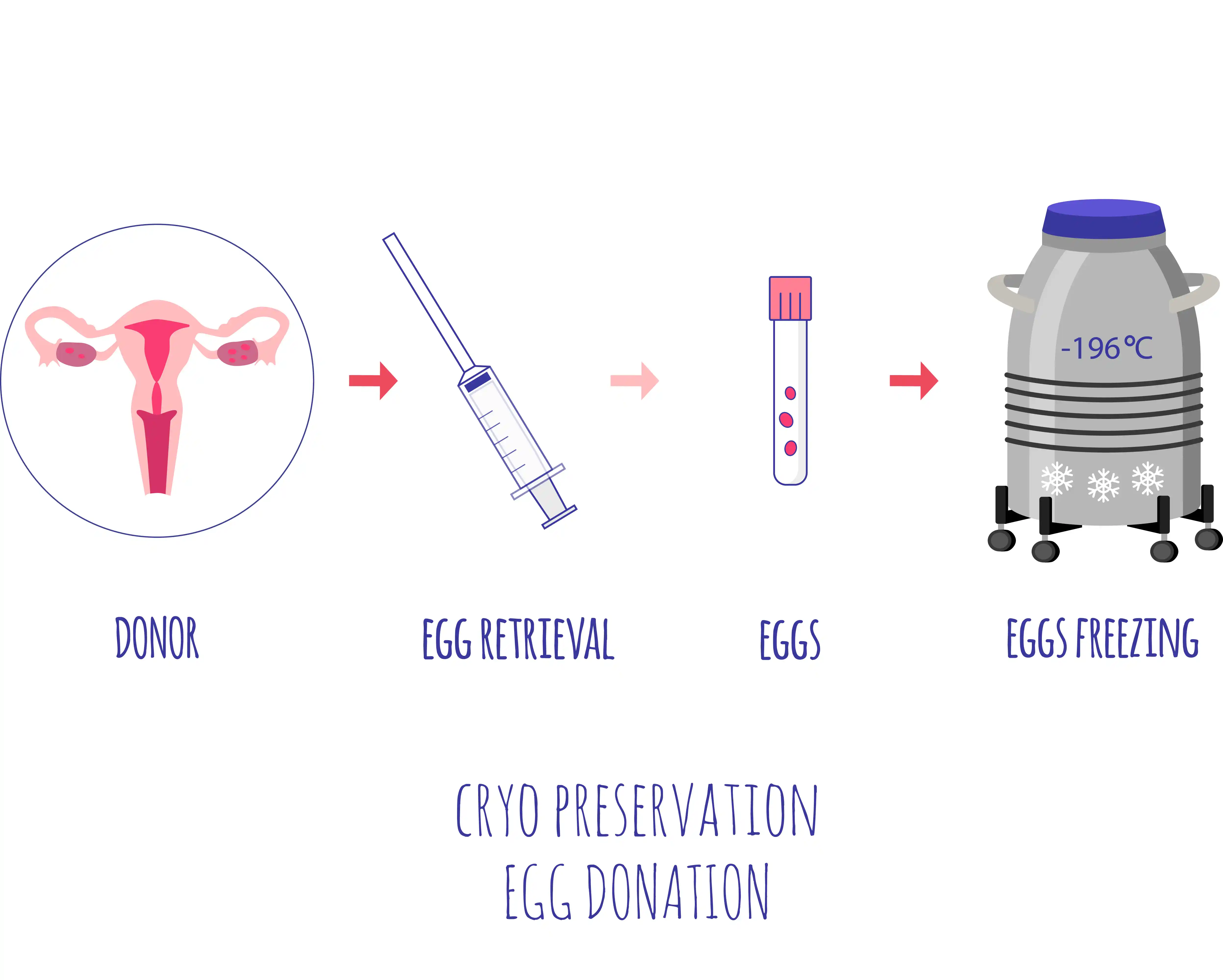
Pristyn Care Sheetla Hospital, Sector 8, GurgaonEgg freezing is a fertility preservation treatment in which mature eggs are collected from the ovaries, frozen, and stored for future use. When a woman decides to conceive later, the frozen eggs can be thawed, fertilized with sperm in a laboratory, and transferred into the uterus through IVF.
Unlike embryo freezing, egg freezing allows women to preserve fertility without requiring sperm at the time of storage.
Free Ivf Surgery Cost Calculator
Fill details to get actual cost
The process involves:
The frozen eggs remain biologically preserved until they are needed for pregnancy.
Women may consider egg freezing for several personal, medical, or professional reasons.
Fertility Preservation for Future Pregnancy
Many women choose social egg freezing to preserve fertility while focusing on career goals, education, financial stability, or finding the right partner.
Egg Freezing Before Cancer Treatment
Chemotherapy, radiation therapy, and certain cancer treatments can affect ovarian function and reduce fertility. Freezing eggs before treatment helps preserve future reproductive options.
Medical Conditions Affecting Fertility
Egg freezing may be recommended for women with:
Declining Ovarian Reserve
Women with lower ovarian reserve or a family history of early menopause may choose egg freezing to preserve healthier eggs at a younger age.
Egg freezing may be suitable for women who:
A fertility specialist can determine suitability through fertility testing and ovarian reserve evaluation.

 The patient meets a fertility specialist to discuss fertility goals and medical history.Blood tests are performed to assess ovarian reserve and hormone levels.A transvaginal ultrasound is done to evaluate the ovaries and antral follicle count.A personalized ovarian stimulation plan is created.
 Daily hormone injections are started to stimulate multiple eggs to mature.The patient self-administers the injections or receives assistance if needed.Regular blood tests and ultrasounds monitor follicle growth.Medication doses are adjusted based on the body's response.
 Once the follicles reach the desired size, a trigger injection is administered.The injection helps the eggs reach final maturity before retrieval.Egg retrieval is scheduled approximately 34–36 hours after the trigger injection.The patient receives fasting and pre-procedure instructions.
 The patient is taken to the procedure room.Mild sedation or short general anesthesia is administered for comfort.A thin ultrasound-guided needle is passed through the vaginal wall to collect mature eggs from the ovaries.The retrieved eggs are immediately examined by the embryology team.Mature eggs suitable for preservation are identified.
 Mature eggs are processed in the IVF laboratory.The eggs are preserved using an advanced rapid-freezing technique called vitrification.Frozen eggs are safely stored in specialized cryopreservation tanks at extremely low temperatures.The number of mature eggs successfully frozen is documented.
 The patient is monitored for a short period after the procedure.Mild cramping or light spotting for a day or two is common.Most patients return home on the same day.Recovery instructions, medications, and follow-up guidance are provided.The fertility specialist discusses future use of the frozen eggs and long-term storage options.
Diet & Lifestyle Consultation

Post-Surgery Recovery Follow up

FREE Cab Facility

24*7 Patient Support
The best age for egg freezing is generally between 25 and 35 years.
At younger ages:
Although egg freezing can still be performed after age 35, fertility naturally declines with age, which may require freezing a larger number of eggs to achieve future pregnancy goals.
Before beginning treatment, fertility specialists assess ovarian reserve and reproductive health.
The Anti-Müllerian Hormone (AMH) test measures ovarian reserve by estimating the number of remaining eggs.
A higher AMH level generally indicates:
Additional Fertility Assessments
Other investigations may include:
These tests help determine the most effective treatment protocol.
Step 1: Ovarian Stimulation
Hormonal injections are administered for approximately 10-14 days to stimulate multiple follicles to mature simultaneously.
This phase is carefully monitored through:
Step 2: Trigger Injection
Once follicles reach the appropriate size, a trigger injection is given to complete egg maturation before retrieval.
Step 3: Egg Retrieval Procedure
The egg retrieval procedure is performed under sedation and usually takes 15-30 minutes.
During retrieval:
Most women return home on the same day.
Step 4: Egg Assessment
Embryologists examine the retrieved eggs and identify mature eggs suitable for freezing.
Step 5: Oocyte Cryopreservation
The mature eggs are frozen using vitrification, an ultra-rapid freezing technique that minimizes ice crystal formation and improves survival rates after thawing.
Step 6: Long-Term Storage
Frozen eggs are stored in specialized cryogenic tanks at extremely low temperatures until future use.
The number of eggs required varies based on age and fertility goals.
General recommendations include:
| Age Group | Recommended Eggs to Freeze |
|---|---|
| Under 35 Years | 10-15 Eggs |
| 35-37 Years | 15-20 Eggs |
| 38-40 Years | 20-30 Eggs |
| Above 40 Years | May require multiple cycles |
Your fertility specialist can estimate the ideal number based on ovarian reserve testing and desired family size.
Egg freezing success depends on several factors:
Frozen Eggs Pregnancy Success Rate
Women who freeze eggs before age 35 generally experience better outcomes because younger eggs are more likely to fertilize successfully and develop into healthy embryos.
The overall pregnancy success rate depends not only on egg survival after thawing but also on embryo quality, implantation, and maternal health at the time of embryo transfer.
Frozen eggs can remain stored for many years without significant deterioration because biological activity is essentially paused at cryogenic temperatures.
Current evidence suggests that eggs frozen through vitrification can maintain their quality for extended periods when stored properly.
Egg freezing is considered a safe procedure, but like all medical treatments, it carries some risks.
Common Side Effects
Potential Risks
A rare complication where the ovaries become excessively enlarged after stimulation.
Although uncommon, these risks may occur during egg retrieval.
Some women may produce fewer eggs than expected despite ovarian stimulation.
A fertility specialist will discuss these risks before treatment.
The egg freezing cost in India varies depending on:
Typically, the total cost includes:
A personalized fertility consultation is the best way to obtain an accurate treatment estimate.
Several factors contribute to treatment outcomes:
Age at Freezing
Younger eggs generally have better reproductive potential.
Ovarian Reserve
Higher ovarian reserve often allows more eggs to be retrieved.
Number of Frozen Eggs
More frozen eggs can increase future pregnancy opportunities.
Laboratory Standards
Advanced vitrification and storage techniques improve egg survival rates.
Overall Reproductive Health
Underlying fertility conditions may affect future treatment outcomes.
Modern fertility preservation offers women greater reproductive flexibility than ever before. Social egg freezing has become increasingly popular among women who want more control over family planning while maintaining future pregnancy options.
Advances in oocyte cryopreservation technology have significantly improved egg survival and pregnancy outcomes, making egg freezing a widely accepted fertility preservation strategy.
Egg freezing stores unfertilized eggs, while embryo freezing stores fertilized embryos. Egg freezing offers greater flexibility because sperm is not required at the time of freezing.
The ideal time is generally before age 35, when egg quality and quantity are typically higher.
Most women experience only mild discomfort during ovarian stimulation and temporary cramping after egg retrieval. Sedation is used during the retrieval procedure.
The number depends on your age and family-building goals. Many specialists recommend freezing at least 10-20 mature eggs when possible.
Success rates vary according to age at freezing, egg quality, and the number of eggs stored. Younger age at freezing is associated with better outcomes.
Yes. Egg freezing before chemotherapy or radiation is a common fertility preservation option for women diagnosed with cancer.
The complete egg freezing process typically takes about 2-3 weeks from ovarian stimulation to egg retrieval.
The AMH test helps evaluate ovarian reserve but is only one part of fertility assessment. Your fertility specialist will consider multiple factors before recommending treatment.
Current evidence indicates that egg freezing is generally safe. Most risks are related to ovarian stimulation and egg retrieval rather than long-term storage itself.
Yes. Frozen eggs can remain preserved for many years and may be used whenever pregnancy is planned in the future.



 DB
DBDivya Bhattacharya

 Recommends
Recommends
Went in for egg freezing in my early 30s. The doctors explained every step. No pressure, just support and clarity.
.svg) MI
MIMeera Iyer
Recommends
Recommends
I came here for egg freezing and was impressed by how informative and respectful the entire process was. They made a sensitive decision feel empowering.
.svg) SS
SSShuchita Sen
Recommends
Recommends
Pristyn Care has been a ray of hope during my egg freezing journey. The medical team's professionalism and understanding made me feel comfortable and empowered. They personalized the treatment plan and ensured I was well-informed at every step. The egg freezing procedure was efficient, and the nursing staff provided exceptional care. Pristyn Care's commitment to patient comfort and their top-notch services are commendable. I am grateful for the successful egg freezing treatment and the emotional support they offered. I confidently recommend Pristyn Care to anyone considering this life-changing procedure.
MMMadhu Meena
Recommends
Recommends
Pristyn Care's egg freezing service was my key to a future filled with possibilities. Their expert team's guidance and modern technology stood out. The process was well-organized, and I'm grateful for the peace of mind it offers. Pristyn Care truly cares about women's reproductive choices.
.svg)
Avail FREE Doctor Consultation

Consult with our expert surgeon for more than 50+ diseases

Once you share your details, our care coordinator will get in touch with you.

The coordinator will understand your symptoms and health condition in detail.

Your consultation will be scheduled at the earliest.
3M +
Happy Patients
150 +
Clinics
30 +
Cities

120Cr—Patient Savings Delivered
so patients focus on recovery, not bills.

Complete Transparency
No hidden charges or surprise bills

End-to-End Insurance Handling
Complete insurance processing support

Up to 20% Savings on Every Surgery
powered by smarter insurance handling

Easy EMI Options
Flexible payment plans available
120Cr—Patient Savings Delivered
so patients focus on recovery, not bills.
Complete Transparency
No hidden charges or surprise bills
Your Form Has Been Submitted Successfully.
Our care coordinator will call you shortly.


Book Your FREE Consultation
Consult with our expert surgeon for more than 50+ diseases
Once you share your details, our care coordinator will get in touch with you.
The coordinator will understand your symptoms and health condition in detail.
Your consultation will be scheduled at the earliest.
3M +
Happy Patients
150 +
Clinics
30 +
Cities