


Table of Contents
Can Vitamin C Supplements Increase the Risk of Kidney Stones?
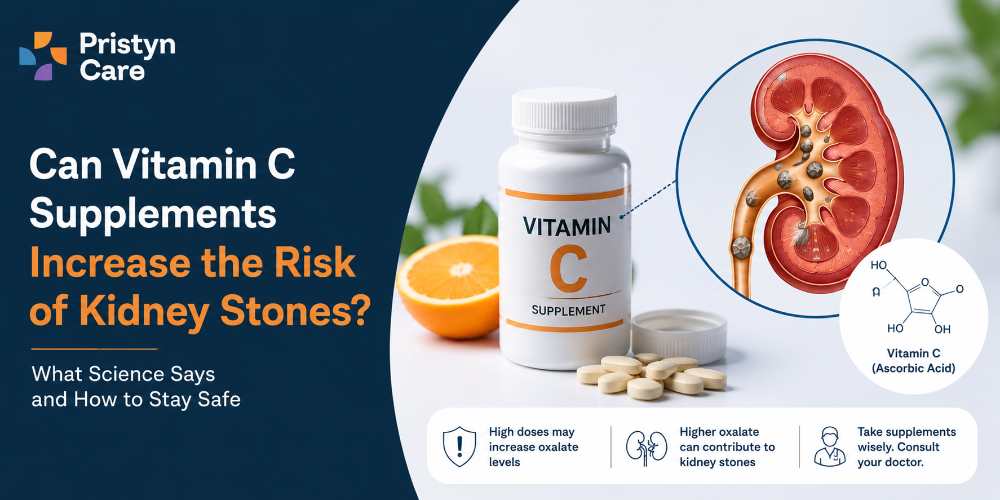
Vitamin C is an essential nutrient that supports the immune system, wound healing, collagen production, and iron absorption. While vitamin C from a normal diet is generally safe, taking high-dose vitamin C supplements may increase the risk of kidney stones in some people, particularly those who are prone to calcium oxalate stones or already have high urinary oxalate levels.
This happens because the body can convert some vitamin C (ascorbic acid) into oxalate. Higher amounts of oxalate in the urine can contribute to the formation of calcium oxalate crystals and stones. However, research is not completely consistent, and the risk appears to depend on factors such as the dose, individual stone risk, kidney health, and previous history of kidney stones.
How Can Vitamin C Increase Kidney Stone Risk?
Vitamin C is water-soluble, so excess amounts are eliminated through urine. During its metabolism, some vitamin C can be converted into oxalate.
If urinary oxalate levels become too high, oxalate can combine with calcium in the urine and form calcium oxalate crystals. Over time, these crystals can grow into kidney stones.
This is particularly relevant for people who already have hyperoxaluria, a condition in which there is an abnormally high amount of oxalate in the urine. The National Institutes of Health notes that high vitamin C intake can increase urinary oxalate and uric acid excretion, although studies on the connection between vitamin C and kidney stones have produced conflicting results.
Do Vitamin C Supplements Cause Kidney Stones?
Not everyone who takes vitamin C supplements will develop kidney stones. The evidence suggests that the concern is mainly with high-dose supplementation, rather than the vitamin C naturally obtained from a balanced diet.
Some kidney stone guidelines recommend avoiding excessive vitamin C supplementation. The Canadian Urological Association recommends against vitamin C supplementation above 1,000 mg per day because of its association with increased urinary oxalate and kidney stone risk.
The European Association of Urology also notes that vitamin C is a precursor of oxalate and advises calcium oxalate stone formers to avoid excessive intake, while acknowledging that the overall relationship remains controversial.
What Dose of Vitamin C May Increase the Risk?
The amount matters. Vitamin C requirements can usually be met through food, while supplements may provide much larger doses.
For kidney stone prevention, regularly taking high-dose supplements, particularly 1,000 mg or more per day, should not be done without medical advice if you are prone to kidney stones.
Some studies have found increased urinary oxalate after vitamin C supplementation at doses of 1–2 grams per day. However, research on whether supplementation directly causes stones has produced mixed results.
The NIH also states that the evidence linking high vitamin C intake to kidney stones is not definitive in healthy people, but the strongest concern is among people with pre-existing hyperoxaluria or certain kidney disorders.
Is Vitamin C From Food Also a Problem?
Generally, vitamin C obtained from fruits and vegetables is not considered the same concern as high-dose vitamin C supplements.
Foods such as oranges, guava, amla, kiwi, strawberries, tomatoes and bell peppers provide vitamin C along with other nutrients and water. A balanced diet rich in fruits and vegetables can be part of a healthy dietary pattern for people with kidney stones.
The concern is primarily about taking concentrated vitamin C supplements in doses much higher than normally obtained from food.
However, people with specific types of kidney stones or medical conditions may need individualized dietary advice.
Can Vitamin C Cause Calcium Oxalate Kidney Stones?
It may increase the risk in susceptible individuals.
Calcium oxalate is the most common type of kidney stone. When vitamin C is metabolized, some of it can be converted into oxalate. Higher urinary oxalate can increase the availability of oxalate to combine with calcium and form crystals.
The American Urological Association’s medical management guideline identifies vitamin C and other over-the-counter supplements as factors that can contribute to higher urinary oxalate, particularly at doses much higher than those obtained from food and beverages.
However, this does not mean that everyone taking vitamin C will develop calcium oxalate stones.
Who Should Be More Careful With Vitamin C Supplements?
Extra caution may be appropriate if you:
- Have had kidney stones in the past
- Have recurrent calcium oxalate stones
- Have high urinary oxalate
- Have a history of hyperoxaluria
- Have certain kidney disorders
- Regularly take high-dose vitamin C supplements
- Take multiple supplements that contain vitamin C
If you have recurrent kidney stones, your doctor may recommend a 24-hour urine test to evaluate substances such as oxalate, calcium, citrate and uric acid. This can help determine your individual risk factors.
Should You Stop Vitamin C Supplements If You Have Kidney Stones?
Do not stop a prescribed supplement without discussing it with your doctor. However, if you are taking high-dose vitamin C on your own, it is worth discussing whether you actually need that dose.
The National Kidney Foundation recommends speaking with a healthcare professional or dietitian about vitamin C and other supplements because some supplements can increase stone risk in certain individuals. It specifically advises avoiding high doses of vitamin C supplements in people at risk of kidney stones.
Your doctor can determine whether you need supplementation and what dose is appropriate based on your diet, medical history and kidney stone type.
What Are the Recommended Ways to Prevent Kidney Stones?
Avoiding excessive vitamin C supplements is only one part of kidney stone prevention. Depending on your stone type and individual risk factors, your doctor may recommend:
Drink Enough Fluids
Adequate fluid intake helps dilute urine and can reduce the concentration of substances that form kidney stones. People who frequently develop stones may need a personalized fluid target based on their health and activity level.
Maintain Normal Dietary Calcium
If you have calcium oxalate stones, you generally should not eliminate calcium from your diet without medical advice. Normal dietary calcium can bind oxalate in the digestive tract and reduce its absorption.
Limit Excess Salt
High sodium intake can increase calcium excretion in the urine and may contribute to calcium stone formation. Reducing highly processed and salty foods can therefore be helpful.
Avoid Excessive Oxalate When Recommended
If testing shows high urinary oxalate, your doctor or dietitian may recommend limiting foods particularly high in oxalate. The diet should be personalized rather than unnecessarily restricting a large number of healthy foods.
Do Not Take Unnecessary Supplements
Tell your doctor about all vitamins, minerals and herbal supplements you take. Some supplements can influence urine chemistry and may affect kidney stone risk.
Are Vitamin C Tablets Safe for People With Kidney Stones?
It depends on the dose and your individual risk.
A standard-dose supplement may be appropriate for someone who has a documented need for vitamin C, but high-dose vitamin C tablets are not a good idea for people who are prone to calcium oxalate stones unless recommended by a healthcare professional.
For someone with recurrent stones, it is particularly important to avoid self-prescribing large doses simply because vitamin C is considered a “healthy” vitamin.
Can Vitamin C Dissolve Kidney Stones?
No. Vitamin C supplements do not dissolve existing kidney stones.
Treatment depends on the type, size and location of the stone. Some small stones may pass naturally, while larger or obstructing stones may require medication or a procedure.
Vitamin C should therefore not be used as a home treatment for an existing kidney stone.
The Bottom Line
High-dose vitamin C supplements may increase the risk of kidney stones in some people, particularly those who are prone to calcium oxalate stones or have high urinary oxalate. Vitamin C can be metabolized into oxalate, potentially increasing the amount of oxalate eliminated in urine.
This does not mean that vitamin C itself is harmful or that you should avoid vitamin C-rich foods. The main concern is unnecessary, high-dose supplementation. If you have recurrent kidney stones, especially calcium oxalate stones, speak with a urologist or dietitian before taking high-dose vitamin C supplements.
 Doctor available







%20(4)%20(1).jpg/1682933853454_ban-Icon.png)
.jpeg/1777541472938_ban-Icon.png)