


 Views: 29
Single-Incision Laparoscopic Surgery – Benefits and Limitations
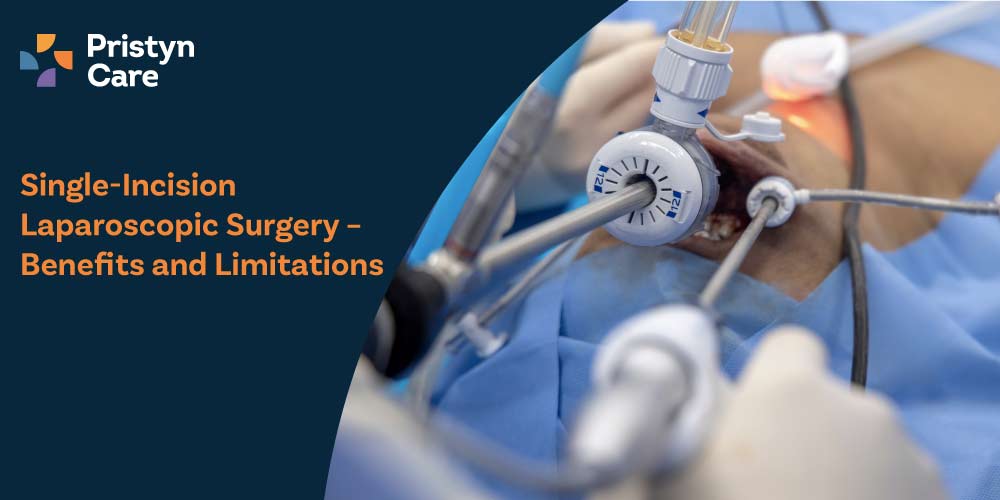
Minimally invasive surgery has evolved significantly, and one of the latest advancements is single-incision laparoscopic surgery (SILS). Unlike conventional laparoscopy that uses multiple small cuts, SILS uses just one incision—usually at the navel.


Dedicated Support at Every Step!
Our Doctors are available 24 hours a day, 7 days a week to help you!

Understanding the benefits and limitations of single-incision laparoscopic surgery helps patients decide whether it is the right option for their condition.
Table of Contents
What Is Single-Incision Laparoscopic Surgery (SILS)?
SILS is a technique where:
- The entire surgery is performed through a single small incision
- A specialized port allows insertion of a camera and instruments
- The incision is typically hidden within the belly button
It is commonly used for procedures like gallbladder removal, appendectomy, and some gynecological surgeries.
No Cost EMI, Hassle-free Insurance Approval
How Is It Different from Traditional Laparoscopy?
- SILS: One incision
- Conventional Laparoscopy: 3–4 small incisions
Both are minimally invasive, but SILS focuses on improved cosmetic outcomes.
Benefits of SILS
1. Better Cosmetic Results
- Single hidden incision (often in the navel)
- Minimal visible scarring
2. Reduced Postoperative Pain
- Fewer incisions may lead to less discomfort
- Lower need for pain medication in some cases
3. Faster Recovery
- Early return to daily activities
- Short hospital stay
4. Lower Risk of Wound Complications
- Fewer entry points reduce infection risk
5. Improved Patient Satisfaction
- Aesthetic advantage is a major benefit for many patients
Limitations of SILS
1. Technical Complexity
- All instruments pass through one incision
- Limited movement and maneuverability
2. Not Suitable for All Cases
- Complex or advanced conditions may require multiple ports
- Obesity or previous surgeries may limit feasibility
3. Longer Operative Time (in some cases)
- Due to technical challenges
4. Requires Skilled Surgeon
- Advanced expertise and experience are essential
5. Risk of Conversion
- May need to convert to conventional laparoscopy for safety
 Doctor available
4.5/5

31+ Years Experience Overall
Doctor available
5.0/5
30+ Years Experience Overall
Doctor available
4.5/5
25+ Years Experience Overall
Doctor available
4.5/5
23+ Years Experience Overall
Doctor available
4.5/5
17+ Years Experience Overall
Doctor available
4.5/5
15+ Years Experience Overall
Doctor available
4.5/5
15+ Years Experience Overall
Doctor available
4.5/5
14+ Years Experience Overall
Doctor available
5.0/5
13+ Years Experience Overall
Doctor available
4.5/5
13+ Years Experience Overall
Doctor available
5.0/5
12+ Years Experience Overall
Doctor available
5.0/5
27+ Years Experience Overall
Doctor available
4.5/5
27+ Years Experience Overall
Doctor available.jpg/1681796287744_ban-Icon.png)
4.9/5
25+ Years Experience Overall
Doctor available
4.7/5
24+ Years Experience Overall
Doctor available
MBBS, DNB( General Surgery) MNAMS, FMAS, FIAGES, FAIS
₹1200₹600Consultation Fee
4.5/5
24+ Years Experience Overall
Doctor available
4.5/5
23+ Years Experience Overall
Doctor available
4.5/5
23+ Years Experience Overall
Doctor available
4.5/5
23+ Years Experience Overall
Doctor available
4.7/5
22+ Years Experience Overall
Doctor available
4.9/5
22+ Years Experience Overall
Doctor available
4.5/5
21+ Years Experience Overall
Doctor available
4.5/5
21+ Years Experience Overall
Doctor available
4.5/5
20+ Years Experience Overall
Doctor available
5.0/5
20+ Years Experience Overall
Doctor available
4.9/5
20+ Years Experience Overall
Doctor available
4.5/5
19+ Years Experience Overall
Doctor available
4.5/5
19+ Years Experience Overall
Doctor available
5.0/5
17+ Years Experience Overall
Doctor available
4.8/5
17+ Years Experience Overall
Doctor available
4.9/5
17+ Years Experience Overall
Doctor available
5.0/5
17+ Years Experience Overall
Doctor available
5.0/5
17+ Years Experience Overall
Doctor available
5.0/5
16+ Years Experience Overall
Doctor available
5.0/5
16+ Years Experience Overall
Doctor available
4.5/5
16+ Years Experience Overall
Doctor available
4.5/5
16+ Years Experience Overall
Doctor available
4.6/5
15+ Years Experience Overall
Doctor available
4.5/5
15+ Years Experience Overall
Doctor available
5.0/5
15+ Years Experience Overall
Doctor available
4.8/5
14+ Years Experience Overall
Doctor available
4.5/5
14+ Years Experience Overall
Doctor available
5.0/5
13+ Years Experience Overall
Doctor available
4.5/5
13+ Years Experience Overall
Doctor available
4.7/5
13+ Years Experience Overall
Doctor available
4.5/5
13+ Years Experience Overall
Doctor available
5.0/5
13+ Years Experience Overall
Doctor available
5.0/5
13+ Years Experience Overall
Doctor available
4.5/5
12+ Years Experience Overall
Doctor available
4.8/5
12+ Years Experience Overall
Doctor available
4.8/5
12+ Years Experience Overall
Doctor available
MBBS, M.S.(Gen. Surgery), DNB (Gen. Surgery), F.MAS, D.MAS, FAIS, FALS, FIAGES
₹1200₹600Consultation Fee
4.5/5
12+ Years Experience Overall
Doctor available.jpg/1681109066874_ban-Icon.png)
4.9/5
12+ Years Experience Overall
Doctor available
4.5/5
12+ Years Experience Overall
Doctor available
4.5/5
12+ Years Experience Overall
Doctor available.jpg/1685814002647_ban-Icon.png)
4.9/5
11+ Years Experience Overall
Doctor available
4.5/5
11+ Years Experience Overall
Doctor available
4.5/5
11+ Years Experience Overall
Doctor available
5.0/5
11+ Years Experience Overall
Doctor available
5.0/5
10+ Years Experience Overall
Doctor available
4.5/5
10+ Years Experience Overall
Doctor available
5.0/5
9+ Years Experience Overall
Doctor available
4.5/5
8+ Years Experience Overall
Doctor available
4.5/5
8+ Years Experience Overall
Doctor available
4.5/5
27+ Years Experience Overall
Doctor available
4.5/5
27+ Years Experience Overall
Doctor available
4.5/5
26+ Years Experience Overall
Doctor available
4.5/5
26+ Years Experience Overall
Doctor available
5.0/5
24+ Years Experience Overall
 Doctor available
4.5/5
21+ Years Experience Overall
Doctor available
4.5/5
21+ Years Experience Overall
Doctor available
5.0/5
21+ Years Experience Overall
Doctor available
4.5/5
20+ Years Experience Overall
Doctor available
4.5/5
20+ Years Experience Overall
Doctor available
4.5/5
19+ Years Experience Overall
Doctor available
4.5/5
18+ Years Experience Overall
Doctor available
4.8/5
18+ Years Experience Overall
Doctor available
4.5/5
15+ Years Experience Overall
Doctor available
Dr. Penmetsa Bhanu Prakash Raju
MBBS, MS-General Surgery, FNB-Minimal Acess Surgery
₹1200₹600Consultation Fee
4.5/5
15+ Years Experience Overall
Doctor available
5.0/5
14+ Years Experience Overall
Doctor available
4.5/5
14+ Years Experience Overall
Doctor available
4.9/5
14+ Years Experience Overall
Doctor available
4.5/5
14+ Years Experience Overall
Doctor available
4.5/5
14+ Years Experience Overall
Doctor available%20(1).png/1742636902782_ban-Icon.png)
4.5/5
13+ Years Experience Overall
Doctor available
5.0/5
13+ Years Experience Overall
Doctor available
4.7/5
13+ Years Experience Overall
Doctor available
4.5/5
13+ Years Experience Overall
Doctor available
4.5/5
12+ Years Experience Overall
Doctor available
4.5/5
11+ Years Experience Overall
Doctor available
4.5/5
10+ Years Experience Overall
Doctor available
4.5/5
10+ Years Experience Overall
Doctor available
4.5/5
9+ Years Experience Overall
Doctor available
4.5/5
7+ Years Experience Overall
Doctor available
4.5/5
7+ Years Experience Overall
When Is SILS Recommended?
SILS may be suitable for:
- Selected cases of gallbladder removal
- Appendectomy
- Some gynecological procedures
The final decision depends on patient condition and surgical complexity.
Factors Surgeons Consider
- Severity of the disease
- Patient’s anatomy and overall health
- Previous abdominal surgeries
- Risk of complications
Recovery After SILS
- Most patients recover quickly
- Return to light activities within a few days
- Minimal scarring and discomfort

Free Hernia Surgery Cost Calculator

Our care coordinator will call you shortly.
Is SILS Better Than Traditional Laparoscopy?
Not always. While SILS offers cosmetic advantages:
- Conventional laparoscopy may be safer in complex cases
- The priority is always safety and effectiveness, not just fewer incisions


Final Thoughts
Single-incision laparoscopic surgery is an advanced, minimally invasive technique that offers excellent cosmetic outcomes and faster recovery for selected patients. However, it is not suitable for every case and requires careful evaluation.
A personalized surgical approach ensures the best balance between safety, effectiveness, and patient comfort.
Social share:






Related Calculators

Dedicated Support at Every Step!
Our Doctors are available 24 hours a day, 7 days a week to help you!
Related Calculators
Get In Touch with our expert doctors !
- please enter 10 digit number.


