


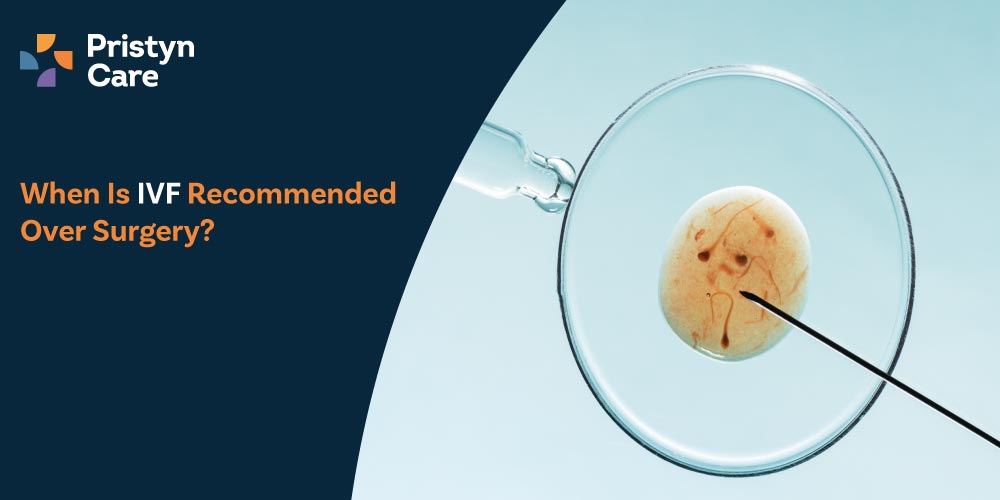
For couples facing difficulty in conceiving, both surgical treatments and assisted reproductive techniques like IVF are viable options. However, the choice depends on the underlying cause of infertility, age, and overall reproductive health.
Understanding when IVF is recommended over surgery helps in choosing the most effective and time-efficient path to pregnancy.
Table of Contents
What Is IVF?
In Vitro Fertilization (IVF) involves:
- Retrieving eggs from the ovaries
- Fertilizing them with sperm in a laboratory
- Transferring the embryo into the uterus
When Is Surgery Usually Considered?
Surgery may be used to:
- Remove Uterine Fibroids
- Treat Endometriosis
- Repair blocked fallopian tubes
- Correct anatomical abnormalities
When Is IVF Recommended Over Surgery?
1. Severe Tubal Blockage
- Both fallopian tubes are blocked or damaged
- Surgery may not restore function effectively
- IVF bypasses the tubes entirely
2. Advanced Maternal Age
- Women above 35–40 years
- Limited time for natural conception
- IVF offers faster chances of pregnancy
3. Severe Male Infertility
- Very low sperm count or motility
- Techniques like ICSI used with IVF improve success
4. Failed Previous Surgeries
- Prior surgical treatments did not result in pregnancy
- IVF becomes the next best option
5. Moderate to Severe Endometriosis
- Surgery may not fully restore fertility
- IVF increases chances of conception
6. Unexplained Infertility
- No clear cause identified
- IVF often used after other treatments fail
7. Time-Sensitive Fertility Needs
- Couples wanting quicker results
- IVF offers controlled and predictable outcomes
Advantages of IVF Over Surgery
- Bypasses many structural issues
- Higher success rates in selected cases
- Controlled fertilization process
- Useful for multiple infertility causes
When Surgery May Still Be Preferred
- Mild to moderate conditions
- Younger patients with good fertility potential
- Correctable anatomical problems
Factors That Influence the Decision
- Age of the woman
- Duration of infertility
- Cause and severity of the condition
- Previous treatment history
- Financial considerations
When Should You Consult a Fertility Specialist?
- Trying to conceive for over 1 year (or 6 months if above 35)
- Known fertility issues
- Irregular cycles or hormonal concerns
Final Thoughts
IVF is recommended over surgery when structural correction is unlikely to restore fertility, time is limited, or previous treatments have failed. It provides a direct and effective route to conception in many complex cases.
A personalized evaluation by a fertility expert is essential to determine whether IVF or surgical treatment offers the best chance of a successful pregnancy.
 Doctor available