



Nose bleeding, medically known as epistaxis, is a common condition that can affect people of all ages. Seeing blood coming from the nose can be alarming, but most nosebleeds are minor and stop with simple first-aid measures. However, frequent, heavy, or prolonged nosebleeds may require medical evaluation to identify the underlying cause.
A nosebleed usually occurs when the tiny blood vessels inside the nasal lining become irritated, dry, or damaged. Common triggers include dry air, nose picking, forceful nose blowing, allergies, respiratory infections, injuries, and certain medications. Knowing how to stop nose bleeding correctly can help prevent unnecessary blood loss and complications.
There are two main types of nosebleeds: anterior nosebleeds and posterior nosebleeds. Anterior nosebleeds start from blood vessels toward the front of the nose and are the more common type. Posterior nosebleeds originate deeper inside the nose and can be more difficult to control. They are more likely to require medical attention, particularly when bleeding is heavy or persistent.
Most mild anterior nosebleeds can be managed at home using the correct first-aid technique. However, repeatedly occurring nosebleeds, bleeding that does not stop after applying pressure, or bleeding associated with an injury or other symptoms should be assessed by a healthcare professional.
Also Read:
How To Get Rid Of A Stuffy Nose Instantly?
Table of Contents
Causes of Nose Bleeding
The inside of the nose contains numerous small and delicate blood vessels. When the nasal lining becomes dry, irritated, inflamed, or injured, these vessels can rupture and cause bleeding. Some of the most common causes of nose bleeding include:
- Dry air, particularly during winter or in air-conditioned environments
- Living in a hot, dry, or low-humidity climate
- Upper respiratory infections such as colds
- Frequent or forceful nose blowing
- Nose picking or scratching the nasal lining
- Injury to the nose or face
- Allergies and nasal inflammation
- Overuse or incorrect use of certain nasal sprays
- Inserting foreign objects in the nose
- Blood-thinning medicines
- Exposure to chemical or other nasal irritants
How To Stop Nose Bleeding?
Knowing the correct first-aid technique is the most important part of managing a simple nosebleed. Follow these steps:
1. Stay calm
Nosebleeds can look worse than they actually are because even a small amount of blood can appear significant. Try to remain calm and focus on controlling the bleeding.
2. Sit upright and lean forward
Sit upright and lean slightly forward. Do not tilt your head backward or lie flat, as blood may flow toward the throat and cause choking or nausea. If blood enters your mouth, spit it out rather than swallowing it.
3. Pinch the soft part of the nose
Using your thumb and index finger, firmly pinch the soft part of the nose just below the bony bridge. Keep continuous pressure for about 10 to 15 minutes without repeatedly releasing it to check whether the bleeding has stopped. Breathe through your mouth while holding the pressure.
4. Apply a cold compress
A cold compress placed over the nose and cheeks may provide comfort and can help constrict blood vessels. However, it should be used along with direct pressure rather than as a replacement for pinching the nose.
5. Avoid putting anything inside the nose
Avoid stuffing tissues, cotton balls, paper, or other objects deep into the nostril. Removing material from the nose can disturb the clot and restart the bleeding. If a healthcare professional recommends nasal packing, it should be performed or guided appropriately.
6. Use a nasal spray only when appropriate
Certain decongestant nasal sprays may help constrict blood vessels during some uncomplicated nosebleeds. However, these sprays are not suitable for everyone and should be used according to medical advice or product instructions, particularly in people with high blood pressure, heart conditions, or other medical conditions.
7. Observe the bleeding
If bleeding continues despite continuous pressure for 10 to 15 minutes, repeat the pressure technique once. If the bleeding remains heavy or does not stop, seek medical attention promptly. A healthcare professional may need to identify and treat the bleeding vessel.
8. Check for possible triggers
If nosebleeds happen repeatedly, discuss possible triggers and underlying causes with a doctor. Blood pressure, medicines such as blood thinners, nasal allergies, infections, or problems with blood clotting may need to be evaluated.
9. Avoid blowing or picking the nose
Once the bleeding has stopped, avoid forceful nose blowing, nose picking, or rubbing the nose for at least the next several hours. These actions can disturb the newly formed clot and trigger another bleed.
10. Avoid strenuous activity temporarily
After a significant nosebleed, avoid strenuous exercise, heavy lifting, and activities that put pressure on the nasal blood vessels for a short period, as advised by your doctor. If nosebleeds are frequent, medical evaluation is more important than relying only on home remedies.
Tips That Can Help Manage Nose Bleeding At Home
1. Use a cold compress
Applying a cold compress over the nose and cheeks can be soothing during a nosebleed. However, the most effective first-aid measure is still continuous pressure on the soft part of the nose. Wrap an ice pack or cold pack in a cloth and apply it gently rather than placing ice directly on the skin.
2. Pinch the nose correctly
Sit upright and lean slightly forward. Pinch the soft part of the nose using your thumb and index finger and maintain firm, continuous pressure for 10 to 15 minutes. Avoid releasing the pressure repeatedly to check whether the bleeding has stopped. If necessary, repeat the technique once.
3. Maintain adequate humidity
Dry nasal passages are a common trigger for nosebleeds. Using a humidifier in dry indoor environments and keeping the nasal lining moisturised with a doctor-recommended saline spray or gel may help reduce irritation and dryness.
A balanced diet containing adequate vitamins and minerals is important for overall health, but vitamin supplements should not be considered an immediate treatment for an active nosebleed. If you suspect a nutritional deficiency, consult a healthcare professional before taking supplements.
4. Avoid inserting apple cider vinegar or other substances into the nose
Apple cider vinegar is sometimes promoted as a home remedy for nosebleeds, but putting vinegar directly inside the nose is not recommended. Its acidity can irritate or damage the delicate nasal lining and may worsen discomfort or bleeding. Use proven first-aid measures such as leaning forward and applying continuous pressure instead.
Also Read:
How to use apple cider vinegar for sinus?
5. Use saline nasal products
Saline nasal sprays can help moisturise dry nasal passages and may reduce irritation that contributes to recurrent nosebleeds. Use a commercially prepared sterile saline product according to its instructions. Avoid using homemade water solutions unless they are prepared safely with sterile, distilled, or appropriately boiled and cooled water.
6. Avoid cayenne pepper and similar remedies
Cayenne pepper is sometimes suggested as a remedy for nosebleeds, but there is not enough reliable evidence to recommend it for stopping active nasal bleeding. Drinking cayenne water or applying pepper inside the nose can cause irritation. It is safer to rely on direct pressure and appropriate medical care.
7. Avoid unproven herbal remedies
Herbal products such as nettle are sometimes promoted for controlling nosebleeds, but there is insufficient evidence to recommend them as a reliable treatment. Avoid placing herbal preparations, teas, or other substances inside a bleeding nostril because they may irritate the nasal lining or interfere with clot formation.
8. Stay hydrated
Drinking enough water supports overall hydration and may help prevent excessive dryness. However, hydration alone will not stop an active nosebleed. During a nosebleed, focus on sitting upright, leaning forward, and applying continuous pressure to the soft part of the nose.
Read More:
Is nose bleeding common during pregnancy?
How To Prevent Nosebleed?
Although not every nosebleed can be prevented, certain habits can reduce the risk of recurrent bleeding. Keeping the nasal lining moisturised, avoiding trauma to the nose, and managing underlying nasal conditions can be helpful.
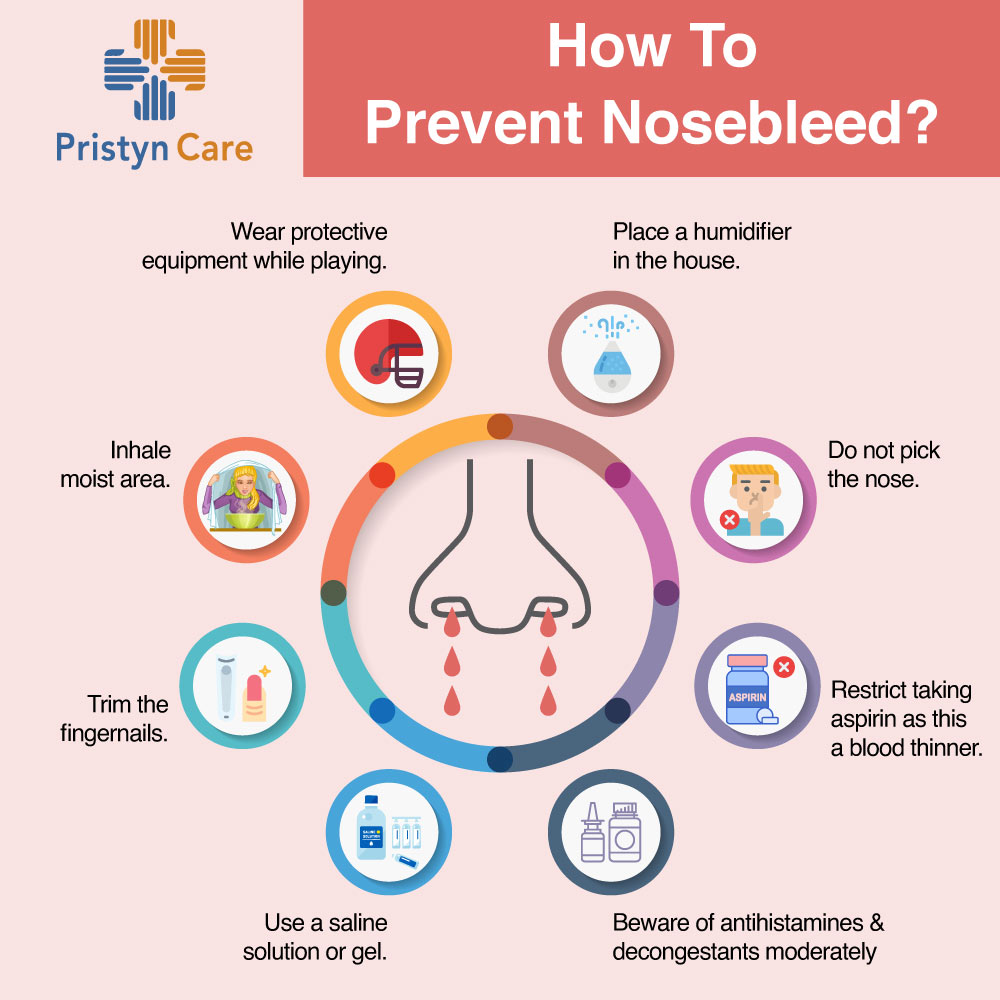
- Keep the nasal lining moisturised, especially in dry weather
- Avoid picking or scratching the inside of the nose
- Keep fingernails trimmed to reduce accidental injury
- Use a humidifier when indoor air is particularly dry
- Blow the nose gently instead of forcefully
- Follow the instructions when using nasal sprays
- Wear appropriate protective equipment during contact sports or activities that may injure the nose
When Should You See a Doctor for a Nosebleed?
Most minor nosebleeds can be managed at home, but medical attention is important in certain situations. Consult a doctor if nosebleeds are frequent, unexplained, or becoming more severe.
- Bleeding continues despite 15 to 20 minutes of firm, continuous pressure
- The bleeding is heavy or you are swallowing a large amount of blood
- The nosebleed occurs after a significant injury to the head or face
- You feel weak, dizzy, faint, or have difficulty breathing
- You experience repeated nosebleeds without an obvious cause
- You take blood-thinning medicines or have a known bleeding disorder
- The bleeding appears to come from deep inside the nose or down the throat
Conclusion
Nosebleeds are common and are often caused by dryness, irritation, minor injuries, allergies, or forceful nose blowing. In most uncomplicated cases, the bleeding can be controlled by sitting upright, leaning forward, and firmly pinching the soft part of the nose for 10 to 15 minutes. Keeping the nasal passages moisturised and avoiding nose picking or forceful blowing can also reduce the chances of recurrence.
However, home remedies should not replace medical evaluation when nosebleeds are frequent, heavy, prolonged, or associated with injury or other concerning symptoms. Avoid putting substances such as vinegar, cayenne pepper, herbal preparations, or other unapproved remedies inside the nose. If you are experiencing recurrent nosebleeds, it is best to consult an
ENT doctor
to determine the cause and appropriate treatment.
Also Read:
 Doctor available