


Table of Contents
When Do Kidney Stones Need Laser Surgery?
Kidney stones are a common yet painful condition affecting millions of people worldwide. While many small stones can pass naturally with medication and hydration, some cases require advanced treatment like laser surgery. Understanding when kidney stones need laser intervention can help you seek timely medical care and avoid complications.
What Are Kidney Stones?
Kidney stones are hard deposits made of minerals and salts that form inside the kidneys. They can vary in size from as small as a grain of sand to as large as a golf ball.
These stones may stay in the kidney or travel through the urinary tract, causing severe pain and discomfort.
Can Kidney Stones Be Treated Without Surgery?
Yes, not all kidney stones require surgery. In many cases, doctors recommend:
- Drinking plenty of water
- Pain relief medications
- Medicines to help pass the stone
Small stones (usually less than 5 mm) often pass naturally within a few days or weeks.
When Do Kidney Stones Need Laser Surgery?
Laser surgery, commonly known as Laser Lithotripsy, is recommended when stones cannot pass on their own or start causing complications.Here are the key situations where laser surgery may be needed:
1. Large Stone Size
If the kidney stone is larger than 6–7 mm, it may not pass naturally and can block the urinary tract. In such cases, laser surgery is often the best option.
2. Severe and Persistent Pain
If you experience intense pain that does not improve with medications, it may indicate that the stone is stuck and needs removal.
3. Urinary Blockage
When a stone blocks the flow of urine, it can lead to swelling in the kidney (hydronephrosis). This condition requires immediate treatment, often through laser surgery.
4. Recurrent Infections
Kidney stones can increase the risk of urinary tract infections (UTIs). If infections keep coming back, removing the stone becomes necessary.
5. Blood in Urine
Frequent or severe blood in urine (hematuria) due to stones may require surgical intervention.
6. Failure of Medications
If medicines and conservative treatments fail to dissolve or pass the stone, doctors may suggest laser removal.
What Is Laser Surgery for Kidney Stones?
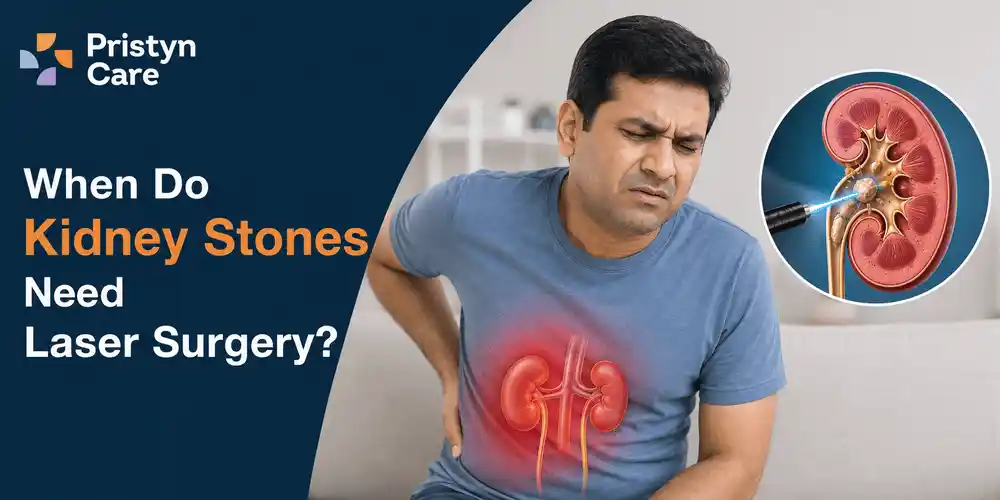
Laser surgery is a minimally invasive procedure where a thin tube (ureteroscope) is passed through the urinary tract to reach the stone.
A laser is then used to break the stone into tiny fragments, which can either be removed or pass naturally through urine.
Benefits of Laser Surgery
Laser treatment for kidney stones offers several advantages:
- Minimally invasive (no cuts or stitches)
- Faster recovery time
- High success rate
- Less pain compared to traditional surgery
- Short hospital stay
Is Laser Surgery Safe?
Yes, laser surgery is considered a safe and effective treatment when performed by experienced specialists. Like any medical procedure, it may have minor risks such as infection or temporary discomfort, but serious complications are rare.
How to Prevent Kidney Stones?
Prevention is always better than treatment. You can reduce your risk of kidney stones by:
- Drinking 2–3 liters of water daily
- Reducing salt intake
- Limiting foods high in oxalates (like spinach and nuts)
- Maintaining a healthy weight
- Following your doctor’s dietary advice
When Should You See a Doctor?
Seek immediate medical help if you experience:
- Severe back or side pain
- Pain while urinating
- Blood in urine
- Fever and chills
- Nausea or vomiting
These symptoms may indicate a serious condition that requires prompt treatment.
Conclusion
Kidney stones can be extremely painful, but not all cases require surgery. However, when stones are large, cause severe pain, block urine flow, or lead to infections, laser surgery becomes the most effective solution.
Early diagnosis and proper treatment can prevent complications and ensure a quick recovery. If you suspect kidney stones, consult a healthcare professional to determine the best course of action.
 Doctor available







 (4) (1).jpg/1682933853454_ban-Icon.png)
.jpeg/1777541472938_ban-Icon.png)