


Table of Contents
Is Milk Good or Bad for Kidney Stones?
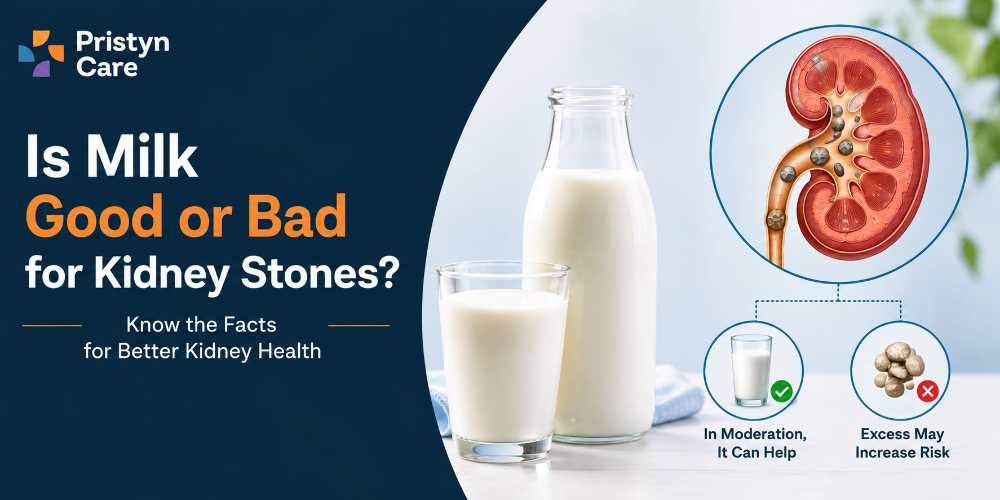
If you have kidney stones, you may wonder whether drinking milk is safe. Since many kidney stones contain calcium, it is easy to assume that milk and other calcium-rich foods could make stones worse. However, avoiding milk and dietary calcium completely is usually not recommended. For many people, getting an appropriate amount of calcium from food can actually help reduce the risk of certain kidney stones, particularly calcium oxalate stones.
The important point is how much calcium you consume, where it comes from, and what type of kidney stone you have. Your overall diet and fluid intake also play an important role in preventing stones.
Is Milk Good for Kidney Stones?
For most people, moderate amounts of milk can be included in a kidney-stone-friendly diet. Milk provides dietary calcium, and calcium from food does not automatically increase the risk of calcium oxalate stones. In fact, calcium in the digestive tract can bind with oxalate from food and reduce the amount of oxalate absorbed into the bloodstream and eventually excreted in urine.
This is important because calcium oxalate is the most common type of kidney stone.
Therefore, simply stopping milk because you have calcium stones may not be the right approach.
Can Milk Cause Kidney Stones?
Milk itself is not generally considered a direct cause of kidney stones when consumed in appropriate amounts. The relationship between calcium and kidney stones is more complicated than simply “more calcium equals more stones.”
A diet that is too low in calcium may allow more oxalate to be absorbed from the intestine. This can increase urinary oxalate, which may contribute to calcium oxalate stone formation. NDKK recommends getting an appropriate amount of calcium from food for people prone to calcium stones rather than unnecessarily eliminating dietary calcium.
However, consuming excessive amounts of calcium, particularly through supplements without medical advice, may not be appropriate for everyone. Your recommended intake should depend on your individual health and stone type.
Why Is Calcium Important for Kidney Stone Prevention?
Calcium can have a protective effect against calcium oxalate stones when consumed with meals.
When you eat calcium-containing foods along with foods containing oxalate, calcium can bind to oxalate in the digestive tract. This can reduce oxalate absorption and therefore potentially reduce the amount of oxalate reaching the urine.
This is why people with kidney stones should not automatically eliminate calcium-rich foods.
Instead, the goal is usually to maintain an appropriate dietary calcium intake while controlling other dietary factors such as sodium and excessive oxalate.
Is Milk Good for Calcium Oxalate Kidney Stones?
Yes, milk can generally be consumed in moderation if you have calcium oxalate stones, unless your doctor has advised otherwise.
Calcium oxalate stones form when calcium combines with oxalate in the urine. Although this may make milk seem like an obvious food to avoid, dietary calcium can actually help reduce oxalate absorption when consumed with meals.
If you have calcium oxalate stones, it may be more useful to focus on:
- Getting an appropriate amount of calcium from food
- Drinking enough water
- Reducing excessive salt intake
- Limiting high-oxalate foods when advised
- Avoiding excessive animal protein
- Following the dietary advice provided after your stone analysis
High-oxalate foods can include spinach, nuts, peanuts, rhubarb and wheat bran.
Should You Stop Drinking Milk If You Have Kidney Stones?
Usually, no—not unless your healthcare professional specifically recommends it.
Completely eliminating milk and other calcium-containing foods may unnecessarily reduce your calcium intake. For people with calcium oxalate stones, maintaining adequate dietary calcium may be more beneficial than following a very low-calcium diet.
However, your diet should be personalized if you have recurrent stones, high urinary calcium, chronic kidney disease, or another medical condition affecting calcium metabolism.
Is Low-Fat Milk Better for Kidney Stones?
Low-fat or reduced-fat milk can be a reasonable option as part of a balanced diet. The main kidney-stone consideration is not simply whether the milk is full-fat or low-fat, but your overall calcium intake, diet quality, sodium intake, and hydration.
If you regularly drink flavored or sweetened milk beverages, check the added sugar and overall nutritional content. Plain milk can be a simpler choice.
Can You Drink Milk While Passing a Kidney Stone?
Milk does not dissolve an existing kidney stone. Drinking enough fluids, particularly water, is generally more important for helping maintain urine flow and preventing dehydration.
Whether a stone passes on its own depends on factors such as its size and location. Some stones require medical treatment, including procedures to break or remove them.
If you have severe or persistent pain, blood in the urine, difficulty urinating, fever, chills, nausea or vomiting, you should seek medical evaluation.
How Much Milk Can You Drink With Kidney Stones?
There is no single amount of milk that is appropriate for everyone with kidney stones. Your calcium requirement depends on factors such as your age, diet, stone composition and overall health.
Instead of avoiding calcium completely, discuss your individual calcium requirement with a urologist, nephrologist or registered dietitian. NIDDK specifically recommends working with a healthcare professional to determine the appropriate amount of calcium for kidney-stone prevention.
What Foods Should You Limit With Kidney Stones?
Milk is only one part of your diet. Depending on your type of stone, your doctor may recommend changes to several dietary factors.
1. High-Sodium Foods
A high-sodium diet can increase calcium excretion into the urine, which may increase the risk of calcium-containing stones. Limiting salty and highly processed foods can therefore be helpful.
2. High-Oxalate Foods
People who form calcium oxalate stones may be advised to reduce foods that are particularly high in oxalate, such as spinach, nuts, peanuts, rhubarb and wheat bran.
3. Excessive Animal Protein
Large amounts of animal protein may increase the risk of certain types of kidney stones. Depending on your stone type, your healthcare professional may recommend moderating meat, fish and other animal-protein sources.
4. Not Drinking Enough Water
Low fluid intake is an important risk factor for kidney stone formation. Drinking enough water helps dilute urine and can reduce the concentration of minerals that form stones.
What Should You Drink If You Have Kidney Stones?
Water should be your primary drink. Staying adequately hydrated is one of the most important steps for preventing many types of kidney stones.
Depending on your individual condition, some citrus beverages may also be helpful because they contain citrate, which can interfere with crystal formation. However, sugary beverages should not replace water as your primary source of hydration.
Milk can be included as a source of dietary calcium, but it should not be considered a substitute for adequate water intake.
Milk vs. Calcium Supplements for Kidney Stones
Getting calcium from food is generally preferred over taking calcium supplements without medical advice. Dietary calcium can interact with oxalate in the digestive tract, whereas supplements may have different effects depending on when and how they are taken.
If you have recurrent kidney stones and are considering calcium or vitamin D supplements, speak with your healthcare professional before starting them.
Does Milk Dissolve Kidney Stones?
No. Milk does not dissolve kidney stones.
Once a stone has formed, drinking milk will not break it down. Treatment depends on the stone’s size, location, composition and symptoms. Some small stones may pass naturally, while larger or obstructing stones may require medical treatment.
The Bottom Line
Milk is not automatically bad for people with kidney stones. For many people, moderate dietary calcium from foods such as milk can be part of a kidney-stone-prevention diet, particularly for calcium oxalate stones. Calcium from food may bind oxalate in the digestive tract and reduce its absorption.
Rather than eliminating milk completely, focus on adequate hydration, appropriate dietary calcium, lower sodium intake and a diet suited to your specific type of kidney stone. If you have recurrent stones or are unsure what foods you should eat, a urologist or dietitian can help create a personalized plan.
 Doctor available







%20(4)%20(1).jpg/1682933853454_ban-Icon.png)
.jpeg/1777541472938_ban-Icon.png)