


 Views: 193
Anal Fissure Medicine: What Is the Best Medicine for Anal Fissure?
An anal fissure is a small tear or cut in the lining of the anus. It commonly causes sharp pain during or after passing stools, burning, and bright red bleeding. Anal fissures can develop after passing hard or large stools, constipation, repeated diarrhoea, or trauma to the anal canal.


Dedicated Support at Every Step!
Our Doctors are available 24 hours a day, 7 days a week to help you!

Medicines can be effective for many acute anal fissures, particularly when constipation and hard stools are addressed at the same time. However, not every fissure heals with medicines alone. A fissure that continues for several weeks, repeatedly returns, or causes severe pain may become chronic and require specialist treatment.
In persistent cases, a doctor may recommend prescription medicines, botulinum toxin injection, or a surgical procedure such as lateral internal sphincterotomy (LIS). The appropriate treatment depends on whether the fissure is acute or chronic, the severity of symptoms, and whether previous treatments have worked.
Table of Contents
What Is an Anal Fissure?
An anal fissure is a tear in the thin tissue lining the anal canal.
It can occur when the anal lining is stretched or injured, commonly due to:
- Passing hard or large stools
- Chronic constipation
- Repeated straining during bowel movements
- Frequent diarrhoea
- Childbirth
- Trauma to the anal canal
- Certain inflammatory or bowel conditions in some patients
A fissure can trigger spasm of the internal anal sphincter. This increased muscle tension can make bowel movements more painful and may interfere with healing.
No Cost EMI, Hassle-free Insurance Approval
What Are the Symptoms of Anal Fissure?
Common symptoms include:
- Sharp or cutting pain while passing stool
- Burning pain after bowel movements
- Bright red blood on toilet paper or on the surface of stool
- Anal itching or irritation
- A visible crack or tear around the anus
- A small skin tag near a chronic fissure
- Fear of passing stools because of pain
- Constipation caused by avoiding bowel movements
The pain of an anal fissure can sometimes continue for minutes or hours after a bowel movement.
If rectal bleeding is persistent or unexplained, it should not automatically be assumed to be caused by a fissure. Other conditions can also cause rectal bleeding and may require medical evaluation.
Is There a Best Medicine for Anal Fissure?
There is no single best medicine for anal fissure that works for every patient.
Treatment depends on whether the fissure is acute or chronic and what is preventing it from healing.
Depending on the condition, a doctor may recommend:
- Fibre supplements
- Stool softeners or laxatives when appropriate
- Adequate fluid intake
- Topical anaesthetic medicines for short-term pain relief
- Prescription topical medicines that relax the anal sphincter
- Treatment for underlying constipation or diarrhoea
- Botulinum toxin injection in selected chronic fissures
- Surgery when conservative treatment does not work
For an acute fissure, keeping stools soft and avoiding straining may be enough for the fissure to heal.
For a chronic fissure, treatment may need to focus on reducing the abnormal sphincter spasm that is preventing healing.
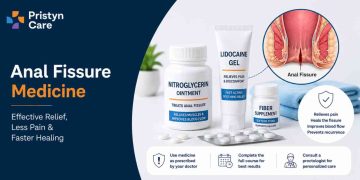
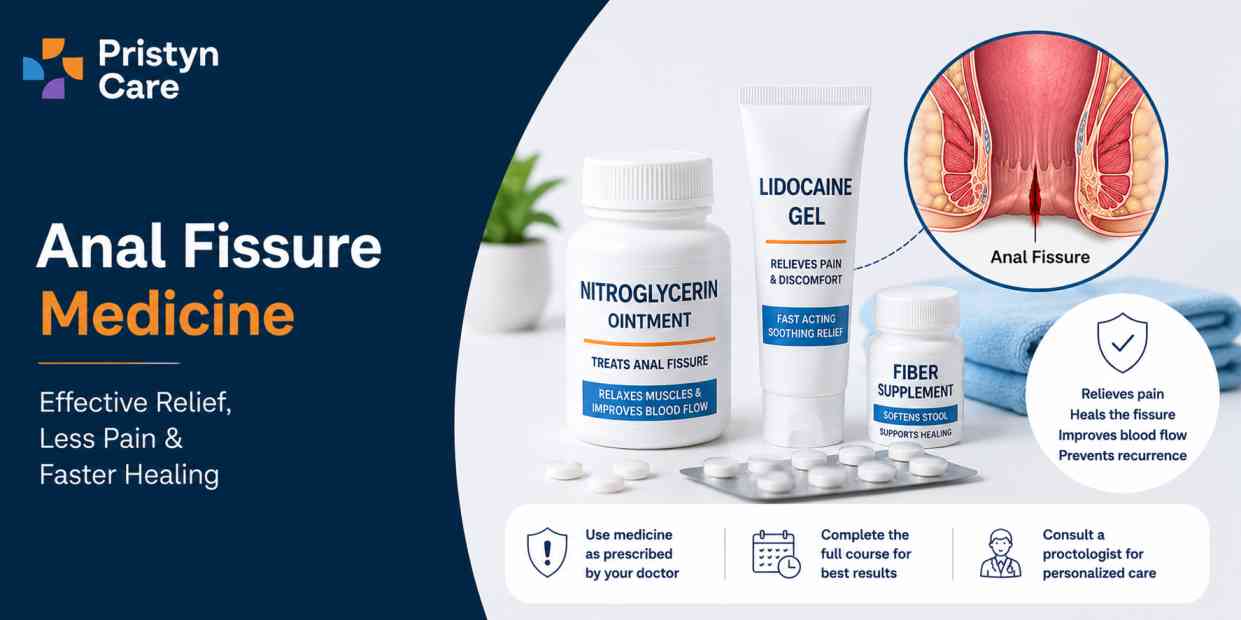
What Medicines Are Used for Anal Fissure?
Different medicines have different purposes.
| Medicine/Treatment | What It May Help With | Important Consideration |
| Fibre Supplements | Softens stools and improves bowel regularity | Adequate fluid intake is important |
| Stool Softeners/Laxatives | Helps prevent hard stools and straining | Choice and dosage should be appropriate for the individual |
| Lignocaine/Lidocaine Gel | Temporarily reduces pain and discomfort | Provides symptomatic relief but does not heal the underlying fissure by itself |
| Topical Nitroglycerin | Relaxes the anal sphincter and may promote healing | Can cause headaches and should be used under medical advice |
| Topical Calcium Channel Blockers | Help relax the anal sphincter and promote healing | Examples include diltiazem or nifedipine preparations; use should be guided by a doctor |
| Pain Medicines | Helps control discomfort | Does not directly heal the fissure |
| Botulinum Toxin Injection | Temporarily relaxes the anal sphincter in selected chronic fissures | Usually considered when conservative treatment is unsuccessful |
| Lateral Internal Sphincterotomy | Reduces persistent sphincter pressure to promote healing | Surgical treatment for selected chronic or treatment-resistant fissures |
The appropriate medicine depends on the patient's symptoms, medical history, duration of the fissure, and previous treatment.
Can Medicine Cure an Anal Fissure?
Yes, many acute anal fissures can heal with conservative and medical treatment.
The most important part of treatment is often preventing repeated trauma to the fissure. This means keeping stools soft, avoiding straining, and maintaining healthy bowel habits.
However, chronic fissures can behave differently.
When a fissure continues for a prolonged period, repeated sphincter spasm can reduce blood flow to the area and make healing more difficult. A chronic fissure may therefore require prescription treatment or a procedure.
So, medicine can cure some anal fissures, but it is not guaranteed to permanently heal every fissure.
How Effective Is Medicine for Chronic Anal Fissure?
Medicines may help chronic fissures, but they are generally less predictably effective than they are for newly developed fissures.
Prescription topical medicines such as nitroglycerin or calcium channel blockers can reduce anal sphincter pressure and support healing in appropriate patients.
However, some chronic fissures do not respond adequately to medical treatment.
If pain and bleeding continue despite an appropriate treatment course, a colorectal or proctology specialist may recommend another treatment option.
What Is the Best Medicine for Anal Fissure Pain?
Anal fissure pain occurs because the tear is exposed to repeated stretching during bowel movements and may be accompanied by sphincter spasm.
A topical local anaesthetic such as lignocaine/lidocaine may temporarily reduce pain.
However, pain medicine alone does not repair the fissure.
The underlying problem also needs to be addressed by:
- Keeping stools soft
- Avoiding straining
- Managing constipation
- Following prescribed topical treatment
- Treating persistent sphincter spasm when necessary
If severe pain keeps returning after every bowel movement, the fissure should be evaluated rather than relying only on painkillers.
Can Ayurvedic Medicine Cure Anal Fissure?
Searches for anal fissure Ayurvedic medicine and Ayurvedic medicine for anal fissure are common among people looking for non-surgical treatment.
Some people may choose traditional or herbal products to manage their symptoms. However, the effectiveness and composition of Ayurvedic products can vary, and "natural" does not automatically mean that a treatment is effective or risk-free.
For a mild, recent fissure, dietary and bowel-habit changes may support healing regardless of whether a person chooses conventional or complementary approaches.
However, persistent pain, recurrent bleeding, or a fissure that is not healing should be assessed by a doctor rather than treated indefinitely with self-selected Ayurvedic medicines.
If you use an Ayurvedic or herbal product, tell your doctor about it, especially if you are also taking prescription medicines.
Does Homeopathic Medicine for Anal Fissure Work?
Homeopathic medicine for anal fissure is another common search among patients who want to avoid conventional medicines or surgery.
There is no single homeopathic medicine that can be considered a proven cure for anal fissure.
A fissure may improve naturally when constipation resolves and the tear is allowed to heal. This does not necessarily mean that a particular homeopathic product caused the healing.
If symptoms continue, become more severe, or repeatedly return, an appropriate medical examination is important.
Acute vs Chronic Anal Fissure: Why Does It Matter?
The duration and characteristics of a fissure can influence treatment.
Acute Anal Fissure
An acute fissure is a relatively recent tear and may heal with:
- Increased dietary fibre
- Adequate fluids
- Stool-softening treatment when required
- Avoiding straining
- Warm sitz baths
- Appropriate topical medicines
Chronic Anal Fissure
A chronic fissure may have features such as:
- Persistent or recurrent pain
- Repeated bleeding
- A visible fissure that does not heal
- A sentinel skin tag
- Increased anal sphincter tone or spasm
Chronic fissures may require prescription treatment or a procedure if conservative management does not provide adequate healing.
This distinction is important because continuously using the same medicine for months without reassessment may delay more effective treatment.
Why Does Anal Fissure Medicine Sometimes Fail?
Medicines may not work adequately for several reasons.
1. Constipation continues
Every hard bowel movement can reopen the fissure and delay healing.
2. The anal sphincter remains tight
Persistent sphincter spasm can contribute to pain and interfere with healing.
3. The fissure has become chronic
Long-standing fissures can be more difficult to treat with conservative measures alone.
4. Treatment is stopped too early
Some treatments require consistent use for an appropriate period before their effect can be assessed.
5. The diagnosis is incorrect
Not every painful anal condition is a fissure. Piles, fistula, abscess, inflammatory bowel disease, and other conditions can cause anal pain or bleeding.
6. The underlying bowel problem has not been addressed
Repeated constipation or diarrhoea can continue to traumatize the area even while medicine is being used.
When Should You See a Doctor for Anal Fissure?
You should consult a doctor if:
- Pain occurs during or after almost every bowel movement.
- Rectal bleeding keeps recurring.
- Symptoms do not improve with conservative treatment.
- The fissure repeatedly returns.
- You have severe or worsening anal pain.
- A lump or skin tag develops near the fissure.
- You have pus or unusual discharge.
- You have fever.
- You are unsure whether the symptoms are caused by an anal fissure.
Persistent bleeding should be evaluated because several conditions can cause rectal bleeding.
Can an Anal Fissure Heal Without Surgery?
Yes. Many acute anal fissures heal without surgery when the underlying causes are addressed.
Treatment may include:
- Increasing dietary fibre
- Drinking adequate fluids
- Taking stool-softening treatment when recommended
- Avoiding straining
- Taking warm sitz baths
- Using prescribed topical medicines
However, not every fissure responds to conservative treatment.
If the fissure becomes chronic or repeatedly returns, a specialist may recommend a procedure to improve the chances of healing.
What Can You Do Along With Anal Fissure Medicine?
Lifestyle and bowel-habit changes are an important part of fissure treatment.
Increase Fibre Intake
Include fibre-rich foods such as fruits, vegetables, whole grains, legumes, and other suitable sources.
Drink Enough Fluids
Adequate fluid intake can help prevent hard stools.
Avoid Straining
Do not force bowel movements or sit on the toilet for prolonged periods.
Do Not Ignore the Urge to Pass Stool
Repeatedly delaying bowel movements can contribute to constipation in some people.
Take Warm Sitz Baths
Warm water can temporarily relax the area and provide relief from discomfort.
Stay Physically Active
Regular physical activity can support healthy bowel movements.
When Is a Procedure Needed for Anal Fissure?
A procedure may be considered when:
- The fissure has become chronic.
- Pain and bleeding continue despite appropriate medical treatment.
- The fissure repeatedly returns.
- The sphincter remains excessively tight.
- Conservative treatment has failed.
- The condition significantly affects daily life.
Depending on the patient, treatment may include botulinum toxin injection or surgery.
The decision should be made after an examination by a qualified colorectal or proctology specialist.
What Is Laser Treatment for Anal Fissure?
Laser technology may be used in selected anorectal procedures, but the suitability of any laser-based treatment depends on the underlying condition and the technique being offered.
For a chronic anal fissure, the key treatment goal is to address the persistent sphincter spasm and allow the fissure to heal.
Patients should therefore not choose a procedure solely because it is described as "laser." The appropriate treatment should be based on the diagnosis, severity, sphincter involvement, and clinical assessment.
What Is Lateral Internal Sphincterotomy?
Lateral internal sphincterotomy (LIS) is a surgical treatment used for selected chronic anal fissures.
The procedure involves making a controlled division of a portion of the internal anal sphincter to reduce excessive resting pressure.
By reducing sphincter spasm, LIS can improve blood flow to the fissure and promote healing.
It is generally considered when chronic fissures do not respond adequately to conservative or medical treatment, although the decision depends on the individual patient.

Free Fissure Surgery Cost Calculator

Our care coordinator will call you shortly.
Is Anal Fissure Surgery Necessary for Everyone?
No.
Surgery is not the first treatment for every anal fissure.
Many acute fissures improve with conservative measures and appropriate medicines.
Surgery is generally considered when the fissure becomes chronic, repeatedly returns, or fails to respond to appropriate non-surgical treatment.
The specialist will consider factors such as:
- Duration of symptoms
- Severity of pain
- Fissure characteristics
- Previous treatments
- Anal sphincter tone
- Recurrence
- Overall health
Medicine vs Procedure for Anal Fissure: Which Is Better?
| Factor | Medicines & Conservative Treatment | Procedure/Surgery |
| Main purpose | Promote healing and control symptoms | Address persistent sphincter spasm or treatment-resistant fissure |
| Best suited for | Acute fissures and selected chronic fissures | Chronic or treatment-resistant fissures |
| Examples | Fibre, stool softeners, topical medicines, pain relief | Botulinum toxin, lateral internal sphincterotomy |
| Recovery | Usually no procedure-related recovery | Depends on the procedure |
| Invasiveness | Non-invasive | Minimally invasive or surgical |
| Risk of recurrence | Depends on healing and bowel habits | Depends on the procedure and individual factors |
| First-line option | Often appropriate for acute fissure | Usually considered after appropriate conservative treatment in chronic cases |
Medicines and procedures should not be viewed as competing treatments. A patient may first receive conservative treatment and move to a procedure only if the fissure does not heal adequately.
Can Anal Fissure Be Permanently Cured?
Anal fissures can often be successfully treated, but recurrence is possible.
The risk of recurrence may be reduced by maintaining healthy bowel habits, avoiding constipation and straining, and treating underlying conditions that contribute to fissure formation.
A chronic fissure that repeatedly returns despite appropriate treatment should be reassessed to determine whether another condition or persistent sphincter dysfunction is contributing to the problem.
Do Not Keep Self-Medicating for Persistent Anal Fissure
There is no universal best medicine for anal fissure.
Acute fissures may heal with fibre, stool-softening measures, appropriate topical medicines, and healthy bowel habits. Ayurvedic or homeopathic products may be preferred by some patients, but they should not replace appropriate medical evaluation when symptoms persist.
If pain and bleeding continue despite treatment, the problem may have progressed to a chronic fissure.
At this stage, repeatedly trying different medicines may only delay effective treatment. A specialist can assess the fissure and determine whether continued medical treatment, botulinum toxin injection, or a surgical procedure such as lateral internal sphincterotomy is appropriate.
At Pristyn Care, patients can consult specialists for evaluation and treatment of acute and chronic anal fissures. Based on the condition, the doctor can recommend conservative treatment, prescription medicines, minimally invasive procedures, or surgery when appropriate.
Frequently Asked Questions
What is the best medicine for anal fissure?
There is no single best medicine for every anal fissure. Treatment may include fibre, stool-softening medicines, topical anaesthetic preparations, or prescription medicines that relax the anal sphincter.
Can an anal fissure heal with medicine?
Yes. Many acute anal fissures heal with conservative treatment and appropriate medicines. Chronic fissures may require additional treatment if they do not respond adequately.
What is the best medicine for chronic anal fissure?
Treatment for chronic fissure may include prescription topical medicines that reduce anal sphincter pressure. If medical treatment fails, a doctor may consider botulinum toxin injection or surgery.
Can Ayurvedic medicine cure an anal fissure?
Some people use Ayurvedic products for fissure symptoms, but there is no single Ayurvedic medicine that can be considered a proven cure for every anal fissure. Persistent symptoms should be evaluated by a doctor.
Does homeopathic medicine cure anal fissure?
There is no established homeopathic medicine proven to permanently cure anal fissures. Persistent pain or bleeding should be assessed by a qualified healthcare professional.
Can an anal fissure heal without surgery?
Yes. Many acute fissures heal without surgery. However, chronic or recurrent fissures that do not respond to appropriate treatment may require a procedure.
When is surgery needed for an anal fissure?
Surgery may be considered when a fissure becomes chronic, repeatedly returns, or does not respond adequately to conservative and medical treatment.
How long does an anal fissure take to heal?
Healing time varies depending on whether the fissure is acute or chronic and whether constipation and sphincter spasm are adequately controlled. Persistent symptoms should be reassessed rather than treated indefinitely without medical supervision.


Disclaimer
This article is intended for informational purposes only and should not be considered a substitute for professional medical advice, diagnosis, or treatment. Medicines should be used according to the advice of a qualified healthcare professional. Do not self-medicate with antibiotics, prescription medicines, or prolonged topical treatments. If you have persistent anal pain, recurrent bleeding, pus discharge, fever, or symptoms that are not improving, consult a doctor for proper evaluation.
Social share:



Related Calculators

Dedicated Support at Every Step!
Our Doctors are available 24 hours a day, 7 days a week to help you!
Related Calculators
Get In Touch with our expert doctors !
- please enter 10 digit number.


