


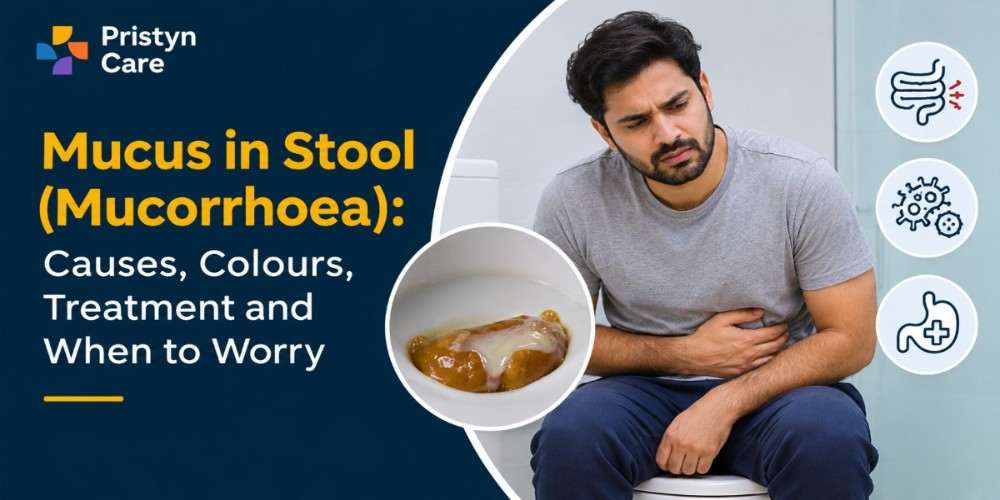
Mucus in stool is not always a cause for concern. Your intestines naturally produce mucus to protect the digestive tract and help stool pass smoothly. A small amount of clear mucus is usually normal.
However, if you notice excessive mucus, changes in its appearance, blood, diarrhoea or abdominal pain, it may indicate an underlying digestive problem. Understanding the possible causes of mucus in stool can help you know when to seek medical advice.
This guide explains what different types of mucus may indicate, common causes, available treatment options and when you should consult a doctor.
Table of Contents
What Is Mucus in Stool?
Mucus is a jelly-like substance produced by the lining of your intestines. It protects the digestive tract and helps stool move smoothly through the bowel.
You may notice mucus in stool as a transparent or whitish substance surrounding the stool, sticking to its surface or appearing on toilet paper after wiping.
When Is Mucus in Stool Normal?
A small amount of clear mucus in stool is usually normal. However, excessive mucus or a persistent change in its appearance may indicate an underlying digestive or anorectal condition.
Mucus in stool should be evaluated if:
- You notice a large or increasing amount of mucus.
- Mucus repeatedly appears in your bowel movements.
- It is accompanied by blood or a noticeable change in appearance.
- You experience abdominal pain, diarrhoea or changes in bowel habits.
Mucus alone does not necessarily indicate a serious illness. Its significance depends on the amount, frequency and other symptoms you experience.
What Does Different-Coloured Mucus in Stool Mean?
The appearance of mucus in stool may provide some clues about your digestive health. However, colour alone cannot identify the underlying cause or confirm a medical condition.
| Appearance | What It May Indicate | What to Do |
| Clear mucus | Small amounts are usually normal. | Monitor if there are no other symptoms. |
| White mucus | May occur with IBS and other bowel conditions. | Consult a doctor if persistent or accompanied by pain or diarrhoea. |
| Yellowish mucus | Can occur with digestive infections or inflammatory conditions. | Seek medical advice if persistent or accompanied by other symptoms. |
| Mucus with blood | May occur with infections, inflammatory bowel disease or anorectal conditions. | Arrange prompt medical evaluation. |
| Black, tarry stool | May indicate bleeding in the digestive tract. This is different from simply having dark-coloured mucus. | Seek urgent medical assessment. |
Important: Mucus colour alone cannot determine whether you have IBS, an infection, inflammatory bowel disease or another condition. A doctor may recommend an examination or tests based on your symptoms.
What Causes Mucus in Stool?
Mucus in stool (Mucorrhoea) can occur due to several digestive and anorectal conditions. Some causes are temporary, while others may require medical treatment.
1. Constipation and Dehydration
Constipation is one of the possible causes of noticeable mucus in stool. When bowel movements become difficult or infrequent, you may notice mucus along with hard stools or straining.
Dehydration can also contribute to constipation by making stools harder and more difficult to pass.
Mucus associated with temporary constipation may settle when bowel movements become regular. However, persistent mucus should not automatically be attributed to constipation.
2. Irritable Bowel Syndrome (IBS)
Irritable bowel syndrome (IBS) is a digestive disorder that affects how the bowel functions. It can cause abdominal pain, bloating, diarrhoea, constipation or changes in bowel habits.
Some people with IBS may also notice white or clear mucus in their stool.
IBS does not cause the same type of intestinal inflammation as inflammatory bowel disease. However, its symptoms can overlap with other digestive conditions, so persistent or unusual symptoms should be evaluated.
Read more about IBS and its causes.
3. Digestive Infections
Certain bacterial, viral and parasitic infections can cause inflammation in the digestive tract, leading to diarrhoea and mucus in stool.
Bacterial infections such as salmonella and shigella may cause symptoms including:
- Loose stools or diarrhoea.
- Abdominal cramps.
- Fever.
- Nausea and vomiting.
- Blood or mucus in stool.
The symptoms and treatment depend on the type of infection. A doctor may recommend stool tests to identify the cause.
4. Inflammatory Bowel Disease (Crohn’s Disease and Ulcerative Colitis)
Inflammatory bowel disease (IBD) refers to chronic conditions that cause inflammation in the digestive tract. Its two main types are Crohn’s disease and ulcerative colitis.
During active disease, inflammation can lead to:
- Diarrhoea.
- Abdominal pain and cramps.
- Blood or mucus in stool.
- Urgent or frequent bowel movements.
- Unexplained weight loss.
Persistent bloody diarrhoea or mucus accompanied by abdominal pain should be evaluated by a doctor.
5. Piles, Anal Fistula and Other Anorectal Conditions
Not all mucus in stool originates from the intestines. Certain conditions affecting the anus and rectum can also cause mucus or discharge that appears on stool or toilet paper.
- Piles (haemorrhoids): These are swollen veins in or around the anus and rectum. They may cause bleeding, irritation and mucus discharge in some cases. Learn more about piles treatment.
- Anal fistula: This is an abnormal tunnel between the anal canal and the skin around the anus. It may cause persistent discharge containing pus, mucus or blood. Read about anal fistula.
- Anal ulcers: These are open sores around the anal region that may cause pain, bleeding or discharge. Learn more about anal ulcers.
- Rectal prolapse: This occurs when the rectum protrudes through the anus and may cause mucus leakage, discomfort or bleeding. Learn more about rectal prolapse.
Mucus or discharge that mainly appears around the anus, particularly with pain, swelling or irritation, may indicate an anorectal problem. A physical examination can help identify the cause.
Related reading: How stress can affect proctology disorders.
6. Colon or Rectal Cancer
Colon or rectal cancer can sometimes cause changes in bowel habits, blood in stool, rectal bleeding and mucus discharge.
However, mucus in stool alone is not a specific sign of colorectal cancer. Many other conditions, including infections, IBS and inflammatory bowel disease, can cause similar symptoms.
Consult a doctor if you notice persistent changes in bowel habits, unexplained weight loss, blood in stool or recurring digestive symptoms. Your doctor can assess whether further investigations or colorectal cancer screening are needed.
When Should You Worry About Mucus in Stool?
A small amount of clear mucus without other symptoms is generally not a cause for concern. However, persistent mucus or mucus accompanied by other symptoms may require medical evaluation.
| Warning Sign | Why It Matters |
| Blood in mucus or stool | May indicate bleeding due to infection, inflammation or an anorectal condition. |
| Black, tarry stool | Can indicate bleeding in the upper digestive tract. |
| Persistent diarrhoea | May be associated with an infection or inflammatory bowel condition. |
| Abdominal pain or cramps | Can occur with infections, IBS and inflammatory bowel disease. |
| Nausea and vomiting | May accompany digestive infections or other gastrointestinal conditions. |
| Fever | May indicate an underlying infection or inflammation. |
| Unexplained weight loss or fatigue | Requires evaluation for an underlying health condition. |
| Dizziness or fainting | May indicate dehydration, significant blood loss or another serious problem, particularly when accompanied by vomiting, diarrhoea or bleeding. |
Seek urgent medical attention if you experience significant rectal bleeding, black tarry stools, severe abdominal pain, fainting or signs of severe dehydration. Do not delay medical assessment if symptoms are severe.
If mucus keeps appearing even without other symptoms, arrange a medical consultation to understand the cause.
Which Doctor Should You Consult for Mucus in Stool?
The right doctor depends on your symptoms and the possible underlying cause.
- Gastroenterologist: Consult a gastroenterologist if mucus is accompanied by persistent diarrhoea, abdominal pain, bloating, changes in bowel movements or suspected conditions such as IBS and inflammatory bowel disease.
- Proctologist or colorectal surgeon: Consult a specialist if mucus is accompanied by anal pain, swelling, bleeding, discharge or symptoms associated with piles and anal fistula.
- General physician: If you are unsure about the cause, start with a general physician who can assess your symptoms and refer you to the appropriate specialist.
The doctor may recommend further tests or examinations depending on your medical history and symptoms.
How Do Doctors Diagnose the Cause of Mucus in Stool?
To identify the cause of mucus in stool, a doctor will ask about your symptoms, bowel habits, medical history and family history.
Depending on your condition, the evaluation may include:
- Physical examination: The doctor may examine your abdomen and, when necessary, the anal or rectal region.
- Blood tests: These may help identify signs of infection, inflammation, anaemia or other abnormalities.
- Stool tests: A stool culture or other stool investigations may help detect infections, parasites or hidden blood.
- Colonoscopy or sigmoidoscopy: These procedures allow the doctor to examine the inside of the rectum and colon for inflammation, polyps, ulcers or other abnormalities.
- Imaging tests: An X-ray, CT scan or MRI may be recommended in selected cases to examine the digestive tract and surrounding structures.
Not everyone with mucus in stool needs all these tests. The doctor decides which investigations are appropriate based on the symptoms and examination findings.
How to Treat Mucus in Stool
Treatment for mucus in stool depends on the underlying cause. There is no single medicine or tablet that treats mucus itself. The aim is to manage the condition responsible for it.
Home Care for Mild Symptoms
If mucus is associated with temporary constipation or dehydration, certain lifestyle changes may help improve bowel movements.
- Drink enough fluids: Maintain adequate hydration throughout the day.
- Eat a balanced diet: Include fibre-rich foods such as fruits, vegetables and whole grains, increasing fibre gradually.
- Stay physically active: Regular physical activity may help support normal bowel movements.
- Follow healthy toilet habits: Avoid delaying bowel movements or straining excessively.
- Include suitable probiotic foods: Foods such as curd or yoghurt may support gut health when tolerated.
These measures may help with constipation-related symptoms, but they do not treat every cause of mucus in stool.
If symptoms persist or are accompanied by blood, fever, diarrhoea or abdominal pain, consult a doctor instead of relying only on home remedies.
Medical Treatment
The treatment depends on the condition responsible for the mucus.
- Digestive infections: Treatment depends on the organism causing the infection. Some infections may require specific medicines, while others need supportive care.
- IBS: Management may include dietary changes, lifestyle modifications and medicines prescribed according to symptoms.
- Inflammatory bowel disease: Treatment may involve prescription medicines to control inflammation and manage disease flare-ups.
- Piles and anal fistula: Treatment depends on the severity and type of anorectal condition. Options may include medication or a procedure when clinically appropriate.
- Other underlying conditions: Conditions such as colorectal cancer require specific evaluation and treatment by the appropriate specialist.
Can You Take Medicine for Mucus in Stool?
There is no universal medicine for mucus in stool. Antibiotics are only appropriate for certain bacterial infections and are not effective against every cause of diarrhoea or mucus.
Taking antibiotics, antidiarrhoeal medicines or other tablets without medical advice may delay the correct diagnosis or cause unwanted side effects.
Consult a doctor to identify the underlying cause before starting treatment.
Conclusion
A small amount of clear mucus in stool is usually normal because it helps protect the digestive tract and supports smooth bowel movements. However, excessive mucus, blood, persistent diarrhoea, abdominal pain or changes in bowel habits may indicate an underlying health condition.
If mucus keeps appearing or is accompanied by anal pain, swelling, bleeding or discharge, consult a doctor to identify the cause. Getting the right diagnosis can help you receive appropriate treatment instead of relying on home remedies or self-medication.
Experiencing anal pain, swelling or discharge along with mucus? Consult a qualified proctology specialist to understand the cause and discuss suitable treatment.
Book a Proctology Consultation
Disclaimer: This article is intended for general health information and is not a substitute for professional medical advice, diagnosis or treatment. Do not take antibiotics or other medicines without medical advice. If you experience blood in your stool, black tarry stool, severe pain, fever, persistent diarrhoea or symptoms that keep returning, consult a qualified healthcare professional promptly.
 Doctor available