

Karnal


Call Us
Book FREE Appointment
Struggling with obesity? Opt for a non-surgical SPATZ Adjustable Gastric Balloon Treatment in Karnal that can give you magically proven results. Consult with our expert general surgeons in Karnal for gastric balloon treatment.
... Read More




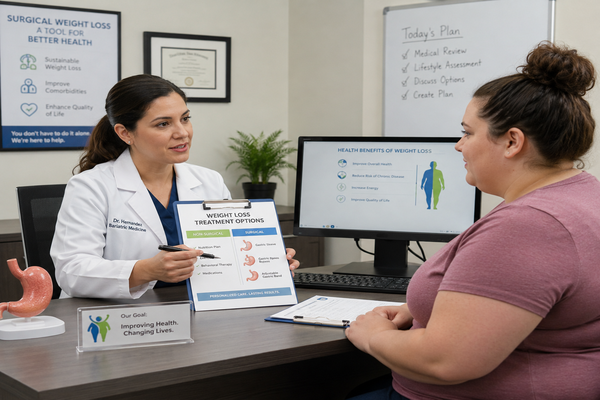
Before treatment, your doctor will likely perform some simple diagnostic tests. These tests are generally performed to assess and evaluate your overall health and determine if you are a suitable candidate for SPATZ adjustable gastric balloon treatment.
Alongside, to further understand your condition, your doctor may also perform some simple tests such as:
In a SPATZ adjustable balloon procedure, the adjustable gastric balloon is inserted into the stomach under the affect of anesthesia and by the process of gastroscopy. This entire process does not last for more than 20 minutes, and once the balloon is filled.
After the procedure, you will be observed for a short period to ensure there are no immediate complications. Your doctor will likely provide post-procedure care instructions, including dietary guidelines and follow-up appointments.
Delivering Seamless Surgical Experience in India
Your safety is taken care of by thermal screening, social distancing, sanitized clinics and hospital rooms, sterilized surgical equipment and mandatory PPE kits during surgery.
A dedicated Care Coordinator assists you throughout the surgery journey from insurance paperwork, to free commute from home to hospital & back and admission-discharge process at the hospital.
Our surgeons spend a lot of time with you to diagnose your condition. You are assisted in all pre-surgery medical diagnostics. We offer advanced laser and laparoscopic surgical treatment. Our procedures are USFDA approved.
We offer free follow-up consultations and instructions including dietary tips as well as exercises to every patient to ensure they have a smooth recovery to their daily routines.
 Still haven’t found the solution?
 080-6510-5124 Call us now
After undergoing SPATZ gastric balloon treatment, it is important to follow a specific diet to ensure a smooth recovery and maximize the benefits of the procedure. The purpose of the Gastric Balloon is to reduce the capacity of your stomach, helping you feel full with smaller portions of food.
Here are some general guidelines for the types of foods to eat after the adjustable balloon treatment:
Remember that the gastric balloon is a tool to support weight loss, but long-term success depends on adopting healthy eating habits, regular physical activity, and lifestyle modifications. Work closely with your healthcare team to ensure a safe and effective recovery.
After undergoing SPATZ adjustable gastric balloon treatment, there are certain foods you should avoid to prevent complications and maximize the effectiveness of the procedure.
Here are some foods to avoid:
Remember, it is essential to follow the specific dietary guidelines provided by your healthcare provider or registered dietitian. They will provide you with personalized recommendations based on your individual needs, health condition, and the type of Gastric balloon used. Adhering to these guidelines will help ensure a safe and successful recovery.
A person who is overweight may have an extremely difficult life. Placing yourself in a seat at the cinema or restaurant can be troublesome, and you can feel like people are glaring at you constantly. As a result, people resort to dieting and hard exercises to eliminate excess weight but have failed. That being the case, if you have failed or suffer from certain symptoms related to your weight, you can be a perfect candidate for a Gastric balloon treatment and its benefits.
SPATZ adjustable gastric balloon treatment is a perfect way to help patients lose excess weight and has many health benefits. Some of them are mentioned below:
While SPATZ adjustable gastric balloon treatment is generally considered safe and effective for weight loss, there are potential risks and complications associated with the procedure. It is important to be aware of these risks and discuss them in detail with your healthcare provider before undergoing the treatment.
Here are some potential risks and complications:
It is crucial to discuss these risks and potential complications with your healthcare provider. They will evaluate your individual situation, provide guidance on managing these risks, and monitor your progress throughout the treatment.
No, the size of the stomach does not increase after SPATZ adjustable balloon treatment procedure. The purpose of the adjustable balloon is to temporarily occupy space within the stomach, giving a feeling of fullness and thereby promoting portion control and weight loss. The balloon is not intended to permanently stretch or expand the stomach. It remains in the stomach for a specific period, typically around 12 months, and is then removed. During this time, it helps individuals adhere to a reduced-calorie diet and make lifestyle changes to support weight loss. After the balloon is removed, the stomach returns to its normal size and capacity.
.svg)

Check out our app!


Surgery
Social Media


© Copyright Pristyncare 2026. All Right Reserved.
Avail FREE Doctor Consultation

Consult with our expert surgeon for more than 50+ diseases

Once you share your details, our care coordinator will get in touch with you.

The coordinator will understand your symptoms and health condition in detail.

Your consultation will be scheduled at the earliest.
3M +
Happy Patients
150 +
Clinics
30 +
Cities

120Cr—Patient Savings Delivered
so patients focus on recovery, not bills.

Complete Transparency
No hidden charges or surprise bills

End-to-End Insurance Handling
Complete insurance processing support

Up to 20% Savings on Every Surgery
powered by smarter insurance handling

Easy EMI Options
Flexible payment plans available
120Cr—Patient Savings Delivered
so patients focus on recovery, not bills.
Complete Transparency
No hidden charges or surprise bills
Thanks for booking!
Our care coordinator will call you shortly.
Get much more with Pristyn Care App


Book Slot for Covid Precaution Dose


Access/Share your and family’s Vaccination Certificate anytime


Create your Ayushman Bharat health account

Book Your FREE Consultation
Consult with our expert surgeon for more than 50+ diseases
Once you share your details, our care coordinator will get in touch with you.
The coordinator will understand your symptoms and health condition in detail.
Your consultation will be scheduled at the earliest.
3M +
Happy Patients
150 +
Clinics
30 +
Cities